
Zero-Trust Remote Access & Identity-Aware ArchitectureRené Bon Ćirić
Eliminate vulnerable, slow, and brittle perimeter VPN appliances (OpenVPN, Cisco AnyConnect, Pulse Secure), prevent ransomware lateral movement across internal networks, and establish continuous identity-aware access control.
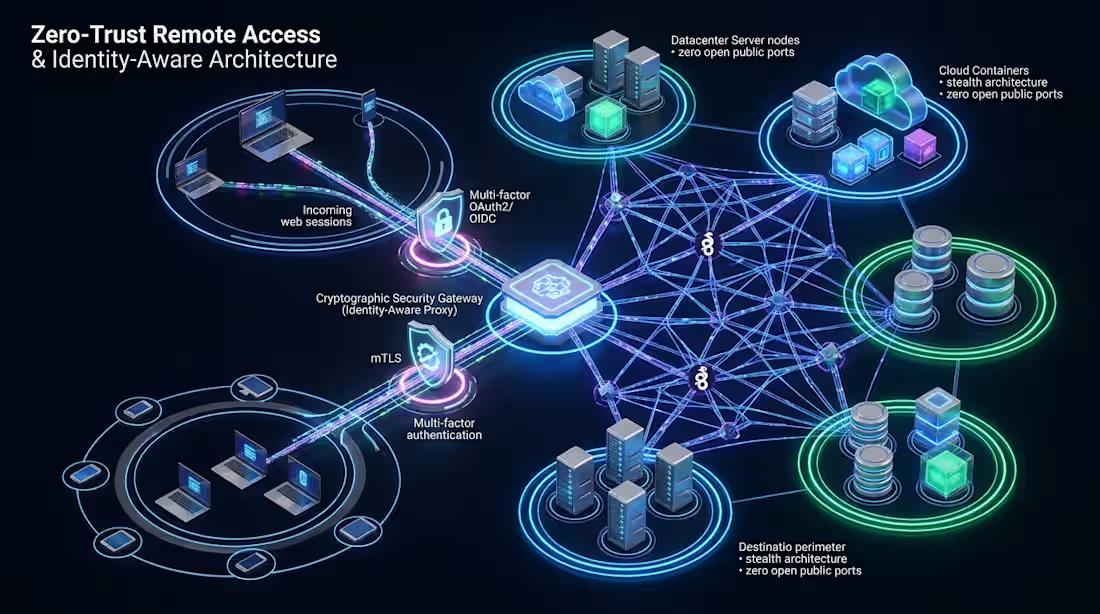
We design and implement a modern, enterprise-grade Zero-Trust Architecture based on Identity-Aware Proxies (IAP), WireGuard peer-to-peer mesh networks, and mutual TLS (mTLS) micro-segmentation running on hardened CentOS Stream 10. Remote developers and internal staff securely access corporate applications through standard web browsers backed by enterprise Multi-Factor Authentication (MFA), without exposing a single open ingress VPN port to the public internet.
Architecture & Safety Invariants
Eliminate Lateral Movement: Zero Trust enforces least-privilege access per application, preventing a compromised laptop from scanning internal networks.
Frictionless Browser-Based Access: Internal tools are accessible directly via web browsers authenticated via corporate SSO/MFA without clunky client software.
Stealth Public Perimeters: Zero open public-facing VPN listener ports; all inbound connections are authenticated and authorized cryptographically before reaching services.
Micro-Segmented Workload Isolation: Service-to-service traffic between servers and containers is strictly encrypted and verified via mTLS or WireGuard overlays.
Tangible Engineering Deliverables
Identity-Aware Proxy (IAP) Gateway: Caddy/Traefik reverse proxy deployment integrated with corporate OAuth2/OIDC (Google, Okta, Microsoft Entra ID) and cryptographic session token verification.
Kernel-Native WireGuard Mesh Overlay: High-performance peer-to-peer WireGuard network connecting servers, cloud instances, and management bastions with automated key rotation.
Workload Mutual TLS (mTLS) Infrastructure: Dedicated private Certificate Authority issuing client certificates for API services, database listeners, and admin interfaces.
Hardened Perimeter Firewall & SELinux Confinement: Restrictive firewalld rules binding services to localhost and WireGuard interfaces under SELinux Enforcing posture.
Access Governance Runbook & Decommissioning Guide: Step-by-step procedures for employee onboarding/offboarding, access audits, and legacy VPN retirement.



Starting at$4,500
Duration2 weeks
Tags
CentOS
Linux

WireGuard
Zero Trust
DevOps Engineer
Infrastructure
mTLS
Security
Service provided by
René Bon Ćirić Ixtlahuacán de los Membrillos, Mexico
- 2
- Followers
Zero-Trust Remote Access & Identity-Aware ArchitectureRené Bon Ćirić
Starting at$4,500
Duration2 weeks
Tags
CentOS
Linux
WireGuard
Zero Trust
DevOps Engineer
Infrastructure
mTLS
Security
Eliminate vulnerable, slow, and brittle perimeter VPN appliances (OpenVPN, Cisco AnyConnect, Pulse Secure), prevent ransomware lateral movement across internal networks, and establish continuous identity-aware access control.
We design and implement a modern, enterprise-grade Zero-Trust Architecture based on Identity-Aware Proxies (IAP), WireGuard peer-to-peer mesh networks, and mutual TLS (mTLS) micro-segmentation running on hardened CentOS Stream 10. Remote developers and internal staff securely access corporate applications through standard web browsers backed by enterprise Multi-Factor Authentication (MFA), without exposing a single open ingress VPN port to the public internet.
Architecture & Safety Invariants
Eliminate Lateral Movement: Zero Trust enforces least-privilege access per application, preventing a compromised laptop from scanning internal networks.
Frictionless Browser-Based Access: Internal tools are accessible directly via web browsers authenticated via corporate SSO/MFA without clunky client software.
Stealth Public Perimeters: Zero open public-facing VPN listener ports; all inbound connections are authenticated and authorized cryptographically before reaching services.
Micro-Segmented Workload Isolation: Service-to-service traffic between servers and containers is strictly encrypted and verified via mTLS or WireGuard overlays.
Tangible Engineering Deliverables
Identity-Aware Proxy (IAP) Gateway: Caddy/Traefik reverse proxy deployment integrated with corporate OAuth2/OIDC (Google, Okta, Microsoft Entra ID) and cryptographic session token verification.
Kernel-Native WireGuard Mesh Overlay: High-performance peer-to-peer WireGuard network connecting servers, cloud instances, and management bastions with automated key rotation.
Workload Mutual TLS (mTLS) Infrastructure: Dedicated private Certificate Authority issuing client certificates for API services, database listeners, and admin interfaces.
Hardened Perimeter Firewall & SELinux Confinement: Restrictive firewalld rules binding services to localhost and WireGuard interfaces under SELinux Enforcing posture.
Access Governance Runbook & Decommissioning Guide: Step-by-step procedures for employee onboarding/offboarding, access audits, and legacy VPN retirement.
$4,500