
Build a Go API or background workerNiko Minadze
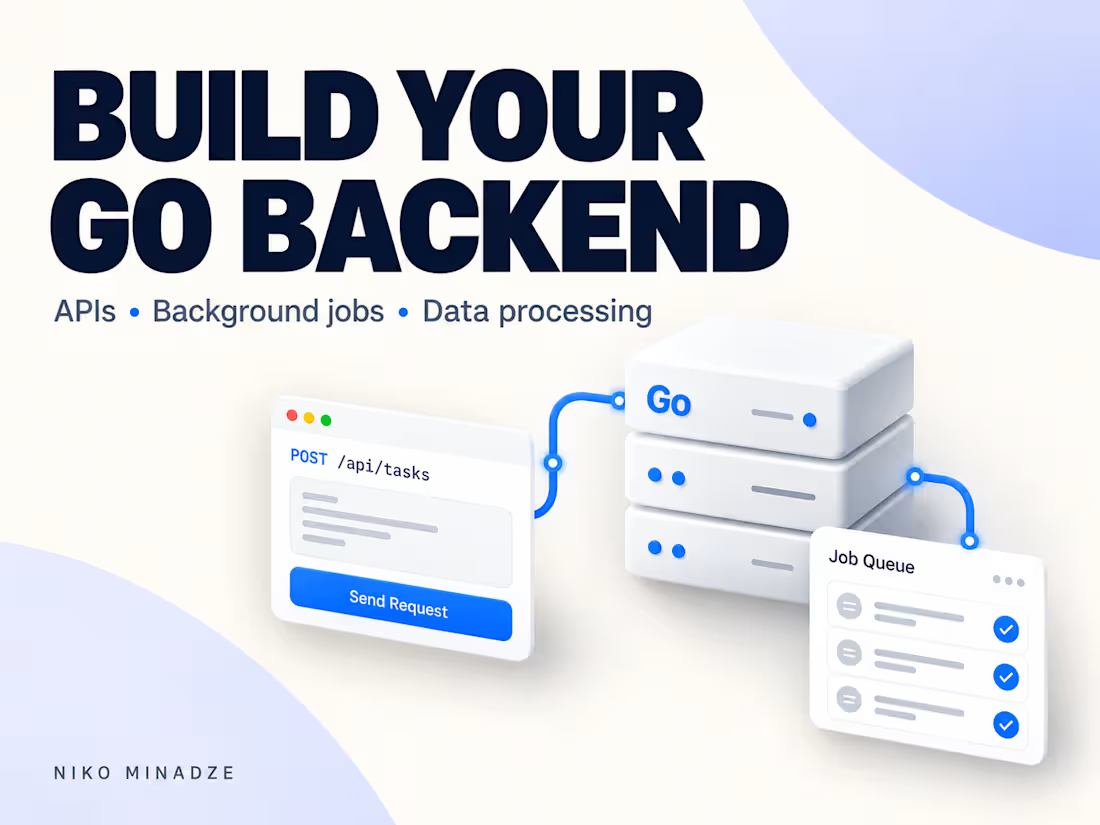
Your app needs a small backend service, or a task should run reliably without making a user wait for it. I build focused Go APIs and background workers around a defined job and a clear input/output contract.
An API might let an existing application create, retrieve and update one kind of record. A worker might process queued imports, synchronise records with one external service, or handle one recurring task.
A small engagement might cover one API resource with up to three related endpoints, or one background worker with one job type. We define the behaviour and dependencies before I quote the implementation. A project needing both can be scoped together.
You receive maintainable Go code, checks of the important success and failure paths, and instructions for running it in your environment.
What is included
Option A: a focused API
One resource with up to three related endpoints.
Request validation and consistent error responses.
One existing data source or external integration.
Integration with an existing authentication mechanism if the endpoints require it.
Tests of the agreed behaviour and example requests.
Option B: a background worker
One worker handling one job type.
One agreed trigger or input mechanism, such as an existing queue or a scheduled command.
One existing data source or external integration.
Defined success and failure handling, including bounded retries where appropriate.
Duplicate-processing controls where required and supported by the destination system.
Tests of the agreed behaviour and an example job or command.
Included with either option
Configuration through environment variables and an example configuration file without secrets.
Useful logs and documented error behaviour.
A README with setup, run and verification instructions.
Source code delivered to your repository, or a new repository under your ownership.
One consolidated round of feedback within the agreed scope.
Corrections for defects introduced by my changes, reported within 14 calendar days of handoff.
Example project scope
The examples above each assume one data source or integration and run instructions for one agreed target environment. I provide a one-time quote after reviewing the data flow, runtime requirements and failure cases. A combined API and worker, or a wider integration, receives a scope and price covering the whole requirement.
Before starting, we define the inputs, outputs, volume assumptions and failure behaviour. If an external service has limits on retries or duplicate prevention, I document those rather than promise guarantees its API cannot support.
A new authentication system, multiple integrations, an admin interface, a distributed processing platform, major data migration and infrastructure provisioning need a separate estimate. Hosting, databases, queues and paid API accounts are provided by you. The agreed delivery includes run instructions for the agreed environment; managed infrastructure setup is separate.
How the work runs
Define the contract. We agree the API endpoints or worker job, example inputs, expected outputs and important failure cases.
Build and check. I implement the service and verify the agreed behaviour against the available data source or integration.
Deliver and explain. You receive the code, tests, example requests or jobs, and practical instructions for running and checking the service.
The five-business-day delivery period starts when the scope, access and necessary integration documentation are ready. Missing credentials, unavailable third-party services or external approvals may move the delivery date.
What I need from you
A description of the task and a few representative inputs and expected outputs.
Repository access if the code belongs in an existing application.
Documentation and test access for the one data source or integration involved.
The intended runtime environment and any existing queue, scheduler or authentication setup.
Expected job volume or request volume, and what should happen when processing fails.
Any existing conventions for logging, configuration and deployment.
FAQs

Contact for pricing
Duration1 week
Tags
GitHub

Go

PostgreSQL

Backend Engineer
Software Engineer
API Developer
Service provided by
Niko Minadze proBangkok, Thailand
- 5.00
- Rating
- 15
- Followers
Build a Go API or background workerNiko Minadze
Contact for pricing
Duration1 week
Tags
GitHub
Go
PostgreSQL
Backend Engineer
Software Engineer
API Developer
Your app needs a small backend service, or a task should run reliably without making a user wait for it. I build focused Go APIs and background workers around a defined job and a clear input/output contract.
An API might let an existing application create, retrieve and update one kind of record. A worker might process queued imports, synchronise records with one external service, or handle one recurring task.
A small engagement might cover one API resource with up to three related endpoints, or one background worker with one job type. We define the behaviour and dependencies before I quote the implementation. A project needing both can be scoped together.
You receive maintainable Go code, checks of the important success and failure paths, and instructions for running it in your environment.
What is included
Option A: a focused API
One resource with up to three related endpoints.
Request validation and consistent error responses.
One existing data source or external integration.
Integration with an existing authentication mechanism if the endpoints require it.
Tests of the agreed behaviour and example requests.
Option B: a background worker
One worker handling one job type.
One agreed trigger or input mechanism, such as an existing queue or a scheduled command.
One existing data source or external integration.
Defined success and failure handling, including bounded retries where appropriate.
Duplicate-processing controls where required and supported by the destination system.
Tests of the agreed behaviour and an example job or command.
Included with either option
Configuration through environment variables and an example configuration file without secrets.
Useful logs and documented error behaviour.
A README with setup, run and verification instructions.
Source code delivered to your repository, or a new repository under your ownership.
One consolidated round of feedback within the agreed scope.
Corrections for defects introduced by my changes, reported within 14 calendar days of handoff.
Example project scope
The examples above each assume one data source or integration and run instructions for one agreed target environment. I provide a one-time quote after reviewing the data flow, runtime requirements and failure cases. A combined API and worker, or a wider integration, receives a scope and price covering the whole requirement.
Before starting, we define the inputs, outputs, volume assumptions and failure behaviour. If an external service has limits on retries or duplicate prevention, I document those rather than promise guarantees its API cannot support.
A new authentication system, multiple integrations, an admin interface, a distributed processing platform, major data migration and infrastructure provisioning need a separate estimate. Hosting, databases, queues and paid API accounts are provided by you. The agreed delivery includes run instructions for the agreed environment; managed infrastructure setup is separate.
How the work runs
Define the contract. We agree the API endpoints or worker job, example inputs, expected outputs and important failure cases.
Build and check. I implement the service and verify the agreed behaviour against the available data source or integration.
Deliver and explain. You receive the code, tests, example requests or jobs, and practical instructions for running and checking the service.
The five-business-day delivery period starts when the scope, access and necessary integration documentation are ready. Missing credentials, unavailable third-party services or external approvals may move the delivery date.
What I need from you
A description of the task and a few representative inputs and expected outputs.
Repository access if the code belongs in an existing application.
Documentation and test access for the one data source or integration involved.
The intended runtime environment and any existing queue, scheduler or authentication setup.
Expected job volume or request volume, and what should happen when processing fails.
Any existing conventions for logging, configuration and deployment.
FAQs
Contact for pricing