
Renato Gaudioso
Senior UX Designer for complex B2B fintech and SaaS.
New to Contra
Renato is building their profile!
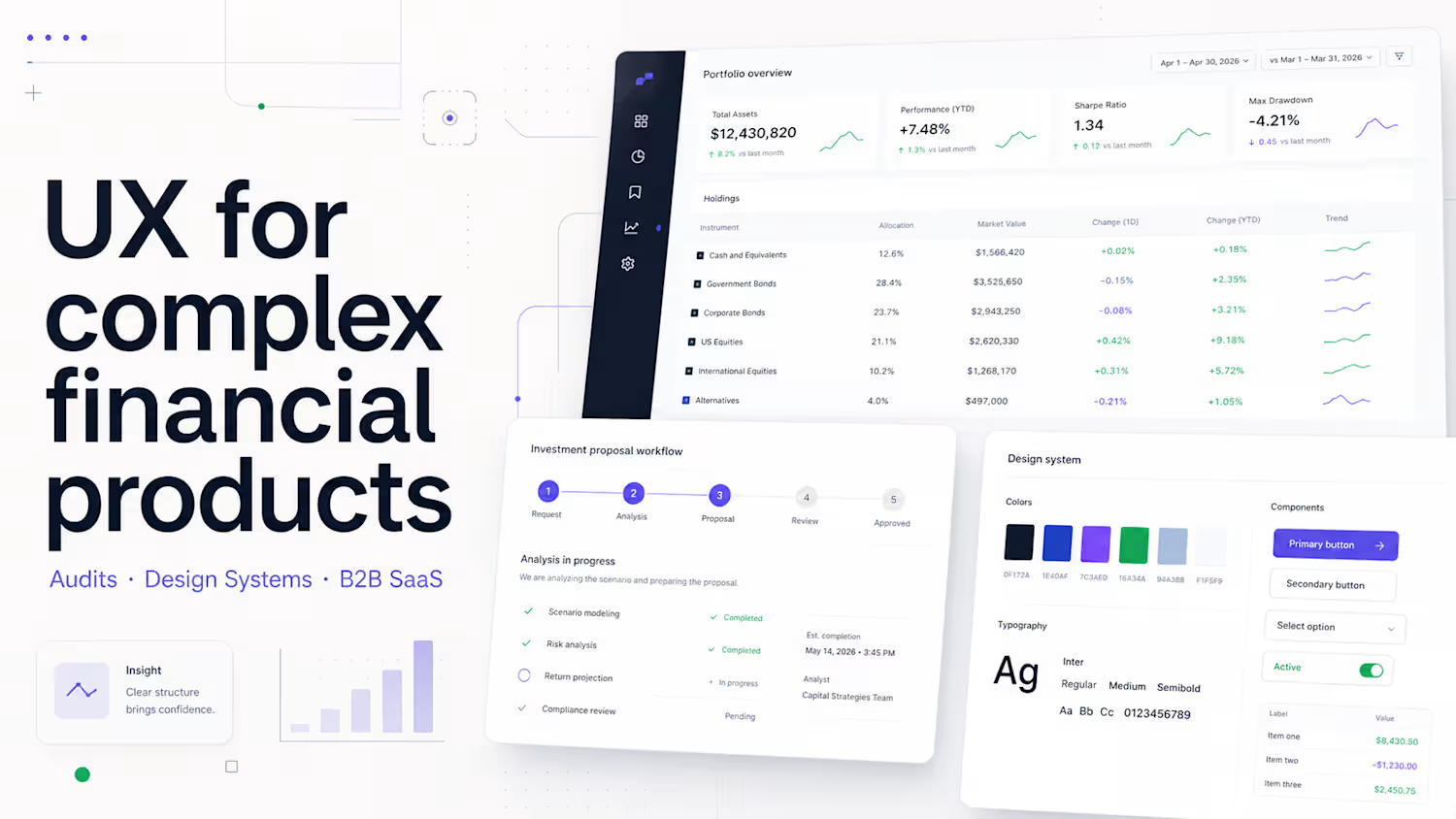
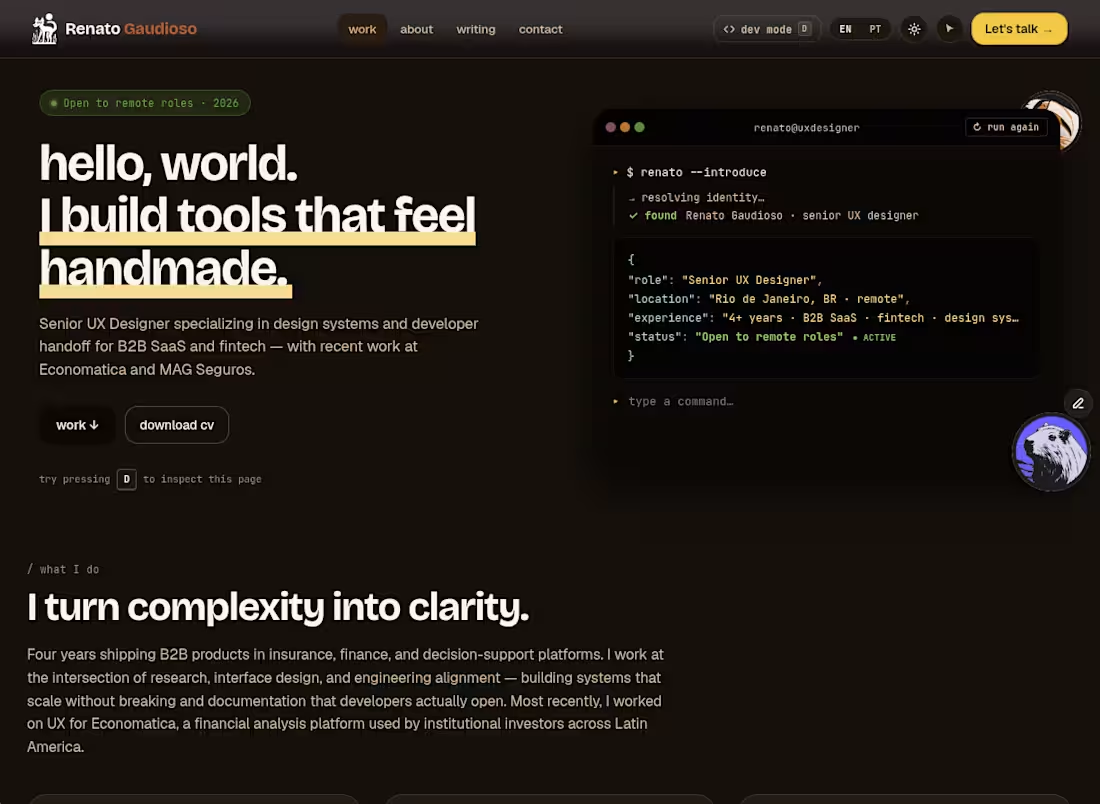
I turned my portfolio into a product lab.
Instead of treating it as a static showcase, I used it as a space to test positioning, narrative, visual perception, and design decisions.
The process combined human feedback, AI agents, benchmarking, Obsidian documentation, and continuous iteration.
AI helped me analyze references, organize hypotheses, and move faster. But the decisions were still mine.
For me, this was the main learning: automation can expand our repertoire, but intention is what gives design its direction.
1
3
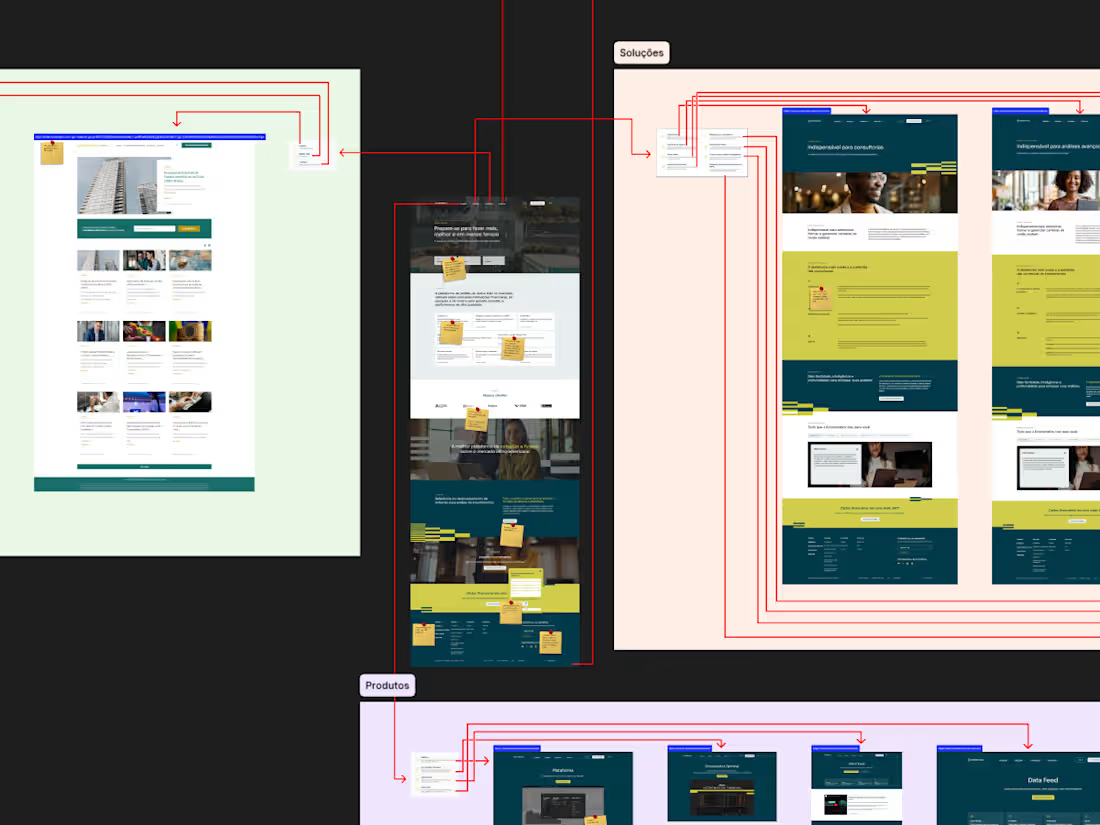
Designing with AI agents inside a real UX workflow
A practical AI-assisted UX process at Economatica: competitor research, website audit, Obsidian documentation, Figma synthesis, and recommendations grounded in human product judgment.
At Economatica, I used Claude agents as research and critique partners to investigate competing financial platforms, review the new website experience, and turn findings into concrete interface and content recommendations. The value was not that AI generated design decisions. The value was that AI expanded the research surface while I remained responsible for prioritisation, product context, and final UX judgment.
The challenge
Economatica operates in a dense financial software category, where credibility, precision, and trust matter. The new website had to explain products, integrations, APIs, data workflows, and use cases without becoming generic fintech marketing. The risk was a site that looked polished but still carried avoidable UX and content issues: inconsistent terminology, repeated imagery, unclear affordances, missing visual support, and page behaviours that could weaken confidence.
What changed
This work created a more systematic way to move from broad AI-assisted exploration to actionable UX critique. It helped separate category conventions from opportunities for clearer Economatica messaging, and it made the designer's judgment more visible: what mattered to financial users, which patterns were worth borrowing, and which recommendations actually fit the product.
1
9
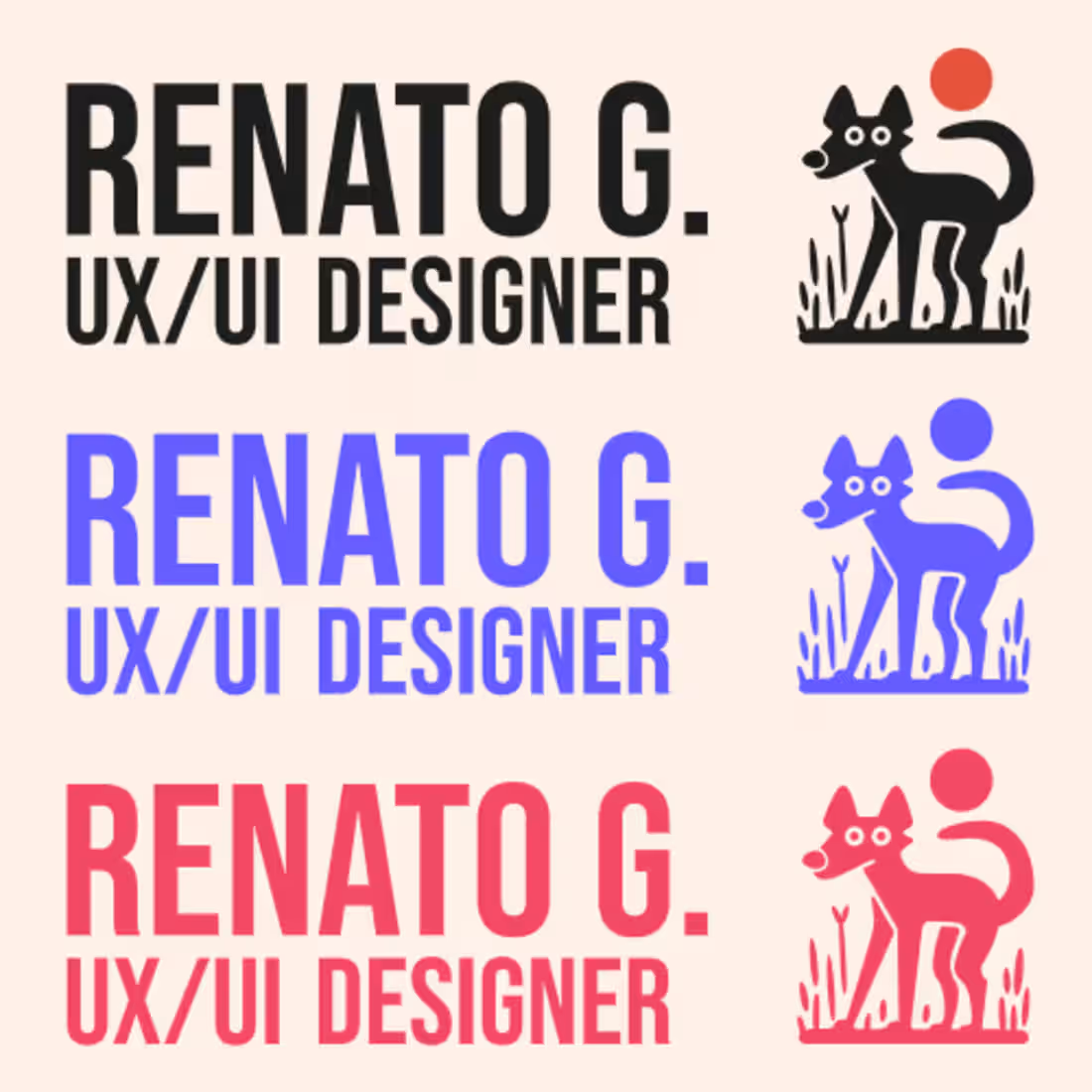
Using AI as a creative accelerator — not a replacement
A weekend experiment testing ChatGPT and Midjourney as tools in a logo design process. The question wasn't whether AI could generate something usable — it can. The question was: at what point does the designer stop designing?
AI quickly became useful in design, especially for references and fast iteration. I combined ChatGPT, Midjourney, Figma and Illustrator to create a single logo, and documented each step.
The brief
A personal logo that felt Brazilian without being a cliché. Enough texture to feel crafted, enough restraint to work at favicon size.
Takeaway
AI accelerates ideation and gives you references. Combined with traditional design tools, it improves both creativity and efficiency. It does not replace taste.
1
14
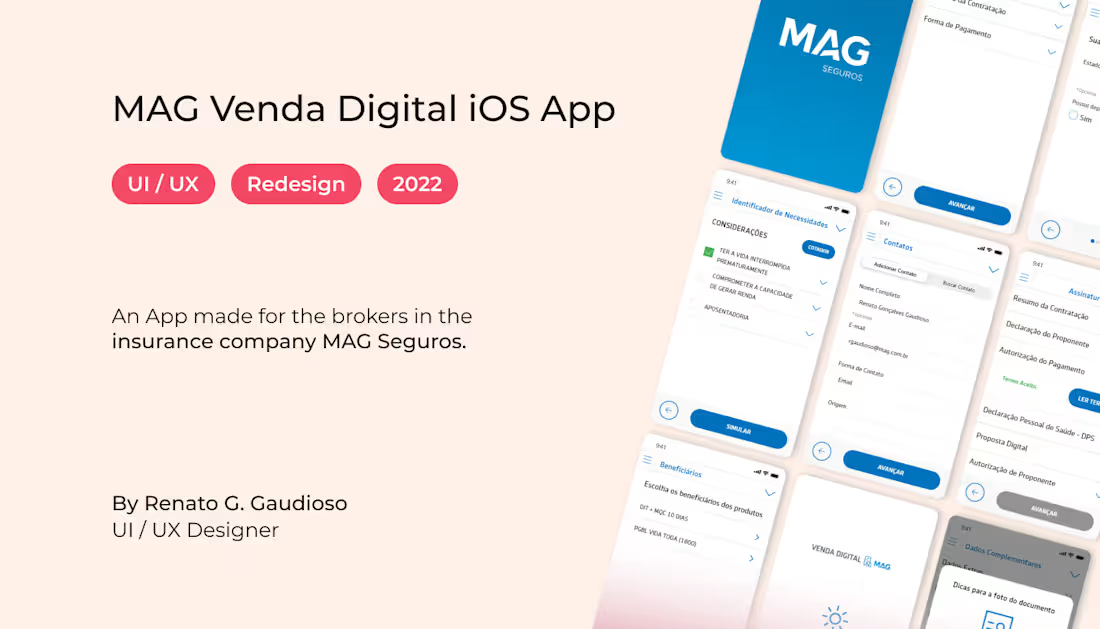
Mobile-first redesign of an insurance sales app for hundreds of brokers
Cleaner navigation, modern iOS patterns, and a flow rebuilt around how brokers actually sell — not how the system was originally structured.
MAG Venda Digital supports insurance brokers in organising and managing their sales processes. As user needs evolved and mobile usage grew, we identified a need for a complete redesign of the iOS version — improving usability, aligning with current UI patterns, and delivering a cleaner, more modern experience.
The challenge
The original app had a confusing navigation structure, an outdated UI, and low engagement from users. On top of that, mobile usage was growing and users expected a smoother, faster experience. Core challenge: redesign the app with a modern look while maintaining familiarity and trust for existing users.
Impact
The redesign delivered measurable improvements to the broker experience — faster task completion, higher satisfaction scores in post-launch surveys, and positive feedback from both brokers and internal stakeholders.
1
16