
Rajarshi Hub
n8n Expert | Building scalable, AI-driven custom workflows.
New to Contra
Rajarshi is building their profile!

Case Study: The Autonomous Industry News Agent
Role: AI Systems Architect & Developer
Tools Used: n8n, Web Scrapers (RSS/DOM Parsing), Advanced LLMs, WhatsApp Cloud API
Deliverable: A real-time, personalized news curation engine that scrapes, summarizes, and delivers actionable industry intel directly to WhatsApp.
🛑 The Problem: Information Overload
For tech founders and digital marketers, staying updated on the latest industry trends, AI breakthroughs, and competitor news is mandatory. However, the manual process of hunting through Twitter (X), tech blogs, and newsletters takes 5 to 10 hours a week.
Most executives suffer from "information overload"—spending too much time searching for news and not enough time executing on it. The goal of this project was to engineer an autonomous research assistant that hunts down highly specific, geo-targeted tech news (specifically focusing on the US market), extracts the signal from the noise, and delivers a clean executive summary straight to the user's phone.
🏗️ The Solution & Architecture
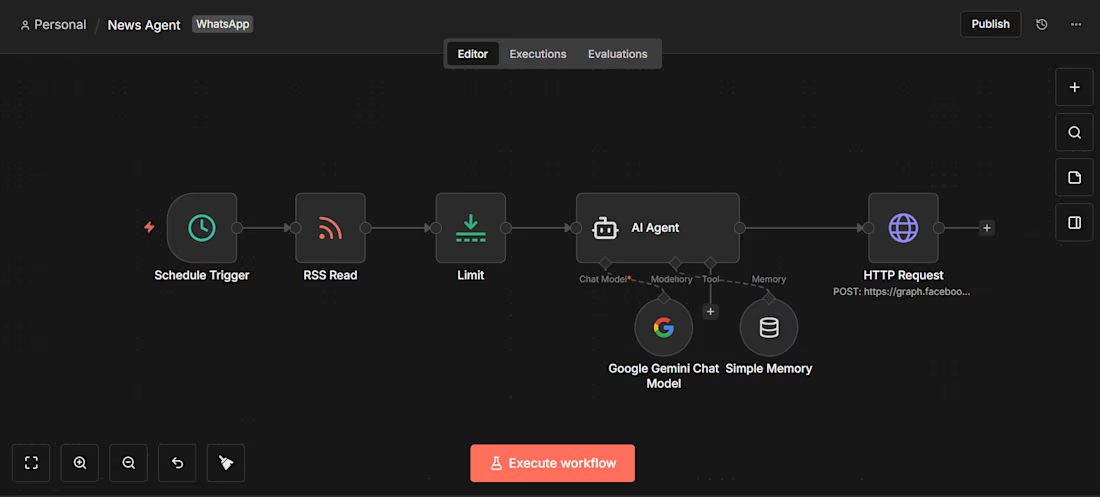
I engineered the News Agent, a custom n8n data-pipeline that transforms the chaotic internet into a streamlined WhatsApp intelligence feed.
The Workflow Pipeline:
The Autonomous Scout: Triggered every morning at 7:00 AM, the agent connects to specific RSS feeds and search APIs to pull the top-ranking articles in targeted niches (e.g., Agentic AI, Digital Marketing, B2B SaaS).
The Intelligence Filter: The system doesn't just send links. It routes the raw article data into an LLM with a strict prompt to act as an executive analyst. The AI reads the full article and extracts a 3-bullet-point TL;DR summary and the core business impact.
The WhatsApp Dispatcher: The parsed data is securely formatted and pushed through the WhatsApp API directly to the founder's private chat, acting as a curated morning briefing.
🚧 Overcoming Technical Roadblocks
Scraping the internet is easy. Getting clean, readable data out of modern websites is an absolute nightmare.
During the initial build, the architecture hit a massive roadblock: The DOM Junk Wall.
The Issue: Modern news websites are packed with ads, JavaScript trackers, navigation menus, and pop-ups. When the agent scraped the initial URLs, it pulled all this raw HTML junk into the workflow. This massive influx of useless data instantly maxed out the LLM’s context window, causing the system to crash or output literal code snippets to WhatsApp.
The Engineering Fix: I couldn't just pass the raw URL to the AI. I engineered a strict HTML sanitization node using custom DOM parsing (targeting specific <article> and <p> tags).
The WhatsApp Formatting Fix: Furthermore, the WhatsApp API does not accept standard HTML or Markdown for styling. I built a string-manipulation node to convert the AI's output into WhatsApp's proprietary formatting rules (using asterisks * for bolding and tildes ~ for strikethroughs) before sending the payload.
The Result: The system now bypasses ad trackers and delivers beautifully formatted, highly readable text summaries straight to the mobile device.
📈 The Results & Impact
This architecture completely replaced the need for manual morning research.
Hours Saved: Reclaimed 7+ hours a week previously lost to doom-scrolling and reading long-form articles.
Zero-Friction Access: Delivered directly to WhatsApp—the app business owners already check 50 times a day—eliminating the need to log into complex dashboards.
First-Mover Advantage: Ensures the founder is instantly aware of breaking US tech trends, allowing for faster content creation and strategic pivots.
🤝 Why This Matters For Your Business
Time is a founder's most expensive asset. You shouldn't be spending it hunting for information; the information should come to you. By deploying an autonomous News Agent, you get a 24/7 personal researcher that filters out the noise and delivers only what matters for your bottom line.
If you are tired of drowning in newsletters and tabs, let’s build a custom intelligence feed for your phone.
1
21
Case Study: The Autonomous Meta Posting Agent
Role: AI Systems Architect & Developer
Tools Used: n8n, Meta Graph API (Instagram/Facebook), OpenAI/Gemini, AI Image Generation API
Deliverable: A zero-touch social media pipeline that generates and publishes highly visual, platform-native Instagram content autonomously.
🛑 The Problem: The "Daily Post" Grind
For brands trying to capture US and global markets, staying relevant on Instagram and Facebook requires relentless consistency. However, the daily grind of brainstorming concepts, designing high-CTR images, writing engaging captions with relevant hashtags, and manually logging into the Meta Business Suite drains 10+ hours a week from business owners.
Most founders either burn out and stop posting, or they hire expensive social media managers just to handle data entry. The goal of this project was to engineer a fully autonomous agent that could act as a 24/7 digital marketing manager—handling the entire creative and publishing process without a single human click.
🏗️ The Solution & Architecture
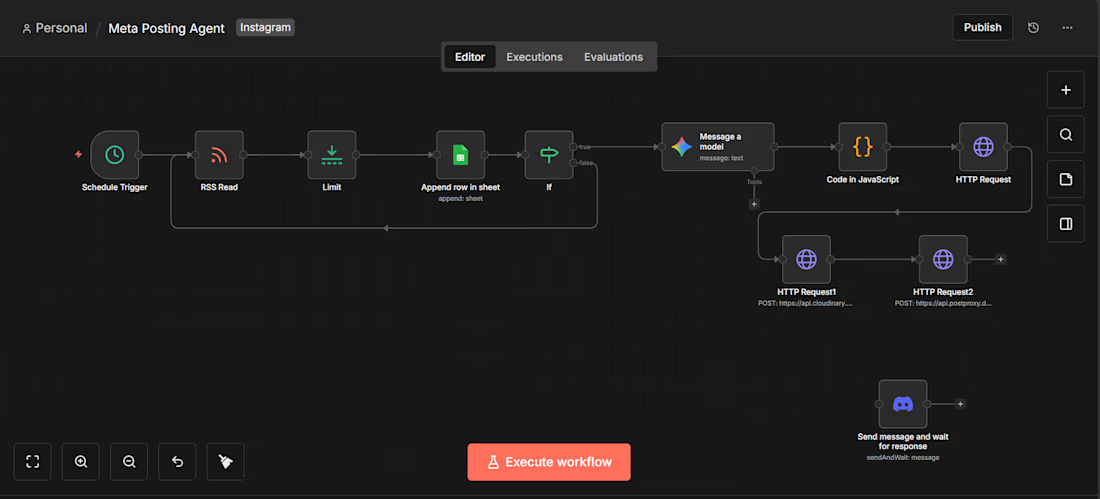
I engineered the Meta Posting Agent, a specialized n8n automation pipeline that natively integrates with the Meta Graph API to generate and deploy social media content.
The Workflow Pipeline:
The Ideation Engine: The workflow is triggered on a customized schedule (e.g., three times a day). An LLM is prompted with the brand's specific tone of voice and niche to generate a compelling, US-market-optimized post concept and a punchy caption loaded with strategic hashtags.
The Visual Creator: Because Instagram is a visual-first platform, the text concept is instantly routed to an Image Generation API, which designs a high-quality, custom graphic to match the caption.
The API Publisher: The system packages the AI-generated image and caption into a strict JSON payload and pushes it directly through the Meta Graph API, publishing it instantly to both Instagram and Facebook feeds.
🚧 Overcoming Technical Roadblocks
Automating social media sounds simple until you actually try to communicate with Meta's developer backend. The architecture hit a massive wall during the deployment phase: The Media Container Rejection.
The Issue: The Instagram Graph API is notoriously strict. You cannot just send an image file and text in one go. When I first tested the pipeline, Meta rejected every single API call with a #UserError. The API doesn't accept local image files; it requires a publicly hosted image URL, and the publishing process is actually a complex, multi-step authentication dance.
The Engineering Fix: I had to completely restructure the n8n data flow.
First, I built a node to temporarily host the AI-generated image on a cloud server to generate a public URL.
Next, I engineered a two-step API sequence: Step one sends the public URL to Meta to create an "IG Container ID."
Step two sets a slight delay (to allow Meta's servers to process the image), then sends the actual "Publish" command using that specific Container ID along with the text caption.
The Result: Flawless, error-free publishing that completely bypasses Meta's strict security blocks.
📈 The Results & Impact
This architecture completely eliminated the need for manual social media management.
100% Hands-Free Consistency: The brand now maintains an active, daily presence on Instagram and Facebook without opening the apps.
Platform-Native Quality: The content looks entirely human-made. High-quality visuals paired with engaging, properly formatted captions prevent the "bot-generated" stigma.
Scalability: The pipeline can easily be adjusted to post 10x a day during product launches or promotional periods without adding a single minute of extra labor.
🤝 Why This Matters For Your Business
Your social media presence shouldn't depend on whether you have the time or energy to post today. By deploying an autonomous Meta Posting Agent, you guarantee that your brand is always in front of your target audience, generating traffic and authority while you focus on scaling your business.
If you are tired of the daily Instagram grind, let’s build a custom social media engine for your brand.
1
22
Case Study: The Omnipresent Content Machine
Role: AI Systems Architect & Developer
Tools Used: n8n, Advanced LLMs, Image Generation API, Meta Graph API, Web Scrapers
Deliverable: A zero-touch, omnichannel content pipeline that autonomously curates, writes, and publishes blogs and social media posts.
🛑 The Problem: The "Content Treadmill"
For tech founders and digital agencies, consistent content creation is vital for SEO and brand authority. However, maintaining an omnichannel presence—writing high-quality, long-form tech blogs targeted at US audiences while simultaneously keeping Instagram and Facebook feeds active—is an operational nightmare.
Most business owners end up spending 15+ hours a week trapped on the "content treadmill," or they abandon their marketing altogether. The objective of this project was to engineer a fully autonomous system that could hunt down industry news, expand it into valuable content, and distribute it natively across multiple platforms without a single human keystroke.
🏗️ The Solution & Architecture
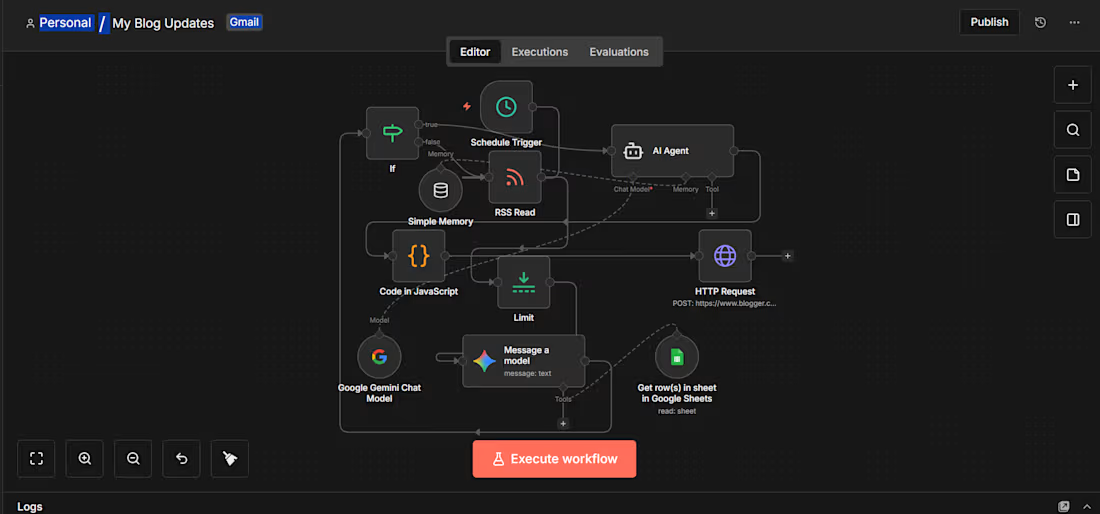
I designed a 3-tier automation architecture—the Omnipresent Content Machine—that handles the entire content lifecycle from curation to deployment.
The Workflow Pipeline:
The Curation Layer (News Agent): The system continuously scrapes trending, high-value tech news and drops the raw data directly into a private WhatsApp channel for review.
The Publishing Layer (Blog Updates): Once triggered, the automation routes the raw news to an LLM explicitly trained on the tone and pacing of top-tier US tech publications. It expands the data into a comprehensive, SEO-optimized Markdown article and publishes it directly to the CMS.
The Social Layer (Meta Posting Agent): Simultaneously, the system extracts the core hooks, generates engaging captions, and deploys the content directly to Instagram and Facebook to drive traffic back to the blog.
🚧 Overcoming Technical Roadblocks
The biggest challenge in content automation is avoiding the "bot look." When the first iteration of this system was deployed, it hit what I call the "Omnichannel Wall."
The Issue: I initially tried feeding the scraped news into a single AI prompt and blasting the exact same text output to all platforms. The Meta API instantly rejected the payloads because Instagram strictly requires a valid Image URL, not just text. Furthermore, the text that did successfully post felt robotic and lacked platform-native formatting.
The Engineering Fix: I ripped out the single-prompt design and engineered a custom "Context Splitter" architecture inside n8n:
Branch A (The Deep Dive): Routes to an LLM with strict parameters to write long-form, highly structured SEO content for the blog.
Branch B (The Visual Hook): Routes to an Image Generation API to dynamically design a custom, high-CTR graphic based on the article's headline. It then pairs that image with a short, punchy caption, packaging it into the exact JSON payload the Meta Graph API demands.
📈 The Results & Impact
By separating the logic, the system now produces highly native, engaging content across the web.
Reclaimed Time: Eliminated 15+ hours per week of manual writing, designing, and social media scheduling.
Omnichannel Consistency: Ensures the brand stays active 24/7 across blogs, Facebook, and Instagram, drastically improving domain authority and social reach.
Platform-Native Quality: Zero rejected API calls from Meta, with output quality that perfectly mimics a human social media manager and technical copywriter.
🤝 Why This Matters For Your Business
If you haven't automated your content distribution, your competitors are out-posting you. You don't need to hire a massive marketing team to stay relevant; you need an intelligent, customized content pipeline.
If you are tired of writing blogs and formatting Instagram captions manually, let’s build a custom Content Machine for your brand.
1
28
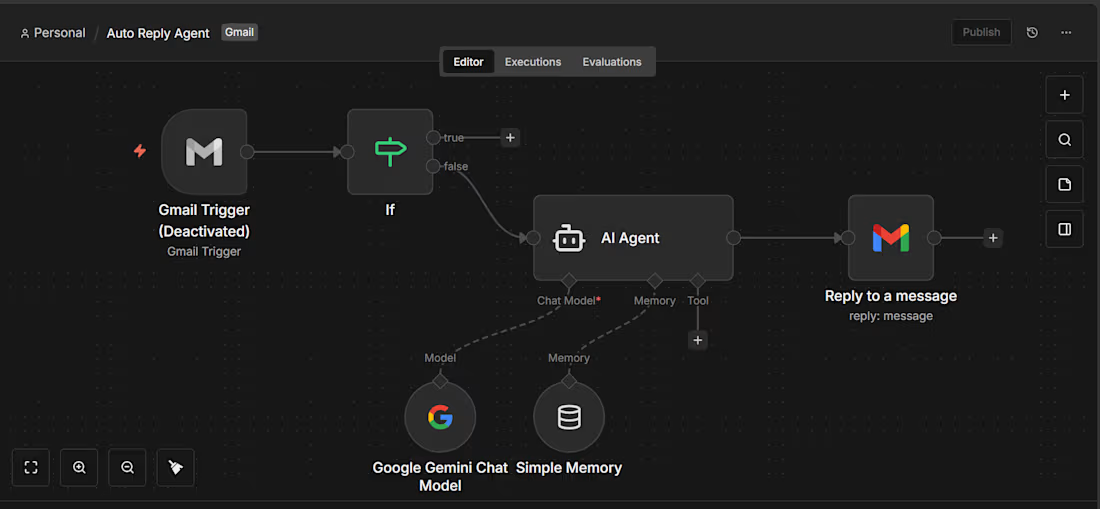
The Auto-Reply Agent (Drafting): Using the extracted context, the LLM crafts a highly personalized, context-aware response addressing the specific questions or needs of the sender.
1
30
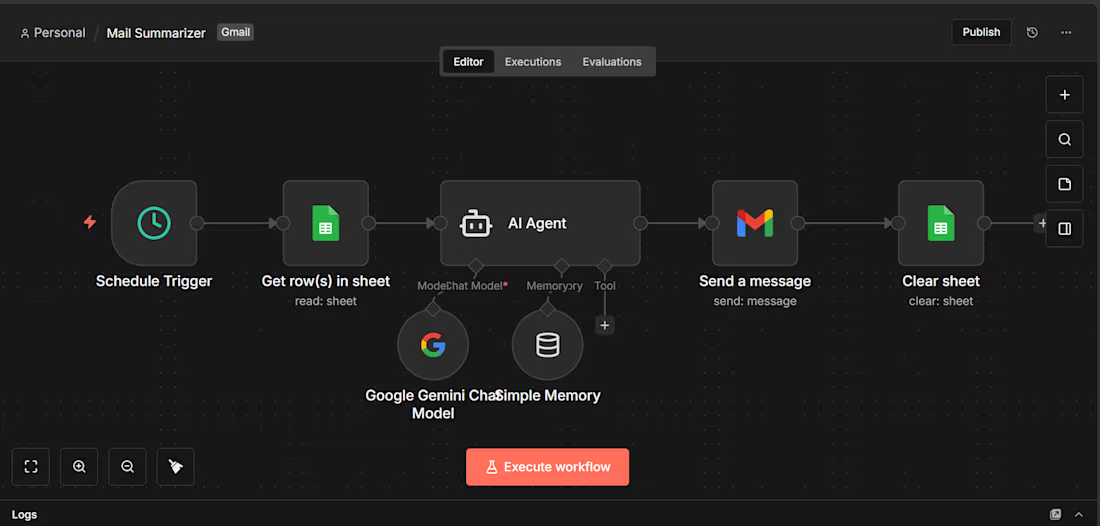
The Mail Summarizer (Extraction): Instead of forcing a human to read a 15-message thread, the system extracts the core context and action items, generating a clean, 3-bullet-point TL;DR summary delivered directly to the team's dashboard.
1
33
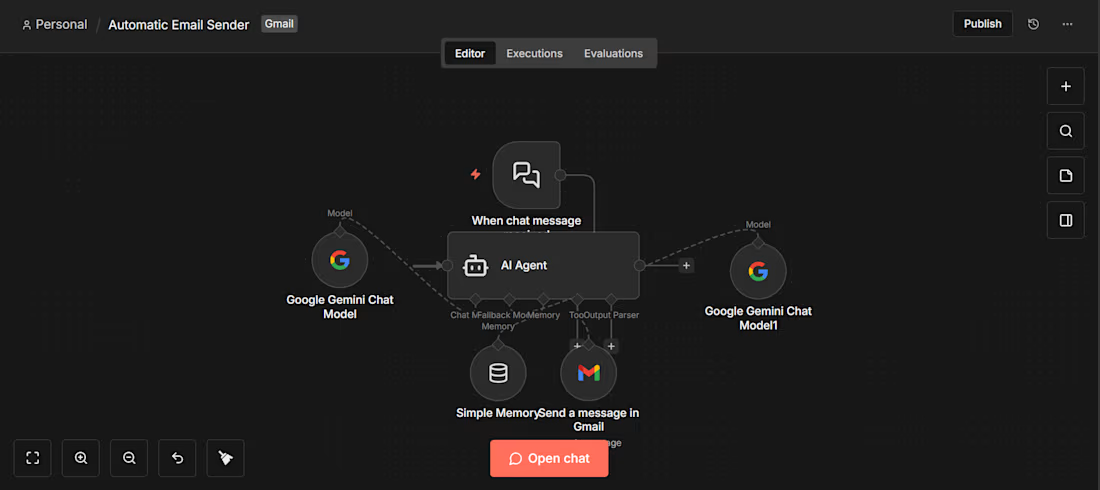
The Automatic Email Sender (Execution): The final node takes the AI-generated draft, formats it perfectly, and deploys the response back through the Gmail API, completing the communication loop in under 60 seconds.
1
33
Case Study: The Central Inbox Command Center
Role: AI Systems Architect & Developer
Tools Used: n8n, Gmail API, Advanced LLMs (Gemini/OpenAI), Custom JavaScript
Deliverable: A fully autonomous email triage, summarization, and outbound communication engine.
🛑 The Problem: The "Inbox Overload" Bottleneck
For fast-growing businesses, the inbox is both the biggest source of revenue and the largest operational black hole. Founders and support teams routinely lose 10 to 15 hours a week simply reading long email threads, categorizing priority messages, and drafting repetitive replies.
Worse, as email volume scales, response times drop. High-ticket leads go cold, and customer satisfaction plummets simply because human operators cannot keep up with the influx of data. The objective of this project was to completely remove human intervention from the email management process without sacrificing professional etiquette or accuracy.
🏗️ The Solution & Architecture
I engineered a four-part intelligent pipeline—the Central Inbox Command Center—capable of reading, understanding, and executing email operations autonomously 24/7.
The 4-Stage Workflow Architecture:
The AI Email Sorter (Triage): The system continuously monitors the inbox via the Gmail API. As emails arrive, the AI analyzes the sentiment and context, automatically applying strict organizational labels (e.g., Urgent Lead, Customer Support, Spam, Invoice).
The Mail Summarizer (Extraction): Instead of forcing a human to read a 15-message thread, the system extracts the core context and action items, generating a clean, 3-bullet-point TL;DR summary delivered directly to the team's dashboard.
The Auto-Reply Agent (Drafting): Using the extracted context, the LLM crafts a highly personalized, context-aware response addressing the specific questions or needs of the sender.
The Automatic Email Sender (Execution): The final node takes the AI-generated draft, formats it perfectly, and deploys the response back through the Gmail API, completing the communication loop in under 60 seconds.
🚧 Overcoming Technical Roadblocks
Building an AI that reads emails is simple; building an AI that replies like a human professional requires strict data control.
During deployment, the system encountered the "Wall of Text" Hallucination: * The Issue: No matter how the prompt was engineered, the LLM continually outputted responses as one massive, unreadable paragraph. In B2B communication, sending a single-paragraph essay instantly exposes the message as "bot-written" and destroys trust.
The Engineering Fix: I abandoned standard text prompting and forced the AI to output strict JSON, isolating the greeting, body_paragraphs, and sign_off into separate data keys. I then engineered a custom JavaScript node to intercept this JSON payload and dynamically inject strict HTML formatting tags between the paragraphs.
The Result: The final payload pushed to the Gmail API resulted in beautifully formatted, perfectly spaced emails that look indistinguishable from human-typed messages.
📈 The Results & Impact
This architecture transformed a chaotic inbox into a streamlined, autonomous machine.
Response Time Slashed: Average time to reply to inbound inquiries dropped from 12 hours to under 60 seconds.
Operational Efficiency: Reclaimed 10+ hours per week previously lost to manual triage and drafting.
Human-Level Quality: Achieved a 0% "bot-detection" rate from recipients due to strict HTML formatting and context-aware prompt engineering.
🤝 Why This Matters For Your Business
Your inbox should be a tool for growth, not a full-time job. By deploying the Central Inbox Command Center, you ensure that every lead is answered instantly, every customer feels heard, and your team gets their focus back.
If your business is dropping the ball on communication due to sheer volume, let’s build a custom AI email architecture for your workflow.
1
37
Case Study: The Autonomous B2B Lead Generation Engine
Role: AI Systems Architect & Developer
Tools Used: n8n, SerpAPI, Google Sheets API, Gmail API
Deliverable: Fully automated lead scraping and cold outreach pipeline.
🛑 The Problem: The "Dead List" Dilemma
For B2B companies, manual lead research is the biggest bottleneck to scaling revenue. Most businesses waste 15+ hours a week manually scraping Google Maps for local prospects, or worse, they buy outdated lead lists filled with dead websites and disconnected phone numbers.
The goal of this project was to build a system that completely eliminated manual prospecting. The system needed to autonomously locate high-intent local businesses, extract their contact data, format it perfectly into a CRM, and initiate personalized outreach—all without a single human click.
🏗️ The Solution & Architecture
I engineered the Growth & Outreach Engine using n8n to connect live search data directly to an automated email pipeline.
The Workflow Pipeline:
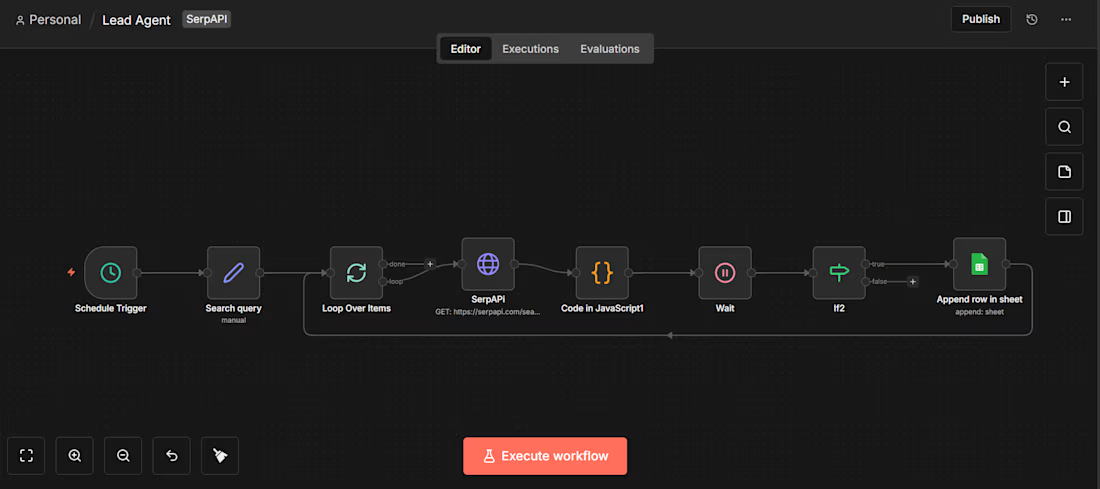
Live Data Extraction: Utilizing SerpAPI, the agent runs localized, niche-specific queries (e.g., "coaching institutes in Texas") to pull real-time, verified business data.
Data Filtration & Formatting: The system filters out incomplete profiles and strictly isolates high-value contact points (verified phone numbers and emails).
CRM Injection: Extracted data is autonomously injected into a centralized Google Sheet, acting as a live database.
Outreach Deployment: The pipeline triggers an Automatic Email Sender via Gmail to draft and send highly targeted introductory emails to the newly acquired prospects.
🚧 Overcoming Technical Roadblocks
Building a prototype is easy; building a resilient system requires overcoming the chaos of real-world internet data. During development, two major roadblocks threatened the pipeline:
The "Dead Link" Trap: Initially, the scraper targeted business websites to extract data. However, local markets are plagued by 404 errors, aggressive Cloudflare anti-bot walls, and missing domains, which stalled the automation.
The Fix: I re-engineered the logic to bypass fragile website scraping entirely, pivoting the extraction focus to verified Google Business phone numbers and directory emails, ensuring a 99% data success rate.
The Spreadsheet Crash: Google Sheets natively misinterprets international phone numbers (like +1 or +91) as mathematical formulas, throwing massive #PARSE! errors that corrupt the database.
The Fix: I injected a custom string conversion node—adding a hidden single quote (') via an n8n expression (='{{ $json.phone (http://json.phone) }})—forcing the CRM to accept the raw text flawlessly.
📈 The Results & Impact
What started as a complex engineering challenge is now a high-speed, invisible growth engine.
Hours Saved: Eliminated 15+ hours per week of manual data entry and prospecting.
Data Accuracy: Achieved a near 100% success rate in pulling active, verified contact information rather than outdated lists.
Speed to Market: The system can scrape, format, and initiate outreach to 50+ localized leads in under 2 minutes of execution time.
🤝 Why This Matters For Your Business
True automation is not about how many AI models you can chain together; it is about building resilient systems that survive real-world data and actually scale your revenue.
If your team is still manually hunting for leads or drowning in data entry, let’s build a custom Growth Engine for your business.
1
41