parth deshmukh
aiml guy with keen interest in finance e-commerce and energy
New to Contra
parth is building their profile!
Every morning before markets open, banks simulate the apocalypse.
I tried to reverse-engineer it. In 48 hours.
The tools that actually get risk right, Bloomberg Terminal, RiskMetrics, BlackRock (https://www.linkedin.com/company/blackrock/)'s Aladdin, cost anywhere from $25,000 to $300,000 a year. And that's before you hire the quant team to run them.
So what does everyone else do?
They open Excel. They pull data that's months old. They calculate risk on assumptions that made sense in 2019 and hope the market hasn't changed too much since then. No live sentiment. No stress testing. No machine learning. Just a number on a spreadsheet that gives you false confidence while the market moves in real time.
The brutal truth is that the gap between institutional risk management and everyone else isn't a feature gap. It's a survival gap. Small funds, retail investors, and early-stage treasury teams are making million-dollar decisions with tools that weren't built for the market they're operating in today.
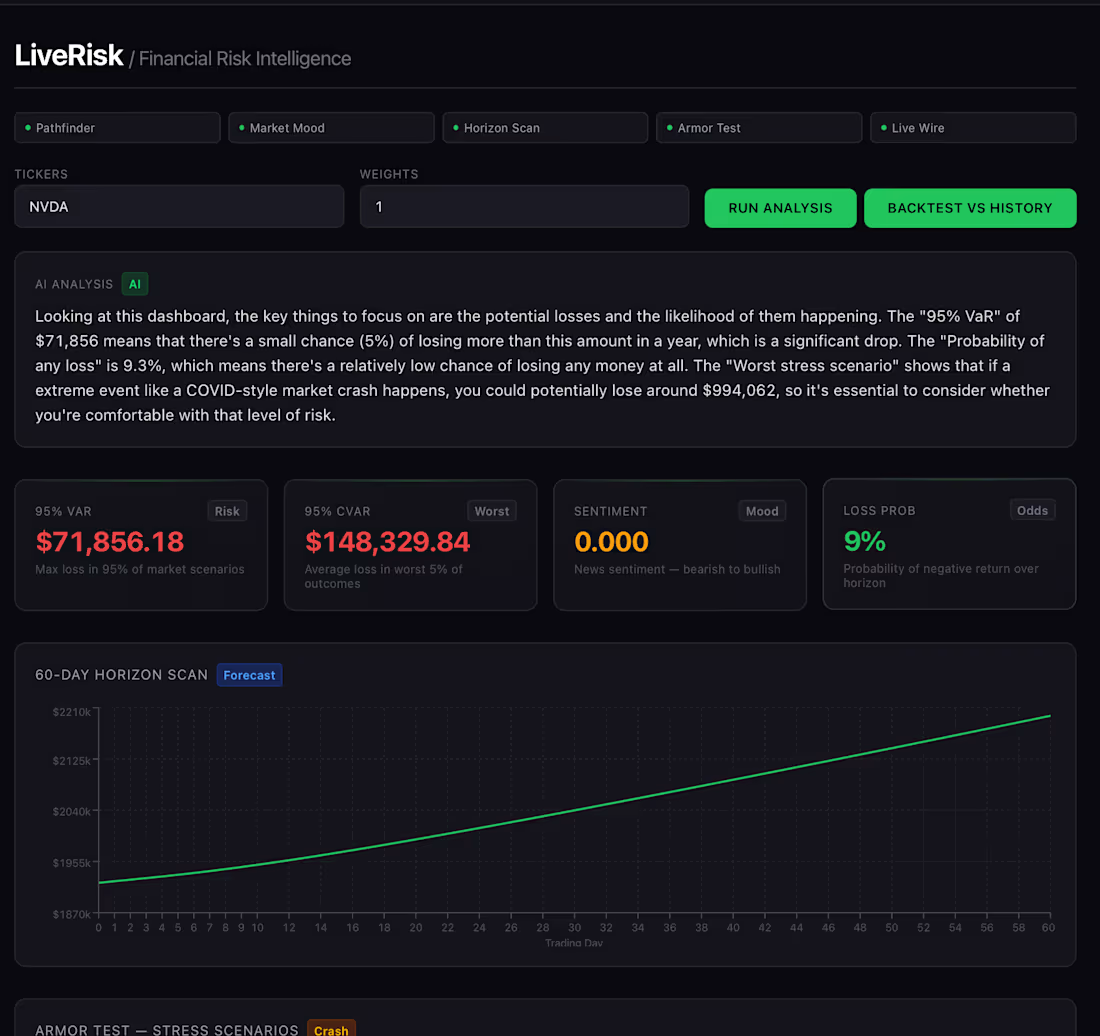
🚀 So I built LiveRisk.
1) Models every asset moving together, because when markets crash, nothing moves in isolation
2) Runs 10,000 simulated futures, finds the worst 5%. That number is your VaR(value at risk), what Goldman calculates every morning before trading starts
3) LSTM neural network forecasts the next 60 days based on how markets actually behave
On the stress tests, why does 2008 and COVID still matter?
Markets have memory. Overleveraged positions rebuild quietly. A virus, a war, a single rate decision can wipe 30% off a portfolio in weeks. Stress testing isn't about predicting which disaster comes next. It's about asking one question before it does:
"If something this bad hit today, would my portfolio survive it?"
LiveRisk runs five scenarios, each modeled on a real period where markets broke differently, a credit collapse, a pandemic shock, a rate spiral, a bubble bursting, a slow economic grind. Five shapes of disaster. Because risk never comes from one direction.
The project still has rough edges I'm actively fixing, and I'll be documenting every part of that process in this series, the math, the failures, and what it looks like when it's fully done.
If you want to follow something being built in real time, this is it.
Follow along. More coming this month.
1
25