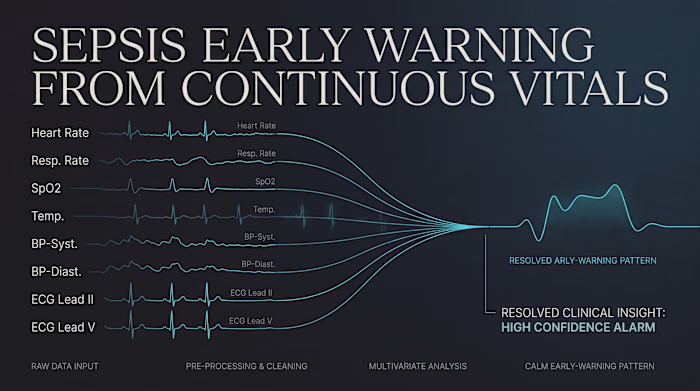
Sepsis Early Warning From Continuous Vitals

Venkatesh Shivandi
The challenge
Standard bedside sepsis scores can identify patients late. The question was whether continuously collected bedside signals could provide an earlier, broadly available warning.
What I did
I analyzed 1,552,210 hourly clinical readings across 43 measures. Because 27 measures were more than 90% incomplete, I removed them rather than impute unreliable data. I then compared 6 model types and narrowed the system to 8 continuously available inputs.
Result
1,552,210 hourly readings processed
43 clinical measures evaluated
8 inputs selected for an every-bed deployment path
Constraints
The result is intended to prioritize patients for review, not act as an autonomous alarm. It was built on one public, de-identified ICU dataset and needs external validation.
Like this project
Posted Sep 2, 2026
Built a sepsis early-warning approach from 1.55M clinical readings, reducing 43 measures to 8 continuously available inputs.