
Reflexvif — autonomy with a budget for GitLab agents
Agents can already write code. What stops teams from letting them ship: how far can they go alone, and how do we know they stayed inside the lines?
What I built
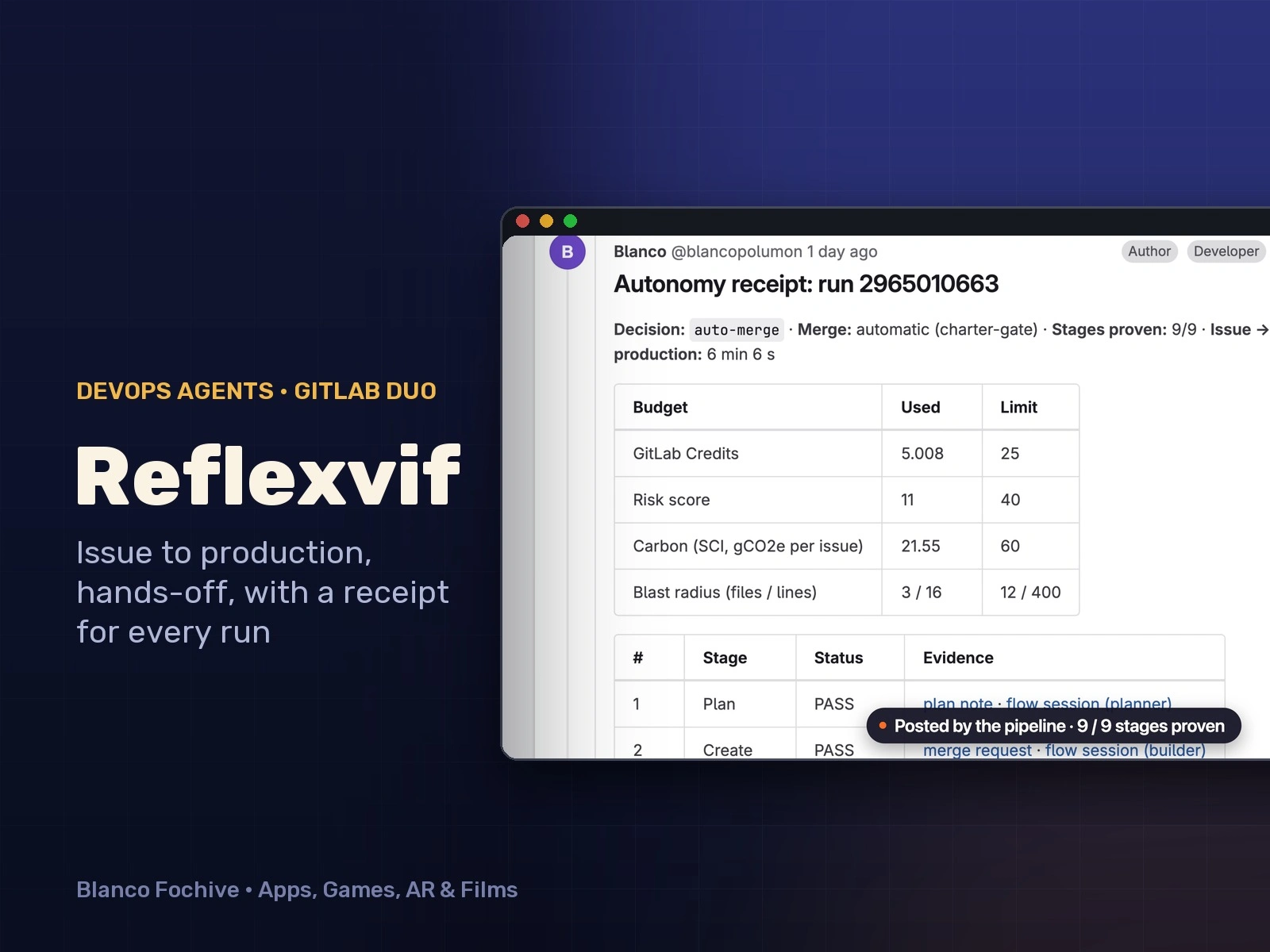
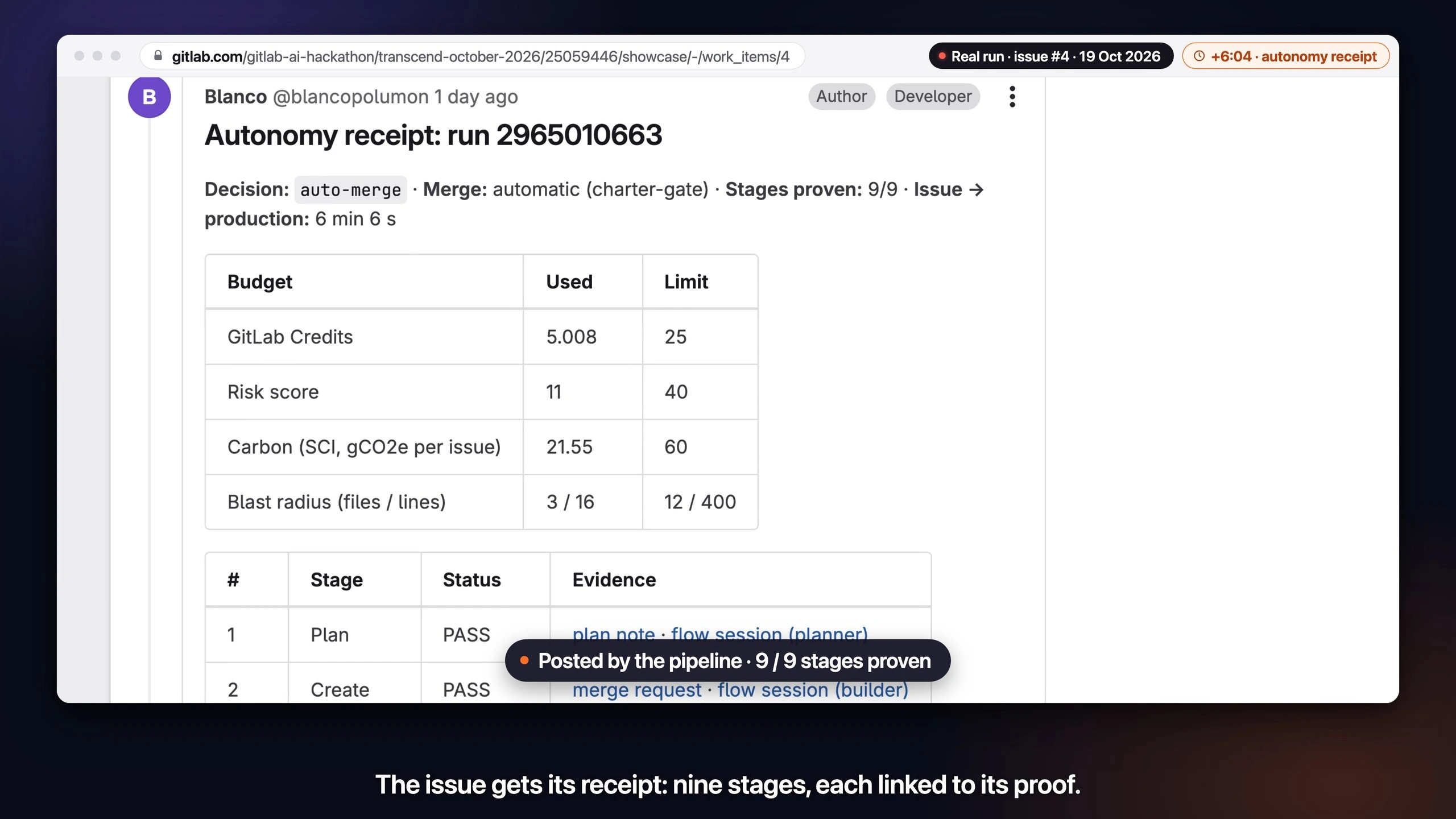
• A written contract, CHARTER.yml, with four budgets: GitLab Credits, a deterministic risk score, carbon per issue, and the exact paths an agent may change
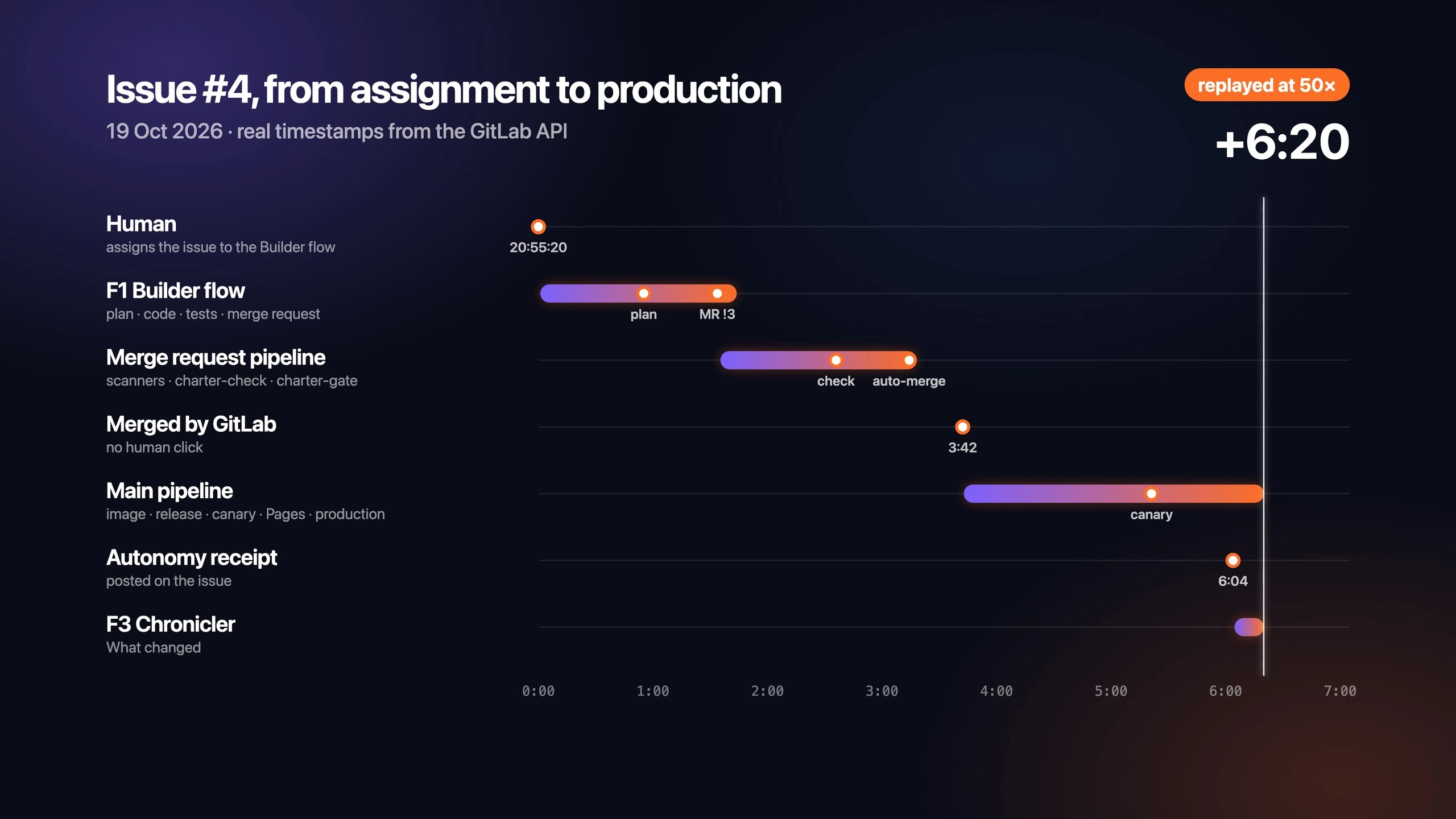
• Three GitLab Duo flows: Builder (issue to merge request), Medic (repairs failing pipelines), Chronicler (plain-language "What changed" note)
• A pipeline gate that reads the contract from the target branch, so a change cannot raise its own budget
• An autonomy receipt on every issue: nine lifecycle stages, each linked to its proof, plus a public run registry
Result
• Real run: issue to production in 6 min 6 s, no human action after the assignment, receipt 9/9
• Medic repaired a deliberately broken merge request in about 3 minutes; a change to a protected path was escalated and nothing shipped
• Built for the GitLab "Life After Code" hackathon, open source (MIT)
My role: Product design, agent and pipeline architecture, DevOps, demo film
Stack: GitLab Duo Agent Platform, GitLab CI/CD, Node.js, OpenTofu, GitLab Pages
Code: https://gitlab.com/gitlab-ai-hackathon/transcend-october-2026/25059446/showcase
0 likes · 1 view · Oct 31, 2026
Reflexvif — autonomy with a budget for GitLab agents Agents can already write code. What stops teams from letting them ship: how far can they go alone, and h...

