Why AI Won't Replace Human Creativity

Jaclyn Blute

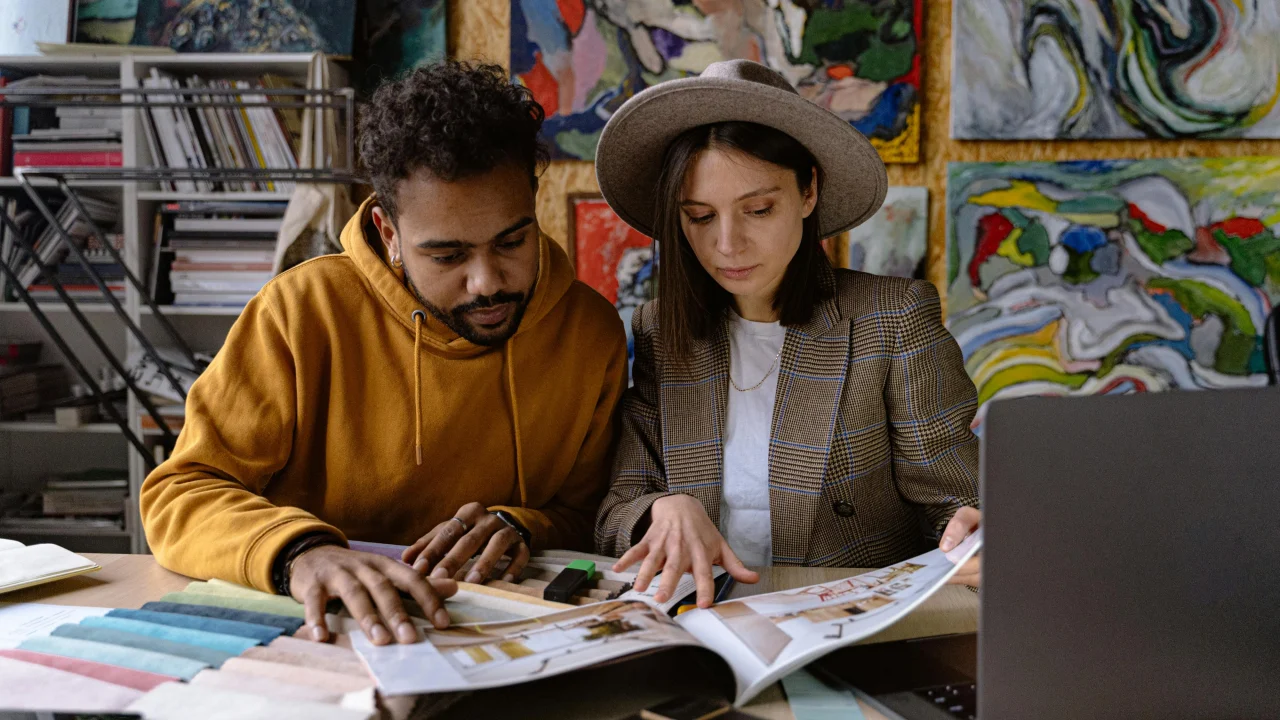
Photo by Antoni Shkraba Studio on Pexels
Every few decades, a new technology shows up and creatives are told — explicitly or not — that this one is different. That this time, the work we do won’t matter anymore.
Right now, that technology is artificial intelligence.
AI-generated content is everywhere: art, music, writing, and design. And the fear is understandable. In the U.S., work created entirely by machines can’t be copyrighted. Which leads to an obvious concern: if something can be made cheaply, on demand, and without the barriers of legal ownership, what happens to the people who used to make it for a living?
For writers, artists, and designers who were already underpaid, the anxiety feels personal. But this isn’t the first time we’ve been here.
When photography first appeared, painters were convinced it would kill painting. Instead, it changed it. Impressionism didn’t happen despite photography — it happened because artists were suddenly freed from the obligation to replicate reality exactly.
Technology didn’t erase creativity. It forced it to evolve.
Why I Don’t Believe AI Replaces Creators
Here’s the part that gets lost in a lot of the discourse: AI doesn’t wake up and decide to make something. It has to be prompted. Directed. Corrected. Evaluated. Edited. All of which has to be done by a qualified human being.
Beyond that, everything AI produces is built from patterns in human-made work — often without permission, which is a serious ethical and legal problem still being worked out. But even setting that aside, the output itself isn’t finished. Not really. Anyone who’s spent time with generative tools knows this.
The jokes about AI being bad at hands or teeth exist for a reason. It can approximate, but it doesn’t understand. And it certainly doesn’t know when something feels right.
That judgment still belongs to people.
Even the law reflects this reality. In the U.S., AI-assisted work can be protected only when there’s meaningful human creative input. Prompts alone don’t qualify. Which quietly reinforces something vital to global cultures: the value is still in the human decisions, not the machine output.
Automation Isn’t the Same as Elimination
Another fear that comes up fast is jobs. If AI can do the work, why keep people?
But businesses don’t exist in a vacuum. They rely on customers — people with money, time, and trust. Automating everyone out of work is not only unethical, but unsustainable.
What we’re actually seeing is a shift toward augmentation. Companies using AI effectively are far more likely to talk about efficiency, iteration speed, and freeing people from repetitive tasks than replacing entire roles outright.
That doesn’t mean disruption won’t happen. It already is. But disruption isn’t the same thing as disappearance.
Recommended by LinkedIn
Creative work, especially, doesn’t scale cleanly without humans. Lived experience doesn’t automate well.
Where AI Might Actually Help Creatives
A designer once joked that the “good stuff” in his work didn’t show up until around hour 40. That line stuck with me because it’s painfully familiar.
So much creative labor isn’t inspiration — it’s setup, iteration, cleanup, and exhaustion. If AI tools can help get people to the good part faster, that matters.
Burnout isn’t a personality flaw. It’s structural. In film, television, and games, 60–80 hour weeks aren’t rare — they’re expected. And we know long working hours are tied to real health consequences, including increased risk of heart disease and stroke.
If a tool can reduce that load on employees without degrading the quality of the work, it deserves consideration.
The Real Issue Isn’t AI. It’s Power.
There will absolutely be bad actors. Content mills will exploit AI. Art will be scraped without consent. Labor will be undervalued wherever it’s allowed to be. That’s not a reason to reject the technology outright. It’s a reason to demand better rules around it.
Ethical AI use means:
Clear consent and compensation for training data
Transparency when AI is used in creative work
Legal protections that prioritize human authorship and labor
The problem isn’t that these tools exist. It’s who benefits (and who is harmed) when they’re deployed.
A Final Thought
AI isn’t here to replace creativity. It’s here to test how much we actually value it.
Just like every creative shift before it, this moment will reward people who adapt without abandoning their principles. The future of creative work won’t be decided by machines — it’ll be decided by the humans who choose how they’re used.
And that part is still very much up to us.
Like this project
Posted Apr 14, 2026
Thought leadership piece examining AI's role in creative work — and why the real test isn't what the technology can do, but what we choose to do with it.
Likes
1
Views
7
Timeline
Feb 9, 2026 - Feb 11, 2026