VeilDaemon: Local-First Operator & Handler Platform

Donavon (studio: SigilForge)


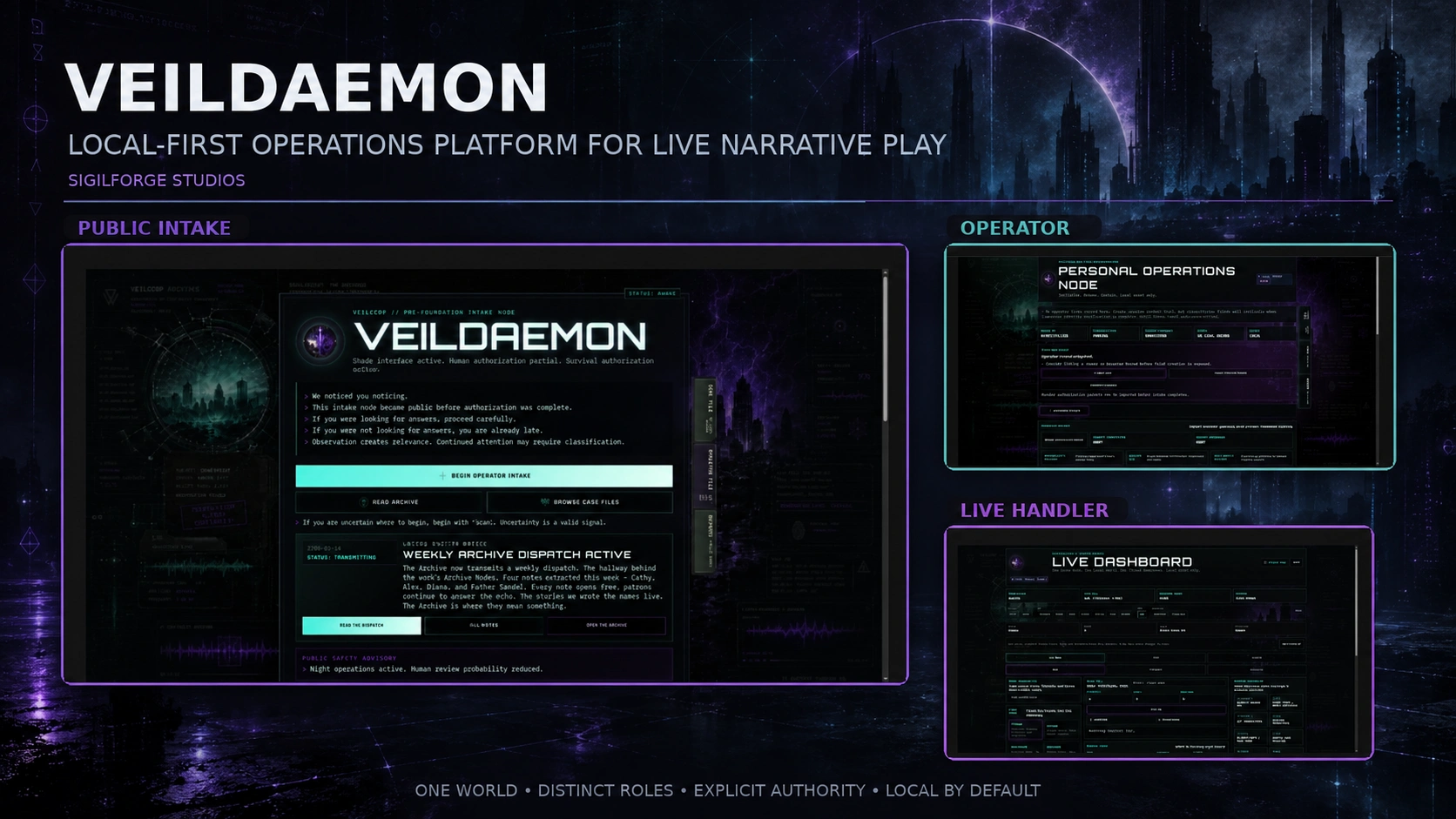
A local-first operations platform for live narrative play
SigilForge Studios designed and built a responsive, multi-surface web platform that turns an immersive public gateway into a working system for players, handlers, publishing, and controlled data transfer.
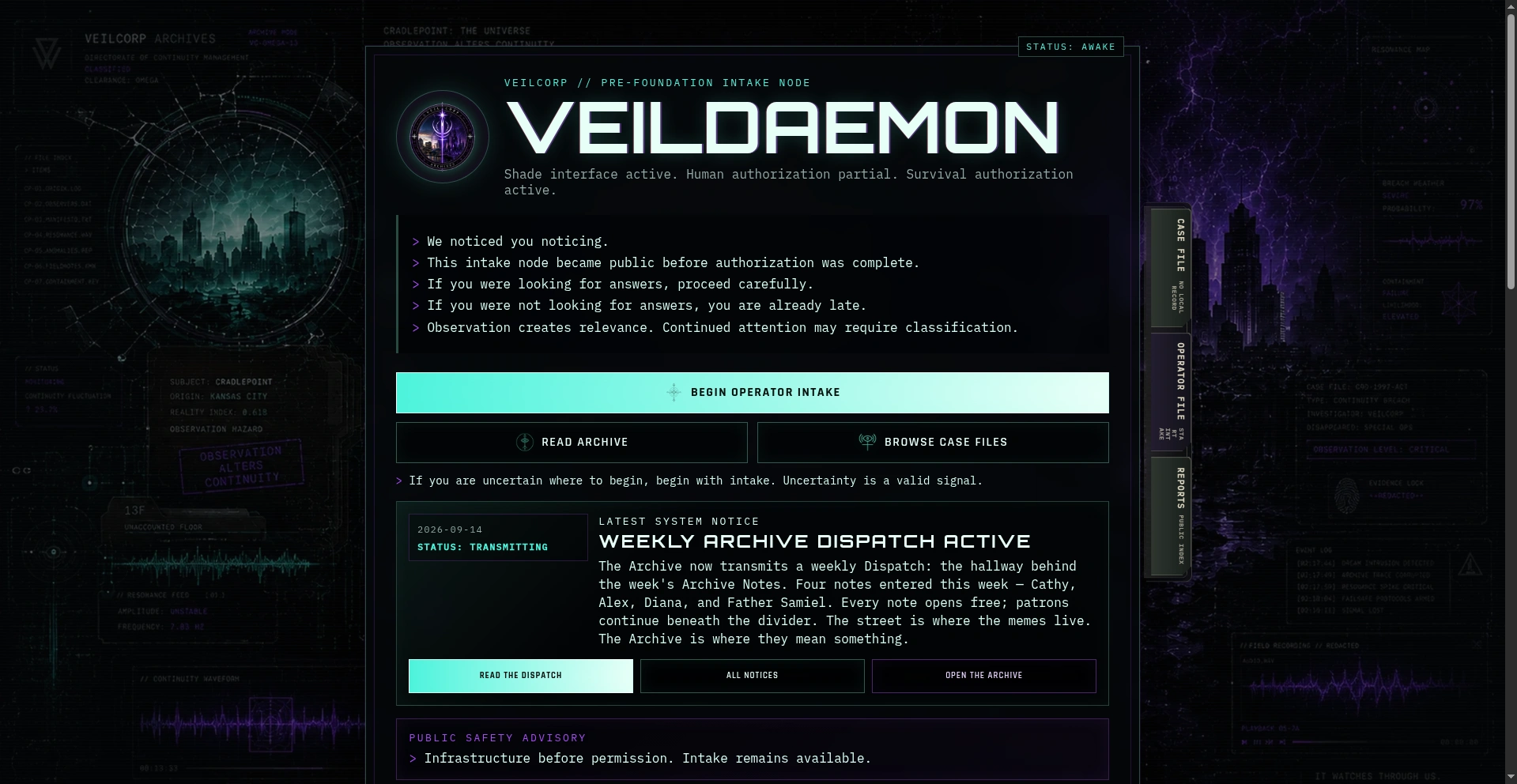
VeilDaemon interface
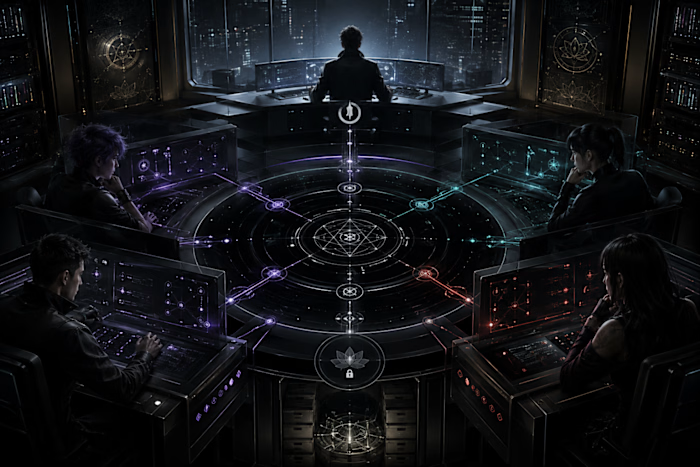
The public intake node establishes the product’s language, visual system, and first action: begin Operator intake.
The interface had to do real work without breaking the world
VeilDaemon began with a difficult product constraint: the interface needed to feel like part of the Cradlepoint Universe while remaining usable as actual operational software. Players needed private records and field tools. Handlers needed a dense control surface for live sessions. Public visitors needed a clear entry point. The system also had to preserve the boundary between what stays on a person’s device and what is deliberately transferred for review.
The goal was not to decorate a conventional dashboard with lore. The product language, access model, information architecture, and failure states all had to support the same experience.
The solution separates roles, data, and authority
The platform is organized around distinct surfaces rather than one overloaded application:
Public intake node: A diegetic gateway that orients visitors and routes them into the appropriate workflow.
Personal Operations Node: A local-first Operator workspace for intake, records, field tracking, anomaly logs, and import/export controls.
Handler systems: A separate control environment for cases, cells, clocks, clues, entities, non-player characters, live state, pressure, collapse mechanics, and session flow.
Review and publishing channels: Server-backed routes for reports, debriefs, alerts, recovery review, and approved public records.
Studio surfaces: Publishing, rights, news, funding, data-room, press, and project infrastructure for the wider ecosystem.
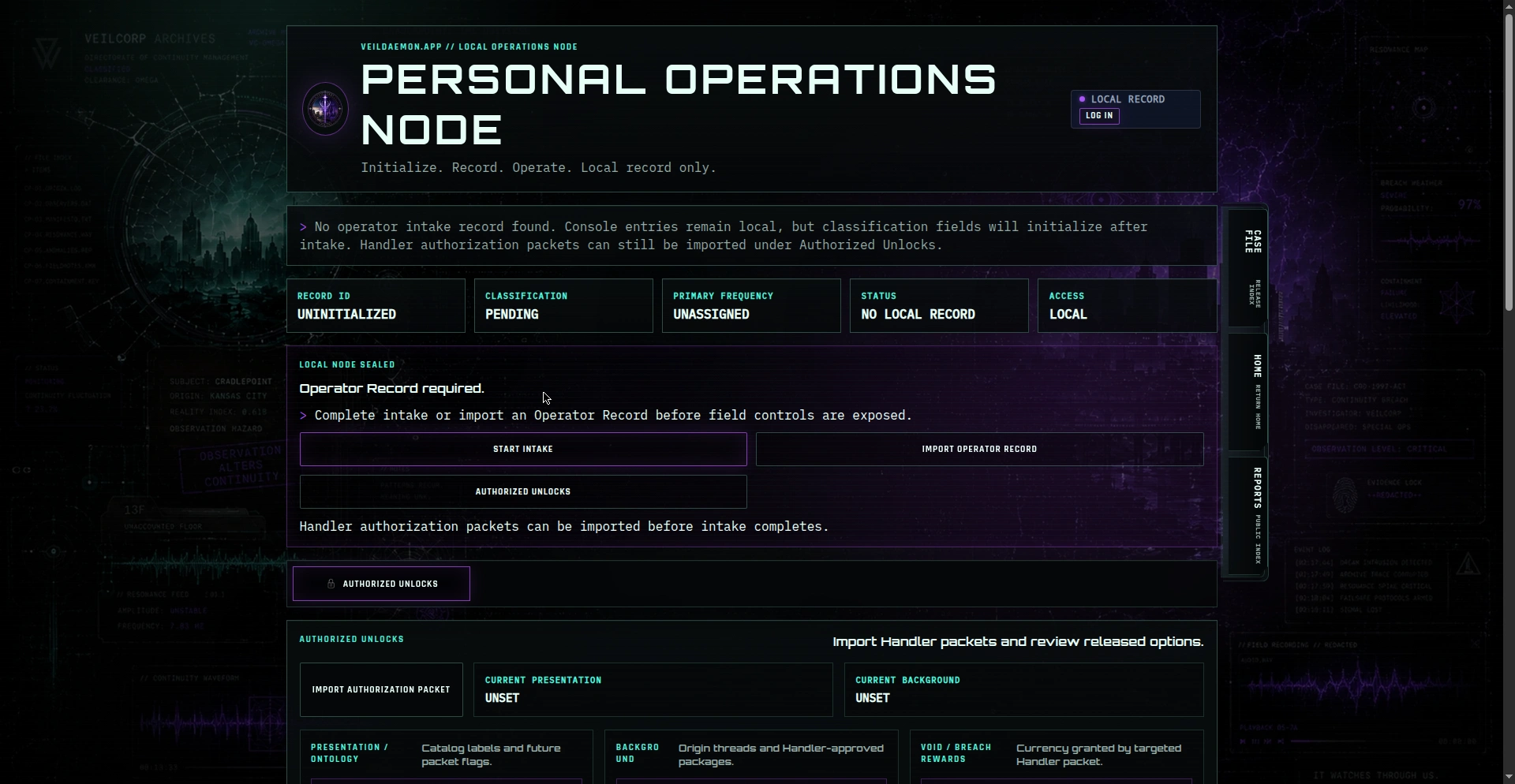
Operator and Handler interfaces
Local-first is a product decision, not a slogan
Operator records remain in browser storage by default. Transfers require an explicit path, and submitted material enters review before it can become a public recovery. This reduces accidental disclosure, keeps the basic tool usable without a mandatory account dependency, and makes consent visible in the interface instead of hiding it in policy copy.
The Handler console turns complex session state into a usable live view
The Handler side needed to hold far more information without collapsing into noise. The resulting system coordinates session state, cases, cells, clocks, clues, entities, triggers, pressure, presentation drift, rewards, live weave controls, and Operator tracking. Role-specific views keep Handler-only context separate from player-facing information while still supporting a shared session.
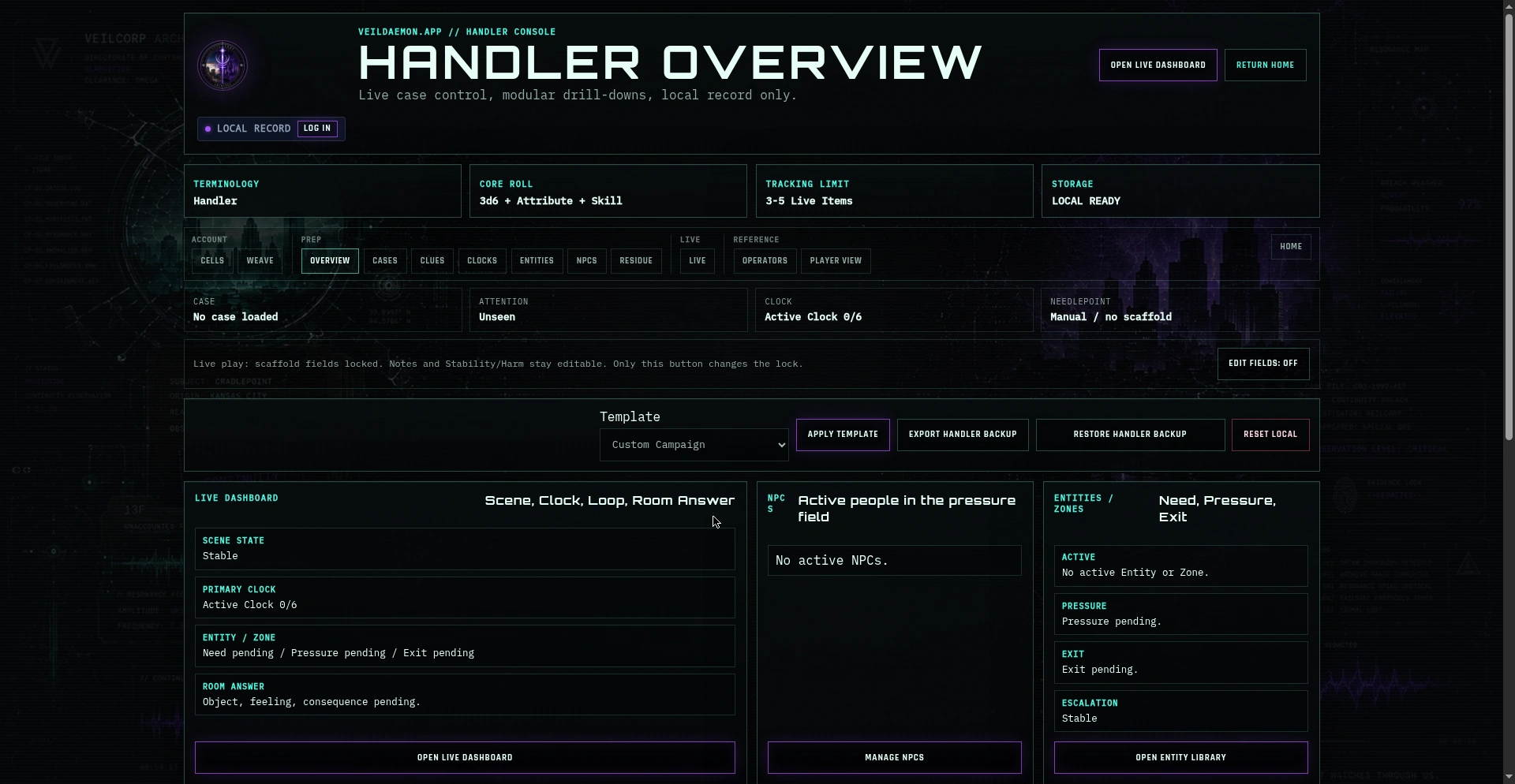
Live Handler dashboard
The build is a platform, not a themed landing page
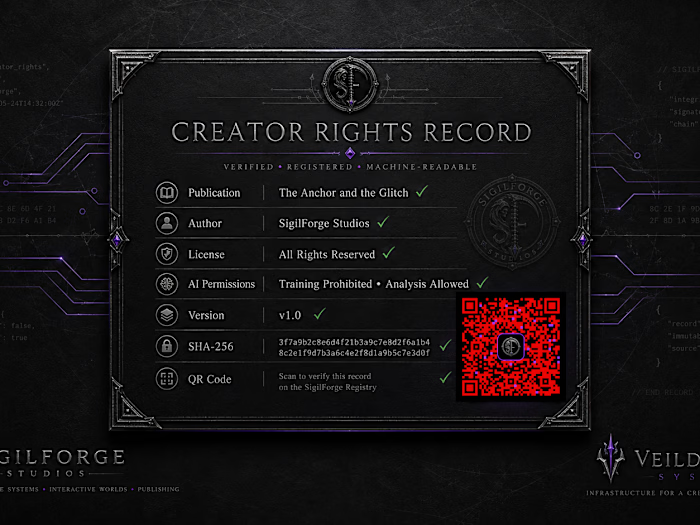
The repository reflects a broad production surface: custom HTML, CSS, and JavaScript interfaces; Vercel serverless functions; local and remote synchronization; Supabase-supported workflows; Twitch EventSub integration; creator-rights records; branded QR generation; publishing utilities; and a dedicated Studio site.
Automated quality work is part of the product. The project includes browser, contract, invariant, mission, integration, adversarial, and unit coverage. The repository history contained 869 commits from the initial commit on July 2, 2025 through the most recent observed commit on September 15, 2026.
Defensive engineering protects both trust and immersion
The most important design choices are quiet ones: validated inputs, explicit authorization, clear role boundaries, review gates, visible failure states, and durable records. The interface can be theatrical because the underlying behavior is conservative.
Private by default: Local Operator data stays local unless the user authorizes transfer.
Separated authority: Operator, Handler, admin, and public surfaces expose different controls and information.
Review before publication: Debriefs and volunteered anomaly material are reviewed before public recovery.
Tested behavior: Playwright and supporting suites exercise core flows, invariants, adversarial conditions, and responsive behavior.
Maintainable delivery: Scripted checks, deployment tooling, asset validation, and modular surfaces keep a large system shippable.
The result is a durable live product with room to grow
VeilDaemon operates as the public interface for Cradlepoint intake and play support while also connecting to reporting, archive, publishing, creator-rights, and Studio workflows. Its strongest outcome is architectural: a coherent experience survives across public marketing, private records, live game operations, and back-office review without flattening those needs into one generic dashboard.
Because this is a self-directed studio platform rather than a client engagement, the proof is the shipped system itself: the live surfaces, the working role separation, the repository history, and the automated coverage. No traffic or conversion claims are made.
Project details
Live product: https://veildaemon.app
Status: Live and ongoing
Scope: Public intake gateway, Personal Operations Node, Handler console and live dashboard, role-separated state tools, serverless APIs, admin and review surfaces, debrief and reporting flows, responsive desktop/mobile layouts, Studio and publishing surfaces, automated test coverage, deployment and validation tooling.
Like this project
Posted Sep 15, 2026
Built a responsive platform for live narrative play with local-first player records, Handler tools, controlled transfer, public intake, and archive workflows.
Likes
0
Views
2
Timeline
Jul 1, 2025 - Sep 15, 2026