Most publication designs don't fail

Olaniyi Somotun

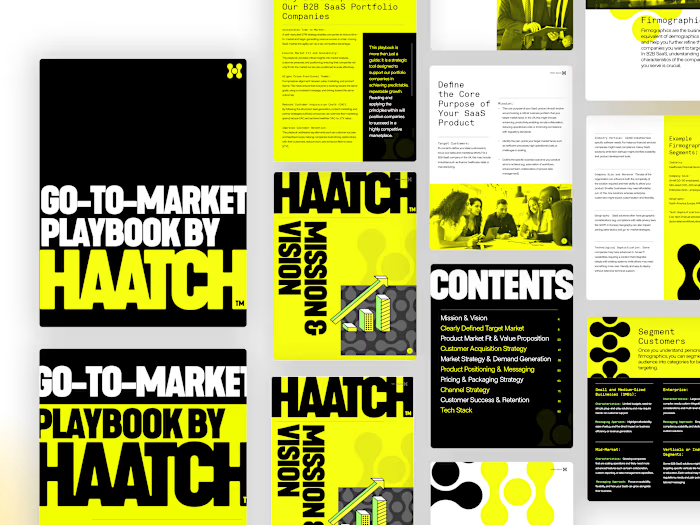
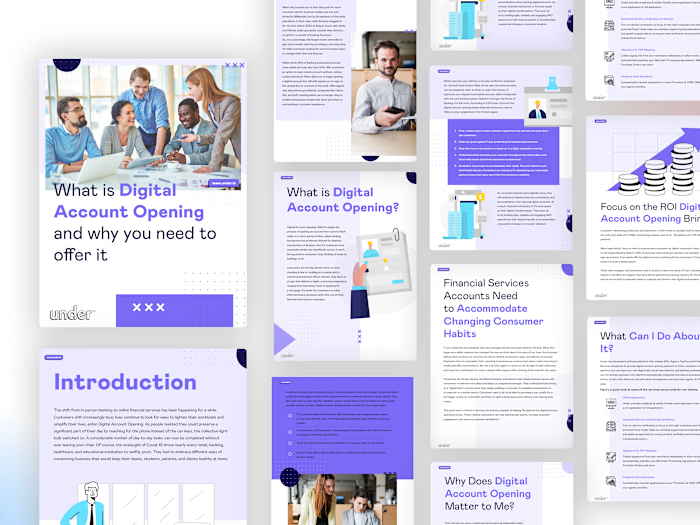
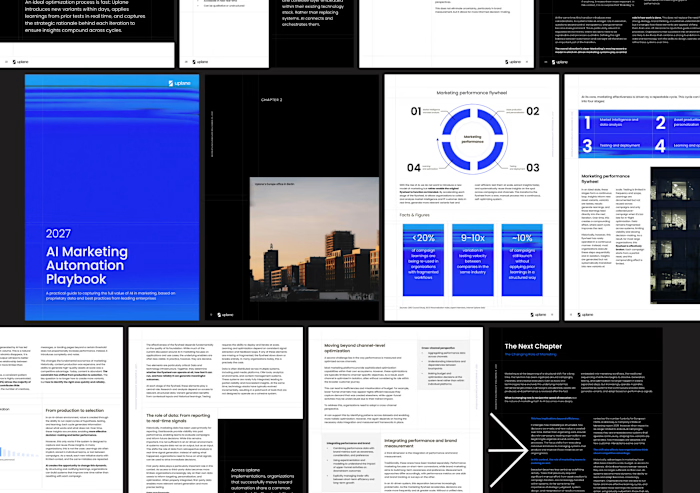
Most publication designs don't fail because of bad design. They fail because nobody planned how they'd be read. After designing publications for startups, NGOs, publishers and corporate teams, I've learned that the tools matter less than the thinking behind them. But the right tools, used well, let you spend more time on that thinking.
Here's how I approach a report today:
Start with the reader, not the layout. Before opening any software, I use AI to pressure-test the content: summarising dense sections, spotting where the story gets buried, and drafting alternate headlines. It's a thinking partner, not a replacement for judgment.
Build structure in InDesign or Affinity layout. Master pages, paragraph styles and a tight grid keep a 100-page document consistent. Every spread gets one job and one focal point.
Make data readable in Illustrator and Figma. Charts should work like sentences, not decoration. I rebuild raw spreadsheet graphs into clean, on-brand visuals people can understand in seconds.
Use AI to speed up the repetitive work. Mood-board exploration, image cleanup, background extension and quick concept variations in Photoshop with generative tools save hours I can reinvest in refinement.
Let white space do the work. No software can fix a crowded page. Restraint is still the most powerful design decision.
AI and graphic software don't make a report good. They give you more room to make the right decisions faster. If you're planning a report, ebook or pitch deck this quarter, what's the one document in your organisation that deserves a redesign? #EditorialDesign
Like this project
Posted Oct 7, 2026
Most publication designs don't fail because of bad design. They fail because nobody planned how they'd be read. After designing publications for startups, NG...
Likes
0
Views
0