
Problem
A small studio runs on a spreadsheet and a lot of memory. A booking comes in by form, someone checks the class isn't full, writes an invoice, works out which pieces can go in the next firing, and at month end adds it up. Each step is small; together they eat evenings, and mistakes are quiet: a double-booked seat, a reused invoice number, a kiln fired half empty.
Sheets plus Apps Script is the most common home for this kind of automation, and the usual result is a pile of scripts nobody dares touch. The brief I set: make it real software that happens to run in a sheet.
Decisions
01
One core, two runtimes
All rules live in plain TypeScript with no Google APIs and no clock. esbuild bundles it into one Apps Script file, and the website imports the same files, so the live demo is the actual engine, not a mock-up.
02
Safe to run twice
Google can fire a form trigger twice. Each request gets an idempotency key, repeats are recognised and ignored, and the read-decide-write step runs under a script lock so two people can't take the last seat.
03
Failure is expected
If an email fails, the booking stays, the row is flagged unsent, the error is logged and a nightly job retries. The sheet is the outbox.
04
Money as integers
Whole pence or cents everywhere, tax split once on the invoice total, and a test that net plus tax equals gross across seven tax rates and about 100,000 amounts. Currency and tax rate are cells in a Settings tab.
Result
This is a concept project, so there are no client results to report. Here is what exists, what was checked, and what isn’t done.
Shipped and checked
85 tests: money, ids, calendar invites, booking and waitlist (including a randomised 400-event run that checks capacity is never exceeded), kiln packing properties, reports, and the Apps Script adapters against mocked Google services.
A live demo site where a booking runs through the real engine, with light and dark themes.
Not done, or not verified
Not installed in a real Google account and not published as a template; the steps are in the README.
One invoice line per booking, no refunds or credit notes, and payments are not handled.
Time saved is not measured because there is no studio. I'd time the five jobs before and after on a real one.
Screens
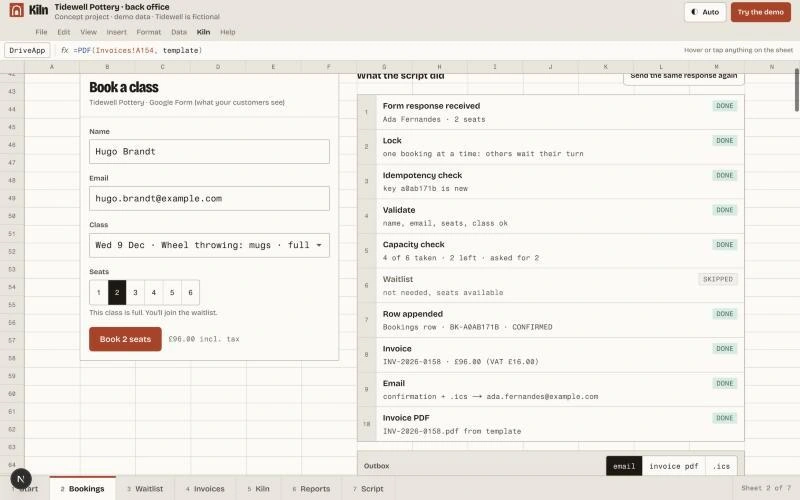
The demo runs the real booking engine and shows each step.
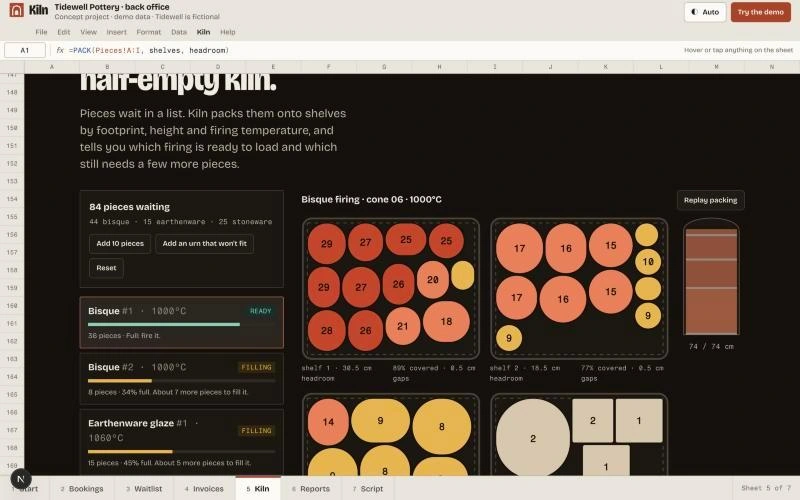
The firing planner, drawn inside the kiln.
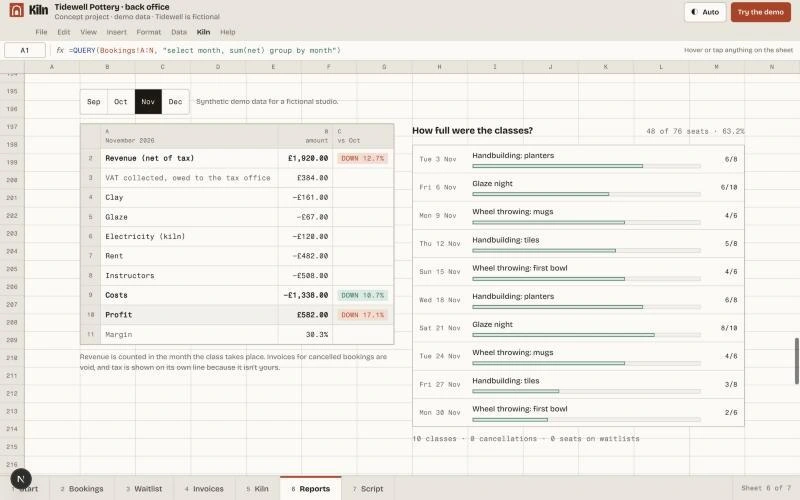
Monthly revenue net of tax, costs and profit.
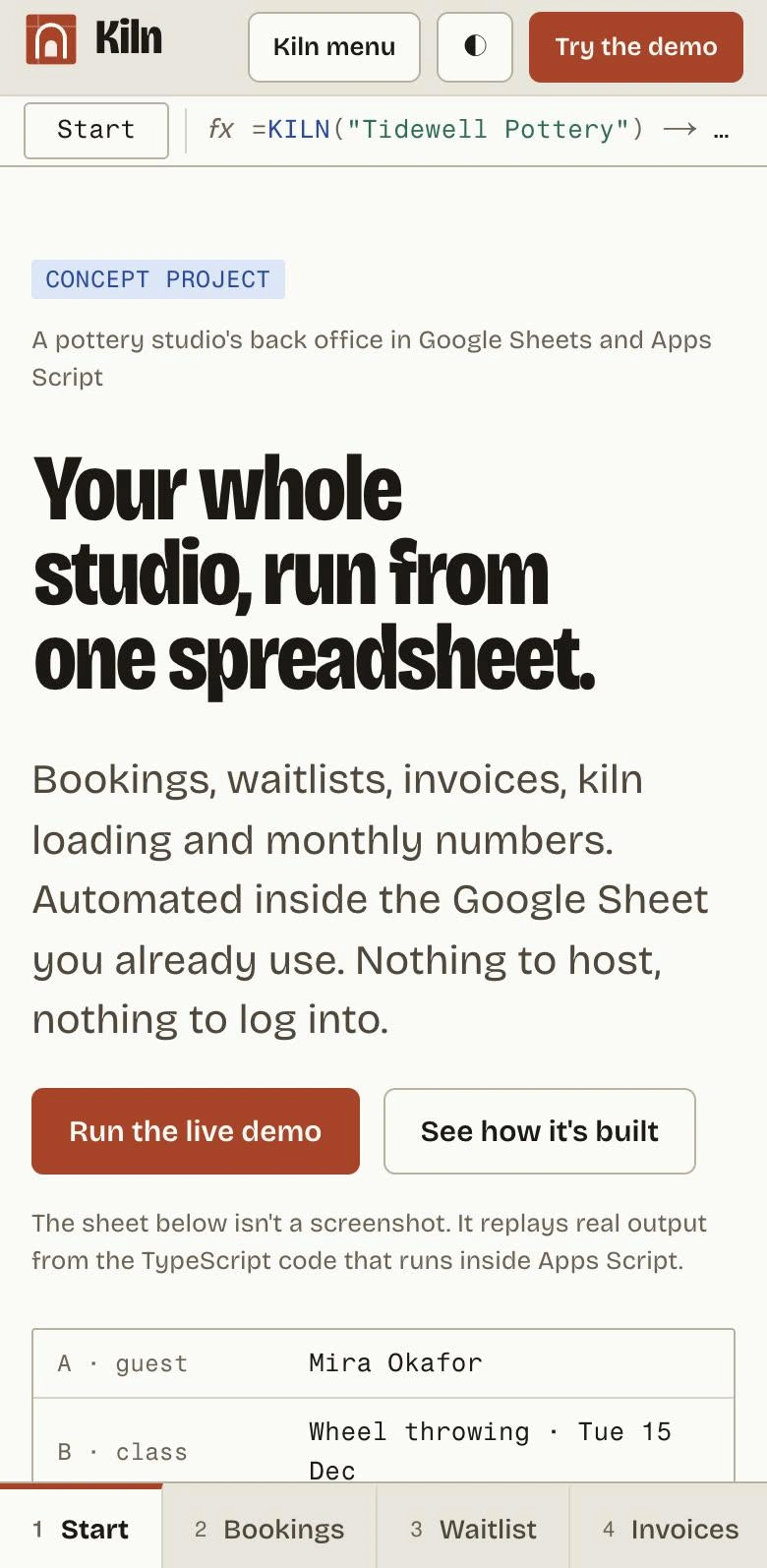
The sheet, collapsed into a phone-sized view.
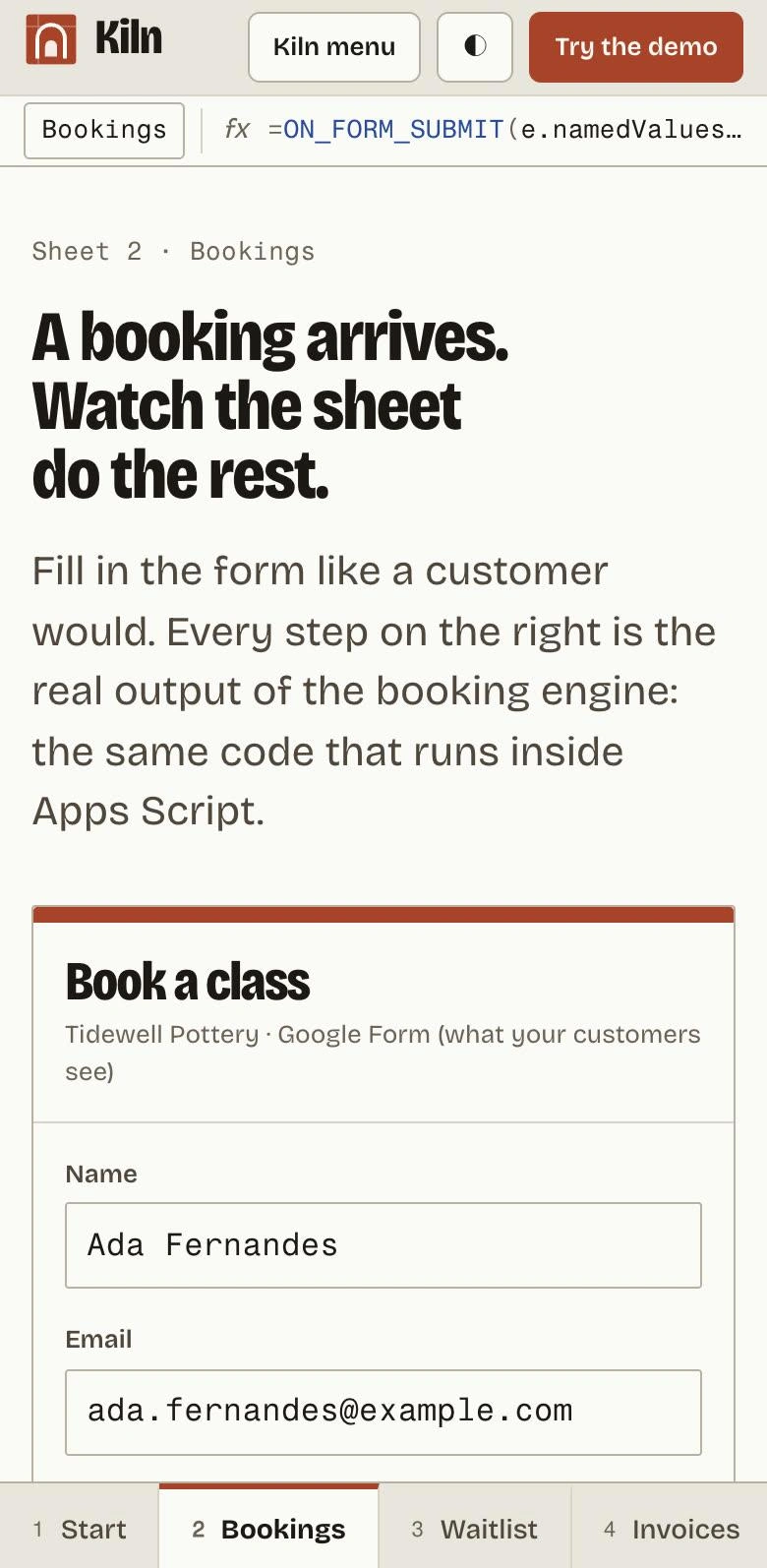
A booking arrives: watch the sheet do the rest.
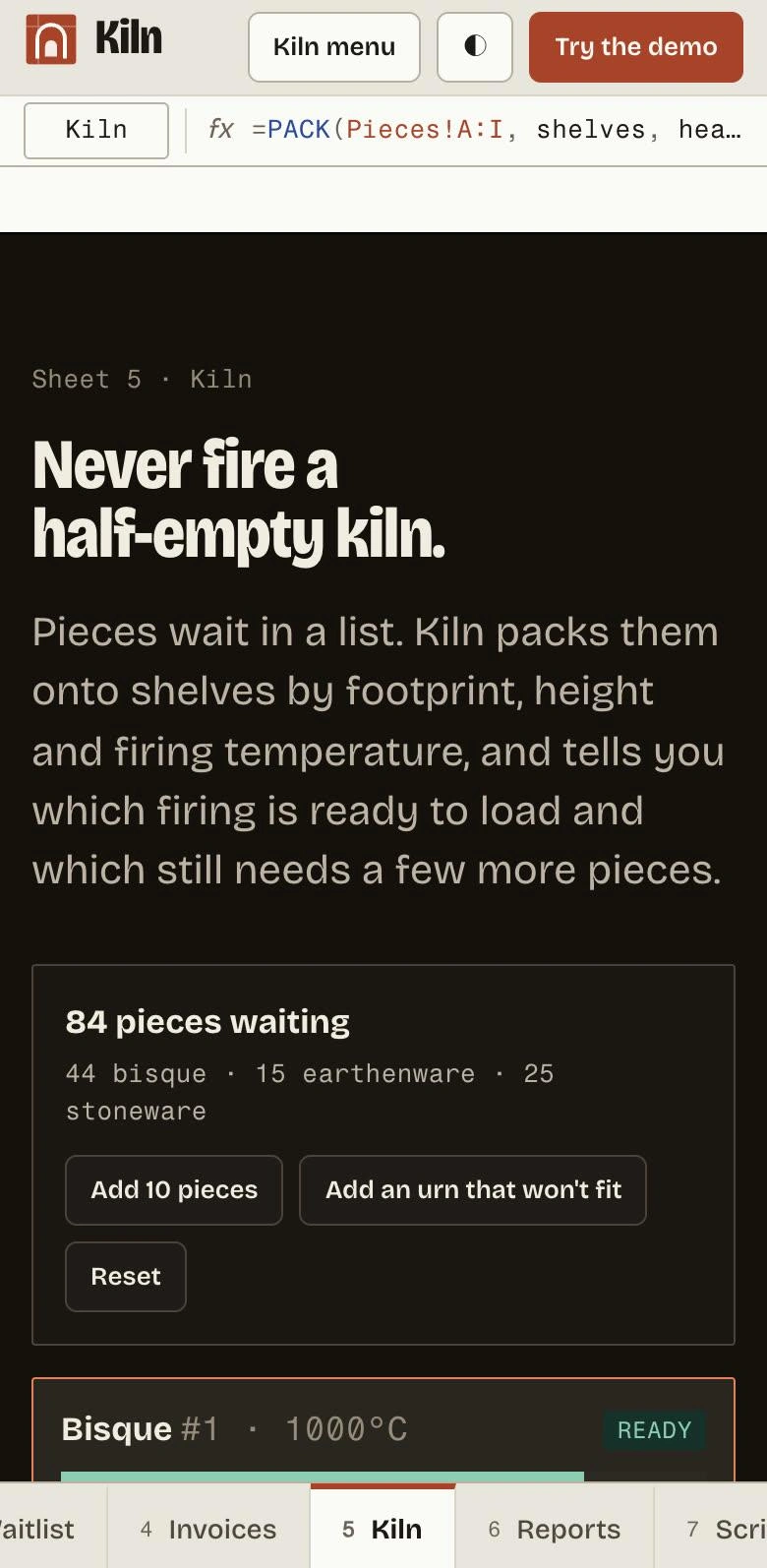
The kiln planner.
0 likes · 0 views · Nov 26, 2026
Created a concept booking and studio-management system using Google Sheets and Apps Script, with invoicing, waitlists, and a kiln firing planner.


