Designing a Joyful Web Experience for children with autism

Nicole


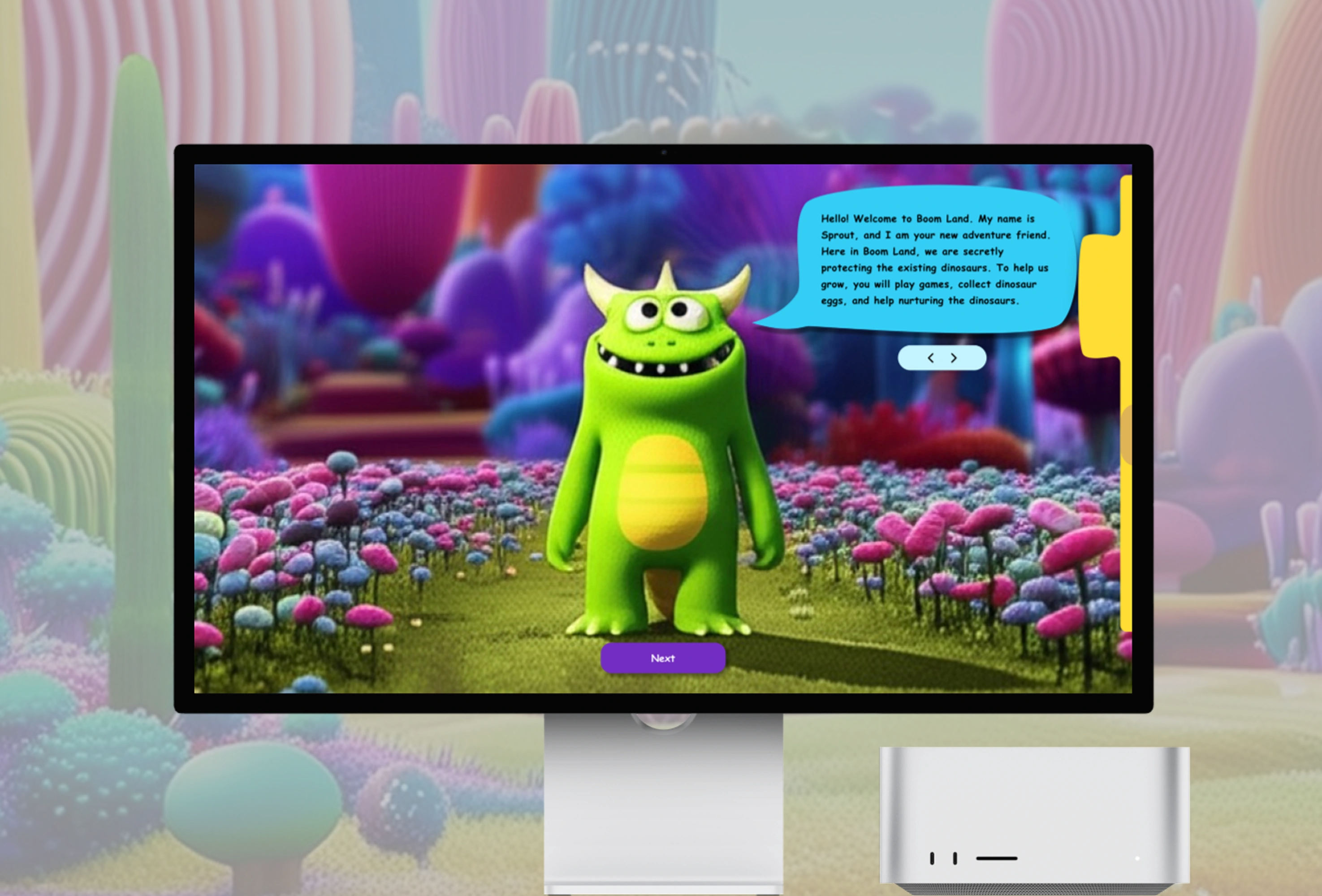
Designing a Joyful, Inclusive Web Experience for the game “Adventure with Sprout”
When I was designing a game intended to help children with autism (aged 3–8) navigate social and emotional learning through play, I realized something: the story shouldn’t end inside the game.
Parents, educators, and therapists needed a way to understand and celebrate each child’s journey. For the Responsive Web Design Capstone, I set out to design a companion website that introduces the game’s mission, explains its science, and gives guardians tools to track progress and celebrate milestones.
The design challenge was twofold:
Build an approachable, research-driven website that communicates trust.
Create a dashboard that turns behavioural data into insight, not just numbers.
The Opportunity (turn stat to graphics)
Autism spectrum disorder (ASD) affects 1 in 36 children (CDC, 2023), and yet most educational games on the market remain generic, overstimulating, or inaccessible for neurodiverse learners.
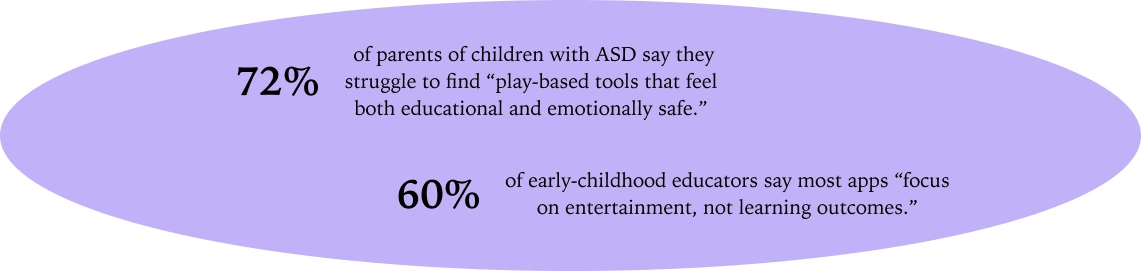
Insights from user survey and interview
The gap between market demand and supply reveal a clear opportunity to me, and my developer friend and I were inspired to develop a learning platform for neurodivergent learners through joyful games.
Competitive Landscape
I reviewed several leading platforms to identify patterns and opportunities:
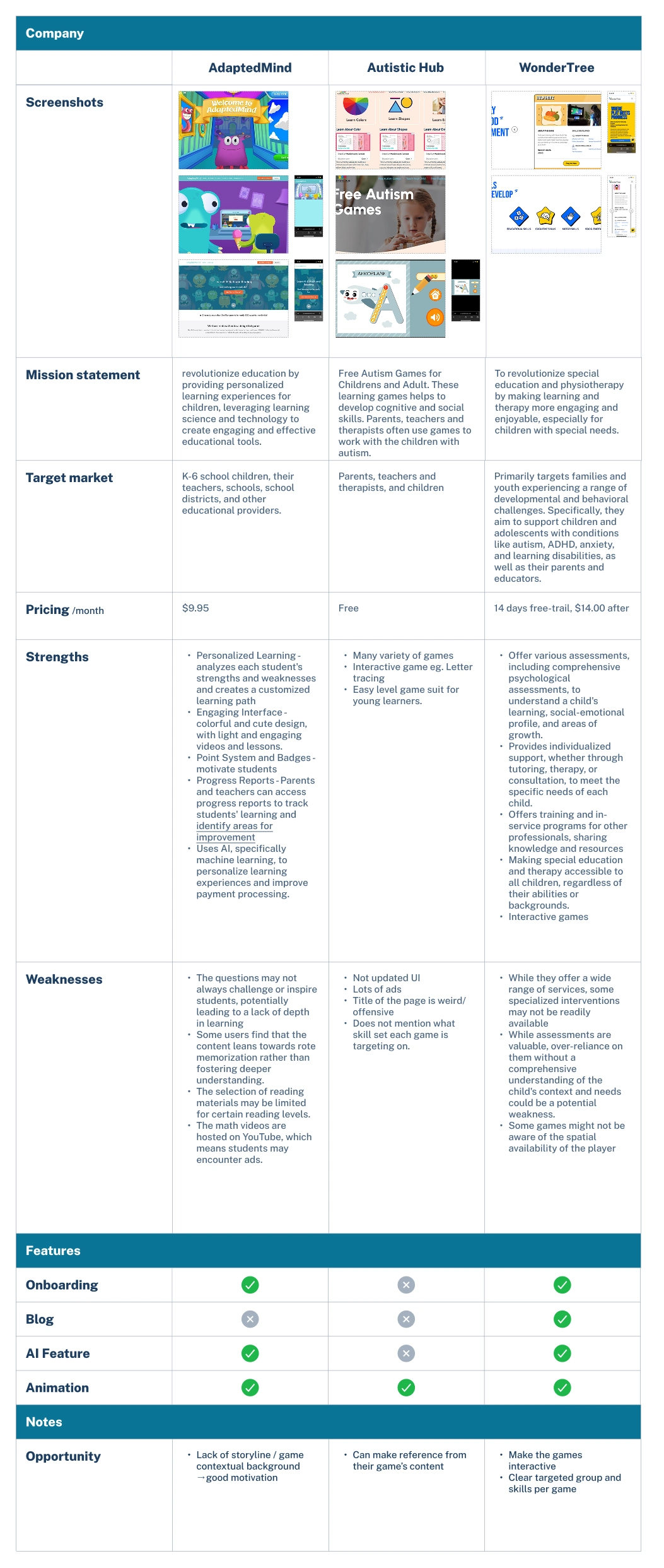
Competitive analysis of existing learning tools for children with autism
By combining AdaptedMind’s personalization, Autistic Hub’s accessibility, and WonderTree’s developmental depth, AWS transforms fragmented experiences into a cohesive ecosystem where:
Children learn through guided play,
Guardians understand progress through clear, friendly dashboards,
Behavioural science quietly drives every design choice.
User Insights
To design a meaningful experience for families and educators supporting children with autism, I conducted 5 survey responses and 2 in-depth interviews, with users like Parents of children with autism, Early childhood educators, Behavioural consultants, and individual with lived experience of autism.
The goal was to uncover what gives a website credibility and emotional trust when introducing a new learning tool, and what encourages both guardians and children to stay engaged long term.
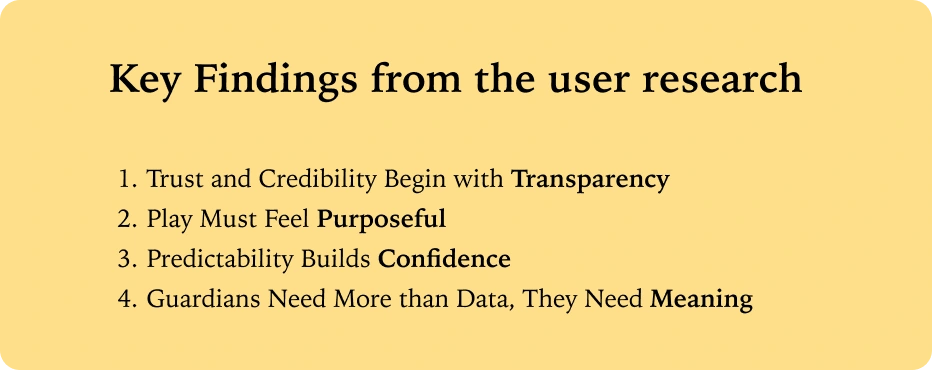
With the following Problem Statements being constructed,
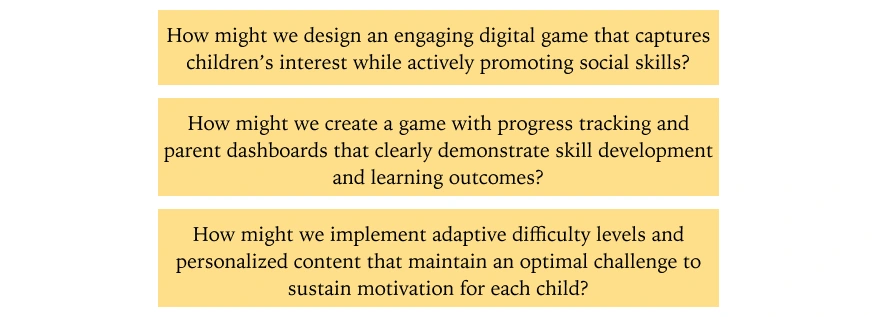
Children with autism spend excessive time on non-educational digital content, missing opportunities to develop social skills.
Parents lack clear, trustworthy platforms that visualize behavioural growth in measurable and compassionate ways.
Educational games often fail to adapt difficulty to each child’s pace, causing disengagement.
We have our How-Might-We questions asked trying to resolve the problems in the design:
The Persona
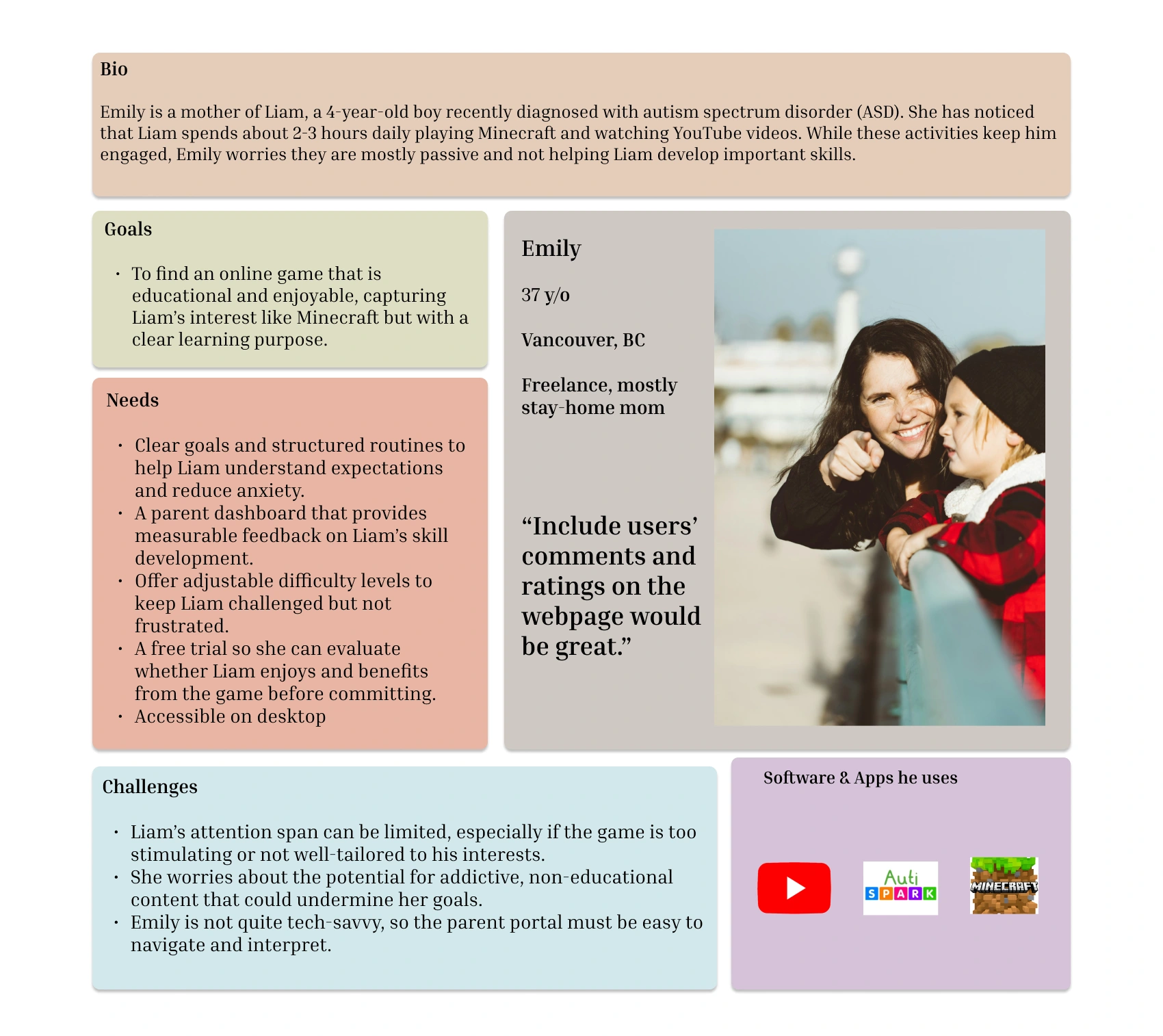
Meet Emily, a caring mother looking for digital play that feels both joyful and purposeful for her son, Liam.
This persona establishes a functional reference point that captures the user’s challenges, needs, and goals. It serves as a design foundation throughout the process, ensuring that every decision remains grounded in meeting real user's needs rather than drifting toward assumptions.
Wireframes
The low-fidelity wireframes focused on simplicity and hierarchy.
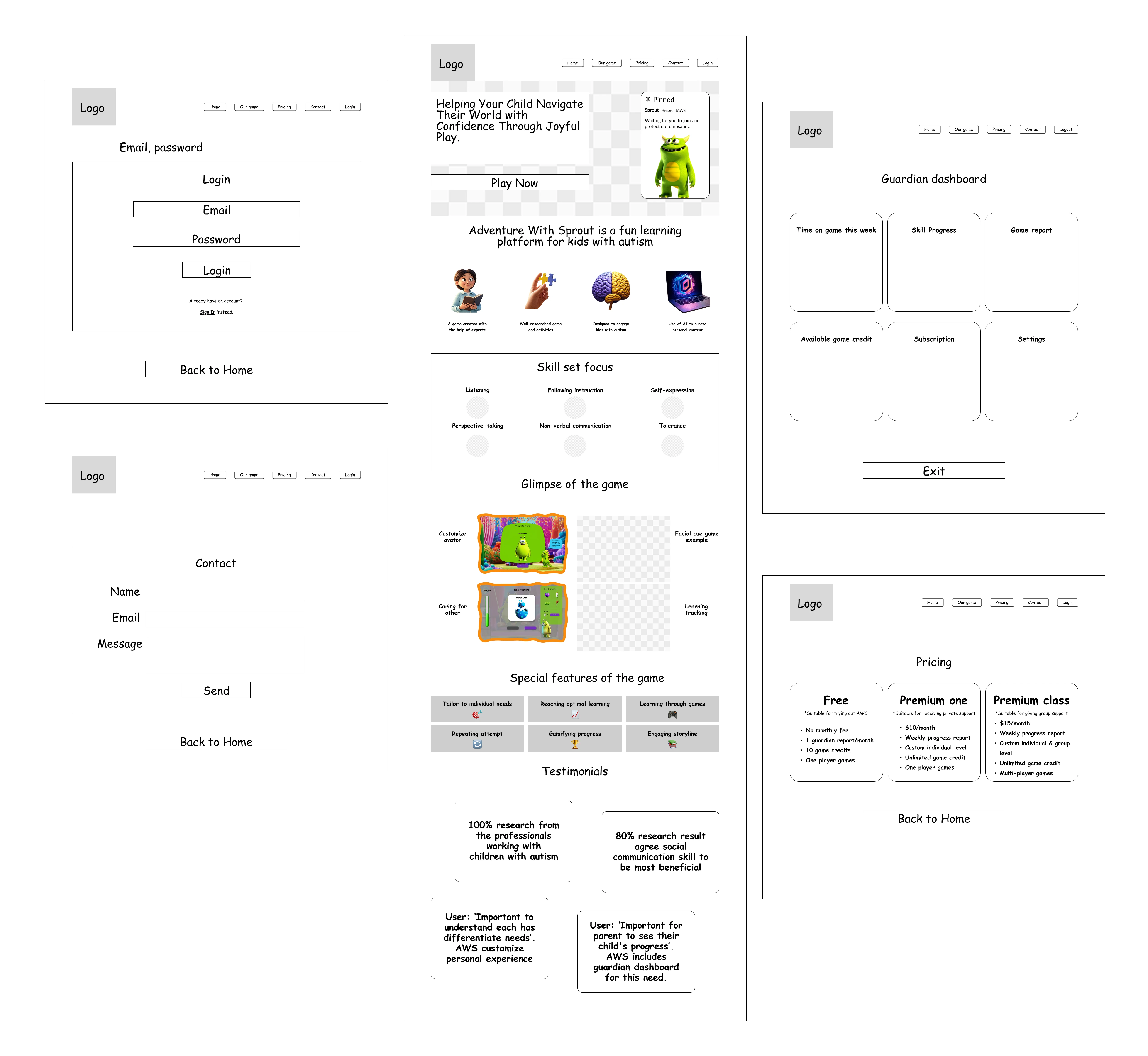
Low-fidelity website wireframes
In the high-fidelity prototype, I integrated colour, illustration, and gentle motion to retain a sense of joyful discovery while preserving accessibility and emotional balance.
The vivid visuals draw children’s attention and make learning feel inviting, while the soft gradients and balanced compositions prevent overstimulation — addressing one of the most consistent concerns from my interviews.
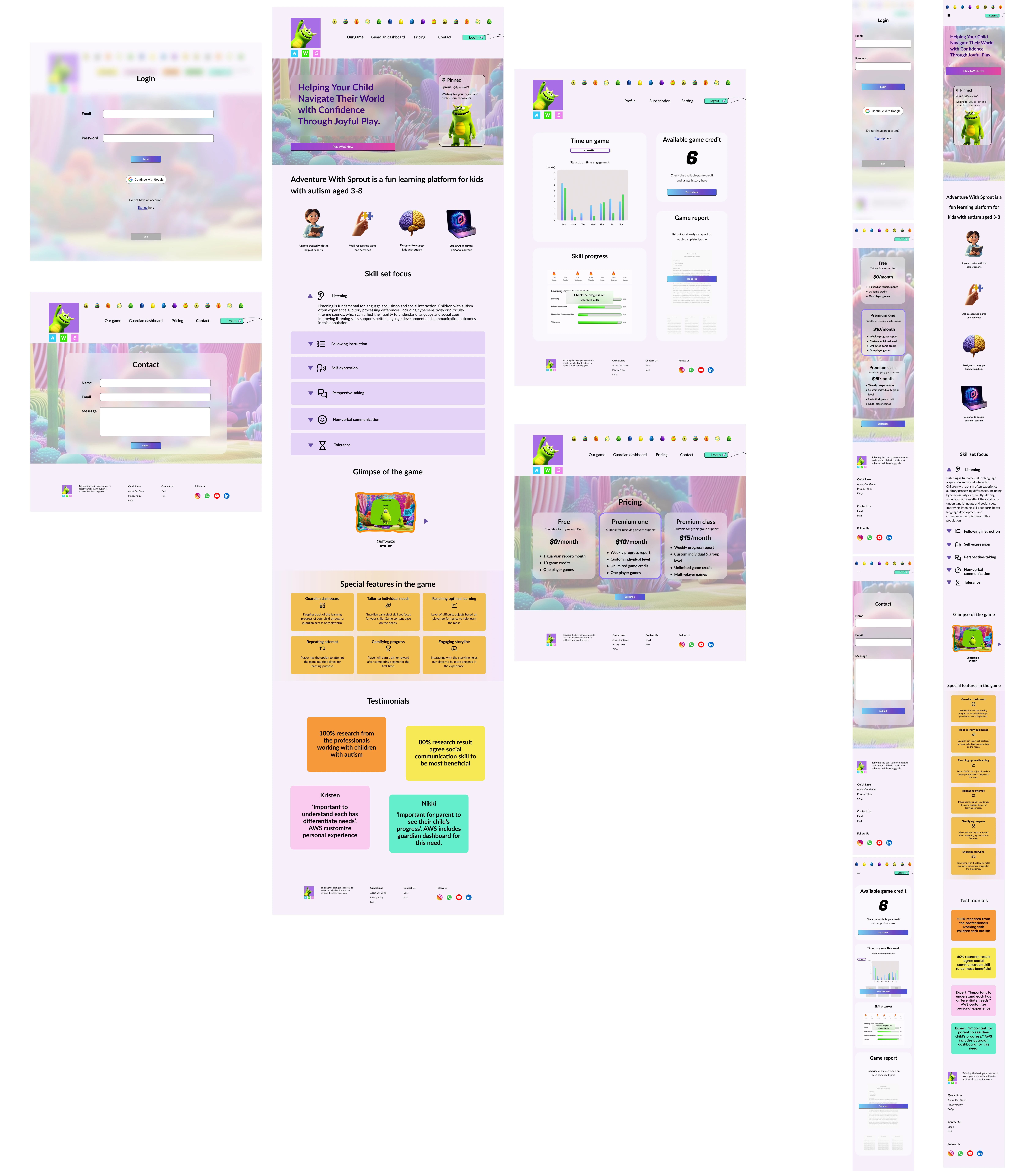
Hi-fidelity responsive wireframes
Originally, I used Comic Sans to reflect a playful tone; however, usability testing and peer feedback from other designers revealed that it compromised the design’s credibility for guardian users.
To achieve better balance, I transitioned to Lato, a humanist sans-serif typeface known for its warmth, readability, and approachability.
Reflection & Broader Implications
This project taught me that designing for inclusion is not about adding accessibility features at the end, but more about building empathy into the foundation.
Balancing childlike wonder with cognitive sensitivity challenged me to think deeply about behavioural design — considering how colours, motion, and pacing influence comfort and engagement.
On a broader scale, Adventure with Sprout reflects how technology can bridge emotional understanding between children and their guardians. In future iterations, I envision:
Gamified progress milestones for guardians
Voice-assisted accessibility
Integration with therapist dashboards
#Game #UI #Responsive #Website
If any part of this project resonates with you, I’d love to hear your thoughts! Feel free to leave a reaction or comment.
You can explore more of my case studies and design stories here https://www.nicoleyts.work/
Like this project
Posted Nov 12, 2025
Designed a companion website for a game aiding children with autism.