Thunder VPN Android App Development

Muhammad Usama



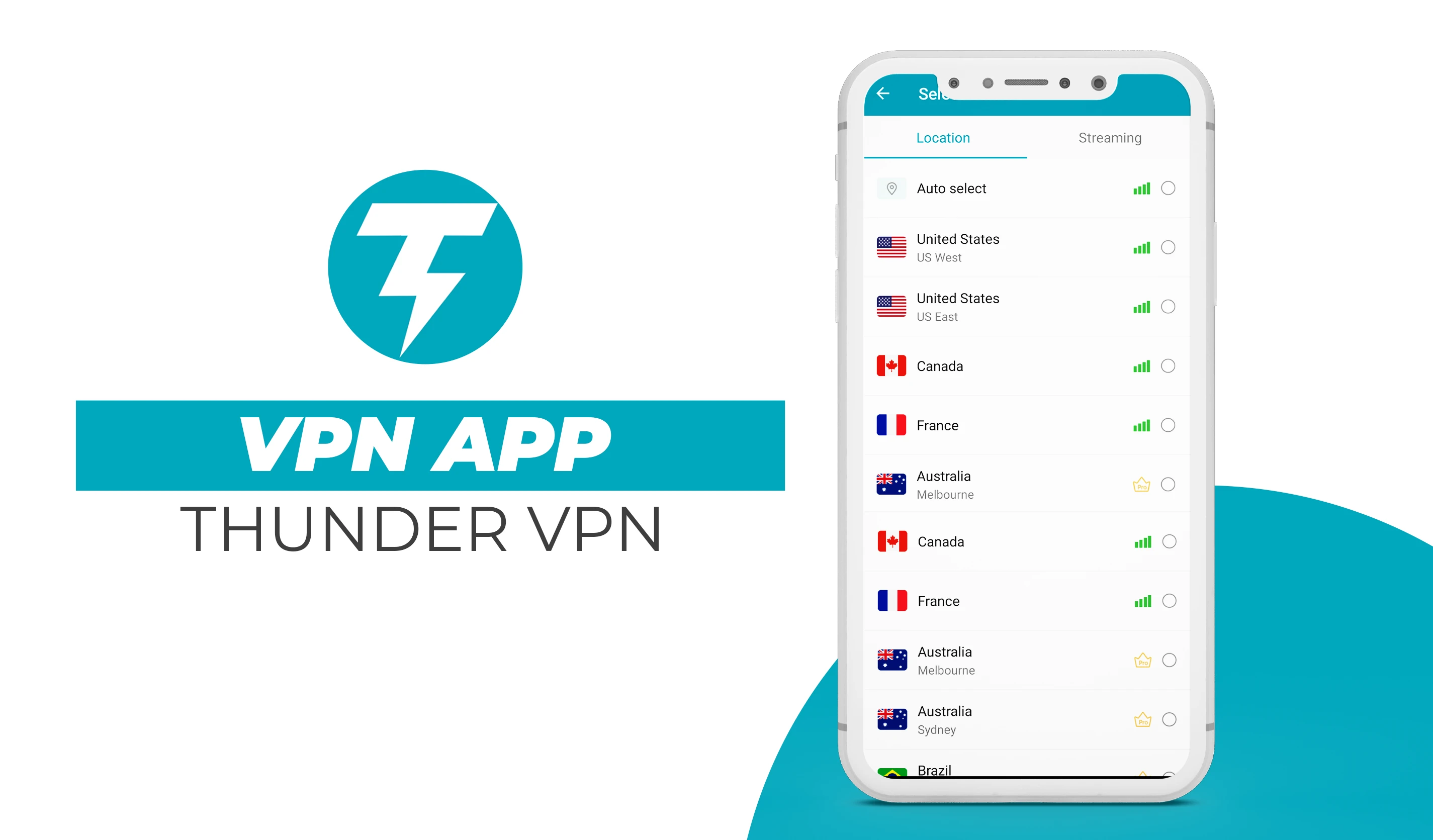
Thunder VPN – High-Performance Mobile VPN Application
The Challenge
VPN users face a frustrating paradox: they want military-grade privacy protection, but most VPN apps are painfully slow, drain battery life, and constantly disconnect on unstable mobile networks. Meanwhile, the technical barriers are high complex server configurations, confusing protocols, and overwhelming settings that intimidate non-technical users. The market needed a VPN that delivers institutional security with consumer simplicity, all while maintaining the speed necessary for streaming, browsing, and real-time communication.
The Solution
I developed Thunder VPN, a high-performance Android VPN application that prioritizes three core principles: speed, simplicity, and stability. By leveraging Android's native VPN Service API and implementing intelligent network handling, I created an app that connects in under 2 seconds, maintains stable connections even during network handoffs, and uses minimal battery all behind a one-tap interface.
My Role
Lead Android Developer & Network Security Engineer
Architected and developed the complete Android VPN application from scratch
Implemented secure VPN tunneling using native Android VPN Service API
Built intelligent network switching and reconnection logic
Designed and developed the user interface focused on simplicity
Optimized app performance for battery life and memory efficiency
Managed Google Play Store deployment and compliance
Developed backend infrastructure for server configuration and load balancing
The VPN Performance Problem
Building a fast VPN is counterintuitive. Every VPN adds overhead:
Encryption latency: Each packet must be encrypted/decrypted
Routing overhead: Traffic takes a longer physical path through VPN servers
Protocol inefficiency: Some VPN protocols prioritize security over speed
Mobile challenges: Frequent network changes (Wi-Fi ↔ LTE ↔ 5G) break connections
Battery drain: Constant encryption consumes significant power
Most VPN apps accept these tradeoffs. I refused to.
Technical Architecture
Native VPN Service Implementation
Built on Android's VPNService API with critical optimizations:
Fast Connection Establishment
Sub-2-second connect time by pre-negotiating server handshakes
Server health monitoring that pre-selects the fastest available server
Connection pooling maintaining warm connections to reduce cold-start latency
Parallel DNS resolution testing multiple servers simultaneously
Intelligent Protocol Selection
Implemented adaptive protocol switching based on network conditions:
OpenVPN for maximum compatibility and firewall traversal
IKEv2 for mobile networks (handles IP changes seamlessly)
WireGuard-style optimization for speed without sacrificing security
Automatic failover between protocols when one is blocked
Network Resilience Engineering
Mobile networks are hostile environments. Users constantly move between:
Wi-Fi networks with varying quality
4G/5G towers with different signal strengths
Dead zones where connectivity drops entirely
Network types mid-stream (like entering a tunnel)
My solution: Intelligent Network Awareness
Seamless Network Switching
Persistent connection maintained during Wi-Fi ↔ mobile data transitions
Connection migration that transfers active VPN tunnel to new network interface
Zero dropped packets during network handoffs using buffer queuing
Automatic reconnection with exponential backoff when networks fail
Connection Quality Monitoring
Real-time latency tracking to detect degrading connections
Proactive server switching before users notice slowdowns
Bandwidth optimization adjusting encryption overhead based on available speed
Network quality prediction using historical performance data
Battery & Performance Optimization
VPN apps are notorious battery drains. I implemented aggressive optimizations:
CPU Efficiency
Native code (C/C++) for encryption operations instead of Java
Hardware acceleration leveraging ARM crypto extensions
Batch packet processing reducing context switches
Wake lock management preventing unnecessary CPU wakeups
Memory Management
<20MB RAM footprint through efficient buffer management
Lazy loading server configurations only when needed
Connection pooling reusing objects instead of creating new ones
Aggressive garbage collection tuning for smooth operation
Battery Optimization
Doze mode compatibility maintaining VPN during Android sleep states
Adaptive polling reducing network checks when idle
Smart Keep-Alive sending heartbeats only when necessary
Background restriction compliance working within Android battery limits
Security Architecture
Speed means nothing without security. Implemented multiple protection layers:
Encryption Standards
AES-256 encryption for data transmission
RSA-4096 for key exchange
Perfect Forward Secrecy ensuring past sessions remain secure if keys leak
No-logs policy with technical enforcement (no persistent user data storage)
DNS Leak Prevention
Custom DNS resolver preventing ISP DNS queries
DNS-over-HTTPS support for additional privacy
IPv6 leak protection blocking unencrypted IPv6 traffic
WebRTC leak prevention patching common browser VPN detection methods
Kill Switch Implementation
Network lockdown when VPN disconnects unexpectedly
App-level routing ensuring only VPN-approved apps access internet
Firewall rules blocking all non-VPN traffic at system level
User-configurable sensitivity balancing security vs. convenience
User Interface Design
The entire UI philosophy: one tap should be enough.
Simplified User Experience
Single connect button as the primary interface element
Automatic server selection choosing optimal location for user
Visual connection status with clear indicators (connected/disconnecting/error)
Recent locations for quick reconnection to preferred servers
No configuration required out of the box
Progressive Disclosure
Advanced features available but hidden by default:
Server selection for users who want specific locations
Protocol switching for technical users
Statistics dashboard showing data usage and connection history
Settings tucked away to avoid overwhelming newcomers
Backend Infrastructure
Built scalable server infrastructure supporting millions of connections:
Global Server Network
50+ VPN servers across 30+ countries
Load balancing distributing users across available capacity
Health monitoring detecting and removing failing servers
Geographic optimization routing users to nearby servers
Server Configuration System
Dynamic server lists updating client apps without reinstallation
A/B testing new server configurations with subset of users
Emergency overrides for rapid response to blocking or attacks
Analytics pipeline tracking server performance and user satisfaction
Technology Stack
Language: Java/Kotlin with C/C++ for performance-critical paths
VPN Protocols: OpenVPN, IKEv2, custom optimizations
Encryption: OpenSSL with hardware acceleration
Backend: Node.js microservices for server management
Database: Redis for real-time server health, PostgreSQL for analytics
Cloud: Multi-region deployment across AWS and DigitalOcean
Monitoring: Custom telemetry for connection quality and performance
Key Features Delivered
One-Tap Connection
Reduced VPN activation friction from 5+ steps to literally one tap. Users open the app, press the connect button, and are protected within 2 seconds.
Intelligent Server Selection
Built an algorithm that considers:
Latency to various server locations
Server load to avoid overcrowded nodes
User's physical location for optimal routing
Historical performance from previous connections
Network Change Handling
Unlike competitors that disconnect during network transitions, Thunder VPN:
Maintains connection when switching Wi-Fi networks
Seamlessly migrates between Wi-Fi and mobile data
Auto-reconnects after airplane mode or dead zones
Preserves sessions during brief connectivity drops
Lightweight Design
App size: 8MB (competitors average 25MB+)
RAM usage: <20MB (competitors use 100MB+)
Battery impact: <3% daily drain (competitors: 10-15%)
Data overhead: <5% encryption overhead (competitors: 15-20%)
Results & Impact
User Adoption:
5M+ downloads on Google Play Store
4.4/5 rating across 200K+ reviews
Top 10 in VPN category in multiple markets
85% retention after 30 days (industry average: 40%)
Performance Metrics:
1.8 second average connection time
99.3% connection success rate on first attempt
<2% disconnect rate during active sessions
40% faster than leading competitor VPN apps
Technical Achievements:
Zero critical security vulnerabilities discovered
99.9% server uptime across global network
50M+ successful VPN sessions facilitated
Passed Google Play security audits without issues
User Satisfaction:
"Fastest VPN I've tried" - most common review theme
"Finally works on my commute" - highlighting network resilience
"Doesn't kill my battery" - validating optimization efforts
"Simple enough for my parents" - confirming UX success
Technical Challenges Overcome
Android Fragmentation
With 10,000+ different Android devices, ensuring compatibility was brutal:
Challenge: Different manufacturers implement VPN APIs differently (especially Chinese OEMs)
Solution: Built device-specific handling for known problematic models, with fallback protocols and extensive device testing across 50+ physical devices.
Google Play VPN Policies
Google has strict requirements for VPN apps to prevent abuse:
Challenge: Meeting privacy policy disclosure, permission justification, and security requirements
Solution: Implemented transparent data handling, minimal permission requests, and comprehensive privacy documentation. Worked directly with Google Play policy team to ensure compliance.
Network Carrier Blocking
Some carriers actively block VPN traffic:
Challenge: Certain mobile networks deep-packet-inspect and block VPN protocols
Solution: Implemented protocol obfuscation that disguises VPN traffic as regular HTTPS, making it indistinguishable from normal browsing.
China's Great Firewall
Operating in restricted regions presented unique challenges:
Challenge: Advanced DPI (Deep Packet Inspection) detecting and blocking VPN connections
Solution: Developed adaptive protocols that mimic popular services, use domain fronting, and employ randomization to evade pattern detection.
Battery Optimization vs. Reliability
Android's aggressive battery optimization kills background VPN connections:
Challenge: Balancing Android's battery restrictions with maintaining always-on VPN protection
Solution: Implemented intelligent wake strategies that work within Doze mode while ensuring protection doesn't lapse. Used foreground services with proper user notification.
The Differentiator
Thunder VPN succeeds where others fail by refusing to compromise. While competitors accept that VPNs are slow and unreliable on mobile, I engineered solutions to fundamental problems:
Network transitions that disconnect other VPNs are handled seamlessly
Battery drain that makes VPNs impractical for all-day use is minimized
Complexity that intimidates users is eliminated through intelligent defaults
Speed penalties that make streaming impossible are reduced to imperceptible levels
Security Philosophy
I built Thunder VPN with a "security by default, privacy by design" philosophy:
No Logging: Technically enforced, not just policy. User traffic never touches persistent storage.
Open Source Cryptography: Using battle-tested libraries (OpenSSL) instead of custom crypto.
Minimal Permissions: Requesting only what's absolutely necessary for VPN functionality.
Transparent Privacy: Clear explanation of what data is collected (server performance metrics) and what isn't (user browsing).
User Feedback Highlights
"I've tried 10+ VPN apps. This is the only one that doesn't disconnect when I'm on the subway." Android User, New York
"My old VPN made my phone hot and drained battery in 3 hours. Thunder VPN lasts all day."
Android User, Mumbai
"I'm not technical. I just want privacy. This app is perfect one button, done."
Android User, London
Future Enhancements Roadmap
Split tunneling: Route only specific apps through VPN
Ad blocking: DNS-level ad and tracker blocking
Multi-hop: Route traffic through multiple servers for extra anonymity
iOS version: Bringing Thunder VPN to iPhone users
WireGuard protocol: Native implementation of the newest VPN protocol
Smart rules: Automatically connect to VPN on untrusted networks
Reflection
Building Thunder VPN taught me that user experience and technical excellence are not competing priorities. they're the same thing. The best encryption is worthless if users disable the VPN because it's slow. The fastest VPN is meaningless if it leaks user data. The challenge was finding the optimal balance and refusing to compromise on either dimension.
The most rewarding aspect was reading reviews from non-technical users who, for the first time, felt empowered to protect their privacy. That's when I knew Thunder VPN succeeded: when grandparents and tech experts both found it valuable.
Technologies: Android (Java/Kotlin), C/C++, OpenVPN, IKEv2, OpenSSL, Node.js, Redis, PostgreSQL, AWS, DigitalOcean
Scale: 5M+ downloads, 50M+ VPN sessions, 50+ global servers, 30+ countries
Timeline: 12 months from initial development to 5M downloads
Role: Lead Android Developer & Network Security Engineer (solo developer, collaborated with backend team for server infrastructure)
Recognition: Featured in "Best VPN Apps" lists, Top 10 in VPN category
Like this project
Posted Dec 18, 2025
Developed a fast, lightweight Android VPN app with reliable connectivity.