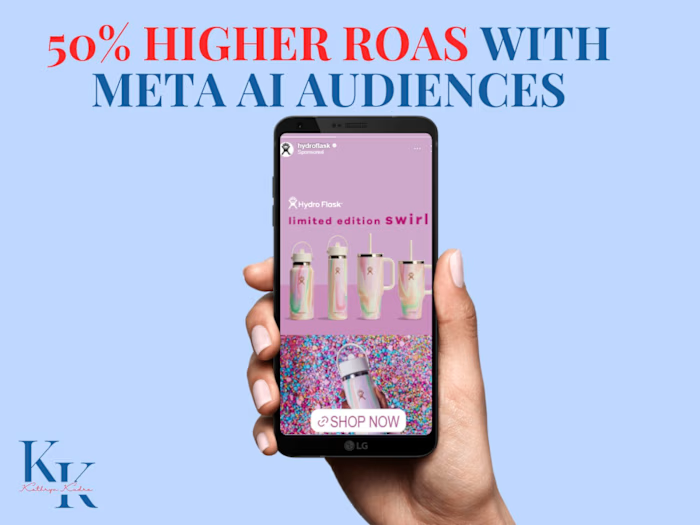
Revamped Meta strategy resulted in a +39% increase in ROAS YoY

Kathryn Kudra


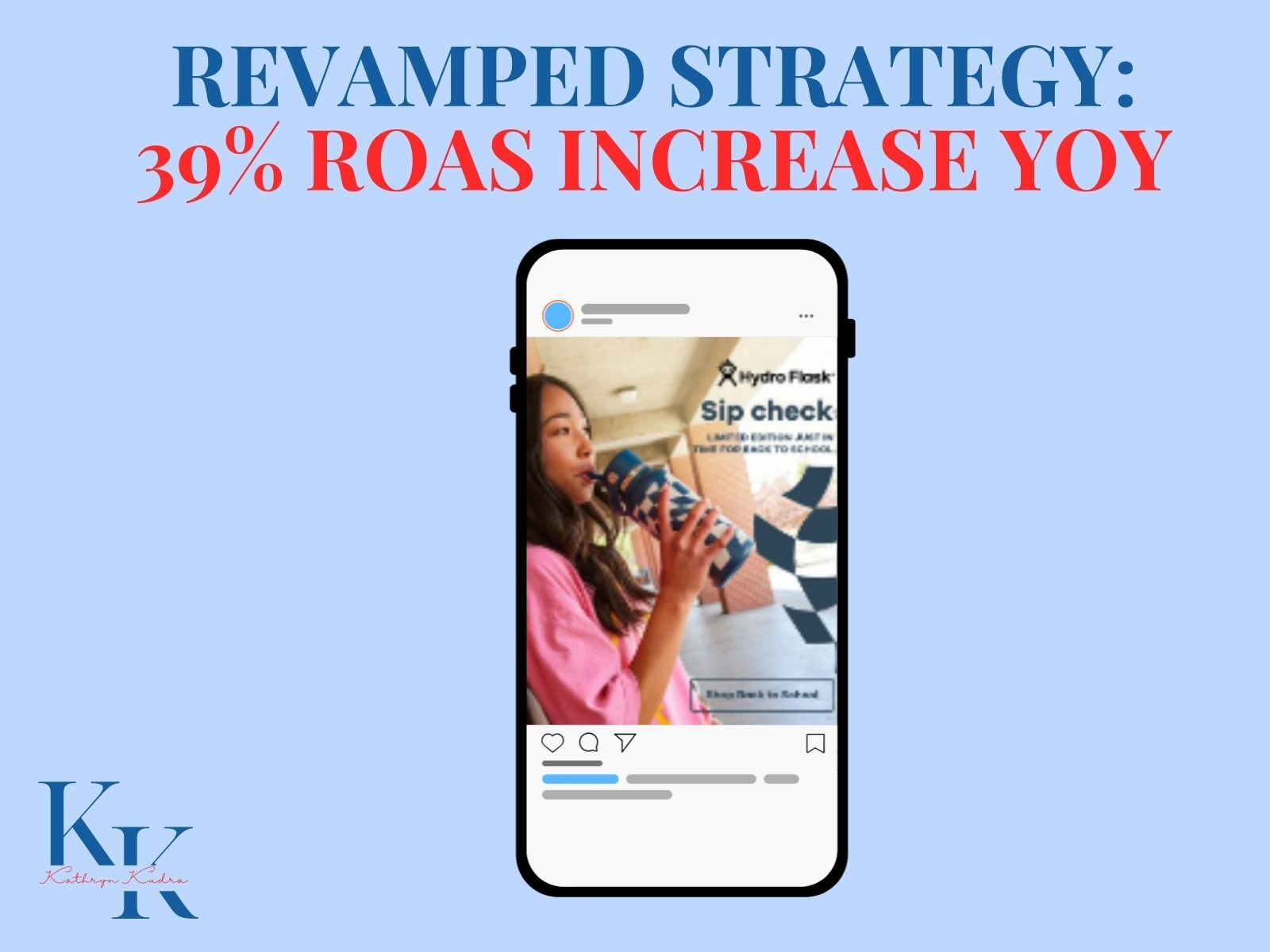
Case Study: Revamping Hydro Flask’s Meta Strategy Resulted in a 39% increase in ROAS (Return on Ad Spend) YoY
Overview
Hydro Flask approached the Back-to-School (BTS) season with a reduced media budget year-over-year, but still needed to grow brand awareness, drive qualified traffic, and improve ROAS efficiency across Meta. I led the full-funnel strategy, media execution, creative optimization, and performance analysis.
Despite the lower spend, we successfully launched a top- and mid-funnel approach to increase demand while increasing lower-funnel efficiency — proving opportunity for the brand to scale profitably during high-intent seasonal moments.
My Role
Full-funnel Meta strategy development
Media buying & pacing
Creative testing & optimization
Audience development
Reporting, insights, and recommendations
Seasonal planning support
The Challenge
Compared to the previous year, the brand reduced the BTS investment by 28%, limiting the ability to capture peak seasonal demand. The goal was to improve paid efficiency despite reduced scale — and identify where incremental spend should have been deployed to avoid missed revenue opportunities.
What I Did
1. Rebuilt the full-funnel approach
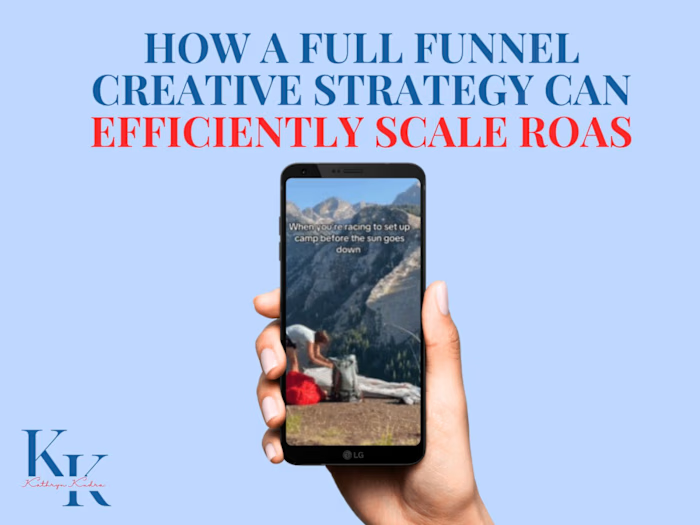
I revamped the BTS Meta strategy to strengthen Top-of-Funnel reach while tightening Mid- and Lower-Funnel retargeting to increase qualified traffic and purchase intent.
2. Refined audiences to boost engagement quality
High-intent custom audiences and refreshed interest segments were deployed to counter the reduced scale and maintain quality of traffic. With the new audiences, CVR improved by 37% supporting increased efficiency.
3. Optimized creative to align with funnel stage
Creative testing focused on diversifying assets throughout the funnel to mitigate creative fatigue. Human elements supported awareness and consideration stages to grow trust and provoke emotion while product-forward assets and seasonal messaging were primarily placed within conversion and retention tactics. By diversifying throughout the funnel, CTR saw a 15% increase YoY.
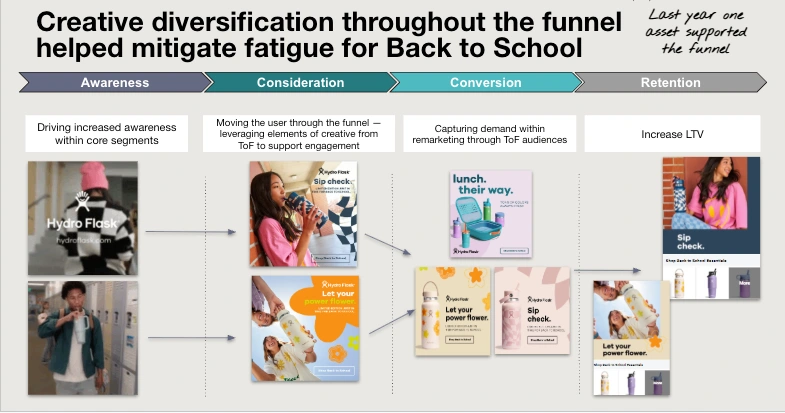
4. Shifted activation timing earlier in the funnel
To compensate for lowered media budgets, I activated ToF demand-driving campaigns earlier, aligning with consumer planning behavior during BTS.
Results
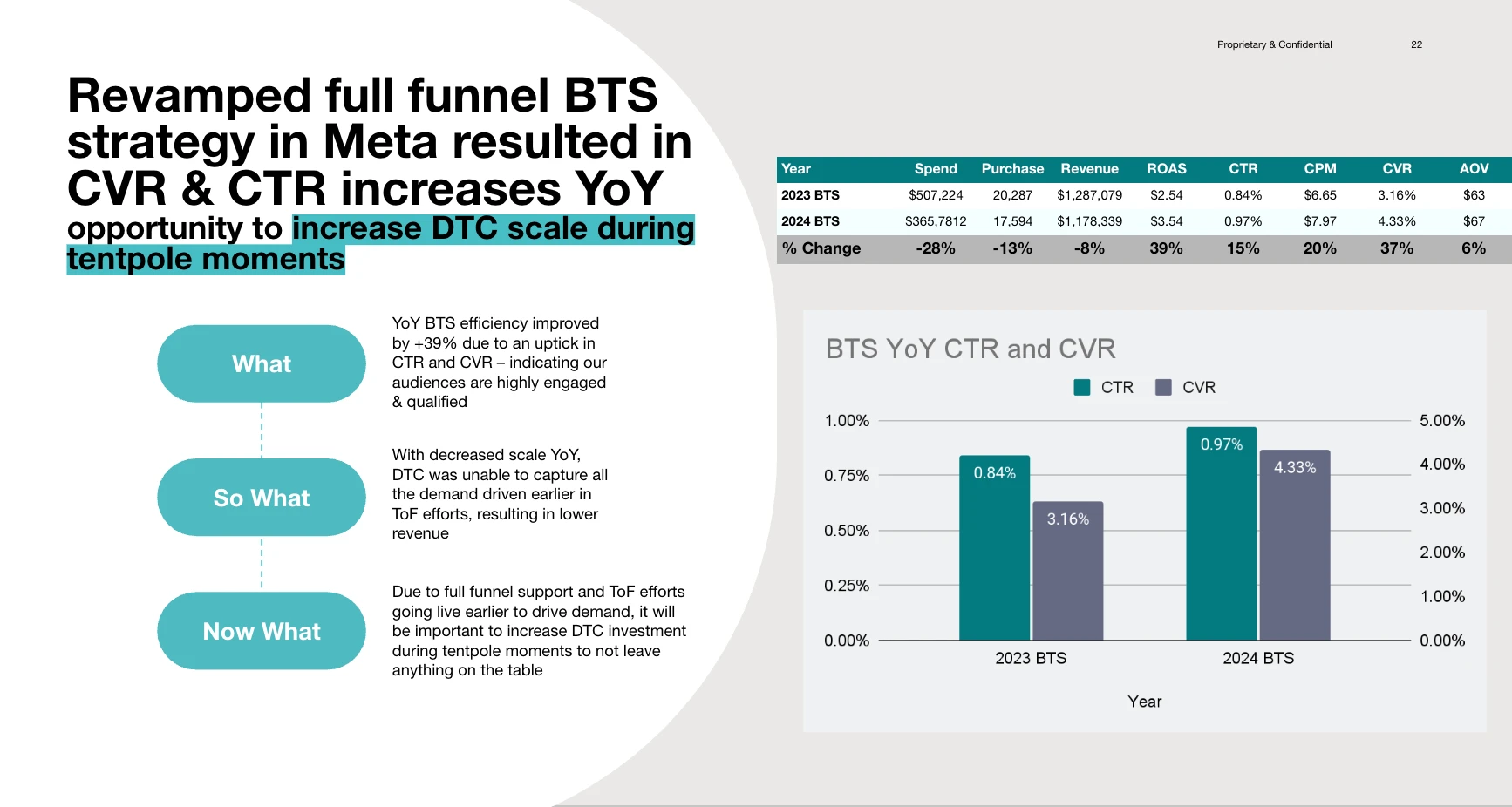
Even with significantly less budget YoY, the updated strategy delivered notable efficiency gains:
CTR increased 15% YoY
CVR increased 37% YoY
ROAS improved 39%, despite lower spend
Higher AOV (+6%) and more qualified traffic
Demonstrated scalable opportunity for future tentpole seasons
These gains indicate that audiences were more engaged, creative was stronger, and the full-funnel structure was more effective — even under budget constraints.
Impact & Recommendations
The performance proved that Hydro Flask could have profitably supported additional DTC investment during BTS. Based on the results, I recommended increasing future tentpole budgets to avoid leaving revenue on the table and to fully capture seasonal demand generated.
Outcome
This project showcased how strategic restructuring, early demand generation, and precise optimization can drive stronger performance — even with limited resources. Hydro Flask left the BTS season with a more scalable Meta framework and clear insights for future seasonal activations.
Like this project
Posted Jan 28, 2026
Reduced spend can drive efficiency through stronger targeting, creative, and funnel alignment, but scaling DTC in tentpoles is crucial to capture full demand.
Likes
1
Views
27
Timeline
Jul 1, 2024 - Sep 30, 2024
Clients
Hydro Flask