Design and Development of Moodie CBT App

Nicole

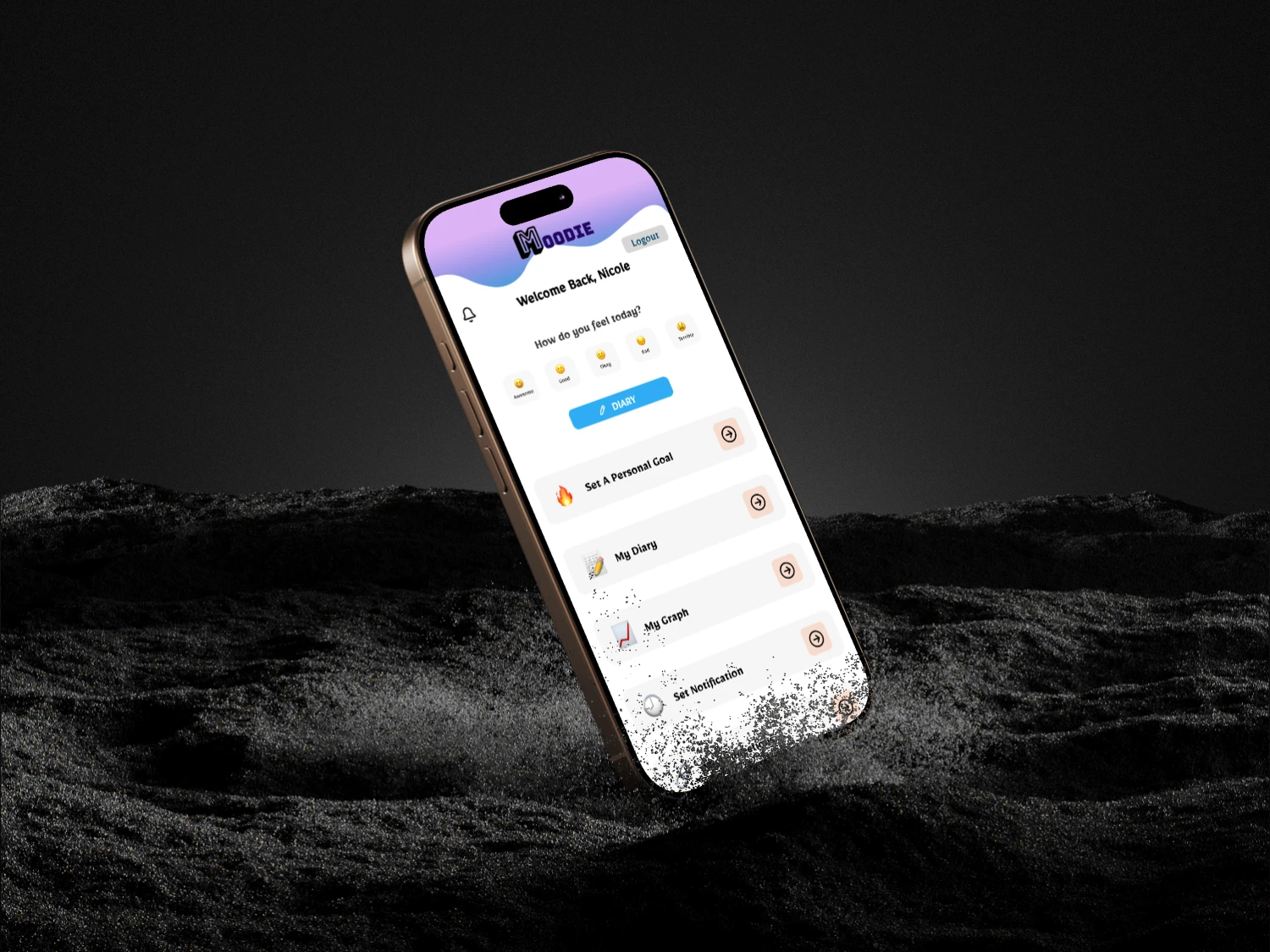
Moodie - A digital self-monitoring app for CBT clients and therapist
Project Description
Cognitive Behavioural Therapy (CBT) is a type of therapy that aims to help individuals recognize and change unhelpful patterns of thinking and behaving that can lead to distress. The process of CBT helps individuals identify and challenge negative or distorted thoughts and beliefs.
Between therapy sessions, self-monitoring or diary work is a core technique where clients track their thoughts, emotions, and behaviours in order for client and therapist into identifying patterns that contribute to emotional difficulties. Many therapists would still provide their clients with a piece of paper to physically document their emotions and behaviours outside the session (Figure 1). With the improvement of technology, it takes me to think that it would be a great idea to transform this physical documentation into the digital form.
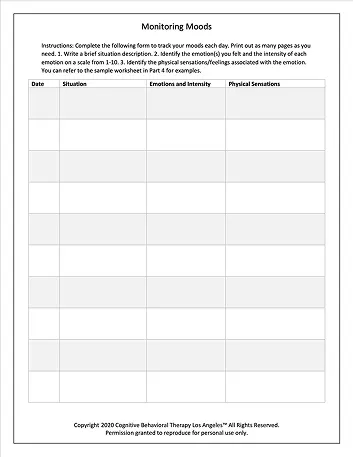
Figure 1: Manual self-monitoring form
What is out there?
I scoured the internet and App Store thinking there must be something that allows monitoring or diary work and sharing between the client and the therapist. Most of the options I came across were either too narrow in providing the emotional trend (Moodfit), too focused on the diary function (Daylio), or the mental health practices (Worry Watch).
Taking the dive
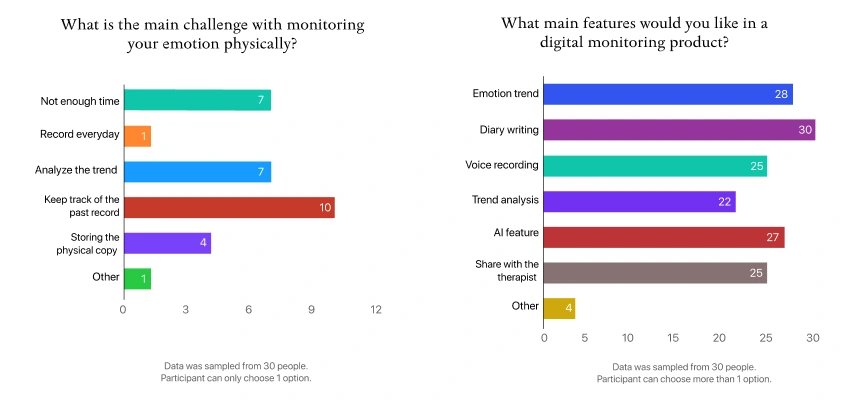
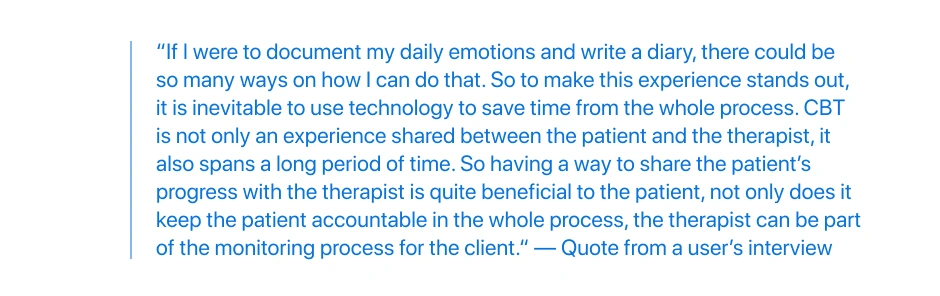
I started brainstorming the elements of the traditional monitoring method and the digital version. What makes the experience more effortless? What features are people interested in having? What are some other needs or wants, and issues that can arise for clients between sessions?
The making of Moodie
From the data I collected, I created an ideal user flow as how I imagined my app to pan out and what my desired user experience would entail. It later developed into an experience map, which captured Carmen’s (the user persona) journey and emotional results with each touchpoint she performs within the app.
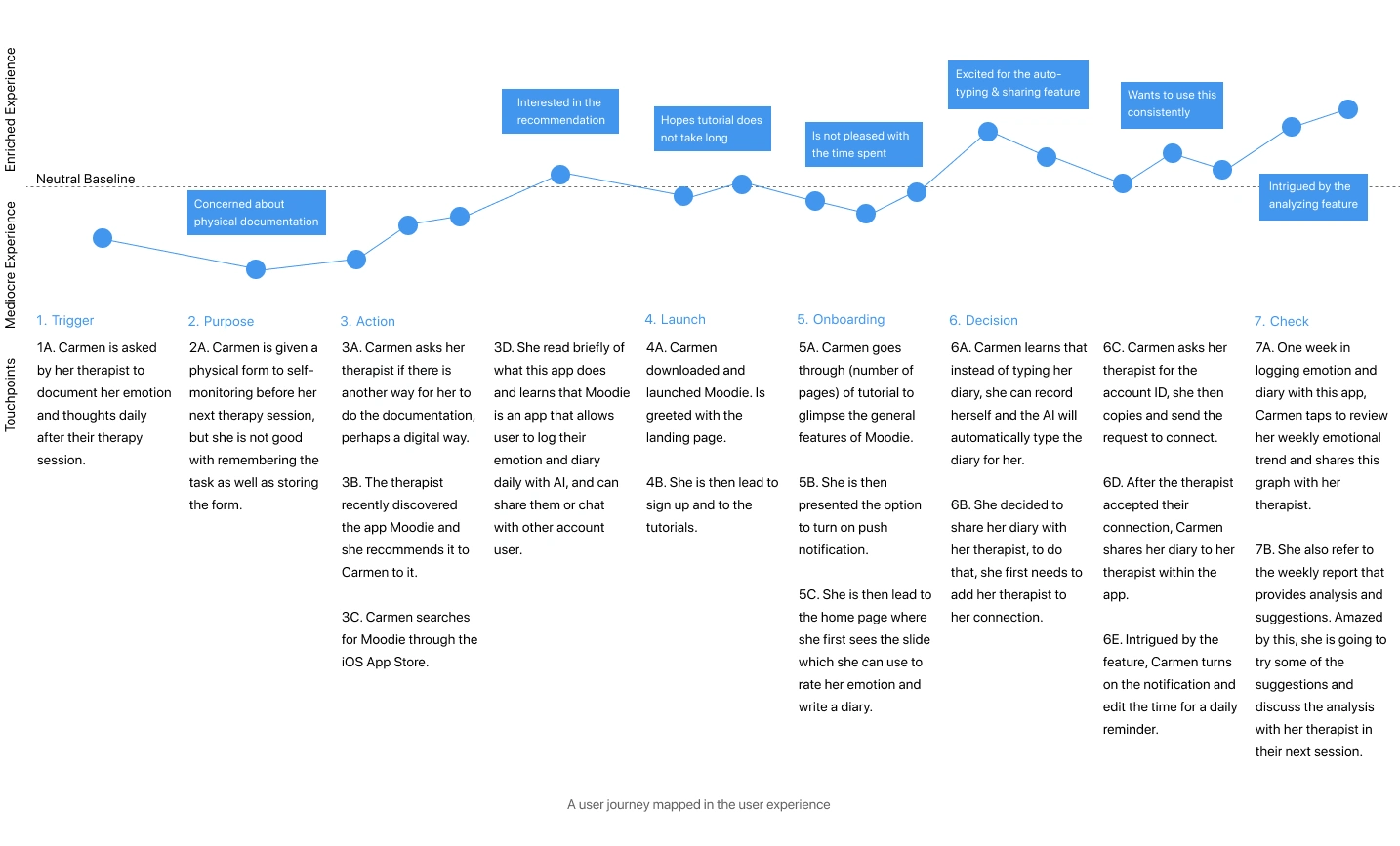
From the data I collected, I created an ideal user flow as how I imagined my app to pan out and what my desired user experience would entail. It later developed into an experience map, which captured Carmen’s (the user persona) journey and emotional results with each touchpoint she performs within the app.
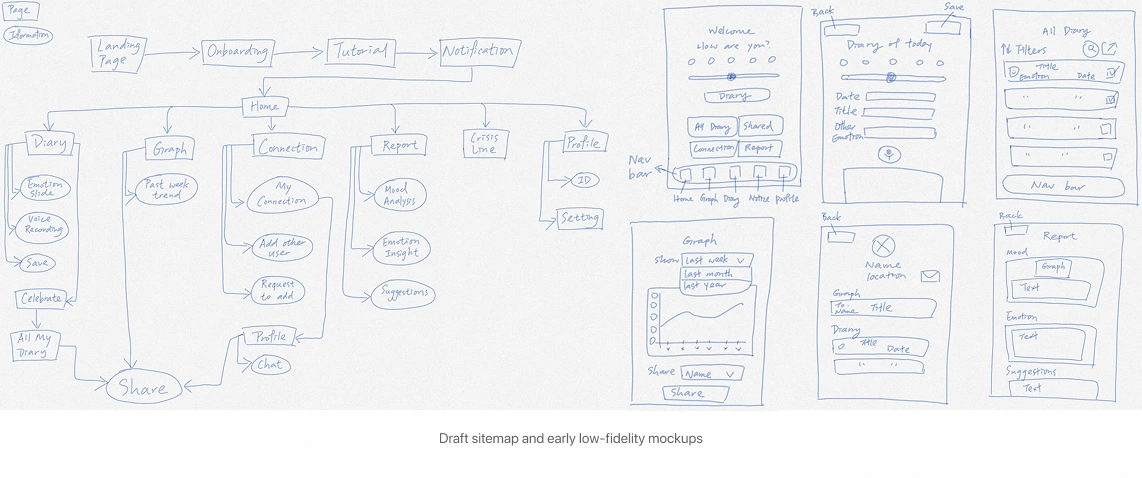
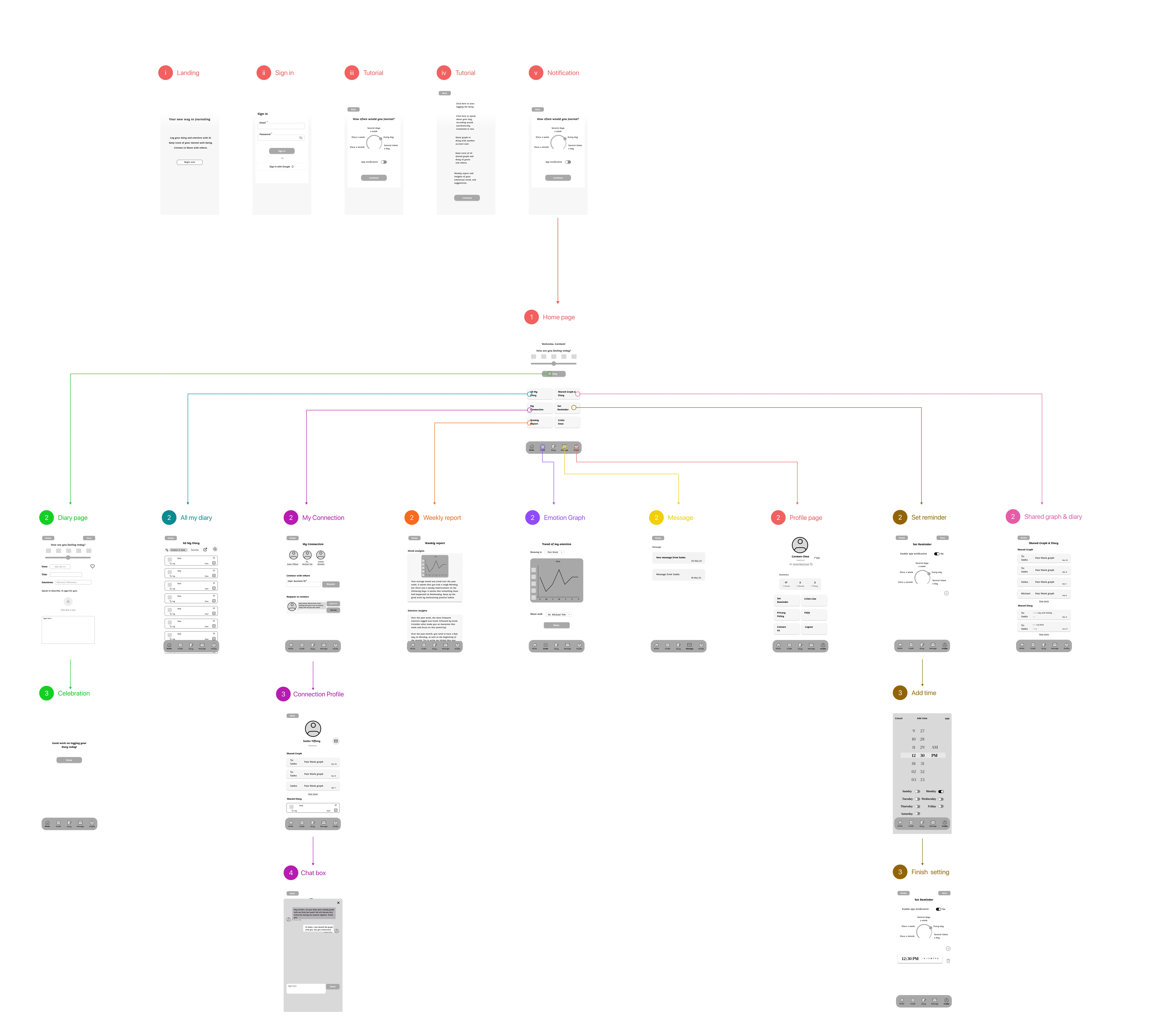
The redesigned user flow including mid-fi wireframes
Moodie’s initial design idea shows all features can be navigated from the home page: diary, graph, connection, report, help resources, and profile. Which I learned later that it is a great way for user navigation. After conducting user-testing with 5 people, it was suggested that in order to bridge user and their therapist together through this design, and to encourage usage consistency, there are other features that would be nice to include: notification to show any update from other users, faster access to the chat feature, faster route to set a reminder, also quick access to keep track of all the shared graph and diary between users. I redesigned the user flow map with this change in mind to make sure various features’ routes were faster to access.
I started pulling user interface inspiration from popular journalling app (MindShift) to study how they guide users through complicated journeys. Together with the user’s feedback I gathered, I updated the user flow map.
Moving forward
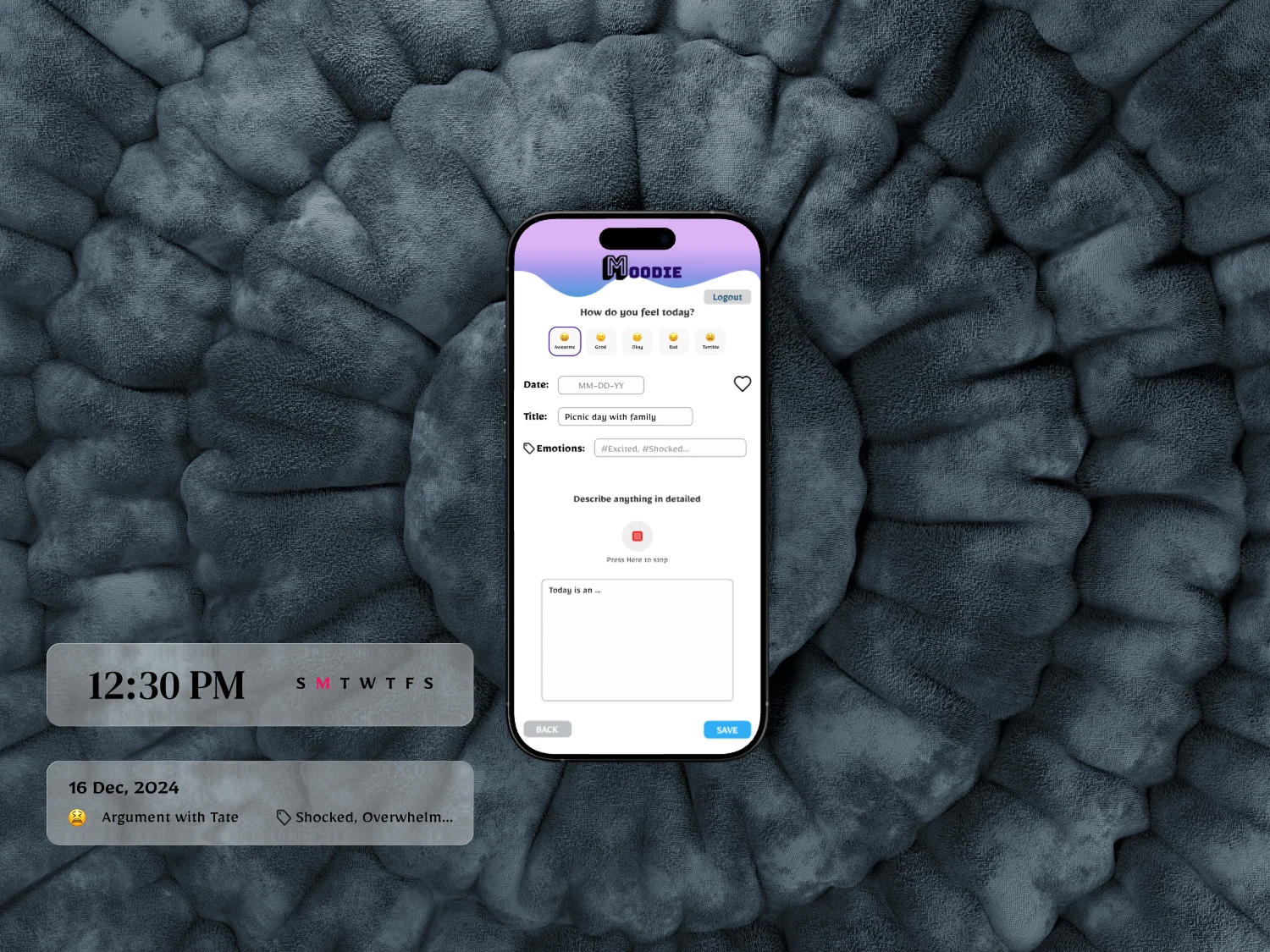
There is still a lot more to explore with Moodie. What if the AI feature expands into the chat box feature? Like 7 Cups of Tea, they provide free chat feature with the AI counsellor. Can user include more than just recording or text in the diary? Can user share their graph and diary to another platform? These are just some of the questions I'd like to expand on as I continue to work on this project. For now, feel free to check out the current state of the app below.
Like this project
Posted Apr 11, 2026
A self-monitoring app for CBT patients, highlighting user-centered features and navigation.