Kesha English Conversation Practice App

Daria Karpova


Kesha — Making English Conversation Practice Feel Real
Role: Product Concept & Conversational UX
Platform: Android · Consumer EdTech
Overview
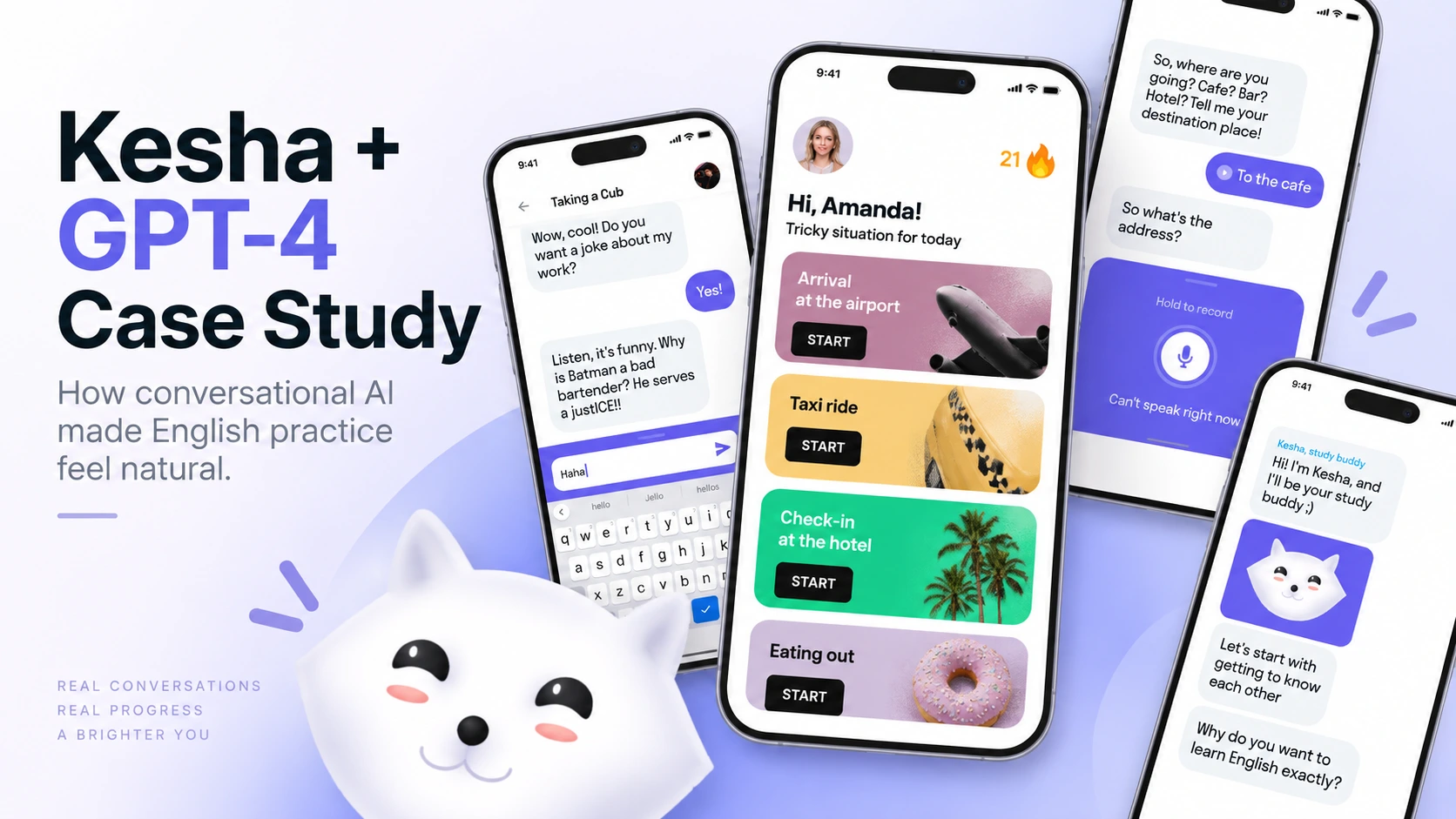
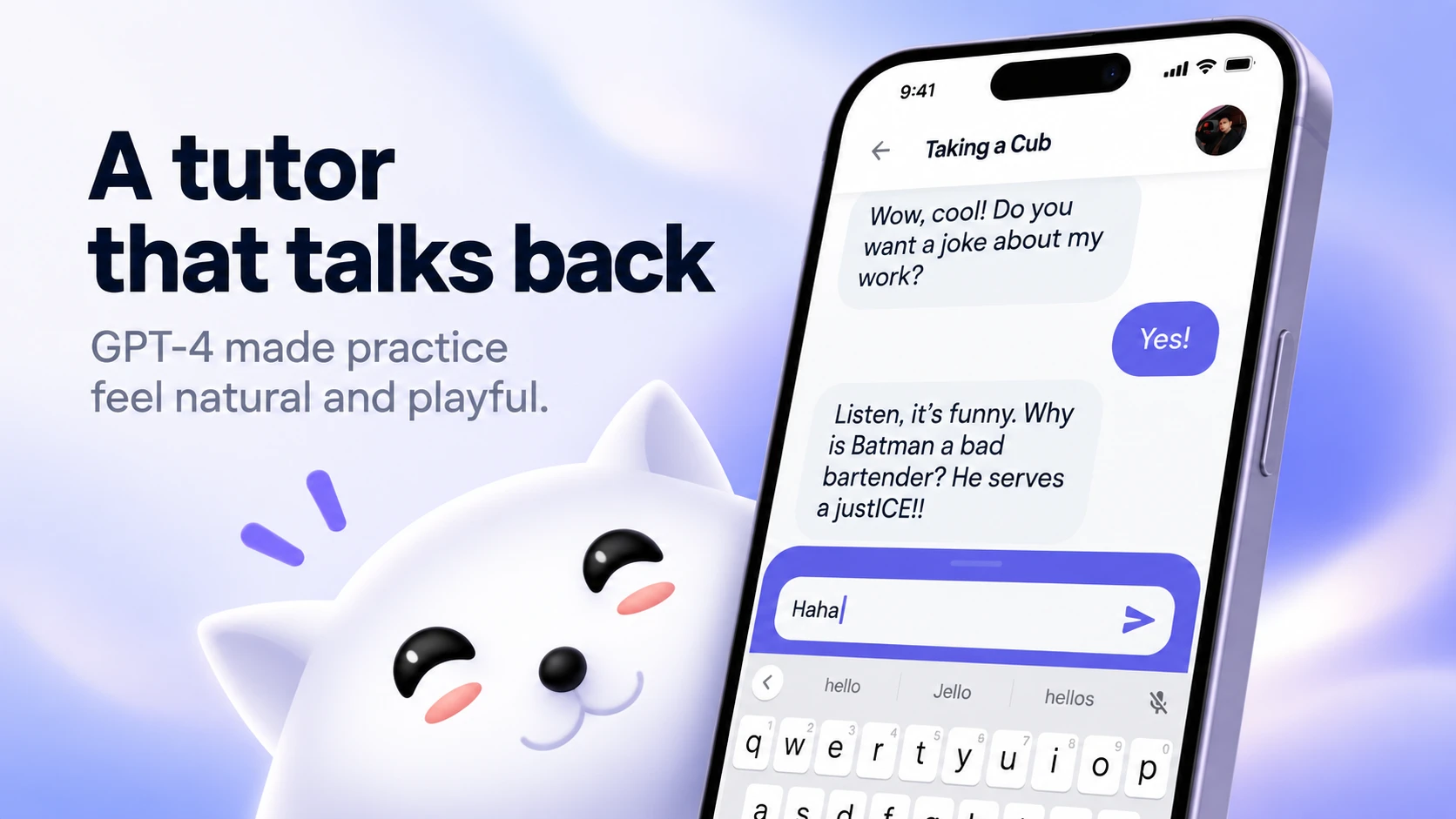
Kesha is an Android app that helps learners practice English through everyday conversations. Instead of working through static textbook dialogues, learners can enter familiar situations, respond with their own words and practice using voice or text.
From taking a taxi to negotiating a price, the scenarios connect language learning with moments people can recognize from real life.
The Product Challenge
Knowing vocabulary is not the same as being ready to speak. The experience needed to make open-ended conversation approachable on a phone, giving learners enough context to begin without making the dialogue feel rigid or predetermined.
My Contribution
I contributed to the product concept and conversational UX, focusing on how learners enter a scenario, understand their task and continue a dialogue.
Scenario-based learning: framed practice around recognizable situations.
Conversational UX: shaped the progression from context to learner response and ongoing exchange.
Voice and text input: explored clear interaction patterns for different ways of practicing.
Mobile-first clarity: kept the task and next action understandable on a small screen.
Learner confidence: made it easier to attempt a response without needing to prepare a perfect answer.
Key Experience Decisions
Start with a situation, not a script
Each scenario gives the conversation a recognizable purpose, helping learners focus on expressing themselves rather than repeating a fixed answer.
Leave room for different responses
Users choose what to say, making practice more flexible and closer to real communication.
Make speaking accessible
Voice and text interaction offer different ways into the same practice experience, with speaking at the center of the product.
Release & Recognition
Kesha was released publicly on Android and covered by technology publications for its conversational approach to language practice.
Like this project
Posted Oct 19, 2026
Helped shape Kesha, a released Android app for English speaking practice through real-life scenarios, text and voice dialogue, and conversational UX.