John Deere Data Adoption and Trust Enhancement Project

Peter Bartsch

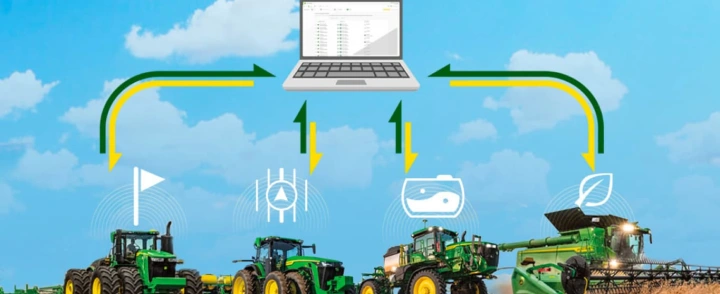
Driving platform-wide data adoption across 500K+ users without destroying trust—enabling $3.8B in connected services revenue
The Strategic Problem
John Deere's future depended on connected services, automation, and AI—but those capabilities required high-quality customer data. The existing model relied on optional data sharing across a fragmented ecosystem of legacy systems, which resulted in low adoption, incomplete profiles, and limited downstream value.
The challenge wasn't convincing users to click through forms. It was forcing adoption without eroding trust in a 185-year-old brand built on reliability.
Why This Was Hard
This problem sat at the intersection of business risk, user trust, and organizational complexity:
User diversity: Customers ranged from highly technical operators to users without email access
Data sensitivity: Sharing triggered deep concerns around surveillance, ownership, and value exchange
System fragmentation: Decades of acquisitions created inconsistent data models and experiences
Relationship complexity: Dealers—not Deere—owned many customer relationships
Global scale: 12 languages across diverse regulatory environments
A purely coercive approach would have increased churn and damaged long-term brand trust.
Strategy
Instead of "forcing" adoption directly, we reframed the problem as progressive value exchange. Our strategy was built on four principles:
Value Before Friction: Users should experience tangible benefits before being asked to share more data
Transparency Builds Trust: Make it clear what data is requested, why, and how it's used—no dark patterns
Multiple Paths, One Outcome: Support adoption through digital flows, dealer-assisted onboarding, and in-field support
Graceful Degradation: Users who didn't complete profiles immediately still retained access—urgency was created through value, not lockout
Execution
Progressive Profile Completion
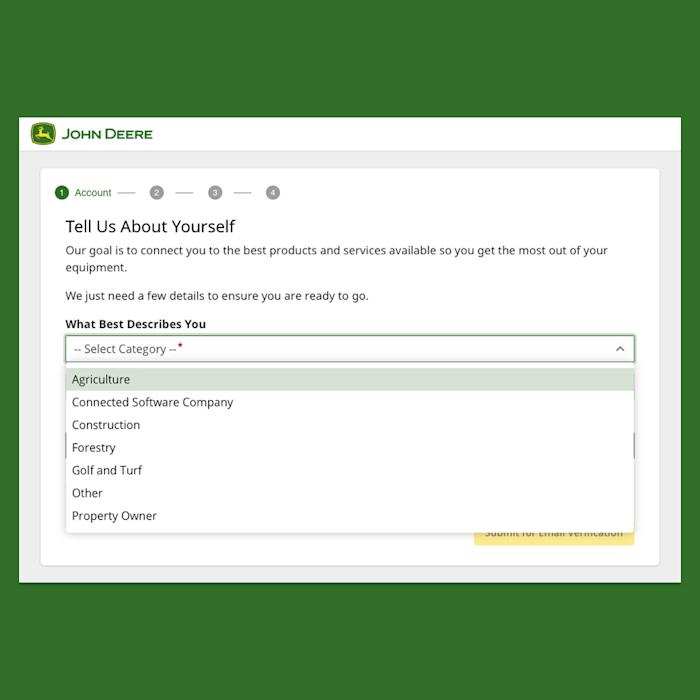
Instead of a single blocking form, we designed contextual prompts tied to moments of value: predictive maintenance, equipment insights, automation features. Each step answered one question: "What do I get if I do this right now?"
Dealer-Enabled Adoption
Dealers became UX multipliers, not just support. Clear dealer workflows for assisting customers, shared visibility into completion state, and consistent language across touchpoints reduced friction while preserving trust in local relationships.
Trust-First Messaging
We replaced abstract legal language with plain-language explanations, explicit benefit statements, and clear reassurance around data use and control. This dramatically reduced resistance during onboarding.
Results
Profile completion increased from 34% to 87%
Enabled $3.8B in connected services, automation, and AI-driven revenue
Reduced support tickets related to account setup by 16%
Improved dealer efficiency by 28%
Established a reusable adoption framework used across multiple Deere platforms
What This Unlocked
This work didn't just solve onboarding. It created:
A scalable foundation for AI-driven services
A repeatable model for introducing "forced" change without backlash
A trust-based approach now reused across Deere's digital ecosystem
The real outcome was organizational confidence in using UX to drive adoption—not just usability.
Like this project
Posted Feb 18, 2026
Enhanced data adoption through trust-building strategies, boosting revenue and profile completion.