Lead Magnet Sales Funnel

Alina Volkova

Problem:
A lot of small digital businesses struggle to turn freebie-downloaders into actual buyers — especially when their nurture sequences are rushed, unclear, or go live too late. Without a clear system behind the funnel, launches feel scattered: emails go out inconsistently, tracking is messy, and the team scrambles without a shared plan.
Solution
I built a lean but strategic email funnel launch plan focused on converting leads from a freebie into paying customers — all within a 3-week window.
The project is broken into three main phases:
Pre-Launch – planning, copy and design preparation.
Setup, Testing & QA – setting up google analytics, Convertkit, opt-in & thank-you pages, testing, including A/B testing of subject lines.
Post-Launch Review – reviewing open rates, conversion, engagement, CTR, and suggesting future improvements.
I also try to think strategically and proactively, even if I’m not the main copywriter or strategist yet. For example:
I scheduled time for a subject line split-test, because open rate matters a lot in short nurture funnels.
I scheduled time to analyze email performance 1 week post-launch and created a task to propose future improvements & optimization ideas for the client.
If this were a real client project, I’d also check if they’re tracking UTM links or tagging subscribers, and I’d coordinate that lightly without overstepping my scope.
See my full project Case Study here: https://www.notion.so/Lead-Magnet-Sales-Funnel-Case-Study-2226b06c7b928155b834f2bae9192076?source=copy_link
Like this project
Posted Aug 10, 2025
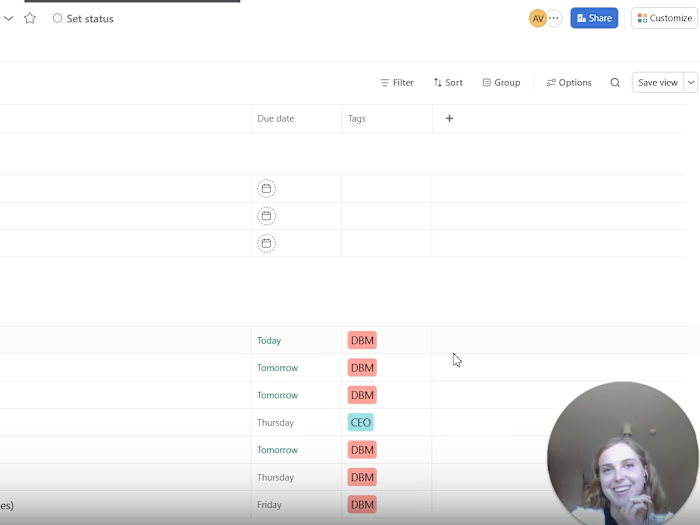
I built a lean but strategic email funnel launch plan in Asana, focused on converting leads from a freebie into paying customers — all within a 3-week window.
Likes
1
Views
11