
A financial forecast is not supposed to tell you what will happen.
It’s supposed to help you prepare for what could happen.
A lot of businesses build one forecast:
Revenue: $500K
Costs: $350K
Profit: $150K
Looks reassuring.
But what happens if revenue is 15% lower than expected?
Or costs increase by 10%?
Or a major customer pays 45 days later than usual?
Suddenly, that “forecast” doesn't look so comfortable.
This is why I think businesses should stop treating forecasts as predictions and start treating them as decision-making tools.
Instead of asking:
“What will happen?”
Ask:
“What happens if our assumptions are wrong?”
For example:
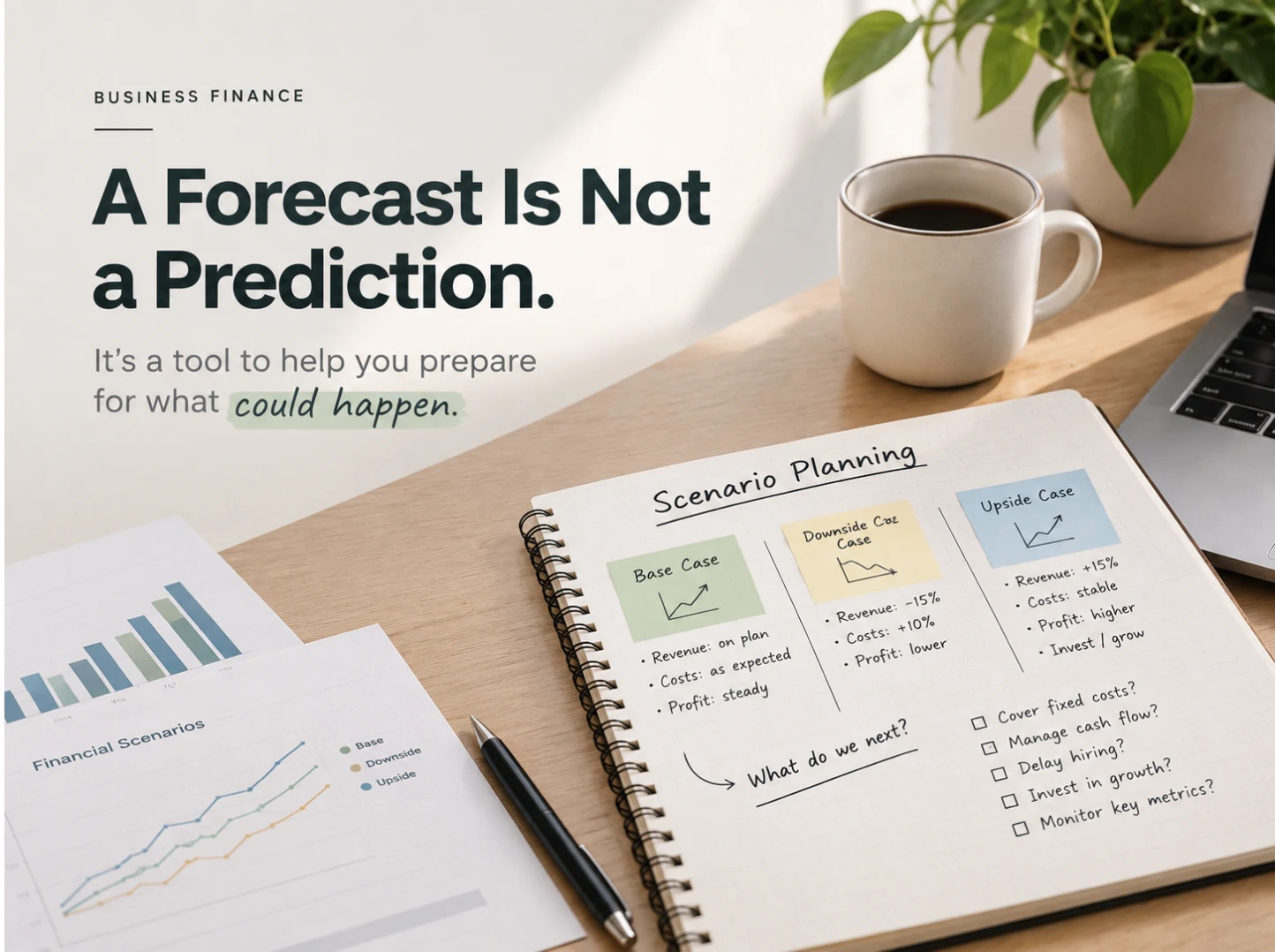
Base case
Revenue grows as expected.
Downside case
Sales are 15% below plan and operating costs increase.
Upside case
Sales exceed expectations and the business has capacity to invest.
Each scenario can answer different questions:
→ Can we still cover our fixed costs?
→ When would cash become tight?
→ Do we need to delay hiring?
→ How much room do we have for new investment?
→ What should we monitor most closely?
The value of forecasting isn't having a number that's perfectly accurate.
It's knowing which assumptions matter most — and what you'll do if they change.
Because a good forecast doesn't eliminate uncertainty.
It makes uncertainty easier to manage.
How often do you think small businesses should revisit their financial forecasts?
0 likes · 0 views · Sep 7, 2026
A financial forecast is not supposed to tell you what will happen. It’s supposed to help you prepare for what could happen. A lot of businesses build one for...
