
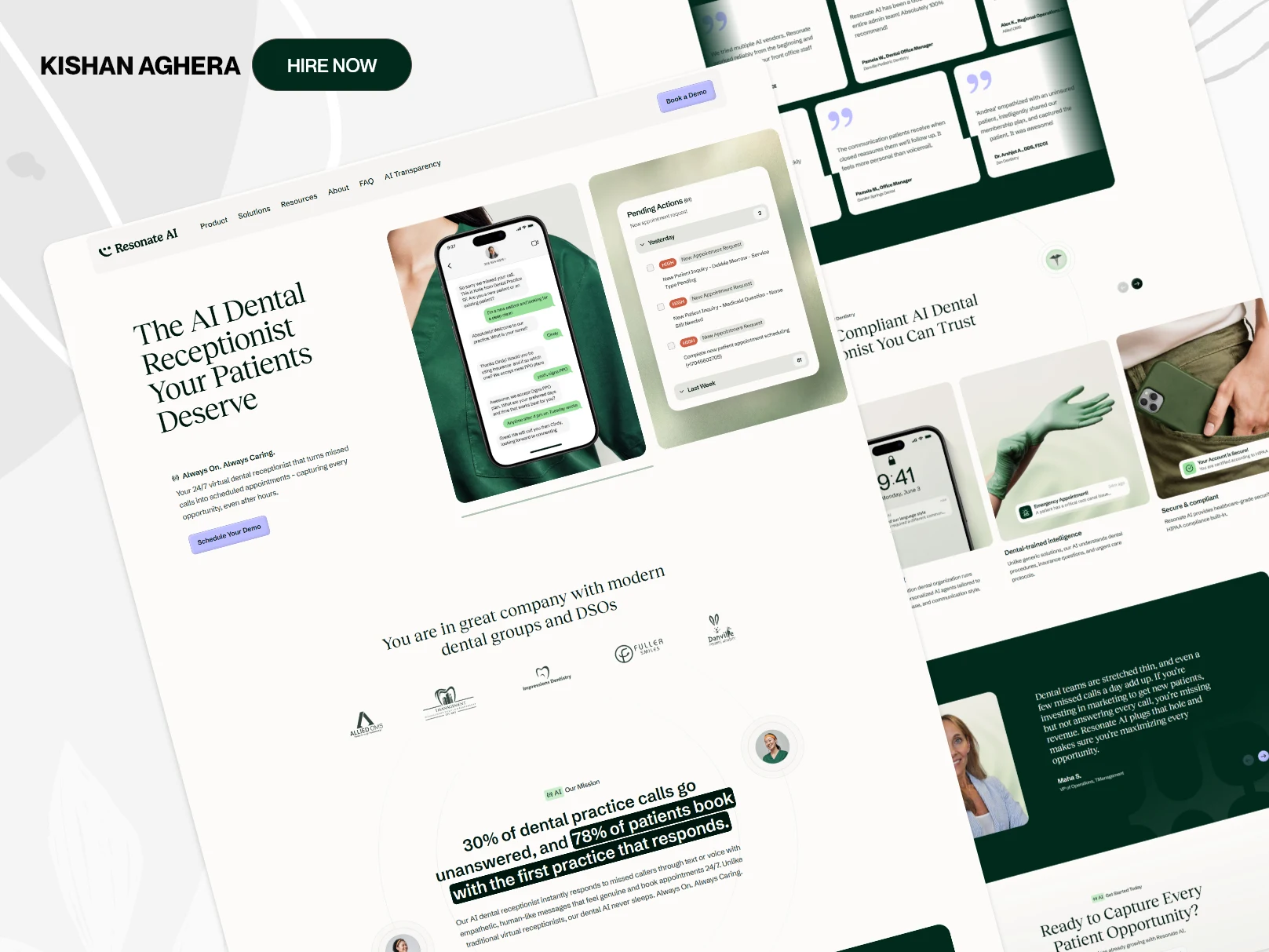
Figma to Webflow Case Study – Resonate
Project URL: https://www.resonateapp.com/
Project Overview
This project involved converting a high-fidelity Figma design into a fully responsive Webflow website for Resonate. The goal was to accurately translate the visual design into a fast, clean, and scalable website while maintaining design consistency, performance, and usability across devices.
My Role
Figma to Webflow Development
Responsive Layout Implementation
Webflow CMS & Structure Setup
Interaction & Animation Implementation
Cross-device Testing & Optimization
Webflow Website Design and Development
Process
Design Analysis
I carefully reviewed the Figma files to understand layout structure, spacing, typography, colors, and components.
Webflow Build
Built the website from scratch in Webflow using clean class naming, reusable components, and a scalable structure.
Responsive Design
Ensured pixel-accurate responsiveness across desktop, tablet, and mobile breakpoints.
Interactions & Polish
Implemented subtle animations and interactions to enhance user experience without impacting performance.
Testing & Optimization
Tested the site across browsers and devices to ensure consistency, speed, and accessibility.
Challenges & Solutions
Complex layouts: Solved using flexible grid and flexbox structures in Webflow.
Design consistency: Maintained exact spacing, font styles, and visual hierarchy from Figma.
Performance: Optimized images and animations for fast load times.
Outcome
The final result is a clean, modern, and high-performing Webflow website that closely matches the original Figma design. The site is easy to manage, scalable, and optimized for real-world use.
Tools Used
Figma
Webflow
Webflow Interactions
1 like · 22 views · Jan 30, 2026
Converted a Figma design into a responsive Webflow website for Resonate.

