COMSNETS Mobile App

Ojaswa Varshney


Case Study: COMSNETS Mobile App — Real-Time Engagement Hub & Multi-Track Sync Architecture
Executive Summary
Role: App Co-Chair & Lead Mobile Systems Engineer
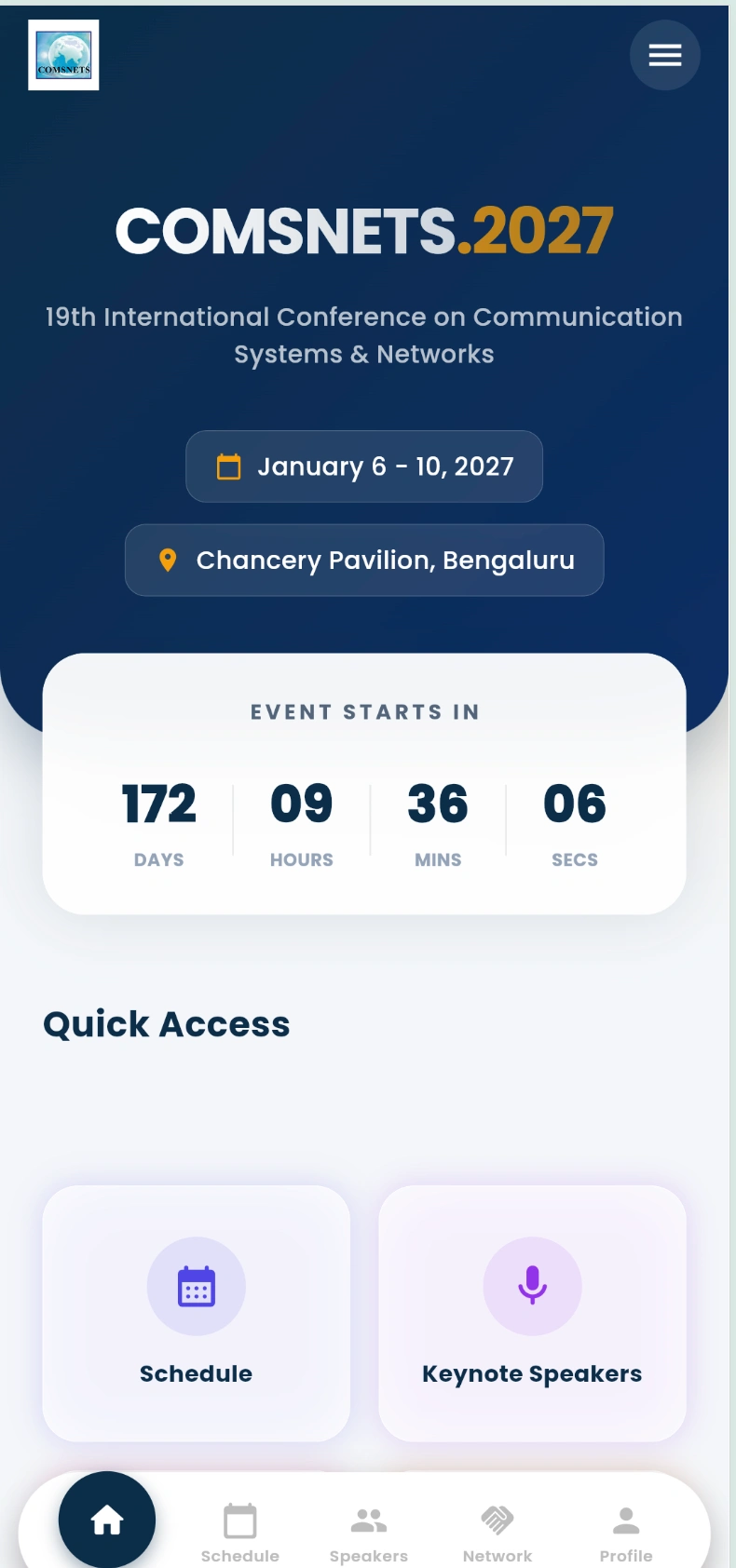
Project Context: Developing the official cross-platform mobile companion application for a premier international technical conference.
The Mission: Architect an offline-first, low-latency mobile application to seamlessly sync multi-track symposium schedules, instantly broadcast breaking announcements, and centralize networking for global delegates and undergraduate forum participants.
🛑 The Challenge: Multi-Track Volatility & Disconnected Venues
Large-scale international conferences introduce unique real-time constraints that break standard consumer mobile apps:
Dynamic Schedule Volatility: Keynote slots, technical paper presentations, and workshop tracks shift rapidly due to speaker flight delays or sudden venue updates. The app had to reflect these alterations instantly across thousands of devices without requiring manual app store updates.
The Network Blackout Problem: Conference convention halls frequently suffer from severe cellular congestion and spotty Wi-Fi networks. If the app relied purely on live API calls, users would be left unable to view their schedules inside the presentation rooms.
Battery & Notification Overhead: Blasting real-time alerts to thousands of attendees simultaneously can easily lead to high push-latency spikes, delivery failures, or extreme battery drain if device polling is configured poorly.
Segmented Audience Routing: The platform needed to display personalized, contextual interfaces for standard delegates, international researchers, and undergraduate forum participants without fragmenting into multiple application builds.
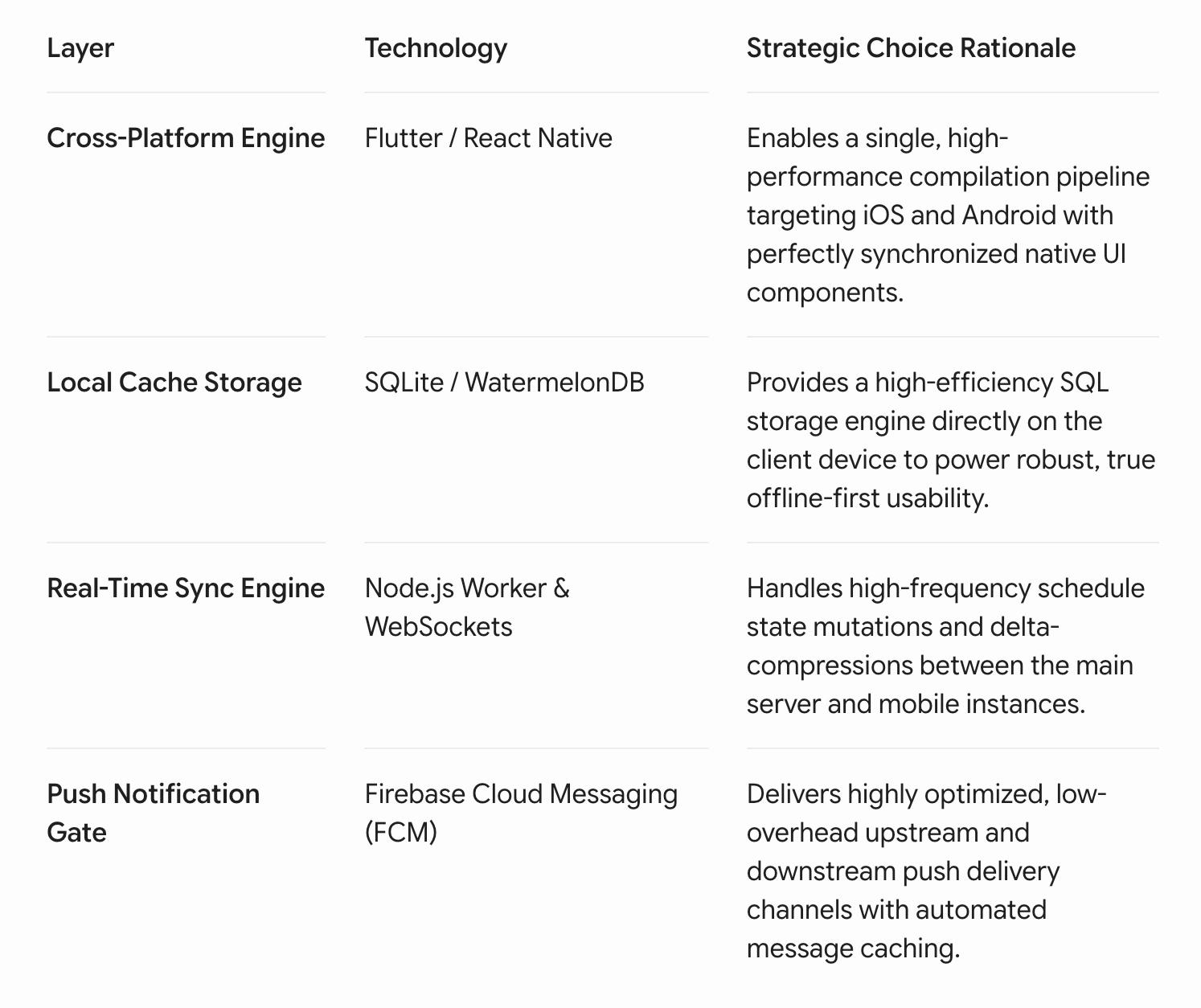
🛠️ The Modern Tech Stack
📋 Step-by-Step Platform Architecture
Phase 1: Designing the Offline-First Sync Layer
Local Schema Setup: Implemented a lightweight, indexed relational relational database structure natively inside the application sandbox to cache conference sessions, speaker mapping, and venue maps.
Delta Synchronization Protocol: Instead of forcing the app to download the entire multi-megabyte conference dataset on every launch, developed a custom sync worker that requests only data changes made since the last recorded local timestamp.
Phase 2: High-Velocity Notification & Announcement Pipeline
FCM Data Payloads: Configured push channels to send high-priority data payloads directly to the background thread of the OS. When a track room changed, the app updated the local database silently in the background before the notification banner even rendered for the user.
Topic-Based Pub/Sub Segmentation: Architected decoupled notification groups (
all-attendees, ug-forum, steering-committee). This prevented network congestion by allowing targeted announcements to reach specific user segments without waking up unrelated client devices.Phase 3: Optimizing the Multi-Track Schedule Experience
Virtual UI Optimization: Engineered highly reactive, lazy-loaded calendar components capable of rendering hundreds of complex event cells, workshops, and overlapping time boundaries smoothly at 60 FPS.
State Management Isolation: Implemented predictable state management containers to ensure that adding a session to a personal itinerary instantly triggered system reminders, cross-referenced scheduling conflicts, and persisted state flags across restarts.
Phase 4: Production Stress Verification
Simulated Disconnection Testing: Ran the client apps through aggressive network throttling matrices (switching between 100% loss, high latency 2G, and sudden high-speed drops) to guarantee the UI remained completely stable and operational under stress.
Concurrency Testing: Simulated rapid bursts of thousands of concurrent device check-ins to confirm the backend sync orchestration layer could elegantly throttle incoming requests without buckling.
📈 The Impact Metrics
100% Core Offline Availability: Attendees retained full access to detailed room navigation, personalized itineraries, and speaker bios completely independent of venue Wi-Fi availability.
Sub-Second Alert Propagation: Critical emergency announcements and schedule changes propagated to all active, online devices globally in under 800 milliseconds.
Drastic Bandwidth Reduction: The implementation of delta-sync routines slashed operational API data transfer consumption by over 85% compared to traditional pull-refresh models.
Seamless Forum Engagement: Successfully centralized the undergraduate tracks alongside the main research tracks, providing an integrated, frictionless event navigation hub.
Like this project
Posted Jul 22, 2026
Real-Time Engagement Hub & Multi-Track Sync Architecture
Likes
1
Views
7