
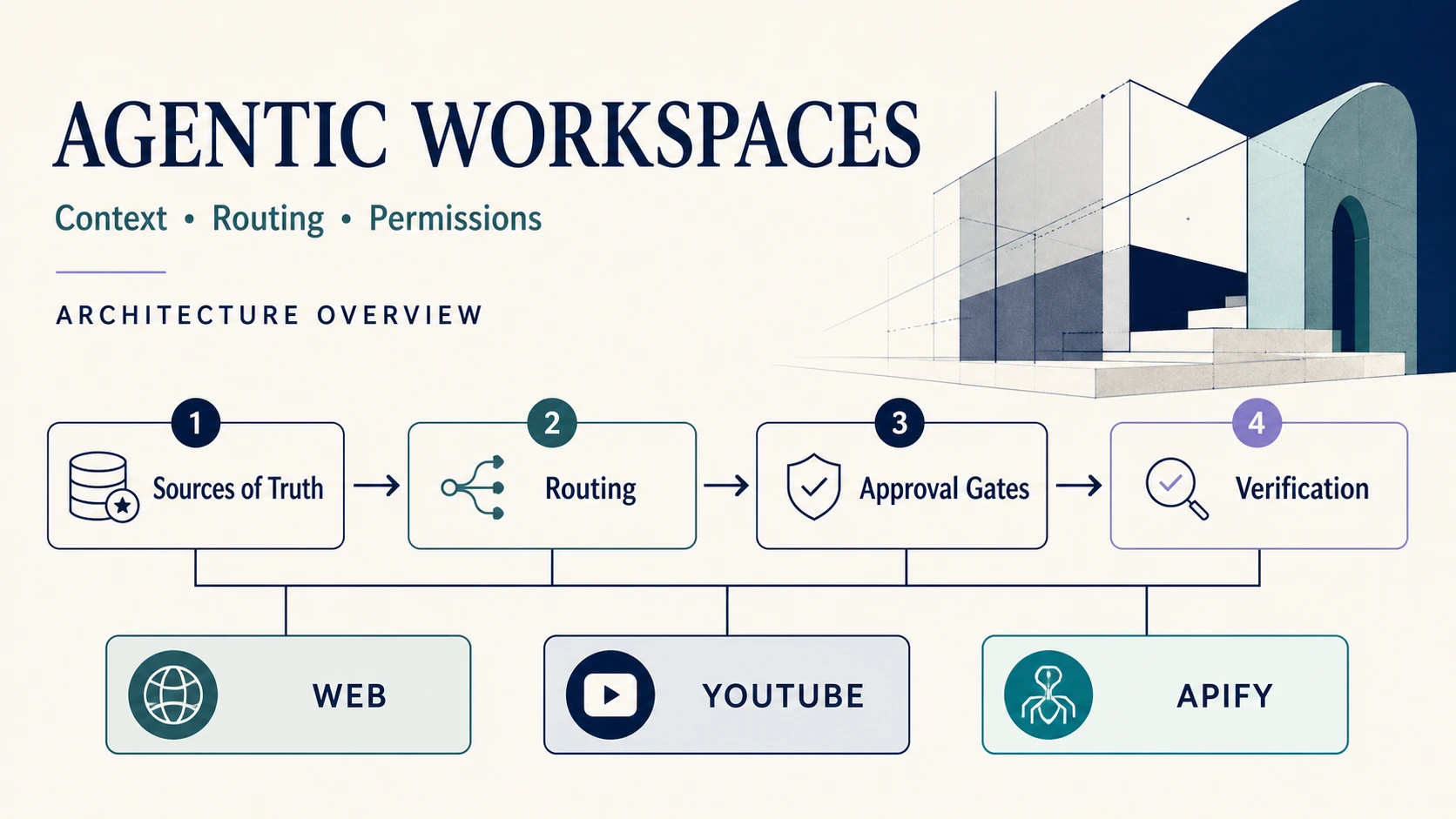
Agentic Workspaces: Context, Routing & Permissions
Problem
Long-running AI work becomes unreliable when instructions, facts, permissions, and verification rules are scattered across chats and files.
What I built
I designed three structured AI workspaces for web prospecting, YouTube creative operations, and Apify product operations. Each workspace uses documented sources of truth, routing rules, durable decisions, approval gates, and task-specific verification.
Core architecture
• explicit source hierarchy and context-loading rules
• separation of verified facts, hypotheses, decisions, and unknowns
• task routing to specialized skills or procedures
• permission gates before external actions, spending, publication, or credential changes
• verification beyond surface-level success signals
• session handoff and reusable documentation
My role
Context architecture, workspace instruction-file design, workflow mapping, permission design, testing, failure analysis, documentation, and iterative refinement.
Outcome
The systems make recurring AI-assisted work more coherent, auditable, and reusable. They are presented as operating architectures, not as generic prompt packs.
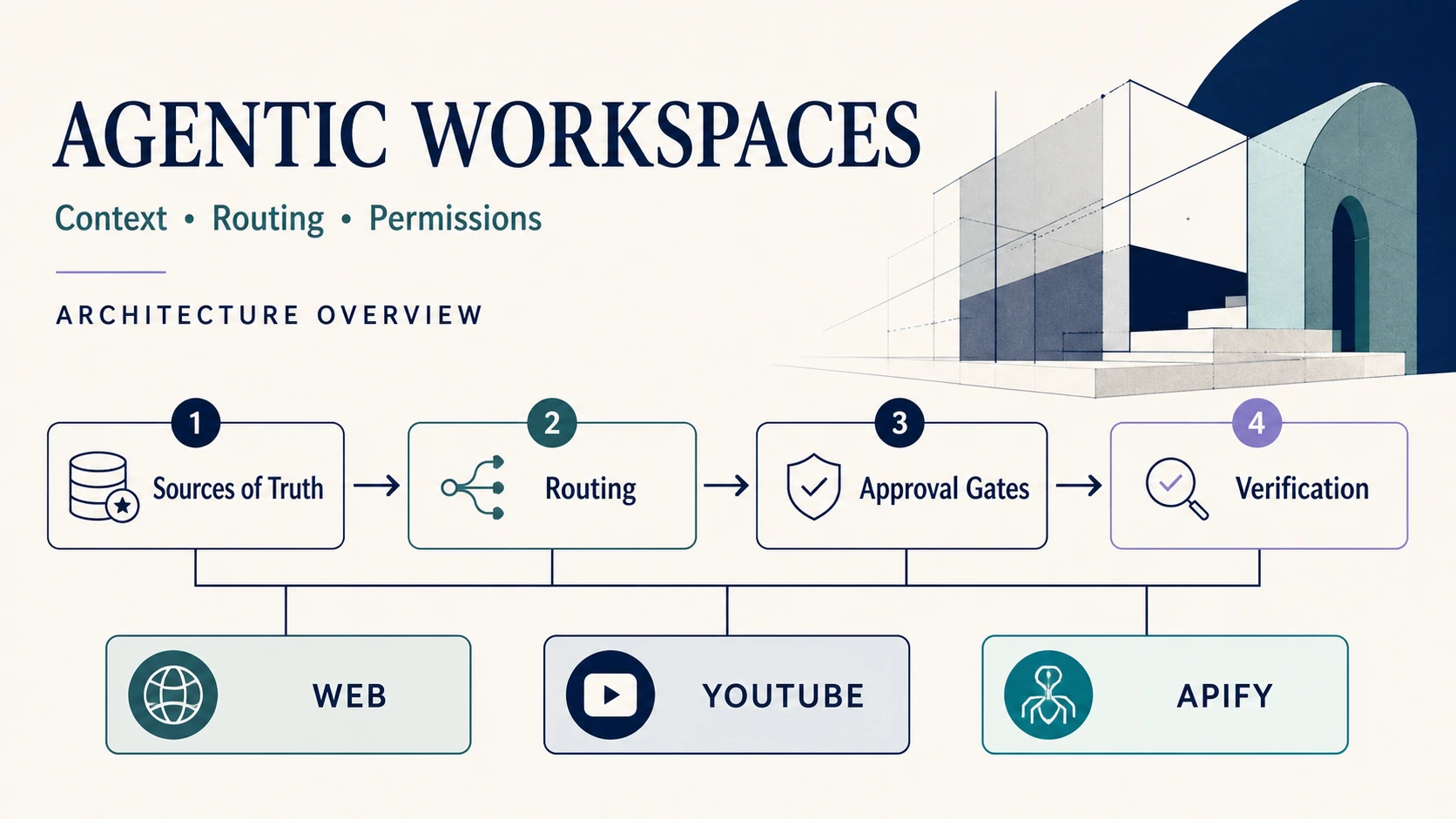
Architecture overview — sources of truth, routing, approval gates and verification across three documented workspaces.
0 likes · 4 views · Aug 12, 2026
Designed three reusable AI workspaces with sources of truth, task routing, memory, approval gates, verification procedures, and documented handoffs.


