Digital Presence Design for Piñata Cantina

Jessica Mena ✦


Project Overview
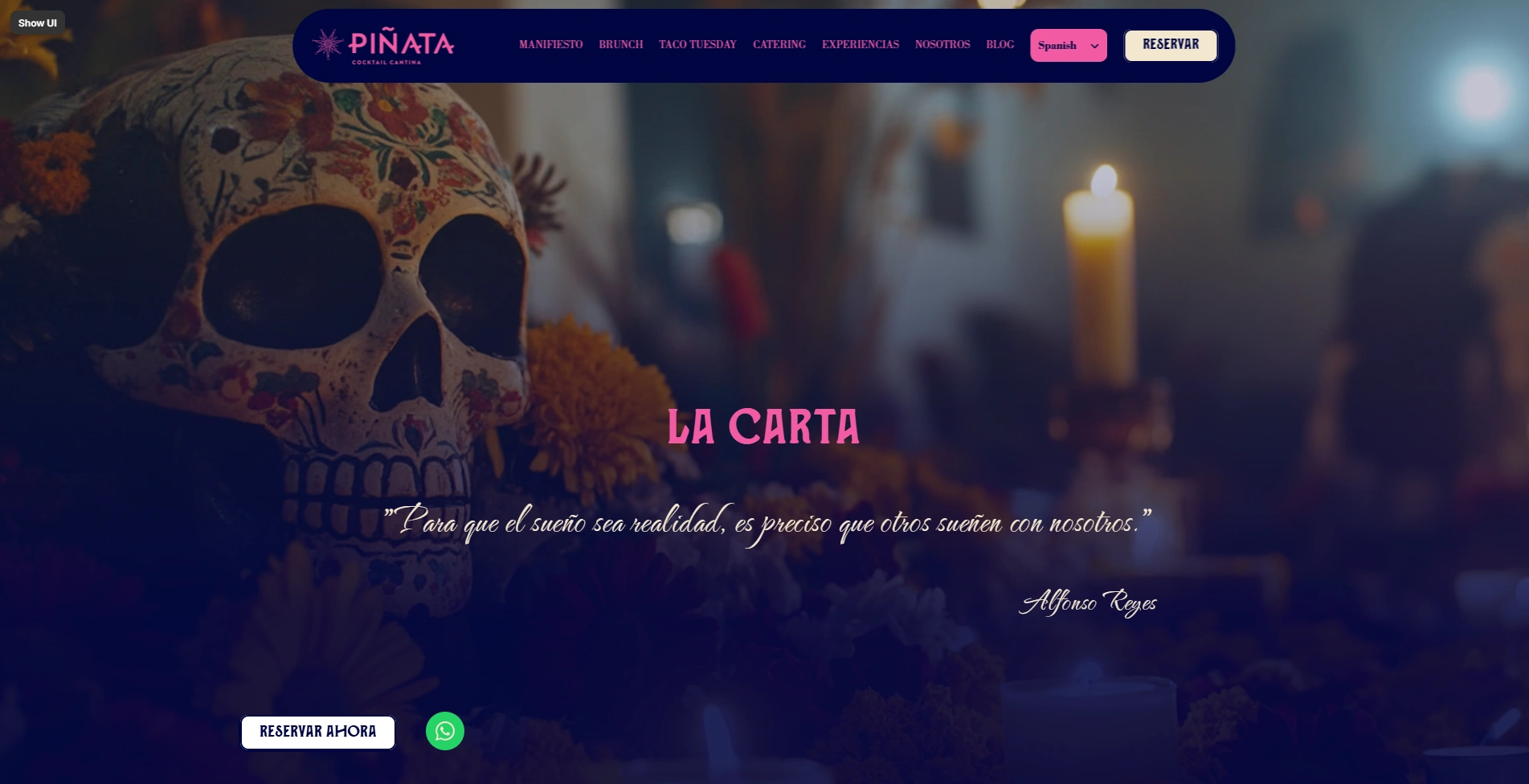
Piñata Cantina is not positioned as a traditional restaurant, but as a cultural and sensory destination inspired by the heritage, textures, and rituals of Yucatán.
The objective of this project was to design and build a digital presence capable of conveying atmosphere, storytelling, and identity before functionality — allowing users to feel the experience before they ever see a menu or make a reservation.
Rather than presenting information in a transactional way, the website was conceived as an extension of the physical space: immersive, warm, expressive, and layered with narrative cues.
The entire experience was designed and developed in Framer, creating a responsive, modular structure that balances editorial storytelling with conversion-driven usability.
The Challenge
Designing for hospitality often falls into predictable patterns:
menus first, booking buttons, generic imagery.
This project required moving in the opposite direction.
Key challenges included:
Translating a multisensory environment — smell, sound, texture, ritual — into a purely visual medium.
Avoiding folkloric stereotypes while still honoring cultural roots.
Designing a structure that builds emotional engagement before presenting practical information.
Maintaining clarity and performance while using rich imagery and expressive layout.
Creating a system flexible enough to grow with seasonal menus, events, and evolving brand identity.
The question guiding the design became:
How do you design a website that behaves more like entering a space than browsing a page?
Experience Strategy
The website was intentionally structured as a progressive reveal rather than an informational hierarchy.
Instead of asking users to choose immediately, the interface guides them through:
Introduction to mood and philosophy
Establishing tone before offering detail.
Cultural grounding
Communicating inspiration, ingredients, and heritage.
Experience framing
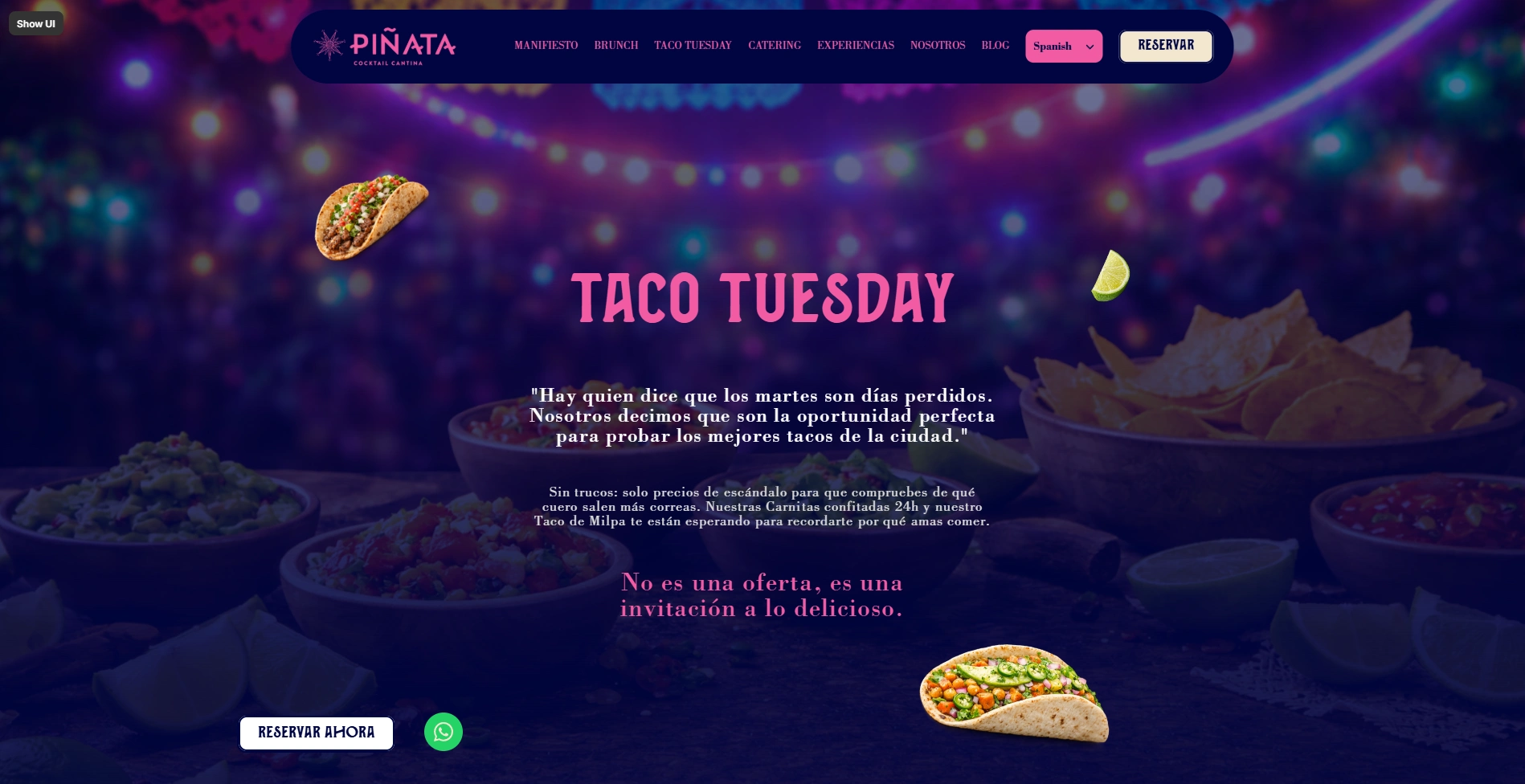
Presenting food and mixology as rituals rather than products.
Social validation and invitation
Building trust through imagery and atmosphere.
Seamless transition to action
Reservation pathways appear naturally once emotional engagement is achieved.
This mirrors the psychological arc of dining itself:
anticipation → discovery → immersion → participation.
Visual Language
The art direction intentionally balances two worlds:
Analytical PrecisionOrganic ExpressionClean typographyTextured imageryStructured gridsFluid compositionsControlled spacingWarm tonal paletteModern UI clarityCultural depth
This contrast reinforces the brand’s identity:
a contemporary reinterpretation of tradition.
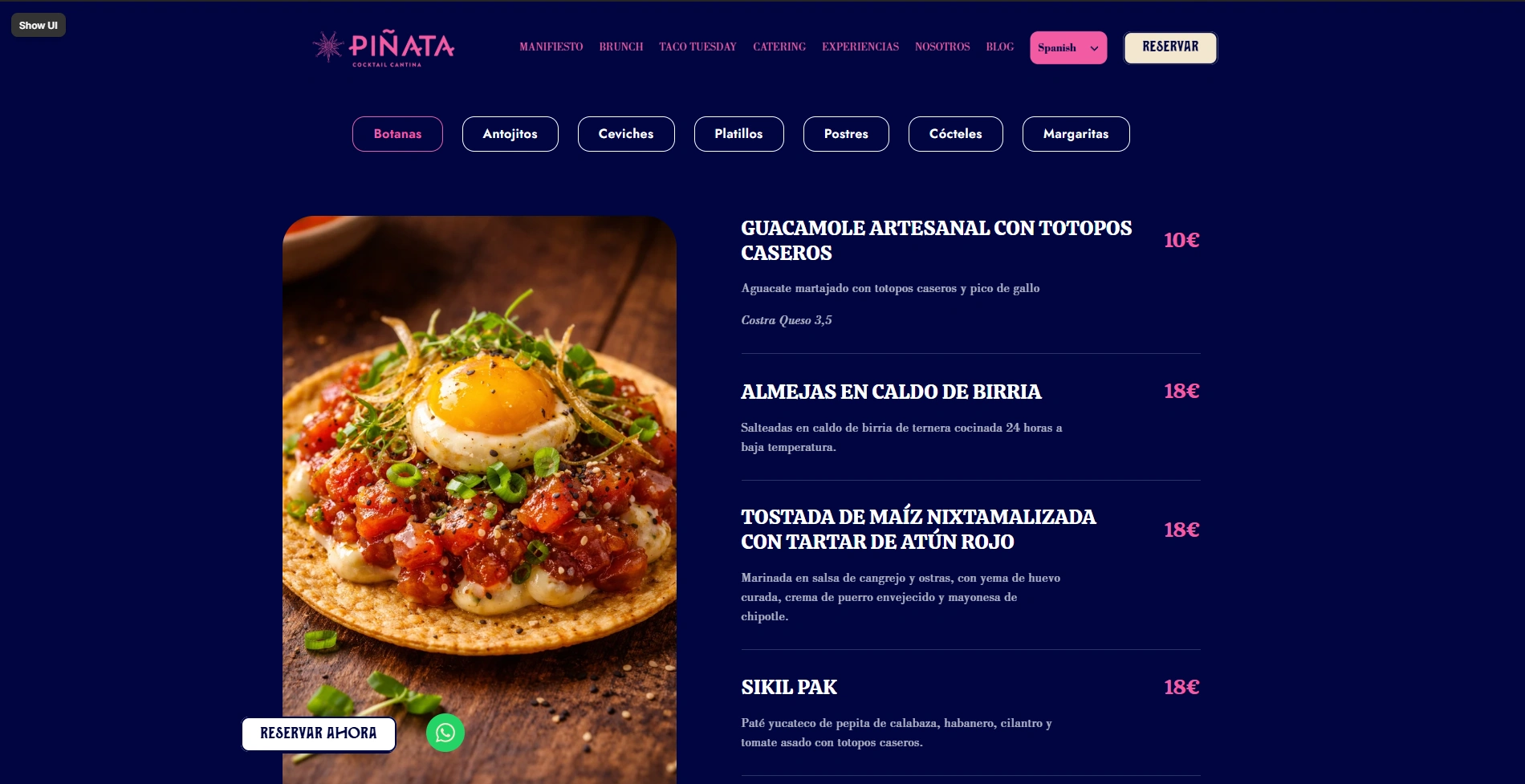
Designing for Appetite Without Showing a Menu
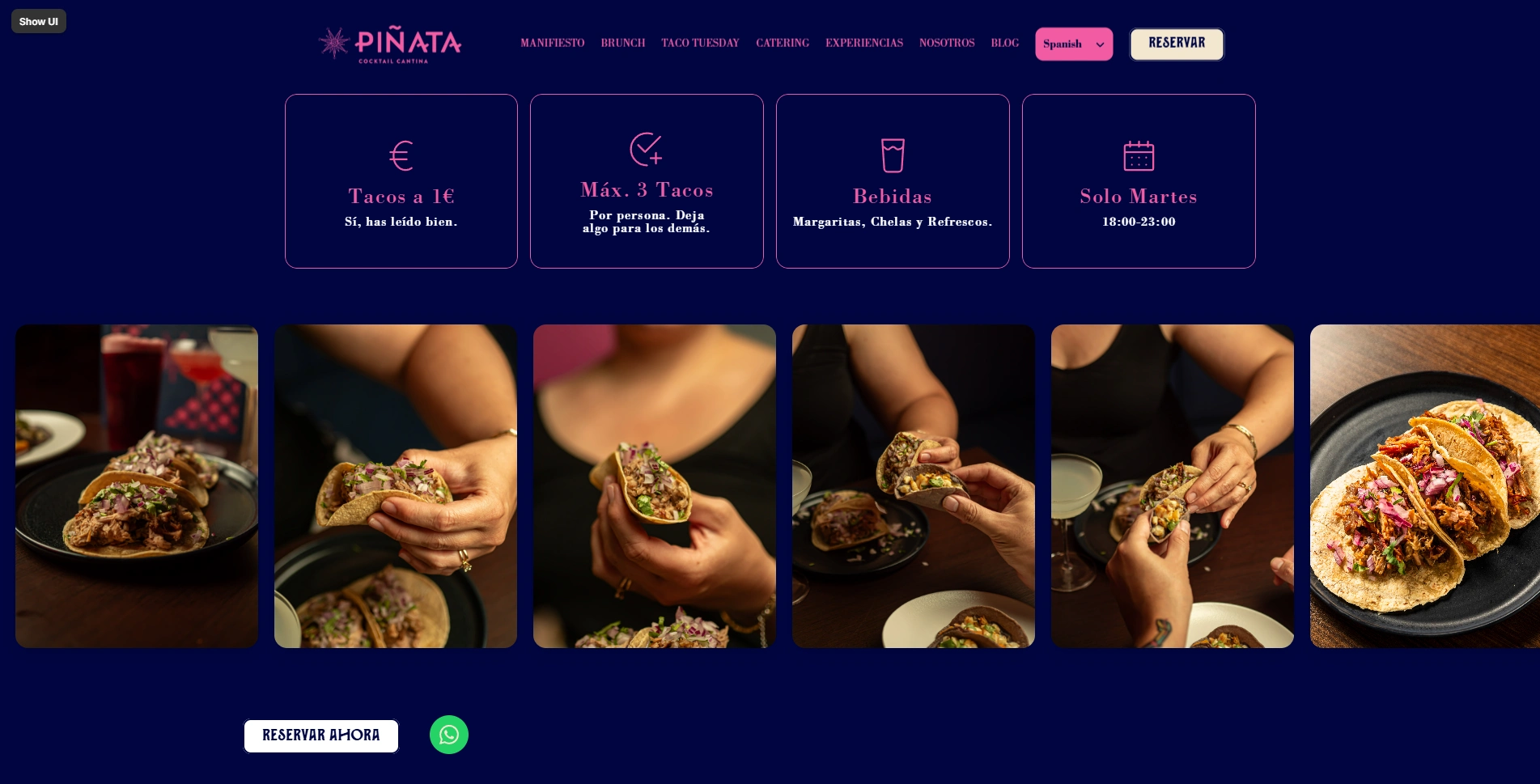
Rather than overwhelming visitors with options, the website uses imagery and pacing to evoke curiosity.
Food and drink are presented as visual chapters:
Close, tactile photography emphasizes materiality and craft.
Generous spacing allows each element to feel intentional.
Editorial rhythm replaces catalog-style listing.
The result is not informational consumption — but emotional anticipation.
UX Approach
The user experience was built around emotional sequencing rather than feature prioritization.
Key UX Decisions
✔ Delay transactional elements to allow brand immersion.
✔ Use scroll-based pacing to simulate spatial movement.
✔ Maintain consistent focal width to avoid visual fatigue.
✔ Design clear yet quiet CTAs that invite rather than interrupt.
✔ Ensure readability and hierarchy remain strong across all devices.
Responsive Design Philosophy
Hospitality websites often lose their identity on mobile.
This project treated responsiveness not as compression, but reinterpretation.
On smaller screens:
Vertical rhythm becomes more cinematic.
Imagery anchors each section to maintain immersion.
Typography scales to preserve editorial tone.
Navigation remains minimal to avoid breaking flow.
The experience remains atmospheric — not reduced.
Motion & Interaction Design
Subtle motion was integrated directly in Framer to reinforce pacing.
Rather than decorative animation, movement functions as:
A transition between narrative moments.
A cue for visual hierarchy.
A way to simulate physical presence.
Soft easing and restrained reveals ensure the site feels alive without becoming performative.
Micro-Design Decisions
The emotional tone of the site is sustained through small, disciplined choices:
Controlled color temperature to maintain warmth without heaviness.
Tight typographic hierarchy for clarity and elegance.
Generous negative space to echo architectural calm.
Carefully scaled imagery to avoid visual noise.
These details ensure consistency between brand narrative and interface behavior.
Development Approach
The site was built entirely in Framer, allowing design and development to remain tightly integrated.
Why Framer
Rapid iteration between layout and behavior.
Native animation control aligned with UX pacing.
Modular architecture supporting future expansion.
Clean responsive management without engineering overhead.
This enabled the project to remain expressive without sacrificing performance.
Process
Concept Definition → Narrative Mapping → Visual Direction → Layout Exploration (Figma) → Framer Development → Interaction Design → Responsive Refinement → Final Optimization
My Role
Web Designer
UX/UI Designer
Framer Developer
Visual Direction & Digital Experience Design
Deliverables
• Fully designed and developed Framer website
• Responsive experience across devices
• Motion behavior system
• Visual storytelling structure
• Scalable layout ready for future content
• Performance-optimized build
Results
The final product establishes Piñata Cantina not simply as a place to eat, but as a destination with a clear cultural voice and contemporary presence.
The website succeeds in:
Communicating atmosphere before information.
Differentiating the brand from conventional hospitality templates.
Creating an emotional bridge between digital discovery and physical visit.
Providing a flexible foundation for growth, events, and evolving content.
✔ The project demonstrates how interface design can translate sensory identity into digital form.
✔ It positions storytelling as a functional UX tool — not just a branding layer.
Like this project
Posted Feb 19, 2026
Digital presence design for Piñata Cantina, shaped around its cultural character and sensory atmosphere. The work translates the restaurant’s identity into an expressive, cohesive web experience.
Likes
0
Views
11