

An original AI-assisted software demonstration using six fictional text files. No customer files are used.
The problem
Bulk renaming is risky when it overwrites a name, changes the wrong file or leaves no way to undo the operation.
What I built
A reusable Node.js command-line tool that produces a reviewable rename plan before making changes. It checks for name collisions, rejects unsafe paths and verifies source file hashes. Apply and undo both require explicit confirmation.
Actual demonstration result
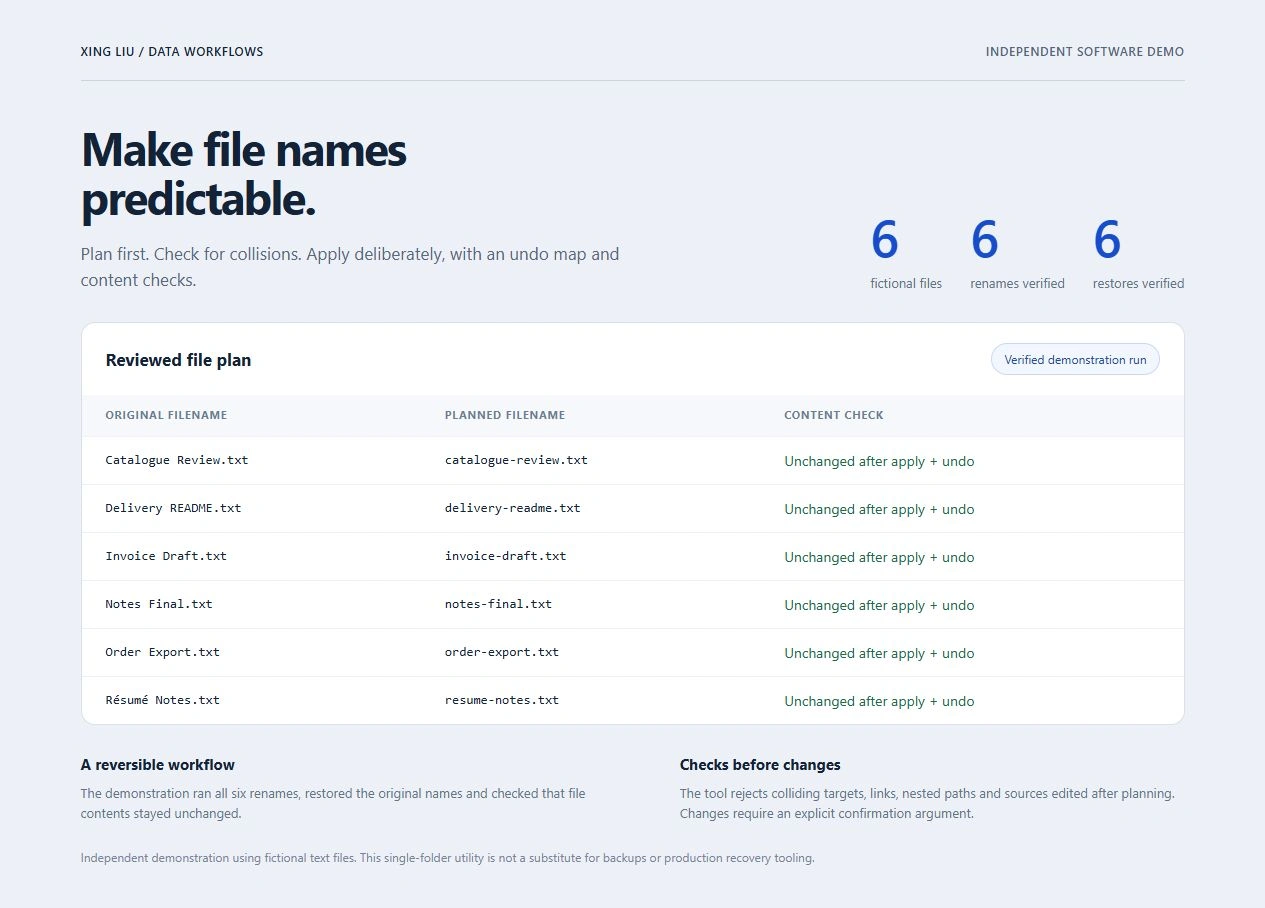
Six files renamed, then all six restored to their original names. SHA-256 content hashes were unchanged throughout. Separate checks rejected a conflicting target name, a path-traversal attempt and a changed source file.
Prepared deliverables
Reusable source code, a JSON rename plan, an execution verification record, a readable HTML report and usage instructions.
Scope
This demonstration handles regular files in one folder. It does not rename folders or symbolic links, and it is not a replacement for a production backup system.
The cover is GPT-created editorial artwork. The report preview is captured from the actual executed demonstration.
0 likes · 0 views · Nov 4, 2026
6 files renamed and restored with unchanged SHA-256 hashes. Includes a reviewable plan, source code and actual verification report.
