Neighborly: A Community Sharing App Design

Alivia See


Neighborly : Community Sharing App
Role: Lead UX Designer & Project Manager
Tools: Figma, Figjam, Canva
Overview
For my final project in HCI 5300, I led a cross-university team of 6 designers (two classmates from Iowa State and three students from NUST in Namibia) to design Neighborly, a community-based mobile app focused on local resource sharing.
Our goal was to tackle food and item waste, local scarcity, and social disconnection by building a platform where neighbors can easily share resources and support one another. Working across two continents and time zones, we used the Design Thinking process to develop a prototype that encourages stronger, more generous neighborhood networks.
My Contributions
As team lead and project manager, I coordinated collaboration across all 6 members, facilitated weekly check-ins, and kept the team aligned through every phase of the design process.
On the design side, I conducted competitive analysis, created low and high-fidelity wireframes, and co-produced and edited our demo video in Canva.
Check out the Demo Video below!
The Problem
Many neighborhoods have untapped resources, such as food, household items, skills, but no easy way to share them. People want to help their communities but face real barriers: they don't know what neighbors have or need, trust between strangers is low, and existing apps like Facebook Groups or Mercari feel too broad or too transactional for genuine local exchange.
Research & Discovery
We ran user surveys alongside a competitive analysis of four apps (Nextdoor, Facebook Groups, Olio, and Mercari) and supplemented both with background research into food insecurity and local resource sharing.
Across all three, the same four pain points surfaced consistently: trust and safety concerns between neighbors, technical and functional gaps in existing platforms, community engagement challenges, and poor usability in current solutions.
These findings gave us a clear design target: an app that felt safe and trustworthy by default, was simple enough for anyone to use, and was built around community connection rather than commercial exchange.
These findings focused our direction into one central question:
How might we design a neighborhood app that is trustworthy, intuitive, and helps people build meaningful local connections through sharing?
Ideation Process
We started ideation as a team, brainstorming features that would directly address each of our four pain points. To map out how everything fit together, I created a user flow illustrating a typical sign-up scenario, which gives the team a shared mental model before anyone touched a screen.
From there, I built out a feature table for each screen, pairing proposed solutions to specific pain points so our design decisions stayed grounded in the research. We then divided screens among team members, with each person responsible for their assigned features.
Most of the team sketched rough paper drafts before moving into lo-fi wireframes in Figma, which came with its own challenge: 4 of our 6 members had never used Figma before. With no professor guidance on the project, I took on teaching the tool alongside managing the design process, troubleshooting with teammates and keeping momentum going.
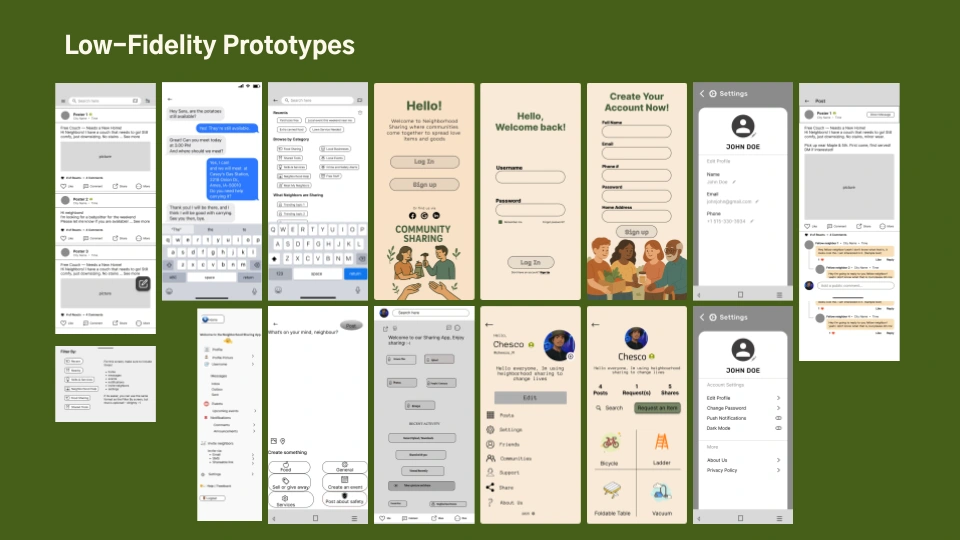
Once everyone had completed at least one lo-fi wireframe, I led the push into high-fidelity by polishing and refining the screens into a cohesive final prototype.
Final Designs
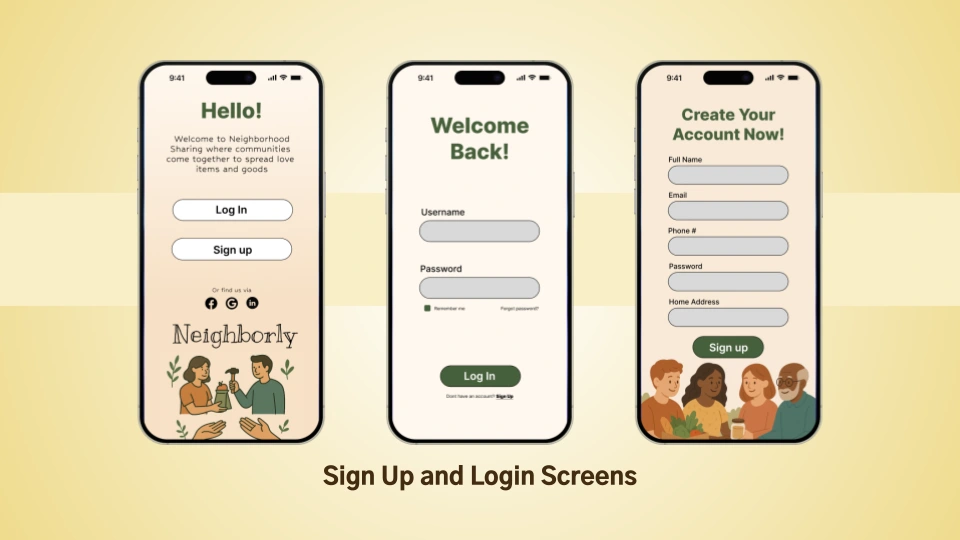
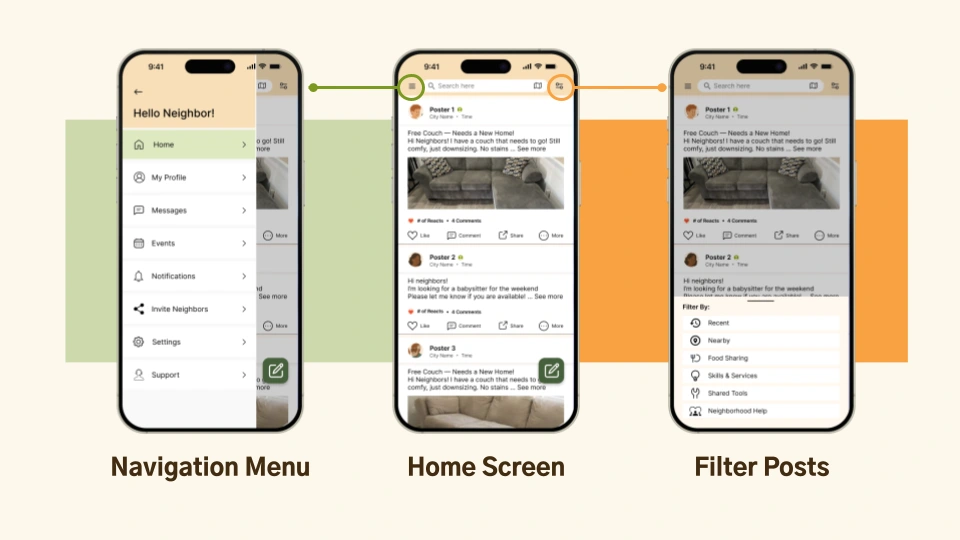
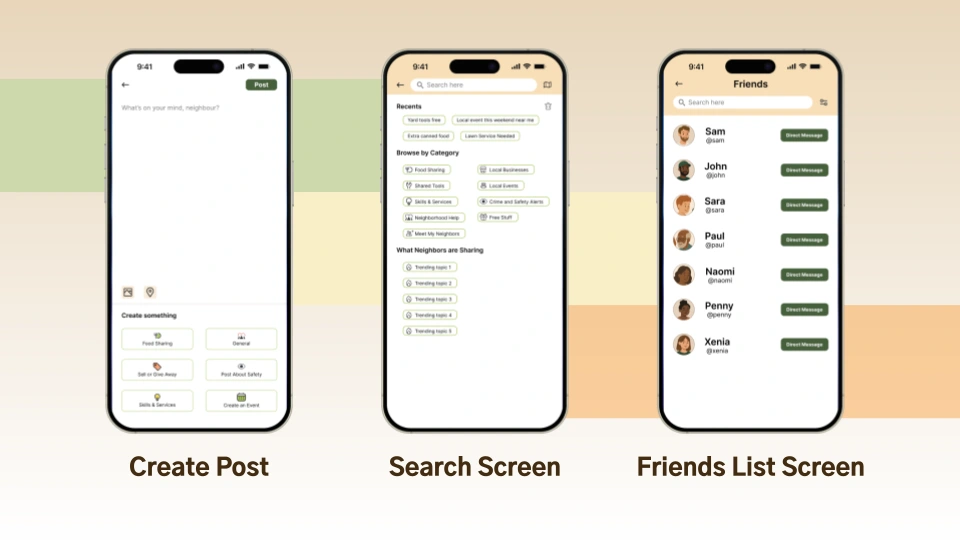
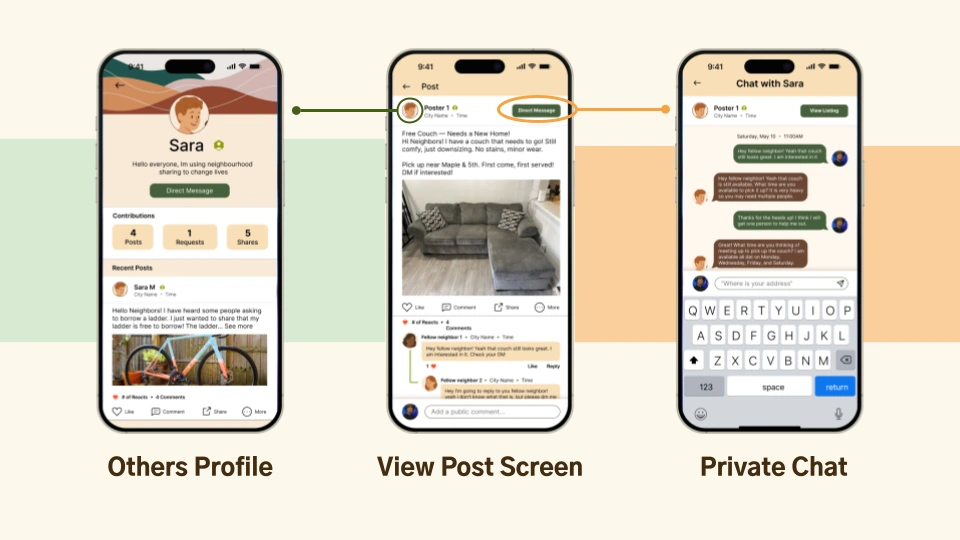
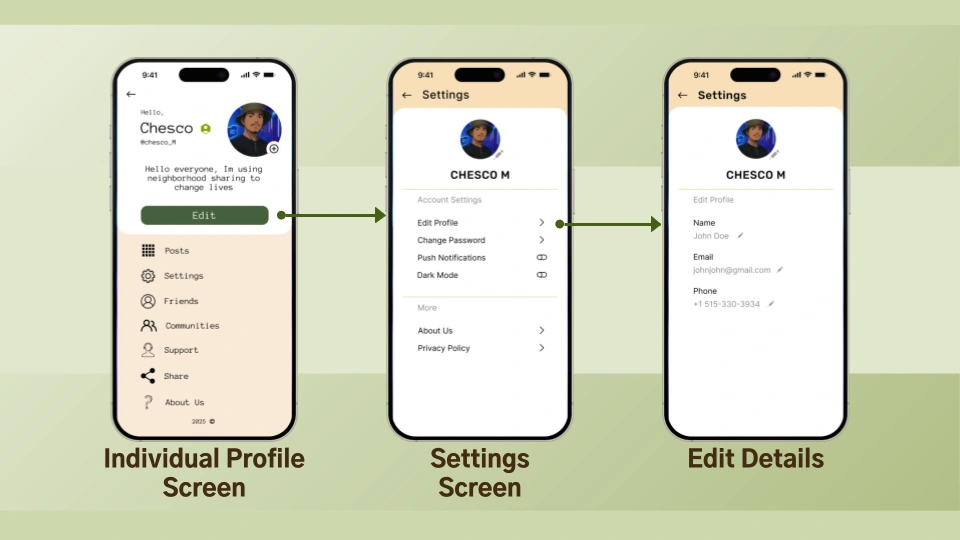
Check out the Interactive Prototype Here
Outcome
Neighborly received a high grade and strong overall feedback from our peers and professors. But beyond the grade, this project pushed me in ways a typical class assignment doesn't: managing a cross-continental team, teaching Figma to four teammates from scratch, and making design and project decisions largely on our own without professor involvement.
The result is something I'm genuinely proud of: a polished prototype, a demo video, and a team that got there together.
Want to go deeper? See the full case study → Neighborly Project
Like this project
Posted Apr 2, 2026
Led a 6-person cross-continental team to design Neighborly, a community sharing app connecting neighbors through local resource sharing. (HCI Master's project)