AI Design Engine for Rumor - Forbes Featured Event OS

Subhradip Roy
Verified


Built the AI Design Engine Inside Rumor - the Forbes-Featured Event OS Used by McLaren, Guess & Revolve
Rumor calls itself the operating system for culture's biggest moments - RSVP management, influential guest discovery, and exposure tracking for the events that make headlines. Forbes covered it as the VIP answer to Partiful. McLaren, Guess, Revolve, Billboard, TAO and Ocean Drive run events on it.
When a platform operates at that level, "good enough" doesn't ship. Every pixel a host sends out carries a luxury brand's name on it.
The Problem
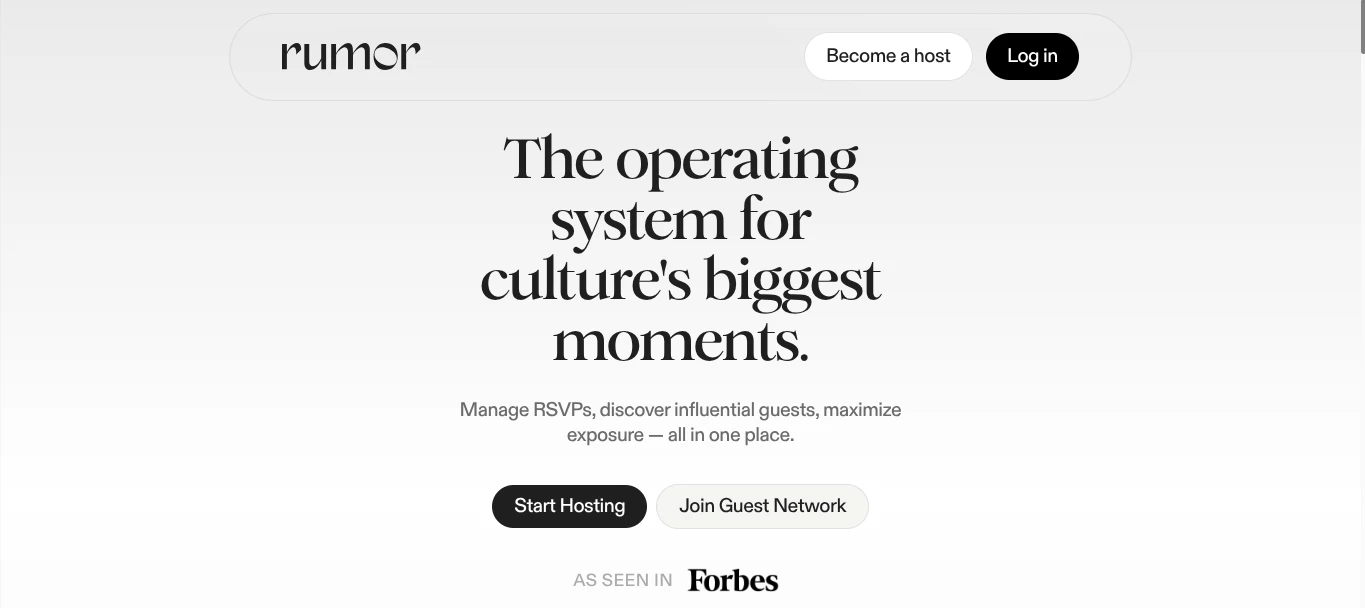
Hosts on Rumor were bottle-necked on visuals. A branded invite meant hiring a designer, waiting days, and paying agency rates - for an event announced next week. The platform could handle everything about an event except the one thing guests actually see first. Rumor needed to invite creation to feel instant and look expensive. And it needed to work in production, at brand-safe quality, fast.
What I Built
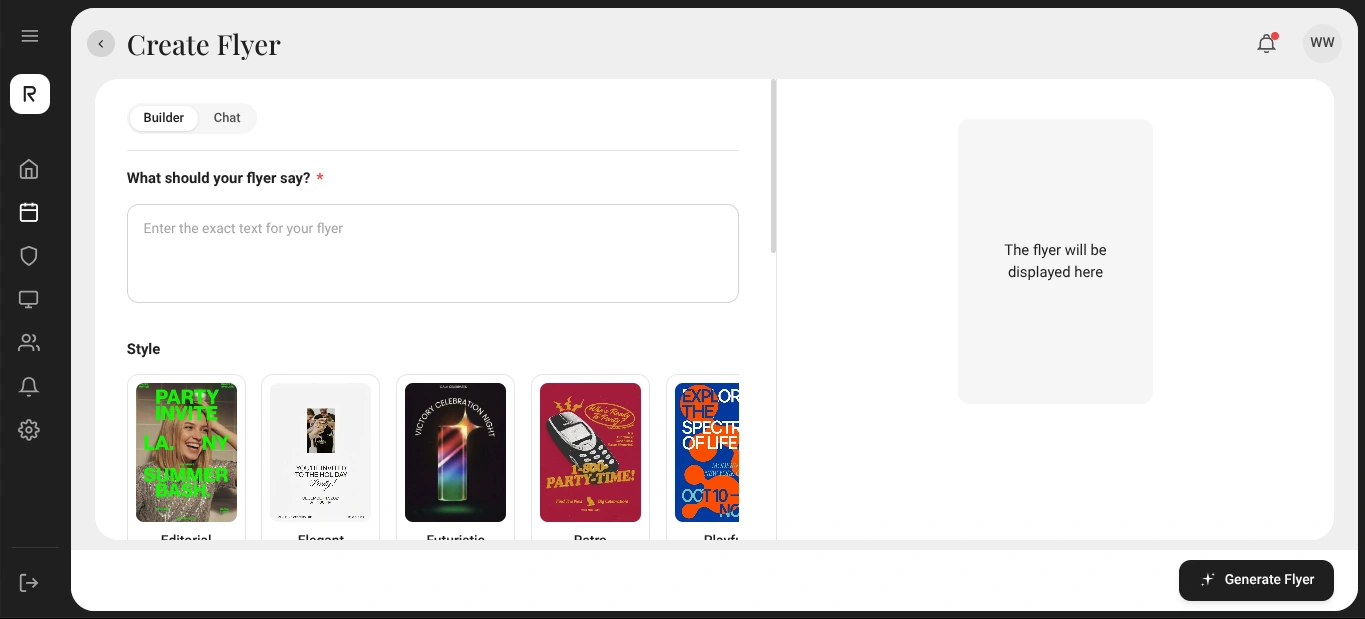
An AI design engine, owned end to end. Hosts describe their event in plain language and get multiple premium, on-brand invite designs in under 30 seconds.
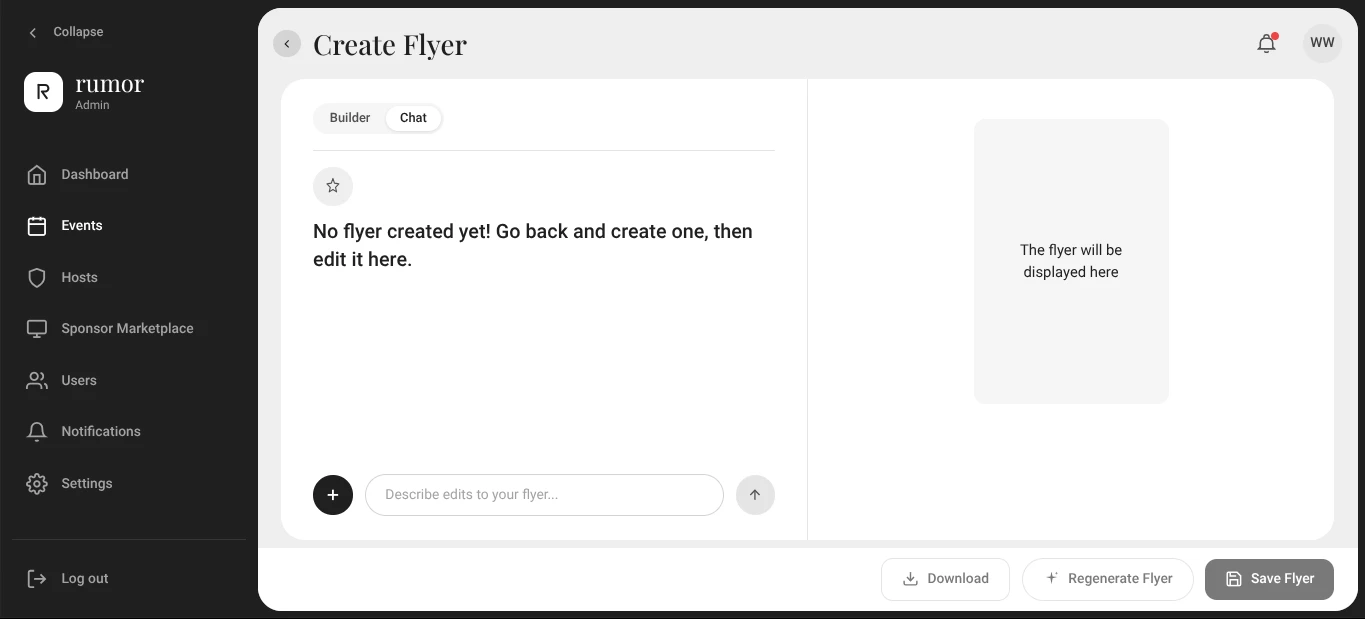
Two entry points, one quality bar. A freeform prompt flow for confident users and a guided form for everyone else - both compiled into expert-grade prompts behind the scenes.
Provider economics solved before launch. Benchmarked DALL·E, Stability and others on quality, speed and cost per image, then routed each invite style to the model that wins it.
Production infrastructure, not a demo. Next.js, React, Supabase and Vercel - documented, modular, and built so the next ten features drop in without a refactor.
The Outcome
Live in 5 days, inside a platform trusted by global brands - documented, bench-marked, and built to extension. What used to cost a host a designer, a budget line and three days now takes 30 seconds.
See It Live:
Like this project
Posted Jul 1, 2026
Built the AI design engine inside Rumor, used by McLaren, Guess & Revolve. Studio-grade designs in 30 seconds. Shipped live in 5 days.
Likes
3
Views
41
Timeline
Dec 29, 2025 - Jan 18, 2026
Clients
Josh Zipkowitz