Editorial Storytelling: MVFashion Magazine

Maryia Malukha


Editorial Learning Experience
MVFashion
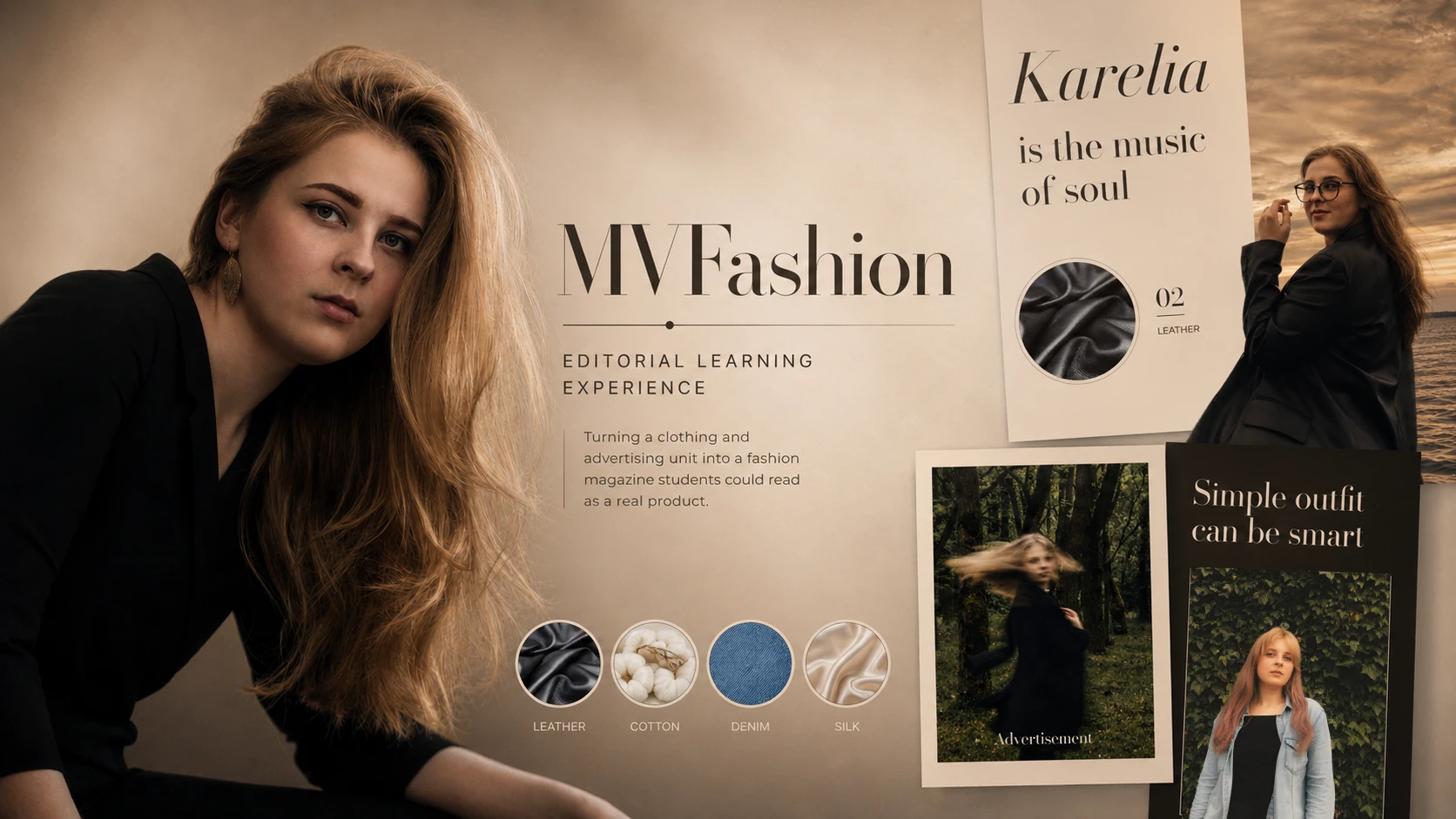
Turning a clothing and advertising unit into a fashion magazine students could read as a real product.
Overview
MVFashion is a teacher-created learning artifact designed to help students practise English vocabulary for clothing, materials, style and advertising inside one coherent editorial context.
My role
Concept development, learning structure, content direction, visual system and print-ready product.
Timeline
5 days
The Challenge
A vocabulary exercise could teach students the words. The challenge was to give those words a reason to be used.
Students needed to describe materials and styles, explain clothing choices and persuasively - not as separate exercises, but as parts of one communicative experience.
Design question
How might a familliar media format turn clothing vocabulary into purposeful communication?
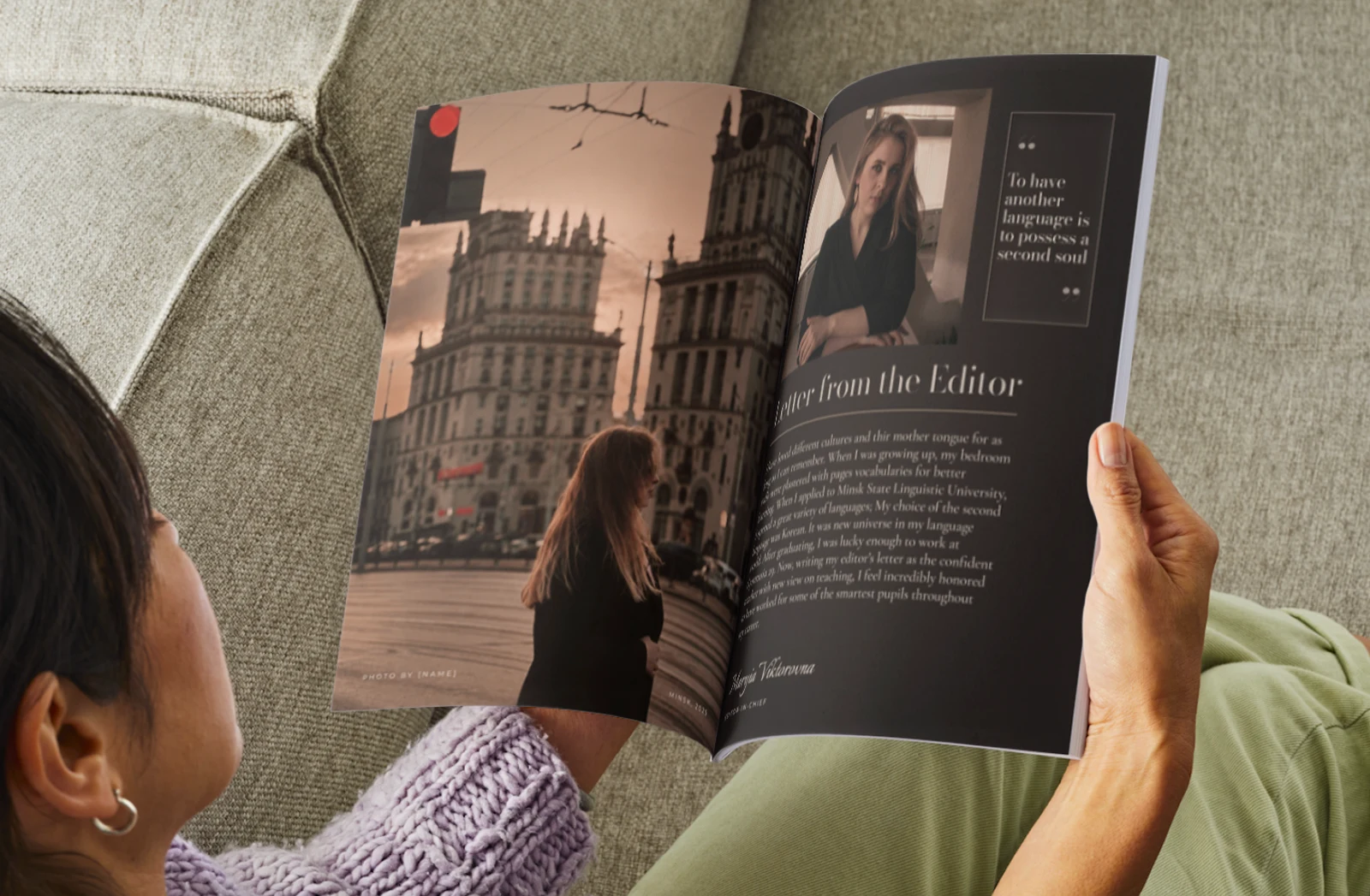
A Magazine Instead of a Worksheet
I built the material as a complete fashion publication. The format naturally connected three language goals:
Describe - fabric, cuts and styles
Position - identity, character and personal choice
Persuade - advertising and sales language
I became the recurring editorial subject because the students already knew me. Familiarity reduced the distance between the learner and the material, while one recognisable character gave the publication continuity.
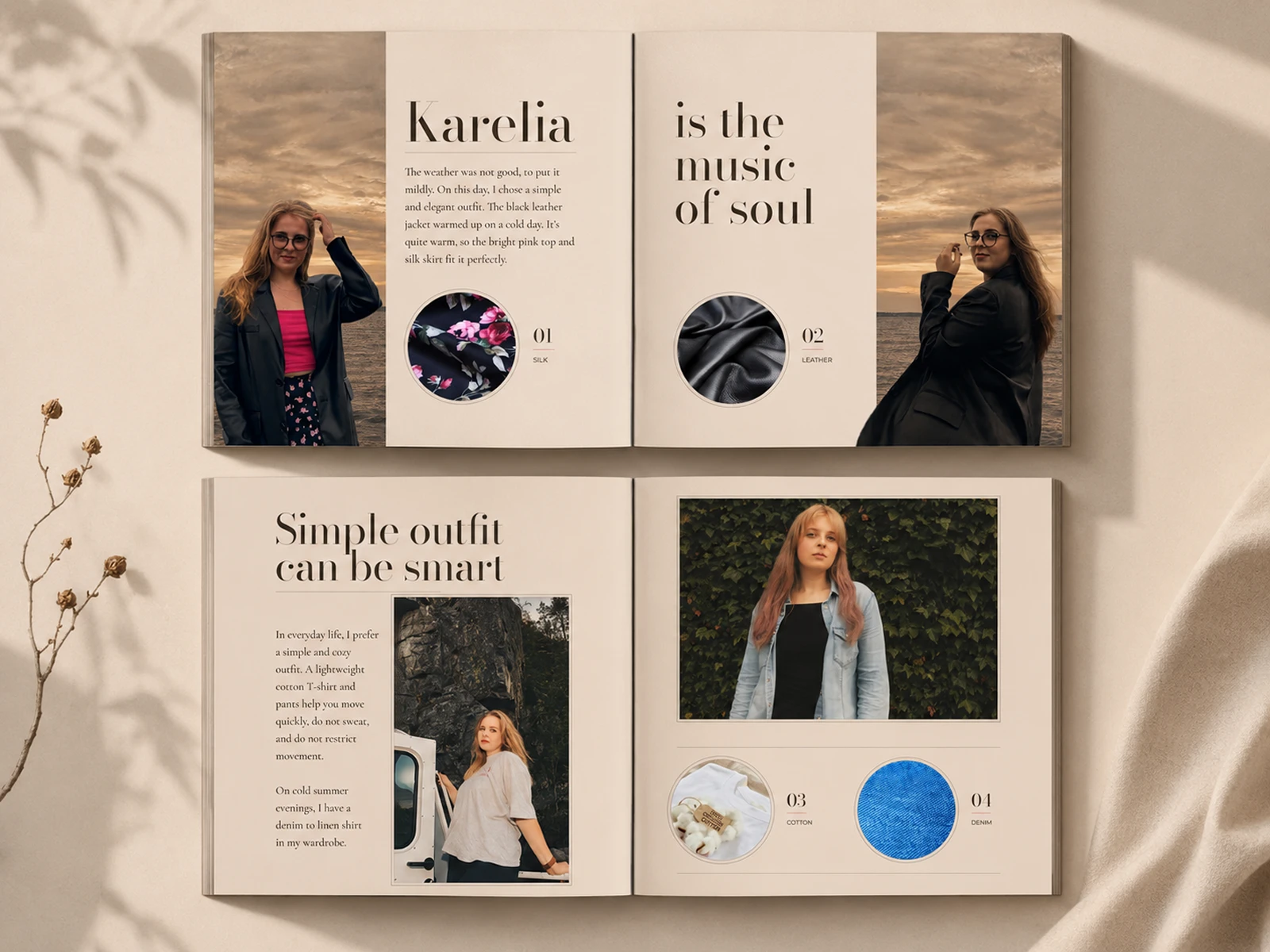
A recognisable editorial system
I structured the experience around sections students would recognise from a real magazine: a cover, editor’s letter, contents, fashion features, advertisements, behind-the-scenes content and a subscription page.
Each format created a different reason to use English - from describing a fabric to persuading a reader.
Words became editorial tools
Material vocabulary - including silk, leather, cotton, denim, lace and linen - was not presented as an isolated glossary.
Each word appeared beside an outfit, visual reference and short editorial story. Students could see not only what the word meant, but how it functioned inside a description.
From concept to print in five days
I developed the concept, selected the visual material, built the editorial structure, directed the content and prepared the complete publication for print within five days.
AI supported parts of the drafting process, while I defined the structure, headlines, narrative and final editorial direction.
Result
The finished magazine was presented to a teaching review panel. Several educators specifically highlighted the originality and ambition of the concept.
The project demonstrated how a conventional vocabulary brief could become a complete, product - like learning experience.
What I would improve today
The central concept still works, but I would now simplify and rewrite parts of the copy, create clearer progression between descriptive and persuasive language, and add explicit learner tasks and feedback checkpoints.
The project taught me that a strong learning concept needs more than an engaging format: every editorial element should have a visible instructional purpose.
Good learning content doesn’t only explain language. It gives language a role to play.
Like this project
Posted Aug 12, 2026
Editorial learning experience that turns fashion vocabulary into purposeful English communication through a print-ready magazine.
Likes
0
Views
15
Timeline
Nov 14, 2025 - Nov 19, 2025