Built with Framer

Valley is an AI outbound platform, backed by General Catalyst and Antler, that runs LinkedIn outreach from a rep's own account. Prospects kept asking how Valley differed from other LinkedIn tools, so we redesigned the website and sales deck to answer that before the sales call.
Client: Valley (AI Outbound)
Year: 2025–2026
Scope: Web Design, Motion Design, Framer Development, Sales Deck
Live site: joinvalley.co
Highlights
Live on 7 January 2026; the comparison sections are still in use ten months on
18-slide sales deck plus an appendix of annotated product screens
Every section a Framer component, so Valley's team runs the site without us
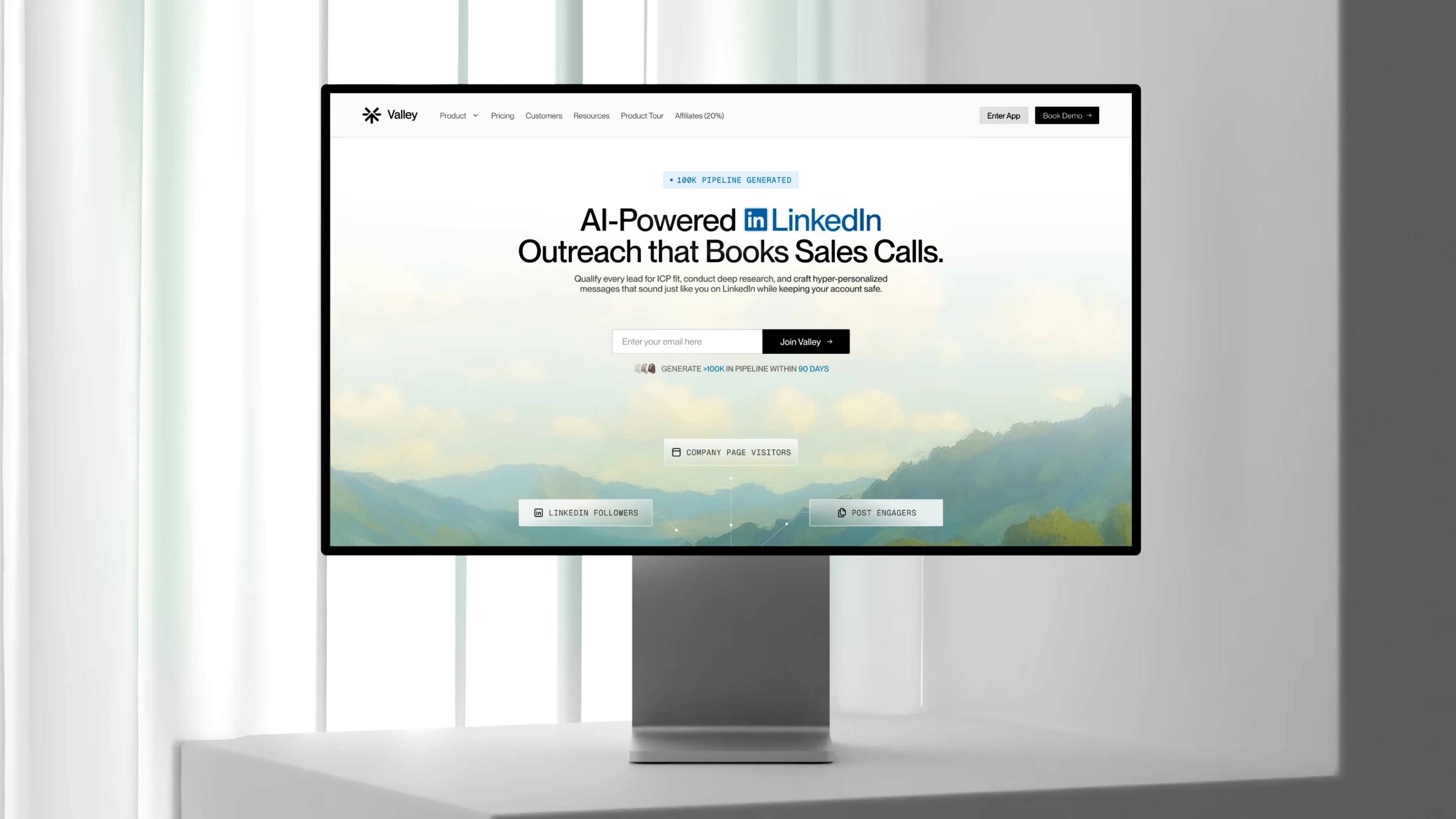
Why did Valley need a new website?
Where Valley was
Valley had a brand it liked. The homepage didn't explain the engine, and prospects kept asking how Valley differed from other LinkedIn tools.
What Valley asks its buyers to do
Let AI run outreach from their own LinkedIn account. Careless automation gets accounts flagged.
What they asked us for
A new homepage, a product-page template and a sales deck, inside Valley's existing brand.
Why it mattered
Sales leaders have been burned by automation tools. They buy the one that shows how it works.
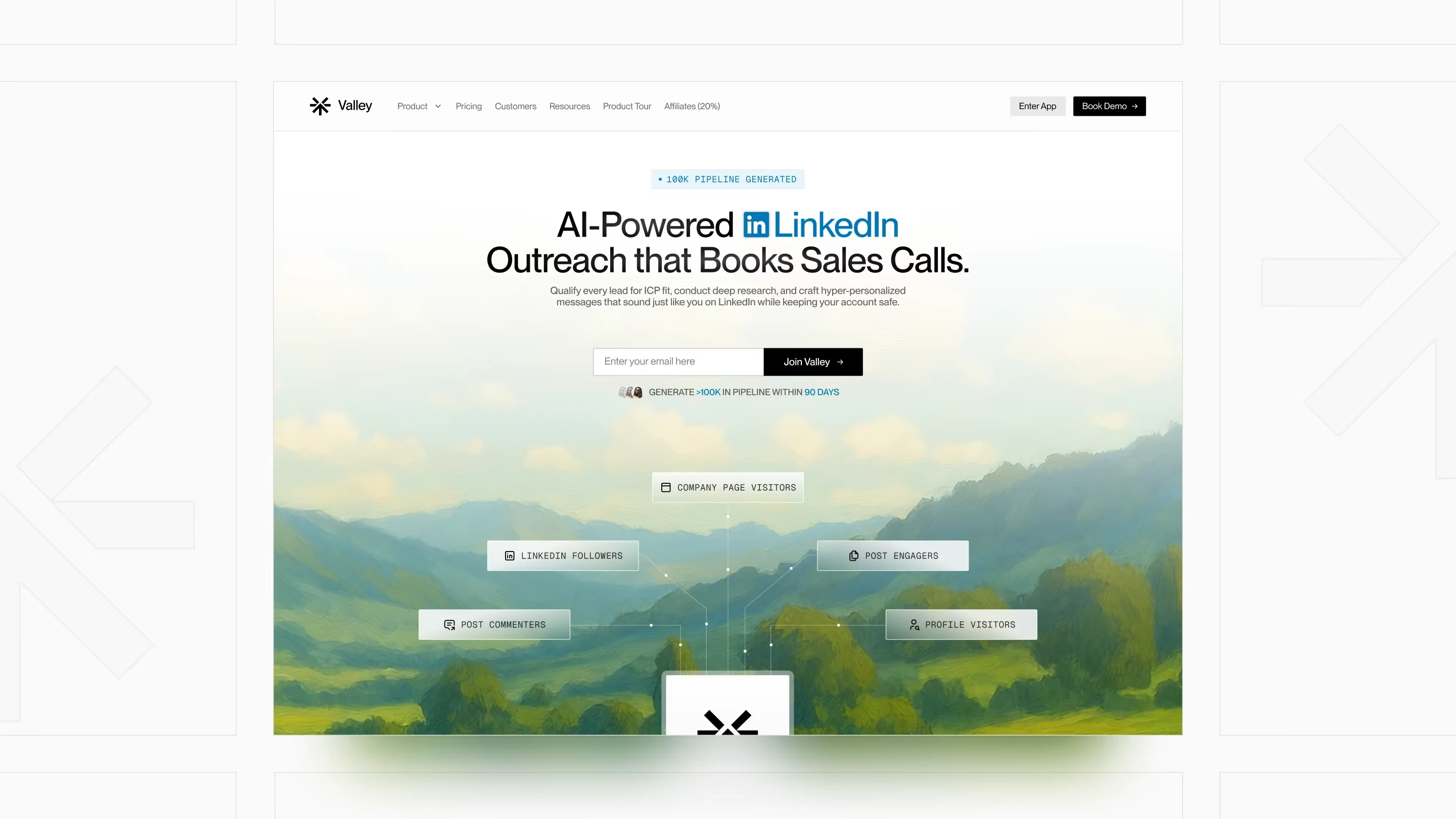
Challenge 01: The website had to answer the competitor question before the sales call
Problem
HeyReach, Expandi and lemlist all automate LinkedIn. Prospects finished demos unsure what made Valley different.
Why it mattered
If the difference only shows up on the call, Valley loses everyone who never books one.
What we did
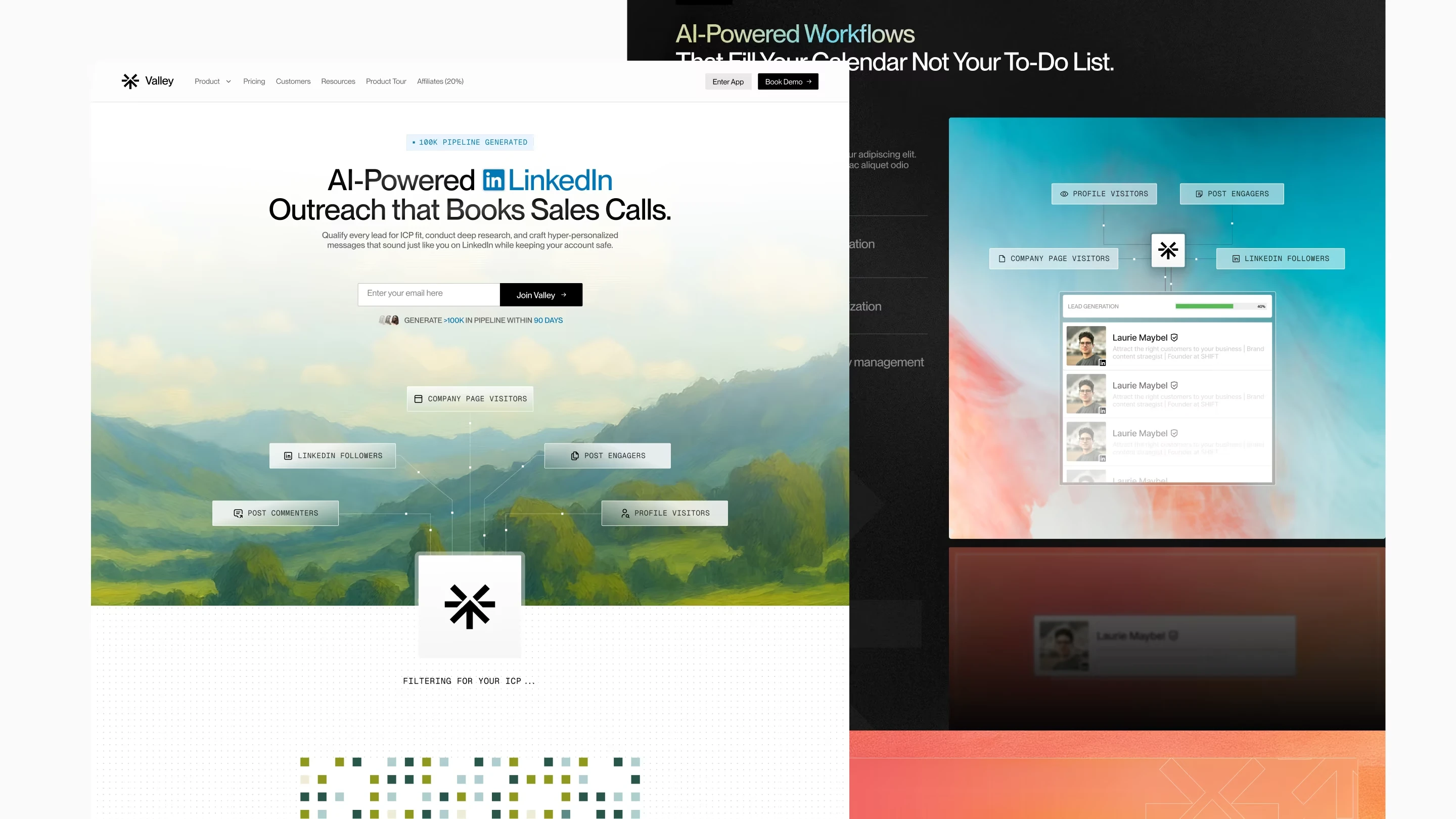
A landing page has about seven seconds to answer: what is this, why now, why you. So the page leads with results, names the category, shows the engine, then proves it. The engine is a visible flow: find, qualify, research, personalise, send. The comparison is concrete: a labelled reply-rate chart, and "migrated off" logos styled so they can't pass for customers.
Outcome
Live on 7 January 2026. Ten months on, Valley's team has rebuilt parts of it and kept the migrated-off band and the reply-rate comparison (checked 3 November 2026).
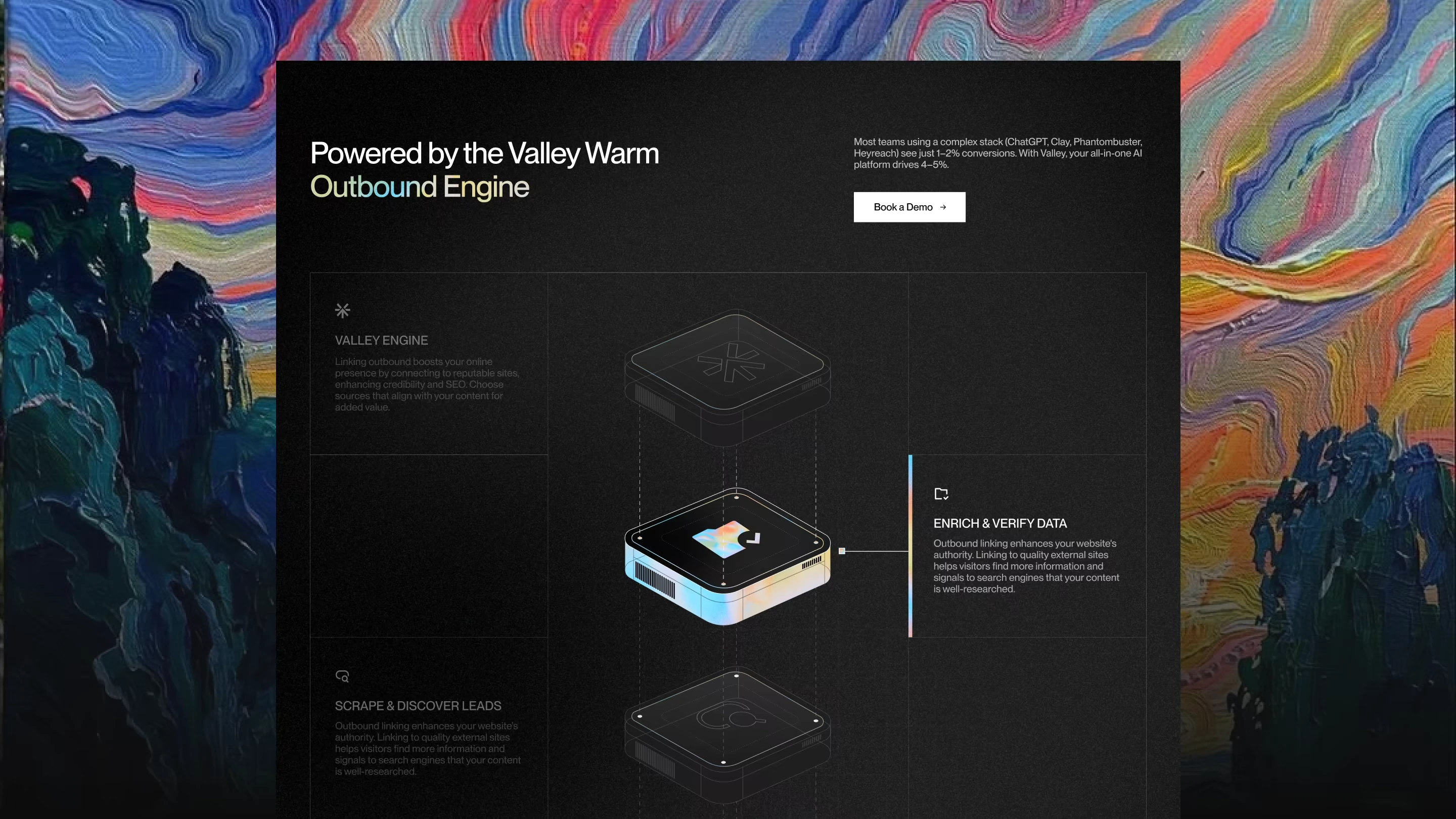
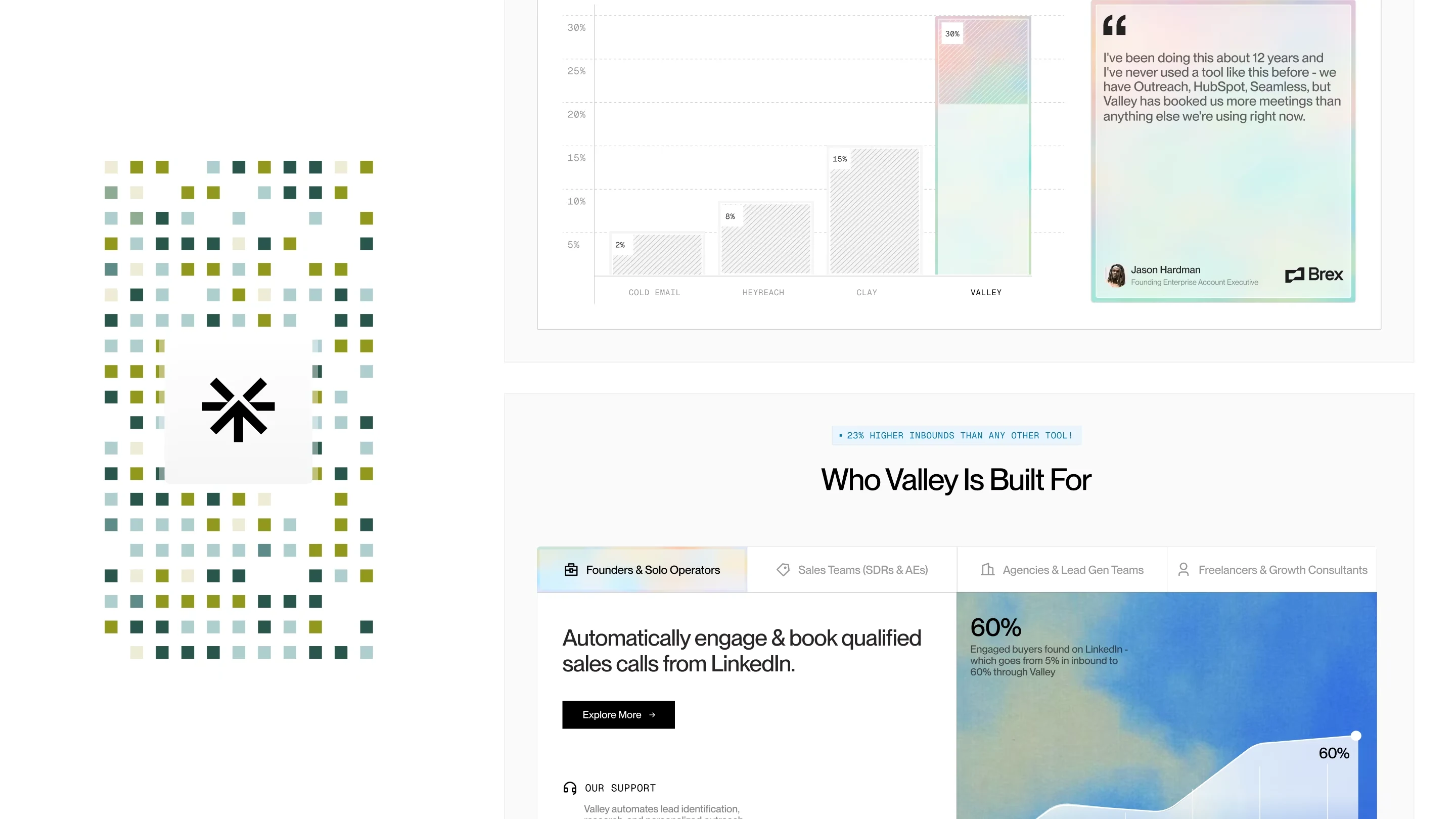
Challenge 02: The sales deck could only show what the product really does
Problem
Product decks drift: callouts start promising features the screenshots can't show.
Why it mattered
A buyer who sees a feature on a slide and can't find it in the demo stops trusting both.
What we did
We locked the flow in low fidelity first. Then two rules: cut any callout without a matching screen, and use Valley's own product wording. The result is 18 slides plus an appendix of annotated screens.
Outcome
Every claim in the deck maps to a screen Valley can show live.

Where Valley ended up
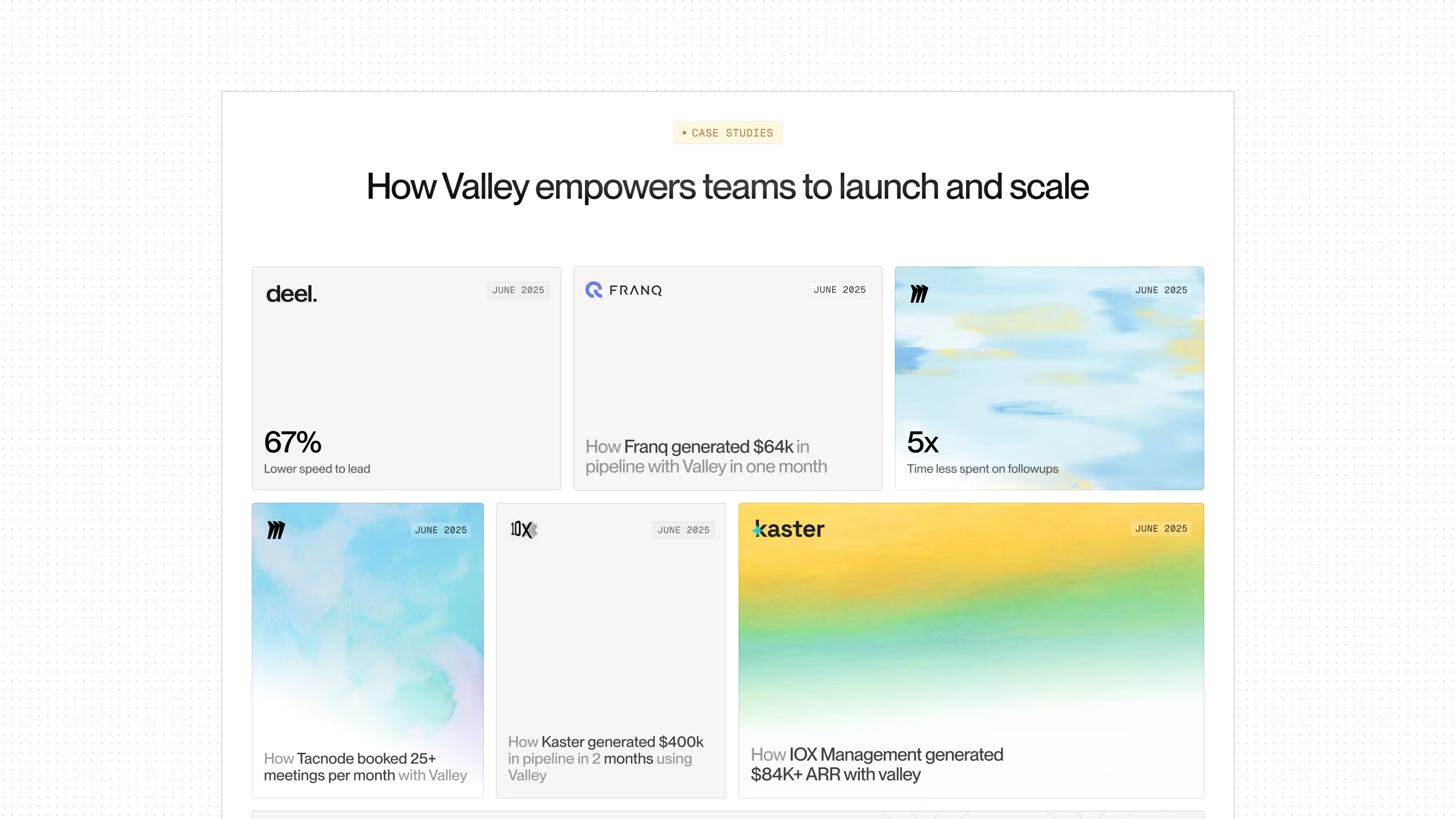
The site is a system Valley's team runs without us: every section a Framer component, testimonials synced across pages, and a product page that copies per feature.
Valley wrote its own copy and kept its brand. We designed and built the site, made the motion and designed the deck.
Web design, motion design, Framer development and sales deck design by PIXELUP LABS, 2025–2026.
0 likes · 1 view · Nov 26, 2026
Website, motion and sales deck for Valley, an AI outbound platform, designed to show how Valley differs before the sales call. Built in Framer.

