
The Problem
Before this project, ROCKPAPER RUNWAY did not have a dedicated landing page for its website development service.
The business offered website design, development, UI/UX, CRO, and performance marketing, but the offer was not clearly packaged into one focused page.
This created three problems:
Visitors could not quickly understand what kind of websites ROCKPAPER RUNWAY builds.
The service did not clearly communicate why a business should redesign or build a new website now.
There was no conversion-focused page designed specifically to turn interested visitors into website development leads.
The goal was to create a landing page that could explain the offer clearly, build trust, and encourage potential clients to take action.
The Strategy
We approached the landing page as a growth asset, not just a design project.
The content strategy was built using the Six-Why framework, which helps answer the key questions a potential client has before making a decision:
Why change?
Because an outdated website can slow down growth, reduce trust, and lose leads.
Why now?
Because websites are no longer just digital brochures. In the AI and LLM era, websites need stronger content structure, faster loading, better UX, and clearer conversion paths.
Why this solution?
Because ROCKPAPER RUNWAY combines UI/UX, development, CRO, and performance marketing thinking into one landing page system.
Why ROCKPAPER RUNWAY?
Because the team understands both design and business growth, not just visual execution.
Why trust this process?
Because the page structure is built around user psychology, intent, clarity, and conversion flow.
Why take action?
Because the landing page positions the website as a revenue and trust-building asset, not just a design expense.
What We Built
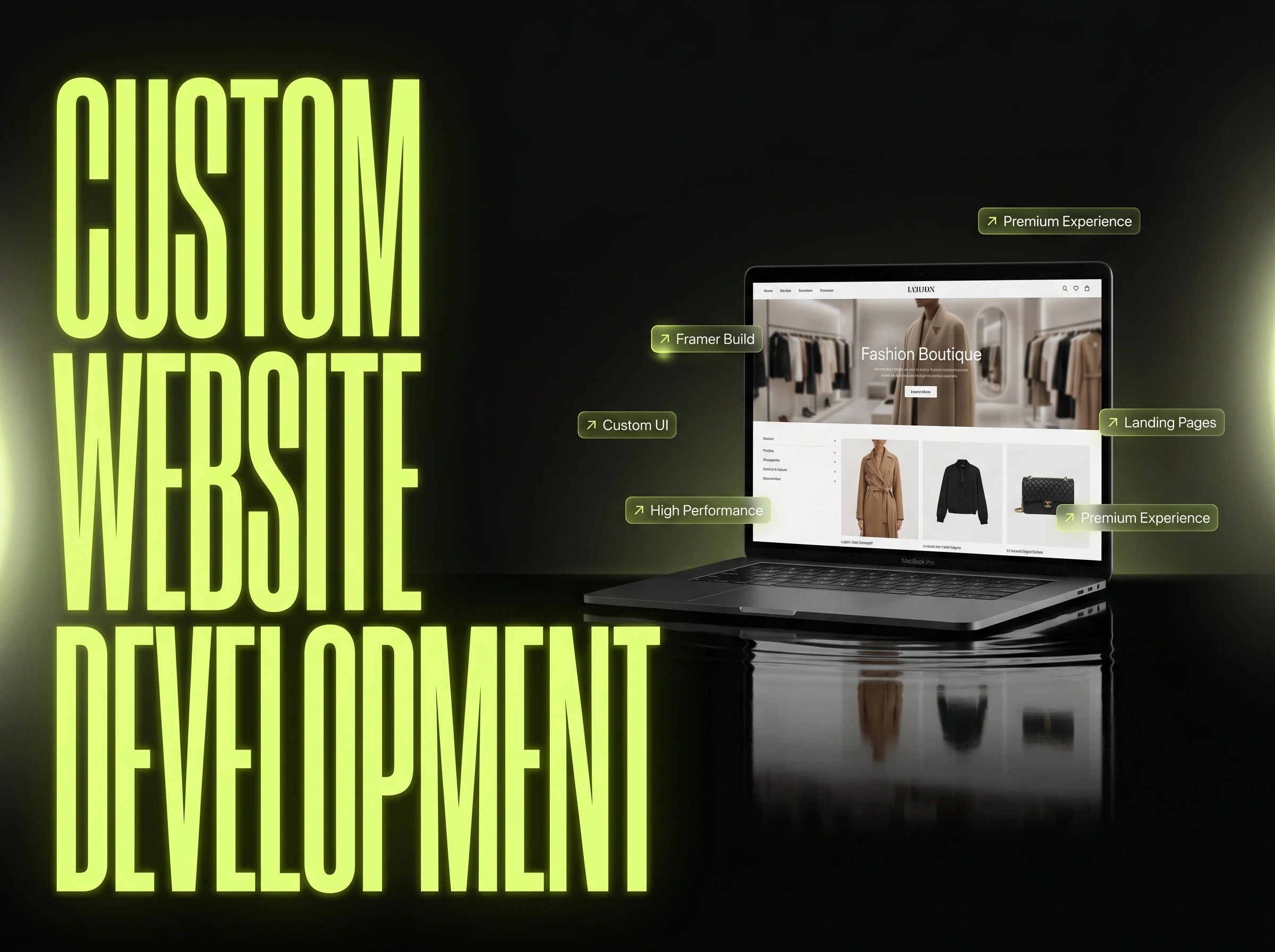
We created a premium Framer landing page for ROCKPAPER RUNWAY's website development service.
Section | Purpose |
|---|---|
Hero section | Clearly communicate the website-development offer and primary value proposition |
Problem section | Show why outdated websites lose attention, trust, and leads |
Service positioning | Explain how ROCKPAPER RUNWAY builds websites with strategy, UI/UX, content, and development |
Process section | Show the client journey from strategy to design to launch |
Proof / credibility section | Position the team's experience in growth, performance marketing, and website creation |
CTA section | Encourage visitors to start a conversation or book a website project |
The final landing page was designed to feel premium, minimalistic, and conversion-focused, with clear visual hierarchy and strong messaging.
My Role
My role was Growth Strategist, UI/UX Content Strategist, and Landing Page Content Developer.
Area | Contribution |
|---|---|
Growth strategy | Defined the offer positioning and conversion goal of the landing page |
Content strategy | Created the Six-Why-based page messaging |
UI/UX direction | Planned the page flow, section logic, and user journey |
Copywriting | Wrote the landing page content to communicate value clearly |
Conversion thinking | Structured the page to reduce confusion and guide visitors toward action |
ROCKPAPER RUNWAY's Framer developer handled the Framer development and page implementation.
Design Direction
The visual direction was premium, minimalistic, and modern.
Instead of using a crowded agency-style design, we focused on:
Clean layout
Strong whitespace
Clear section hierarchy
Sharp service positioning
Simple but persuasive copy
Conversion-focused CTA placement
A premium look suitable for founders, startups, and service businesses
The design goal was to make the page feel like a serious growth partner, not a generic website agency.
Outcome
The final result was a focused landing page that clearly positioned ROCKPAPER RUNWAY's website development service.
The page helped transform the offer from a broad agency service into a specific, client-ready website development solution.
1 like · 12 views · May 28, 2026
A conversion-focused Framer landing page for a website development agency, built using psychology-led content strategy and the Six-Why framework.

