DLA Inverse Design

Christian Neureuter


Inverse Design of Non-Periodic Dual-Pillar Structures for Dielectric Laser Acceleration
A Thesis Research Project
Documentation & Presentations
Full Thesis PDF - Complete research document with detailed methodology and results
Thesis Presentation - PowerPoint presentation summarizing key findings
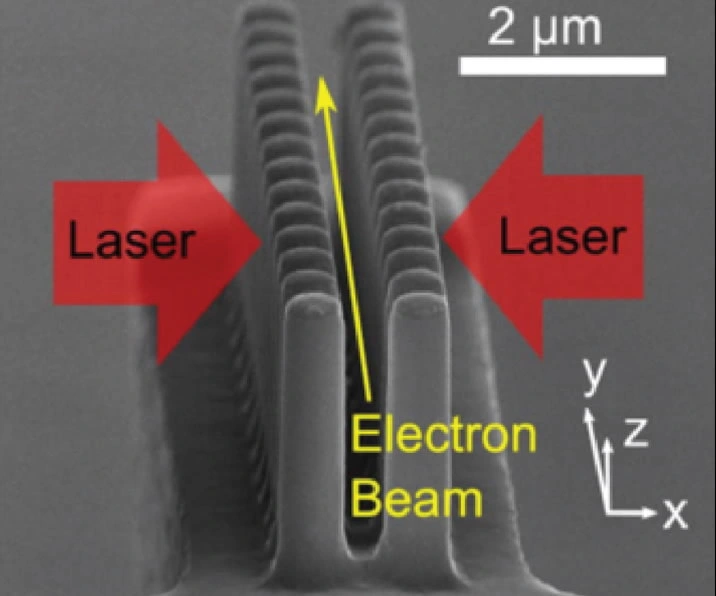
Automated the design of high-performance, nanoscale photonic structures for next-generation particle-on-a-chip accelerators. Developed a novel optimization pipeline integrating Lumerical FDTD electromagnetic field simulations with custom algorithms featuring basin hopping global optimization to design devices that precisely control and boost electron energy. The breakthrough adjoint-based method with field gradient computation cut the computational cost of optimization—compared to traditional approaches—by such an extraordinary degree that it enabled robust convergence for complex problems in a non-convex parameter space with an arbitrary number of degrees of freedom. The research successfully simulated the first-ever non-periodic structures capable of generating arbitrarily complex, non-sinusoidal accelerating fields (sawtooth and superposition waveforms) through multi-cell electromagnetic interactions and field superposition analysis. Created comprehensive visualization tools and an empirical model for predicting optimal design parameters—providing crucial insights for future accelerator development.
TECHNOLOGIES USED
Python • Ansys Lumerical
KEY METRICS
10²⁸x Simulation Reduction
100+ Optimized Parameters
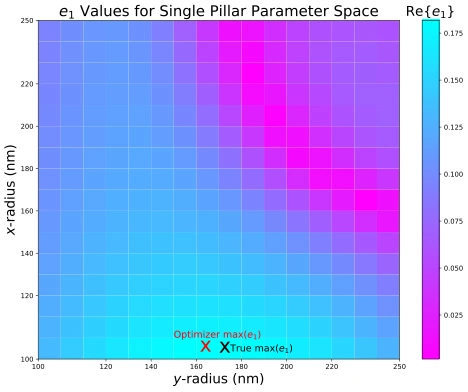
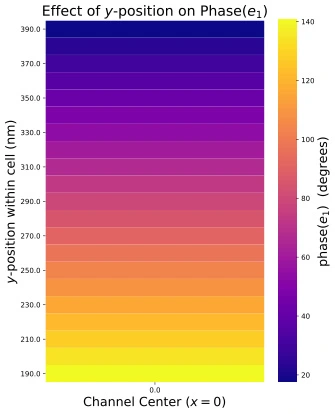
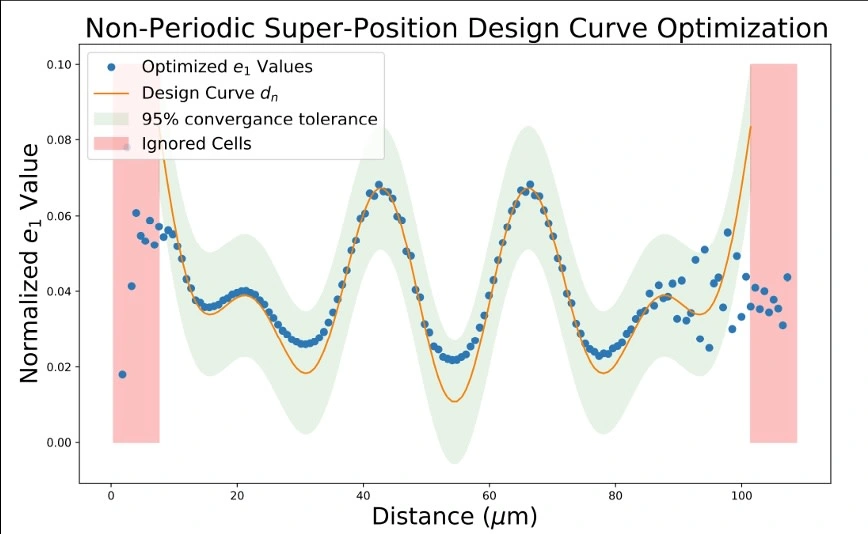
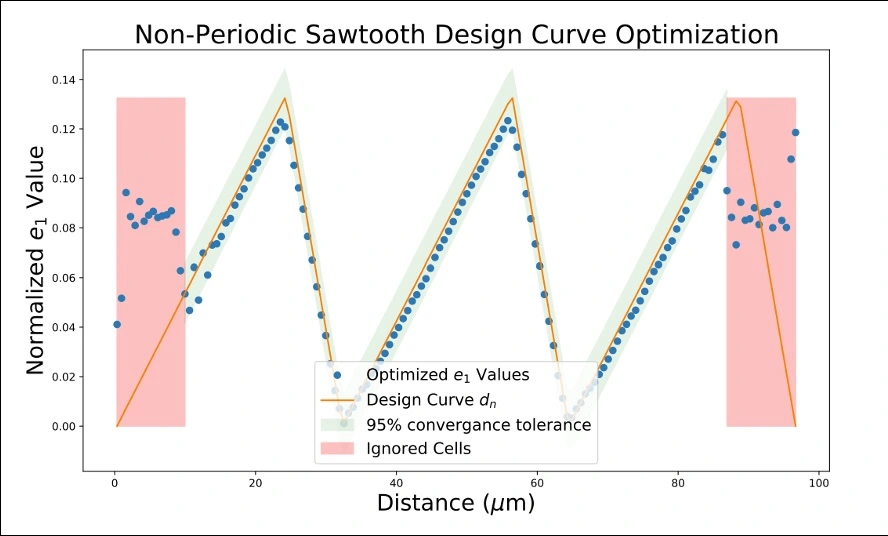
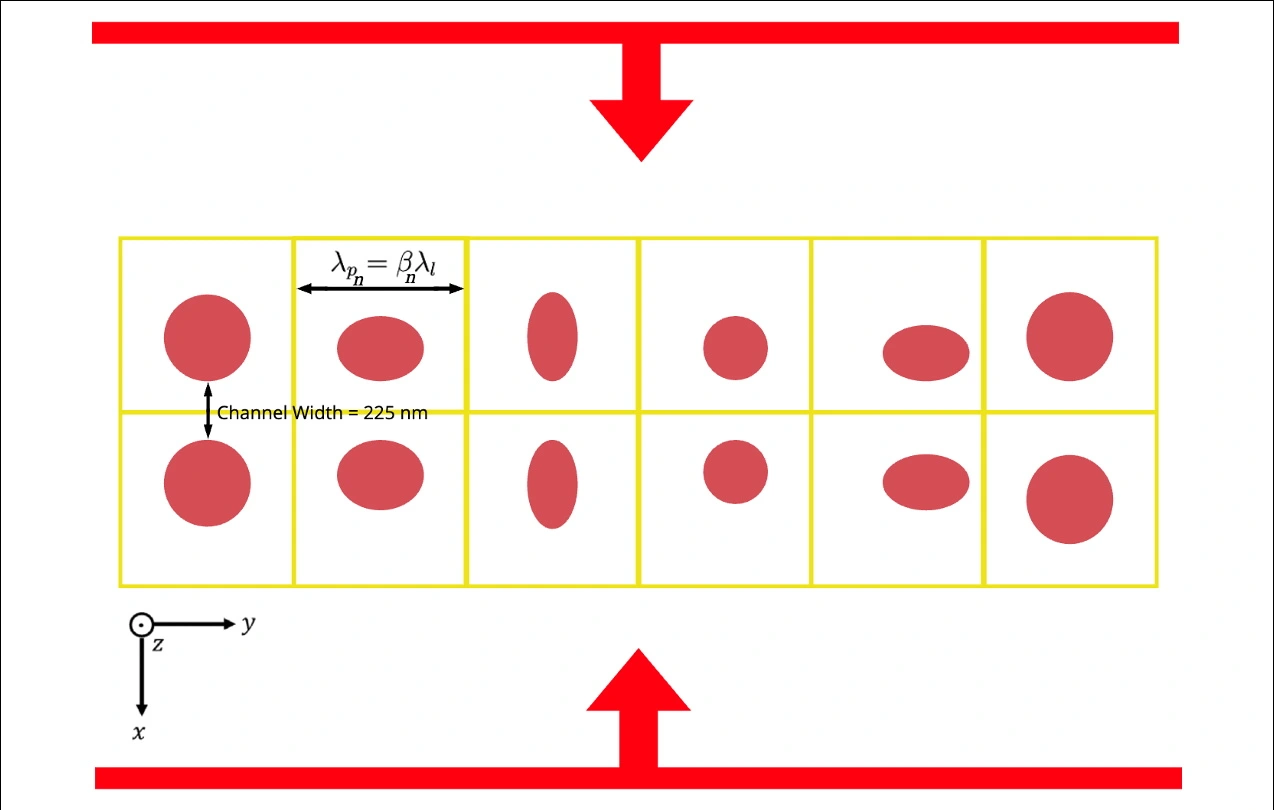
The repository contains the full body of research and code from my master's thesis on the inverse design of photonic structures for dielectric laser acceleration (DLA). The project focuses on designing and optimizing periodic and non-periodic dual-pillar silicon structures to maximize the energy gain of an electron beam.
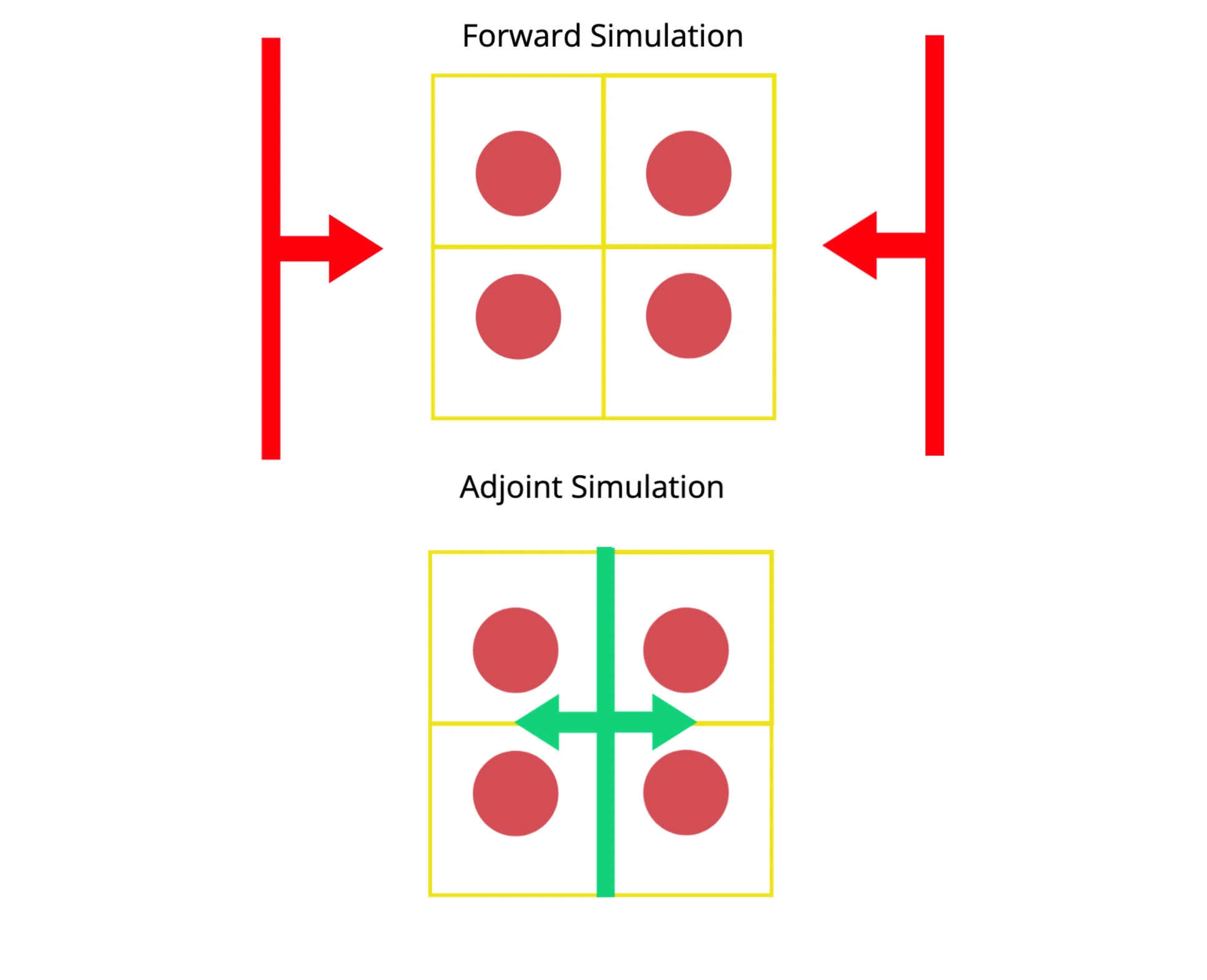
The core of this work is the development and application of a sophisticated computational pipeline that combines Finite-Difference Time-Domain (FDTD) simulations with advanced, gradient-based optimization algorithms. By leveraging the adjoint method, this research efficiently calculates the electromagnetic field gradients necessary for optimizing structures with a large number of geometric parameters, making it possible to design complex, high-performance particle accelerators on a chip.
Key Features & Technical Achievements
Advanced Optimization Algorithms: Implementation of a custom ADAM optimizer combined with a basin-hopping strategy for robust global optimization of non-convex, high-dimensional electromagnetic problems.
Complex Waveform Generation: Successfully designed structures capable of producing arbitrary, non-sinusoidal accelerating fields, including sawtooth waveforms and multi-harmonic superpositions. This demonstrates the versatility of the inverse design framework.
Dynamic & Aperiodic Design: Developed methods to optimize non-periodic ("chirped") structures where the periodicity changes dynamically with the electron's energy. This is a critical step towards creating realistic, high-gradient accelerator sections.
Comprehensive Design-Space Mapping: Systematically mapped the design space to establish an empirical, sigmoid-based relationship between electron velocity (β) and the achievable accelerating field strength (E1), providing crucial design guidelines for future DLA research.
Core Methodologies
Adjoint Method: A mathematical technique to efficiently compute the gradient of an objective function (i.e., the accelerating field) with respect to many design variables. In this project, it allows high-dimensional optimization using just two FDTD simulations per iteration, drastically reducing computational cost.
FDTD Simulations: All electromagnetic field calculations were performed using Lumerical FDTD Solutions, integrated into a Python-based control script via the
lumapi library.Custom ADAM Optimizer: An implementation of the ADAM algorithm to perform gradient-based parameter updates with momentum and adaptive learning rates.
Constraint & Weighting System: A sophisticated system of constraints and weights was developed to guide the optimization, ensuring physically manufacturable designs and improving convergence by focusing on the most promising regions of the design space.
Repository Structure
The project is organized into several key directories. For a detailed breakdown of the notebooks, please see the Project Structure Guide.
notebooks/: Contains all the Jupyter notebooks, categorized by research theme.docs/: Contains all project documentation, including the installation guide.examples/: Intended for example scripts or simplified usage cases.results/: Intended for storing output data, plots, or other simulation results.Getting Started
To explore this research, please refer to the Installation Guide for setup instructions.
It is recommended to start with the notebooks in
notebooks/1_phase_analysis to understand the fundamental concepts of phase sensitivity before moving to the more complex optimization studies in the other folders.License
This project is licensed under the MIT License. See the LICENSE file for details.
Like this project
Posted Aug 29, 2025
Automated design optimization of nanoscale photonic structures for particle accelerators (dielectric laser accelerators).