
August is ending, so no more summer parties for anyone looking to get their sun up and sobriety down. We are also heading into the fall season; start the pumpkin spice lattes, festivals, and deal with the ‘going-back-to-school’ nerves for your kids.
Rebirth without the restart. Just old feelings and new circumstances. There are perfect festivals around this time, and one comes to mind. Notting Hill Carnival, an event that shows the end of something can be revitalising. Since 1966, it has been celebrated every August to remind us of two things: the Windrush Generation’s aid to improve Britain after the war and the Notting Hill Riots.
It has been going strong ever since, and has recently reached its 60th anniversary in print. But between budget cuts, cancellations, policing tensions and bad news, many people are mixed and have been for a long time. Despite its roots and nature, there is one thing I can say which is a bit strange. As a person who has Caribbean heritage, this is more of a realisation, and it needs to be addressed, but what actually went wrong when a celebration about unity turned people, especially people with relative descendants, to stab, assault or devastate each other? But more on that later.
I have been hearing about the many mishaps, and in the end, the same stories appear: the arrest rates, the chaos, the shock and awe… it is a shame a bad reputation arose despite strong resilience against prejudice. Of course, news media have the skillfulness in knowing how to angle a story, but it is true about its events (and so is the madness at many other carnivals and festivals).
Carnival’s Origins
But before all of this, let me introduce you to the Windrush Generation.
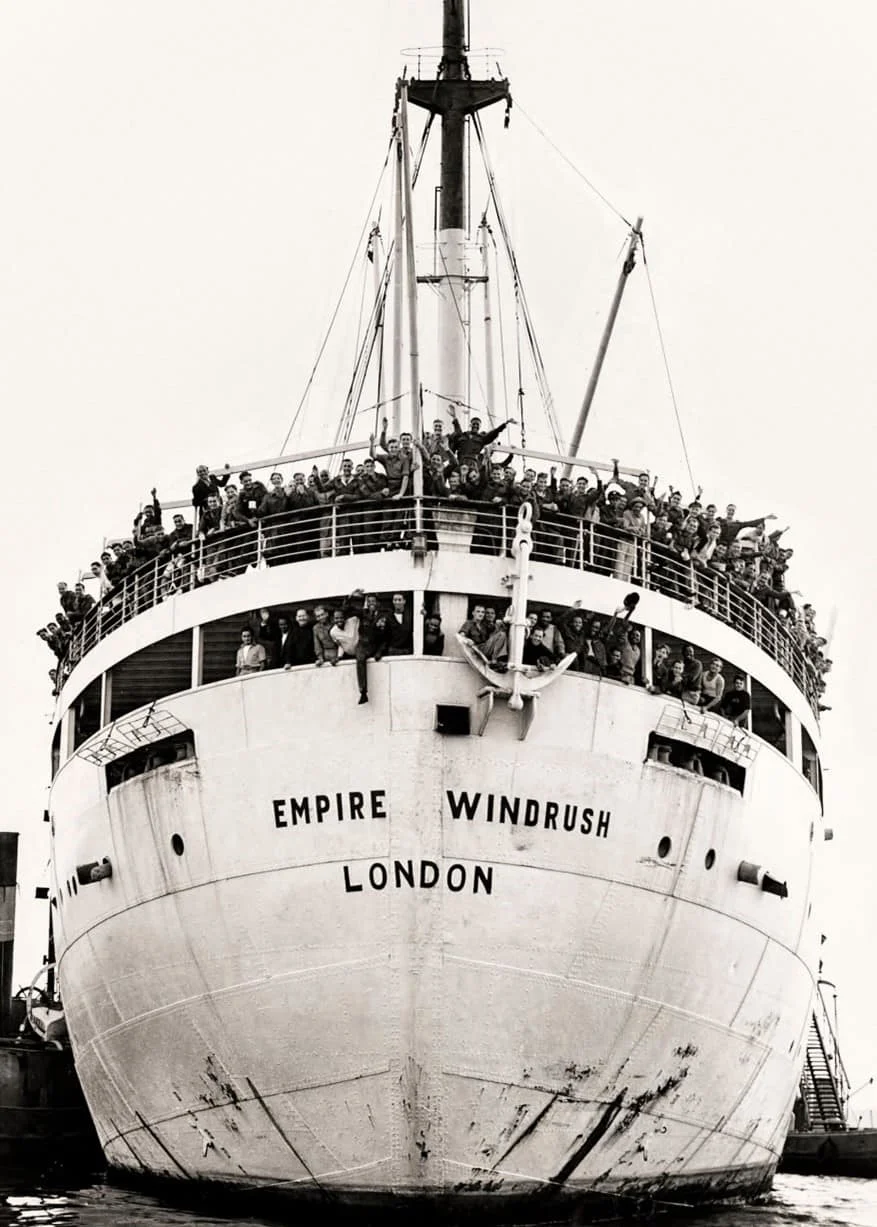
Thousands of people, around 1948—1971, arrived in the UK from Caribbean countries to help fill post-war UK labour shortages, in exchange for the right to settle. They are commonly referred to as “the Windrush generation,” named for the ship they arrived on (HMT Empire Windrush). This generation brought and tackled many things. Being placed in a poor country, indoctrinated to lose morale by racists and told they had no rights, despite their work in progressing healthcare at the time. It makes my skin crawl when you read more about their verdicts and unjust deportation from Britain that happened in 2018. I will explain briefly, but the full circumstances are here.
In 1958, the Race Riot happened between racist groups that attacked Notting Hill, a borough full of West Indian immigrants at the time, and the people of the borough, who had to suffer discrimination despite everything done to live in it, going on for a few days. There were no fatalities, despite injuries and stabbings, and a couple of people from the racist groups got sentenced. Whilst this was caused by many groups causing attacks and assaults on Afro-Caribbeans, there was apparently no involvement with the police until these groups attacked the police for defending them.
Throughout all of this, one woman appeared: Claudia Jones, an activist and newspaper editor for the (WIG) West Indian Gazette, began the first Caribbean Carnival in 1959 at St Pancras Town in Camden. It was an indoor event meant to bring unity and happiness, and it has fostered unity between people of different backgrounds. She made the first Caribbean festival in Britain become known as the “Mother of Notting Hill Carnival”. The carnival itself was originally inspired by the racially motivated murder of Kelso Cochrane in Notting Hill in May 1959, months before its conception, alongside a number of attacks. He was attacked by a group of young, white people on his way back from a hospital visit at night. His attackers haven’t been convicted, and due to how they handled it, many believed the police had done a horrible job, calling it a ‘robbery gone wrong’ despite one of them having a history of discrimination and hate crimes on record.
Life Beyond Regret offers another answer to the negativity in our hearts! Please share it with others who feel the same way you do.
Despite these attacks, she gave homage and paved the way to bring joy to many people. She unfortunately died two years before the first Notting Hill Carnival, which was organised by an activist, Rhaune Laslett, in 1966, bringing diverse communities together in hopes of easing the racial tension.
Since then, it has become the UK’s largest street festival. Steel pans were melodious, locals gathered, and the dancing brought many together. This was a revolution amidst the injustice. Since then, it has grown more popular, reaching millions of people from the 1980s to the 1990s.
It was born from instability and injustice and managed to bring joy and community through times when someone like me, in a comfortable setting, could never imagine. I don’t think I could be at ease if I had a person trying to chase me down and attack me just because of how I look. Even if you have never gone to a carnival, you can tell that it has imparted a long-standing sense of freedom and happiness. Well, you should — now people see the headlines, the mass profile case of debauchery.
So what’s going on, and why is there a view of negativity toward an event meant to bring back unity?
There are a couple of points, and whether or not you agree with them, they are not easily solved and possibly won’t be for a long time.
The Debates & Hidden Viewpoints
The security issue
British Police are involved in security and have been for decades to ensure protection and safety. But they usually don’t have much credibility when they are involved in something that involves race; Kelso Cochrane and the Notting Hill Carnival riot, for example.
In 1976, 1,600 officers were dispatched, and with an eight-fold increase since the previous year’s carnival, it was no doubt that it wasn’t a pleasurable sight for the carnival-goers. So much happened to the discriminated that hasn’t helped; the Vagrancy Act of 1824 (which has been repealed this Year, something I didn’t know before I studied for this article), which was used to condemn the homeless, gave a ‘systematic’ leeway to suspect black people, the stop-and-searches, the way ‘black youths’ have been blamed prior. Police officers suspected someone of pickpocketing, and many people tried to defend the suspect, and soon there was a riot. With the amount of police involved and the systemic racism, it was only a matter of time.
Police used trash bins as there were no riot shields at the time; people got injured in waves, headlines pushed attention towards those ‘black youths’ being at fault, and many politicians want the removal or relocation of the carnival.
There are even more stories of policing concerns throughout the decade, and whether the Metropolitan Police are doing their fair dues, at the same time, ensuring the safety of the carnival.
This year’s carnival, police set up checkpoints where people have to pass through gates to be detected. Most would probably swear and say this isn’t what ‘Carnival’ is. But that’s not a problem, as Carnival seems to be foretelling the same story of negativity, stabbings and chaos that forces residents to leave for a few days.
As much as police enforce the law, they are almost human! You can’t put the pressure on a few cops and have them sit still like soldiers in the middle of all this dancing and celebrating. They can’t protect themselves, and you can’t also snap them out of existence just because some people view them as a stereotype and politically bad.
There is no equal way to maintain it, as one side views security as a reminder of the injustice, opposing freedom, and the other side views Carnival as an unsafe event, with recurring incidents every year.
So how will security be enforced for those who want to enjoy it in the coming years?
Will there ever be another situation that causes a reminder of past racial tensions? Is every action an eggshell waiting to crack?
Only time will tell if there will be conformity or riots in the future.
The Nature of Carni-goers
Whilst security has been an issue spanning decades, the people going to the Carnival have shifted to become something much more… antisocial. For the best, we don’t have high levels of discrimination anymore; however, it still exists and is rooted far deeper in areas, islands and countries that have it worse than Britain.
Why are people who only led the conflict and accidents believed to be the cause? There’s only a handful of people out of the millions who go, yet as soon as one thing goes wrong, it is plastered all over the media.
I love the aesthetic, the aspect, the bank holiday freedom (well, I have to work on the 31st so I’m not really free). Carnival, much like many festivals, deserves to be enjoyed without worry.
But let’s be honest, a lot — and I mean a lot — can go wrong from the people themselves. Sure, people can have fun and do whatever; that is the nature of Carnival, and it moves in a metronome with one end being fun, unrestricted, anarchically good fun and the other end, a bunch of stress, fighting between the youths and, of course, the many ongoing attacks, assaults and situations.
Carnival is always brought into the limelight as a recurring headline, but not as much as other Carnivals; yet this one seems to have so much more information on its shortcomings. Seems like most of it is filled with the expectation of gang feuds and knife crime.
But keeping in mind, despite London being an absolute mess to have a massive carnival in (we left Liverpool Street and Spitalfields covered in rubbish when England came close to winning the World Cup back in 2018 and, of course, I was working the day after), there is the charm in a street festival being that it is a street festival; the people make the environment. The hosts bring the vibes and energy out. The problem is constructing it into a place fit for every kind of person who wants to go, in the sense that some will come to cause havoc.
This is a video from the 90s. Carnival then… Carnival we know now… which one do you think holds more of Claudia Jones’ vision: Rhaune Laslett’s efforts, the Trinidadian musician Russell Henderson and pioneer Sterling Betancourt, when the steel pans were playing melodies?
If the whole reason to have the carnival is to harmonise in unity against oppression, racism, riots and injustice, I will say it again… why are we fighting amongst ourselves?
Why do we end up stabbing each other over nonsense?
Why isn't the historical knowledge about the Carnival ingrained into the minds of youths?
There is a lot for a person who views both sides of the musical equation to question whether the value of Carnival will soon fade into history or will it remain prominent?
The Solution Is(n’t) Simple
I have gone once before, and festivals aren’t my go-to in general, but whilst there were fun times, you have to be wary of the not-so-good. The cramped space, nowhere to settle, overpriced snacks, not knowing which direction is the reggae area (it doesn’t seem like it, but there is a structure, and some places have musical dances - it isn’t always about provocative dancing). I didn’t realise that the steel pans are the day before the first day of Carnival and missed out, something I wish I could have seen that day.
I would enjoy it if there weren’t a human body in every direction. An event that celebrates freedom attracts freedom from every kind, yet packs us in a bordered crowd filled with police officers and surrounded by scanning systems. There’s so much more that I could mention, but I will leave you with a point for you to consider:
The fact that the culture has slowly been overwritten due to what I believe is the needs of the many, meaning Carnival these days is for the people who want to party and may not consider the event in its purest form: a multi-racial event about unity for all those who suffer from discrimination, especially the Windrush Gen and those who suffered through the West London Riots.
Maybe it is what the youths of this day and age can comprehend?
The way we understand concepts always changes daily. Stretch that to decades, and you get the current Notting Hill Carnival.
I can only hope that there will be a firm middle ground in the future. But until the organisers, the parliament, and the people unite, Carnival will persist as a complex case of mixed opinions.
Thank you for reading
0 likes · 0 views · Nov 22, 2026
A detailed highlight of Notting Hill Carnival, its criticisms, and whether it still honours its original founding story.
