SIX WORLDS

Vanesa Martinez


SIX WORLDS
An Independent Speculative Research & Creative Direction Project
Humanity is accumulating what it cannot process and losing what it cannot measure.
Six Worlds explores six contradictions of contemporary life. Each world starts from documented evidence, becomes a thesis, and ends as an artifact from a civilization that does not exist yet.
These are not predictions. They are six ways of looking at the present from a possible future.
SIX WORLDS overview
01 — THE CRUST
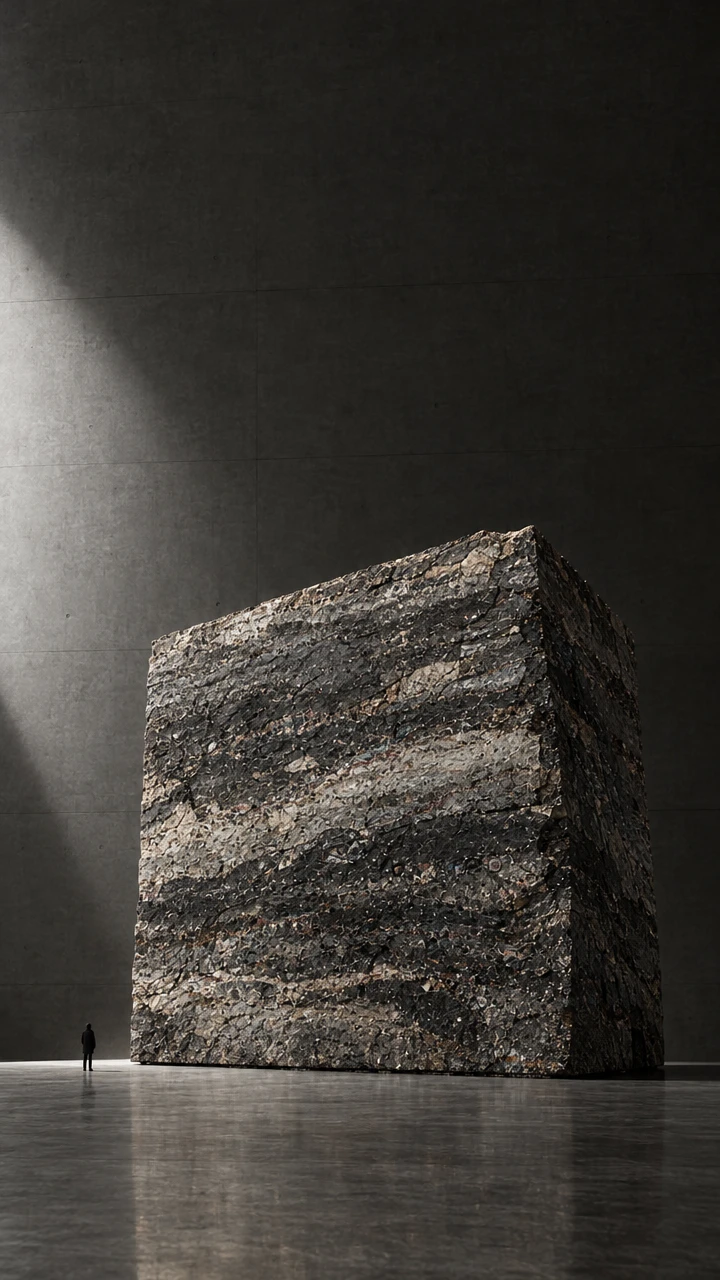
The Surplus / Dark Data
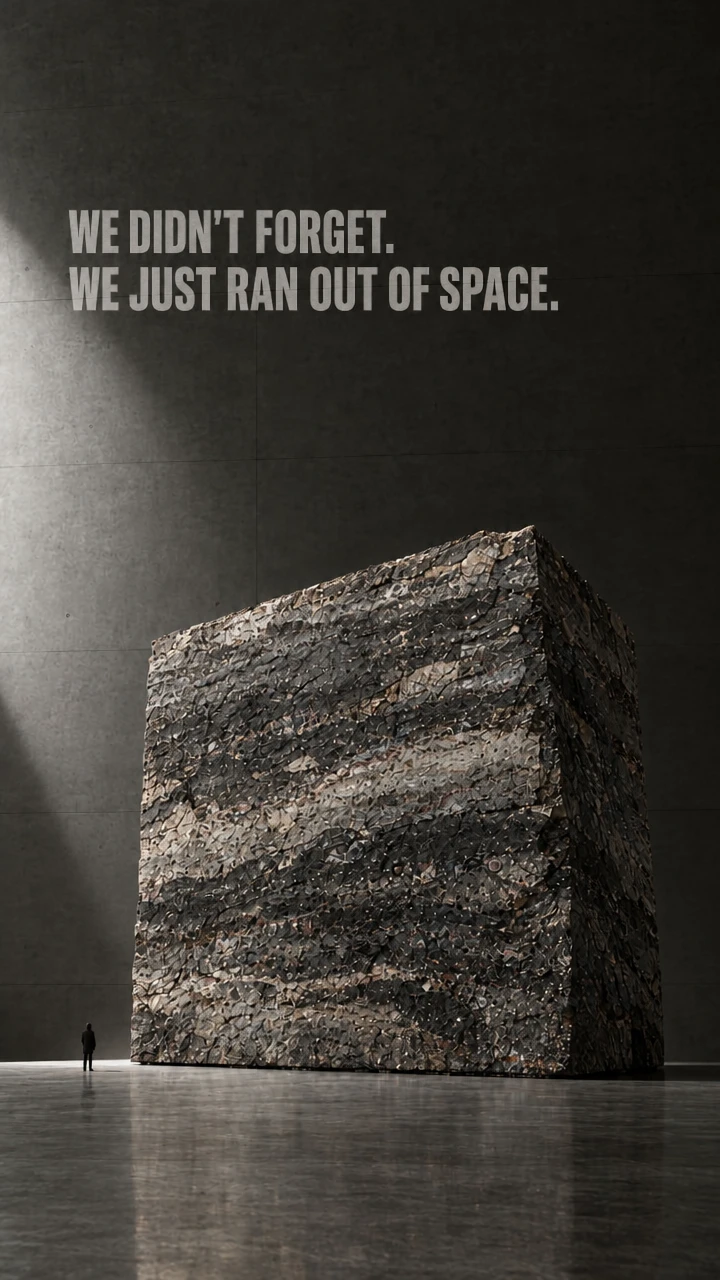
WE DIDN'T FORGET. WE JUST RAN OUT OF SPACE.
EVIDENCE
Splunk's The State of Dark Data, which surveyed more than 1,300 business and IT leaders across seven economies, found that 55% of their organizations' data was dark: unknown or unused.
THESIS
We confuse keeping with preserving.
THE CRUST
02 — THE TRIBUTE
The Hidden
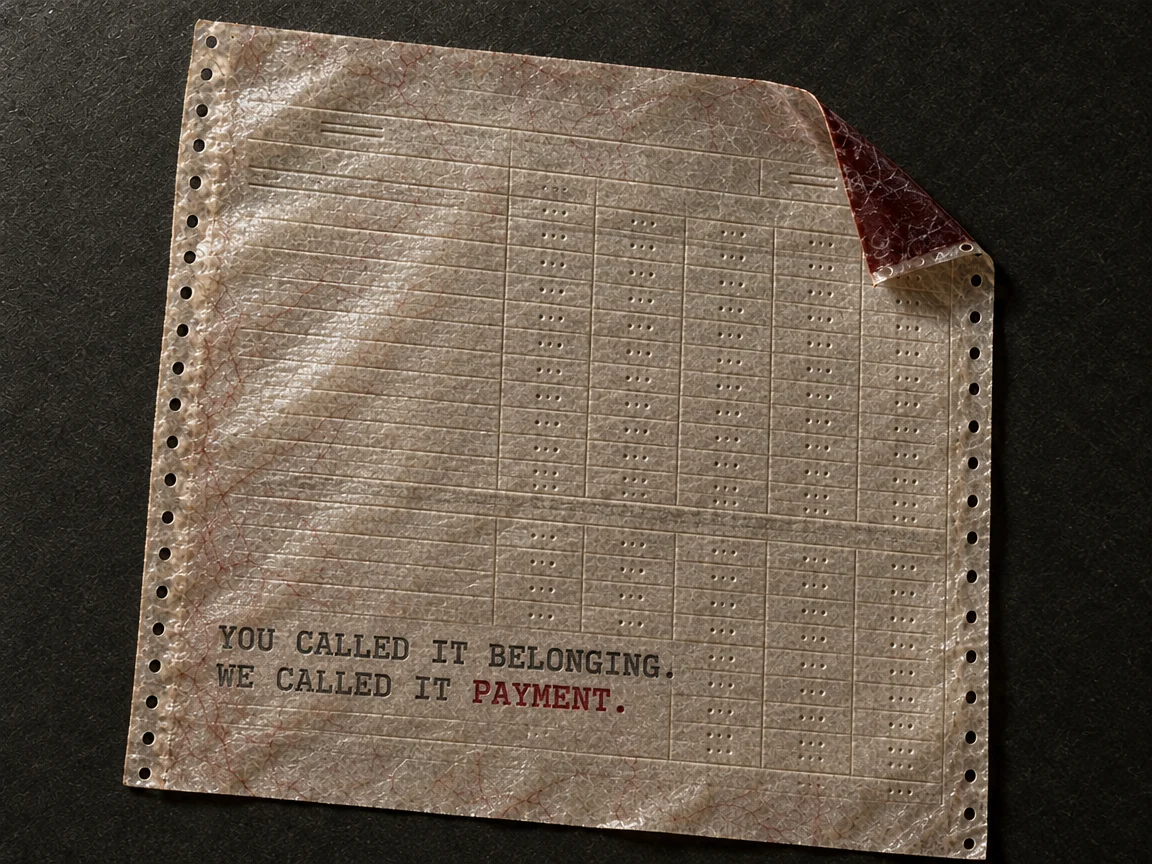
YOU CALLED IT BELONGING. WE CALLED IT PAYMENT.
EVIDENCE
In Canada, the potlatch was banned from 1885 to 1951 as part of policies of cultural suppression against Indigenous nations, including the Kwakwaka'wakw. Ceremonial objects were confiscated.
THESIS
Belonging can become a form of payment: time, attention and emotional energy given to brands and figures that do not know us.
SPECULATION
Loyalty becomes visible. Every act of defense leaves a debit on the body.
ARTIFACT
An emotional bank statement.
Note: the historical reference and the contemporary thesis are distinct. The potlatch is presented here in the context of its cultural suppression, not as an analogy for brand loyalty.
THE TRIBUTE
03 — THE UNWRITTEN BRANCH
Alternative Collective Memory
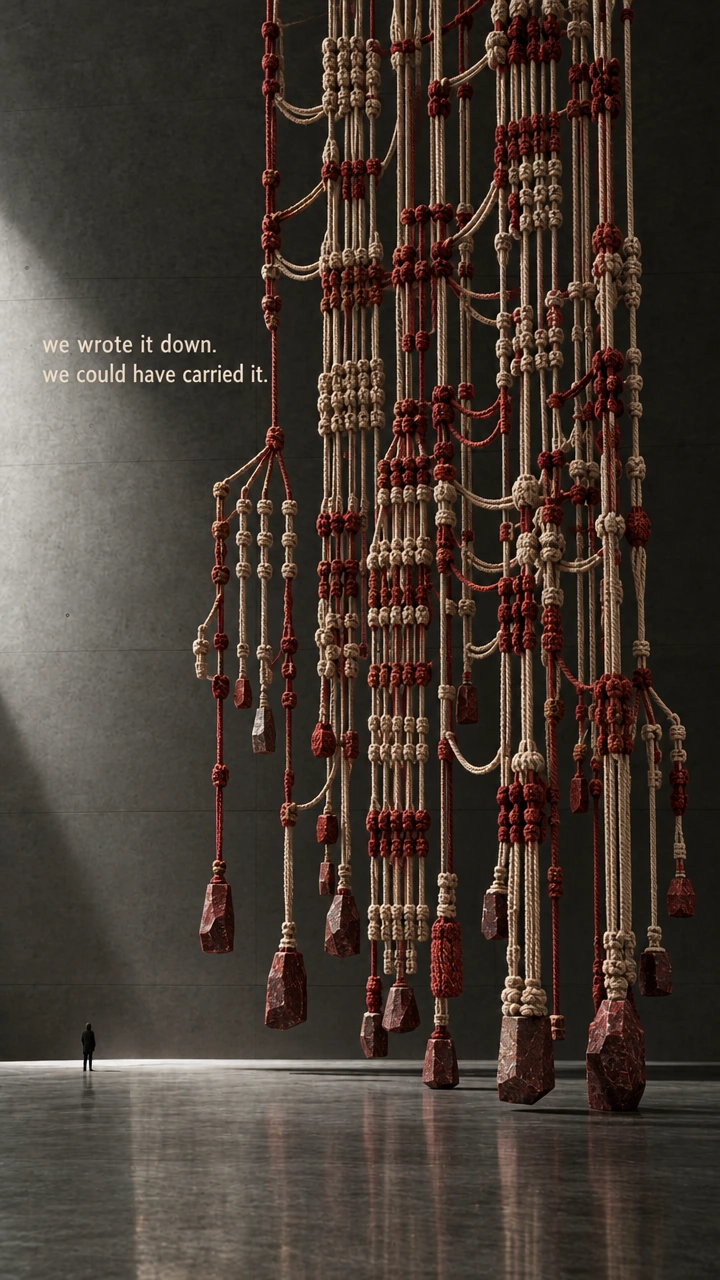
WE WROTE IT DOWN. WE COULD HAVE CARRIED IT.
EVIDENCE
Andean quipus recorded information with cords, colors and knots. In 1998, UNESCO inscribed the Flemish Béguinages, testimony to communities of independent religious women.
THESIS
Recording and transmitting memory did not have to depend on linear writing.
SPECULATION
Agreements are woven, genealogies are knotted, and memory is not consulted but traversed by hand.
ARTIFACT
A speculative textile record. It is not a reconstruction of a historical quipu.
THE UNWRITTEN BRANCH
04 — THE INCARNATION
Technological Redemption
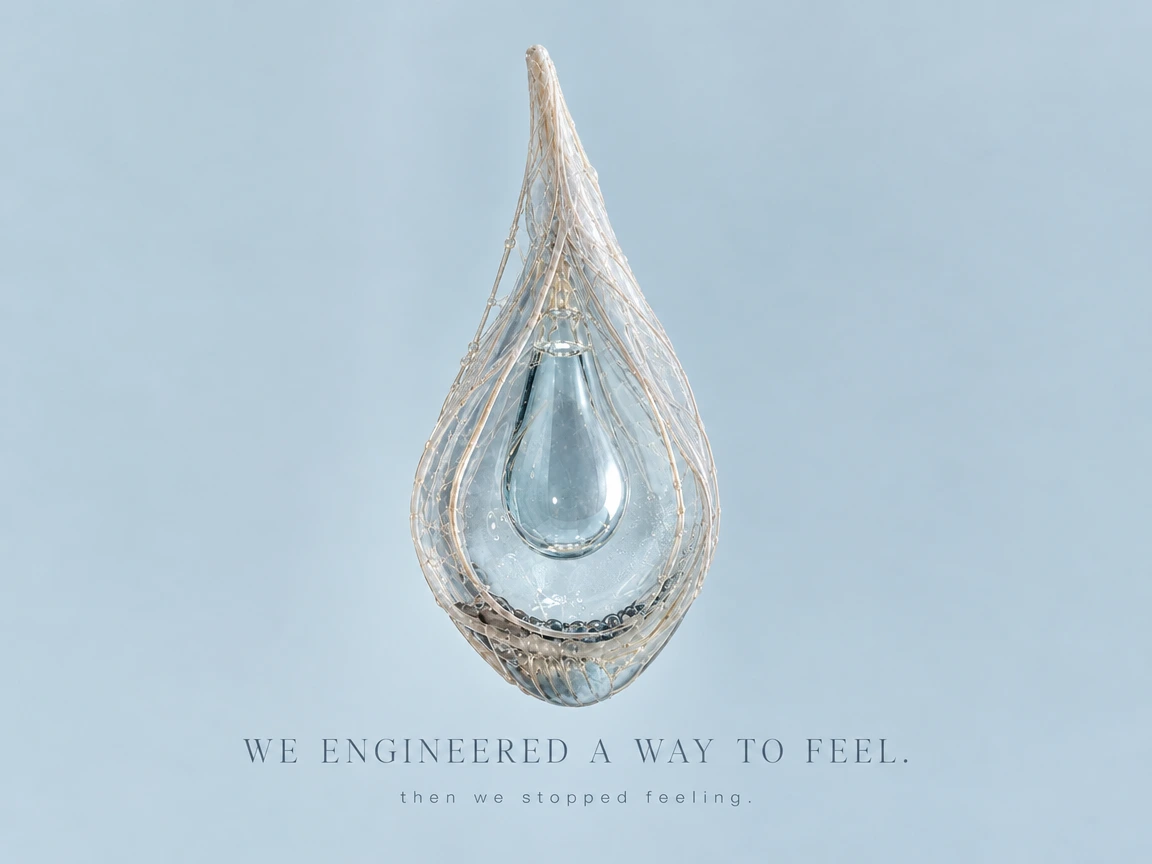
WE ENGINEERED A WAY TO FEEL. THEN WE STOPPED FEELING.
EVIDENCE
Academic research on “griefbots”: AI systems that simulate deceased people from their digital traces, raising questions about memory, consent and emotional dependence.
THESIS
Humanity has always built symbolic prostheses for what it cannot bear emotionally.
SPECULATION
Grief becomes a delegable function. An artificial organ holds and releases what the body no longer expresses.
ARTIFACT
A prosthetic tear organ.
THE INCARNATION
05 — THE THRESHOLD
The Absent
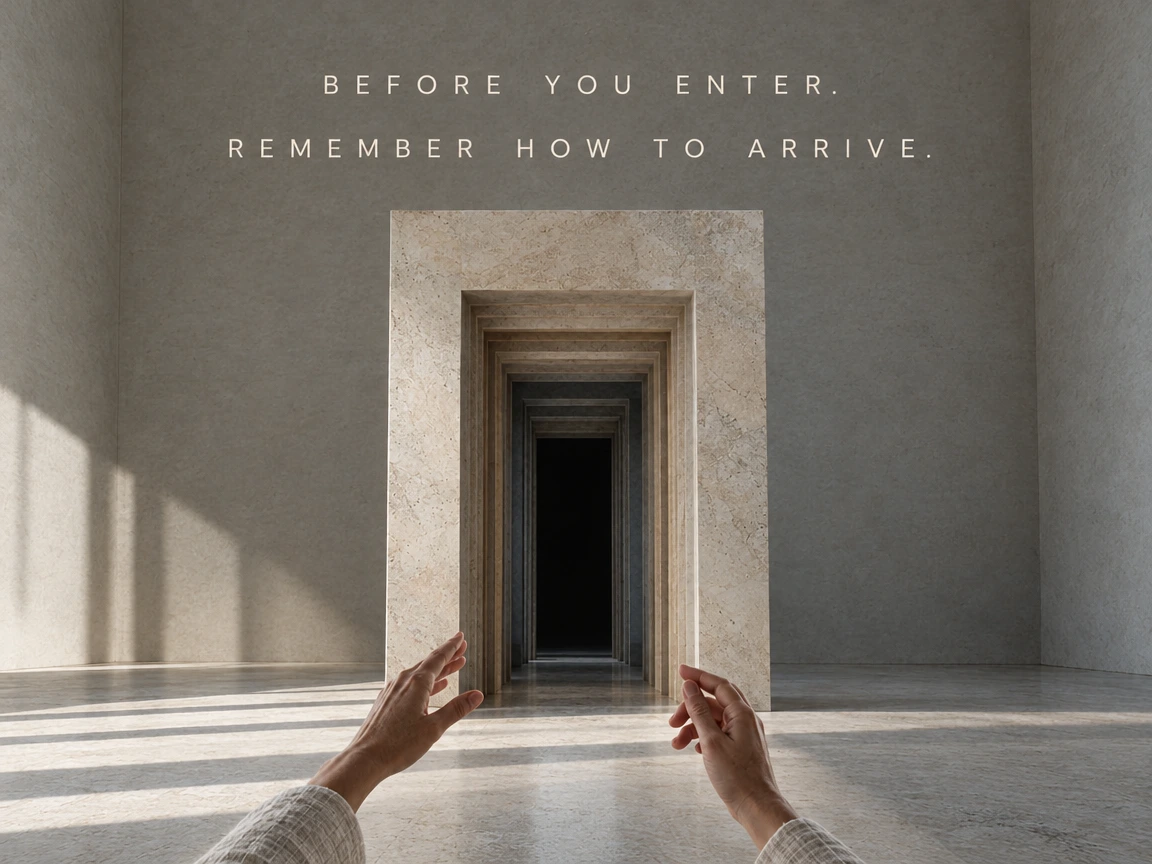
BEFORE YOU ENTER. REMEMBER HOW TO ARRIVE.
EVIDENCE
At the medieval abbey of Cluny, monks kept silence through a lexicon of more than a hundred hand signs, recorded in the late eleventh century.
THESIS
We have eliminated thresholds. We move from one notification to the next without transition, and forget how to arrive.
SPECULATION
No space is entered without a ritual of transition. Silence becomes an access protocol.
ARTIFACT
An architectural passage that can only be entered through a sequence of gestures.
THE THRESHOLD
06 — THE TREMOR
The Somatic Demand
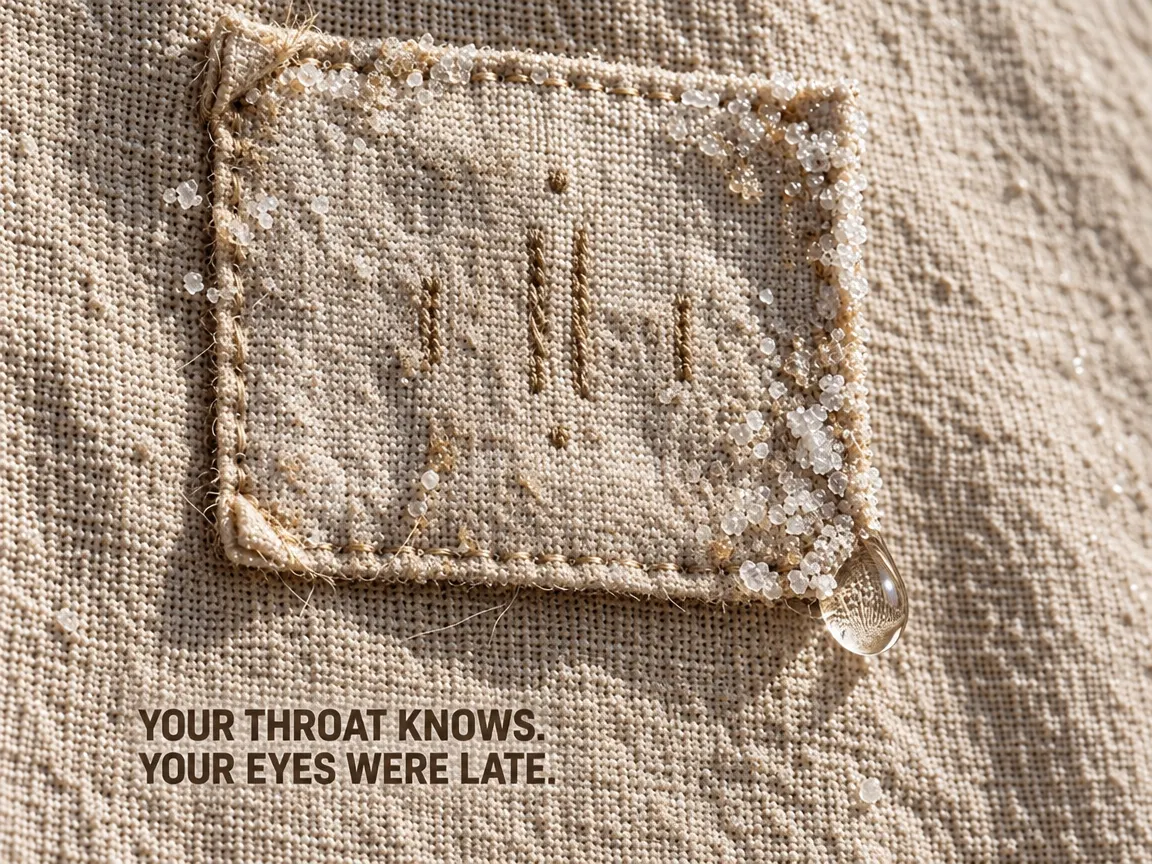
YOUR THROAT KNOWS. YOUR EYES WERE LATE.
EVIDENCE
From 1969, artist Artur Barrio staged situações in public space with organic, precarious materials, making political violence visible.
THESIS
Constant exposure to crisis turns even the urgent into content. Seeing is not always feeling.
SPECULATION
Communication stops seeking attention and seeks a bodily reaction. The cost of a decision is felt, not read.
ARTIFACT
A sensory garment label. A material metaphor, not real technology. Barrio is a historical reference; the artifact does not reproduce his imagery.
THE TREMOR
THE METHOD BEHIND THE WORLDS
Six Worlds does not try to predict what is coming. It uses verifiable fragments of the past and present to ask what we might become.
The EVIDENCE → THESIS → SPECULATION method can be applied to brand research, concept development and campaign direction.
CREDITS
Creative direction, concept development, selection and visual decisions: Vanesa Martínez.
Research, conceptual exploration and visual production with AI assistance.
A self-initiated project, with no client or commercial brief.
This is not a prediction.
If this feels familiar, it's because you already live here.
SELECTED REFERENCES
Splunk, The State of Dark Data
U'mista Cultural Centre, on the potlatch ban (1885–1951)
Museo Larco, on quipus
UNESCO, Flemish Béguinages (1998)
Hollanek & Nowaczyk-Basińska, “Griefbots, Deadbots, Postmortem Avatars” (2024)
Scott G. Bruce, Silence and Sign Language in Medieval Monasticism (Cambridge University Press, 2007)
Museo Reina Sofía, on Artur Barrio's Situações
Like this project
Posted Nov 1, 2026
A self-initiated speculative research and creative direction project exploring six contradictions of contemporary life through evidence, thesis, speculation and artifacts.
Likes
0
Views
0