Rethinking Career Guidance for Nigerian Youth

Anwana-Toyo John



Why asking kids “What do you want to be?” is failing African youth. A powerful wake-up call to Nigerian parents to guide, not dictate, career paths.
Abstract: The question "What do you want to be when you grow up?" has long served as a hallmark of early childhood conversations in many African homes. While the intention might be innocent, the consequences have proven counterproductive for generations of African youths. This article critiques the African parenting approach to career guidance, highlighting its adverse effects on career confusion, unemployability, and unprofessionalism in Nigeria. It proposes a practical, parent-led mentorship model as a strategic solution to liberating young African minds from the illusion of conventional formal education.
Rethinking "What Do You Want to Be When You Grow Up?" — A Wake-Up Call to African Parents
‐ Written by Anwana-Toyo
Introduction:
In living rooms across Nigeria, it is commonplace to hear a parent lean toward a mere six-year-old child and ask, with a proud smile, "What do you want to be when you grow up?" On the surface, this question seems harmless, even appears encouraging. But beneath its simplicity lies a profound systemic flaw in how African parents-Nigerians in particular, approach career guidance. Often times, this question triggers a lifetime of societal pressure, misguided ambition, and sadly, unrealized potential. In reality, most children do not yet possess the emotional or intellectual maturity to make life-altering decisions that concerns their future, yet they are expected to respond with professions that sound prestigious like doctor, lawyer, engineer, and so on, just to sound ambitious and satisfy the adults.
Contextual Analysis: The Epidemic of Misplaced Passions
In contemporary Nigeria, this cultural obsession with predefined career roles has led to a crisis of disengagement. A 2022 report by the Nigerian Bureau of Statistics (NBS) revealed that over 33% of Nigerian graduates are unemployed, with a significant portion either working outside their field of study or struggling with job dissatisfaction.(NBS Q4 2022 Report). Many of these individuals were victims of early career scripting—pushed into professions they had no passion for, driven by societal and parental expectations.
According to Jobberman's "Best 100 Companies to Work For" report, job satisfaction levels in Nigeria remain low, with only 6.7% of workers feeling very satisfied in their roles.
Instead of nurturing natural talents and interests, African parents often prioritize traditional career paths, neglecting the vast opportunities that lie in creativity, entrepreneurship, and technical skills. This disregard for personalized guidance has contributed to a high rate of dropouts, economic stagnation, and the alarming rise in unprofessional conduct across various industries.
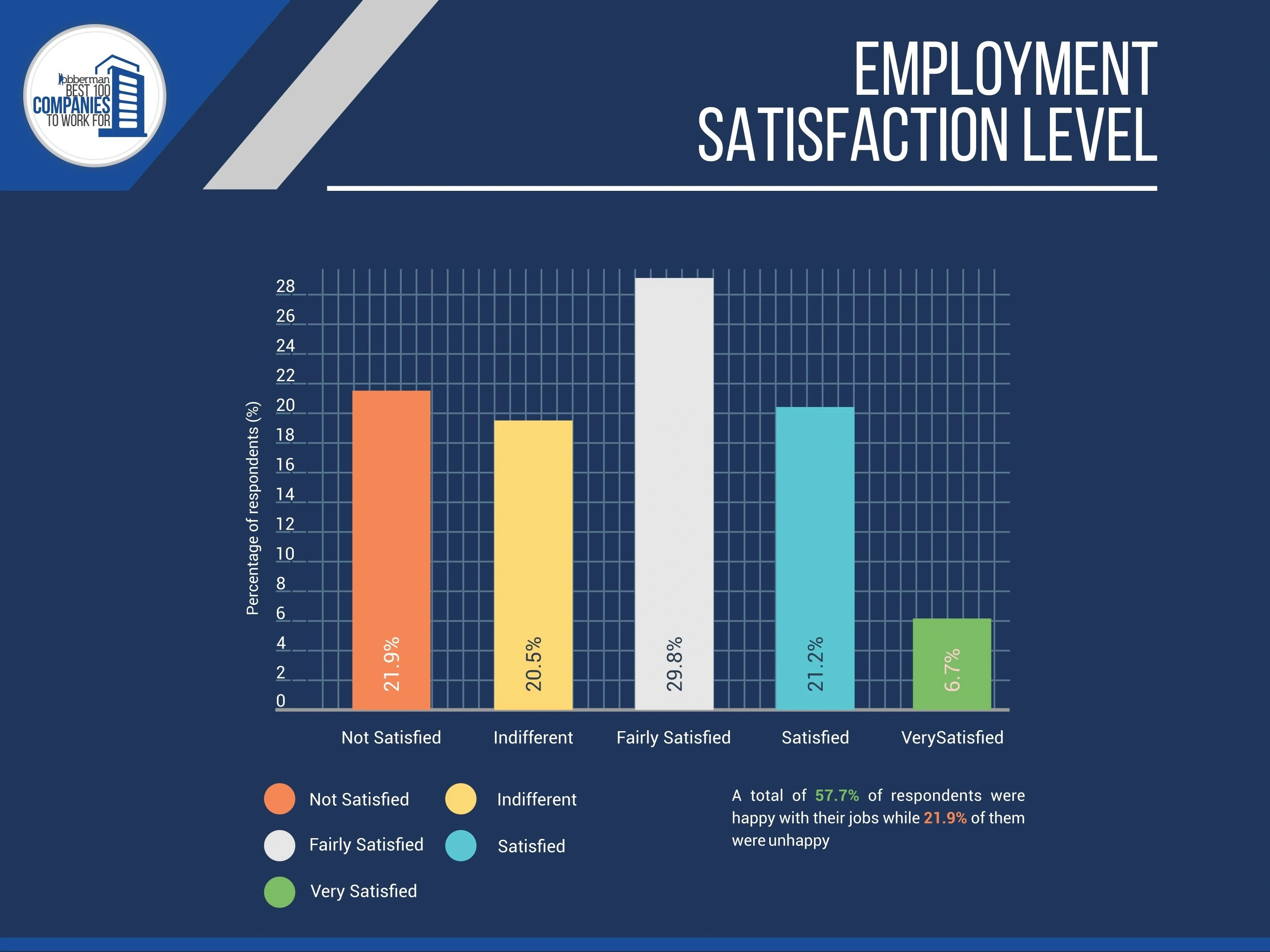
The consequences of early career misguidance and parental pressure reflect not just in unemployment rates, but also in job dissatisfaction. As illustrated below, only 6.7% of employees report being very satisfied with their jobs, while over 42% are either indifferent or not satisfied—a concerning indicator of misplaced career alignment and lack of professional fulfillment in Nigeria's workforce.
Source: Jobberman Nigeria, “Best 100 Companies to Work For” Report, 2022
The Myth of Formal Education as a Panacea
There’s an entrenched belief in most African homes that formal schooling is the key to success. The truth, however, is far more complex. While formal education plays a vital role in intellectual development, it cannot substitute for genuine passion, exposure, and skill-based learning. The typical Nigerian classroom, which is either overcrowded, underfunded, understaffed, or even uninspiring sadly offers little more than rote learning and memorization. Teachers, underpaid and often unmotivated, prioritize test and exam results over actual learning, rather than fostering curiosity. Most of these teachers lack interest in putting more efforts because they are undervalued and barely recognized for their devotion.
By prematurely shipping children off to schools with zero grounding in real-world knowledge, many parents unknowingly abdicate their most critical responsibility which is to coach their children on life itself from the basics at home. Children are not trained to think, explore, or discover who they truly are. They are trained to conform, obey, and regurgitate facts. And in a society that worships certificates more than competence, this approach becomes a ticking time bomb.
The Untapped Goldmine of Vocational Skills
While Nigerian parents obsess over securing university admissions and credentials, A 2023 World Bank technical brief highlights the ongoing challenge of skills gaps in Nigeria, noting that employers seek a range of competencies including technical and digital skills. This challenge is further emphasized by a 2019 World Bank survey which found that nearly 65% of individuals recruited by African companies needed at least basic digital skills.[1] Meanwhile, vocational training centers like Lagos’s SkillNG report a 90% job placement rate for graduates in fields like UI/UX design and drone maintenance—roles barely discussed in living rooms.
Countries like Rwanda and Ghana are already capitalizing on this shift. Rwanda’s EdTech Africa Initiative partners with parents to identify children’s aptitudes early, blending formal schooling with apprenticeships. In Nigeria, startups like AltSchool Africa and GOMYCODE now offer accredited certifications in robotics and AI—fields many parents still dismiss as “hobbies.”
Why This Matters:
- Nigeria’s creative industry (Nollywood, music, art) contributes 2.3% to GDP (NBS 2023) which is more than agriculture. Yet parents still steer children away from “unstable” creative careers.
- The African Development Bank projects that Africa faces a significant youth unemployment challenge, with an estimated 100 million young Africans potentially unemployed by 2030. Nigeria, with a large and growing youth population expected to exceed 130 million by 2063, will require the creation of an estimated 30 million additional jobs by 2030 just to maintain current employment levels. Without rethinking career mentoring, unemployment will skyrocket. [2]
Case Study: Nigeria’s Unprofessional Workforce
Take the example of a certified medical doctor who prescribes medication without a proper diagnosis—resulting in the death of a patient. Or an engineer who sacrifices safety to appease a client’s budget, leading to a collapsed structure. These are not isolated incidents. They are the ripple effects of a broken system where passion and responsibility were never cultivated.
Reports from 2023 indicate a considerable level of job dissatisfaction among professionals in Africa, with one survey revealing that 55% of respondents in Africa, including Nigeria, reported being satisfied with their jobs.[3] This suggests a significant portion of the workforce experiences some level of discontent in their current careers. This misalignment between occupation and passion has led to half-baked service delivery, reduced innovation, and diminished public trust in professional sectors.
The Parent’s Role as the First Career Coach
Parents must reclaim their position as the first teachers—not just of reading and writing, but of self-discovery. Before formal schooling begins, children should be introduced to activities that develop curiosity, creativity, and courage. Parents must pay close attention to what their children love doing, be it drawing, fixing things, storytelling, or questioning how things work and hence cultivate that.
Career mentoring should begin at home, not through long-hours lectures, but through engagement. Expose your child to a wide range of careers by letting them watch you work, visit your friends in different professions, or attend workshops, webinars, and vocational events. Let your child see what it means to be a craftsman, an artist, a coder, a farmer, a social worker. Give them room to ask questions and experiment. This creates clarity, not confusion. Most children aren't even proud of their parents own professions, mostly due to how the parents paints the profession or career as diminishing in the eyes of the children, and this is wrong. Parents should take pride in their professions hereby encouraging the children to understand what passion truly means.
Mrs. Funmi Adebayo, a Lagos-based accountant, once shared an experience when she believed her son’s future hinged on a law degree. For years, she pushed him toward courtroom ambitions, with the typical mentality of being regarded as 'mama barrister', dismissing his obsession with dismantling gadgets as a “distraction.” But when he began getting called out for skipping classes to build automation prototypes, she faced a choice: double down on tradition or trust his curiosity.
She chose the latter.
Today, her son runs a thriving Lagos tech startup that designs affordable smart home systems for low-income communities. “I thought passion was a luxury,” she admitted. “Now I see it’s the foundation of purpose. Letting go of my rigid expectations didn’t just save his future, it redefined mine.”
Nigeria’s tech ecosystem—valued at $8.4 billion in 2023, is proof that non-traditional paths yield prosperity. Yet, a 2023 survey by TechCabal revealed that 72% of Nigerian founders faced parental resistance early in their careers.[4] Many, like Mrs. Adebayo’s son, averted to entrepreneurship only after overcoming familial pressure to pursue “stable” professions.
Challenging the Educational Status Quo
It’s time we question the default assumption that formal education must begin as soon as a child can speak, write, or walk. Education is not merely about enrolling a child into a classroom. True education begins when a child learns to make decisions, solve problems, communicate, and create. If a child demonstrates passion for mechanics or design at age 7, it is far more beneficial to cultivate that through play, tools, and apprenticeship than to drown it in forced memorization and irrelevant note writing.
Education should be voluntary—not in the literal sense, but in terms of the child’s genuine interest. If a child does not yet see value in formal learning, perhaps they are simply not ready. Forcing them only breeds resistance, burnout, and low academic performance. On the other hand, when a child is internally motivated, learning becomes exciting, even magical without pressure.
Solutions for a New Parental Paradigm
1. Ditch the Scripted Questions: Instead of asking "What do you want to be?" ask "What fascinates you today?"
2. Create Career Exploration Routines: Dedicate monthly weekends to visit workplaces for exposure (e.g., creative studios, mechanic workshops, or a radio station).
3. Prioritize Mentorship : Invest in mentorships, apprenticeships, and online platforms that encourage practical learning over extra tuition fees.
4. Support, Don’t Dictate: Encourage and celebrate your child’s talents, even if they defy societal norms and expectations. Let the path be theirs, not yours.
Conclusion
In reshaping the future of Africa, the parenting model must evolve. Career discovery should be a journey of nurturing interests, not scripting destinies. Let us stop asking our children what they want to be and instead help them discover who they already are. Because when passion meets purpose, productivity and professionalism will follow.
The future of Africa depends not on certificates, but on competence—and competence begins at home.
Like this project
Posted May 18, 2025
Why asking kids “What do you want to be?” is failing African youth. A powerful wake-up call to Nigerian parents to guide, not dictate, career paths.
Likes
3
Views
11
Timeline
May 17, 2025 - May 18, 2025