E-commerce Revenue Growth via Facebook Ads

Vipashyana Srivastava


E‑commerce Revenue Growth via Facebook & Google Ads
Role: Performance Marketing Strategist
Platform: Facebook Ads, Google Ads
Client Type: E‑commerce brand (DTC)
Period: 3+ month
Project Overview
The client is a growing e‑commerce brand that wanted to scale revenue profitably without losing control of acquisition costs. Monthly sales had plateaued, and previous ad efforts were fragmented, with limited tracking, inconsistent creative testing, and no clear ROAS targets.
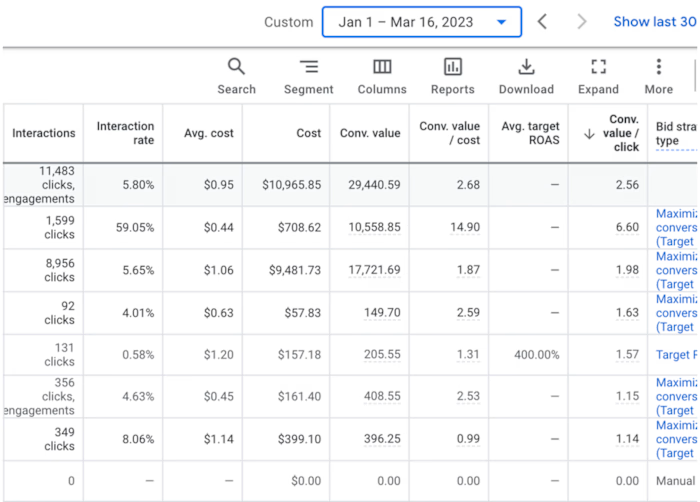
Over a multi‑month engagement, I designed and executed a full‑funnel performance marketing strategy across Facebook Ads and Google Ads. This resulted in an incremental $15,000–$20,000 increase in monthly revenue, driven by higher‑intent traffic, stronger conversion rates, and more efficient media allocation.
Objectives
Increase monthly revenue by at least five figures while maintaining profitable ROAS.
Stabilize and scale paid acquisition across Facebook and Google, using data‑driven experimentation.
Optimize the e‑commerce funnel from ad impression to checkout, reducing friction and drop‑off.
Create a repeatable paid strategy that the client could continue to scale after the engagement.
Discovery & Audit
Before launching new campaigns, I completed a full audit of the client’s digital advertising stack:
Facebook Ads audit
Reviewed historical campaigns, ad sets, and creatives.
Evaluated attribution windows, optimization events, and audience structure.
Identified overspending on broad, unsegmented audiences and underutilization of warm audiences.
Google Ads audit
Assessed keyword strategy, match types, and negative keyword coverage.
Reviewed search terms, ad relevance, and quality scores.
Detected missed opportunities in branded and high‑intent non‑brand queries.
Analytics & tracking
Confirmed pixel and conversion tracking accuracy.
Evaluated attribution in platform dashboards and Google Analytics to align on realistic ROAS benchmarks.
Benchmarked key metrics (CPC, CTR, conversion rate, AOV, ROAS) to set targets for optimization.
Strategy
1. Full‑Funnel Facebook Ads Framework
I mapped the customer journey and rebuilt Facebook campaigns into a structured funnel:
Top of Funnel (TOF):
Cold audiences based on interest, lookalike, and broad targeting to efficiently reach new prospects.
Middle of Funnel (MOF):
Warm audiences such as website visitors, add‑to‑cart users, and social engagers.
Bottom of Funnel (BOF):
High‑intent users: cart abandoners, checkout initiators, and recent purchasers (for upsells).
Key elements:
Optimization for purchase and messaging conversions to align delivery with revenue.
Segmentation by device and placement where relevant, based on performance data.
Frequency monitoring to avoid creative fatigue and wasted spend.
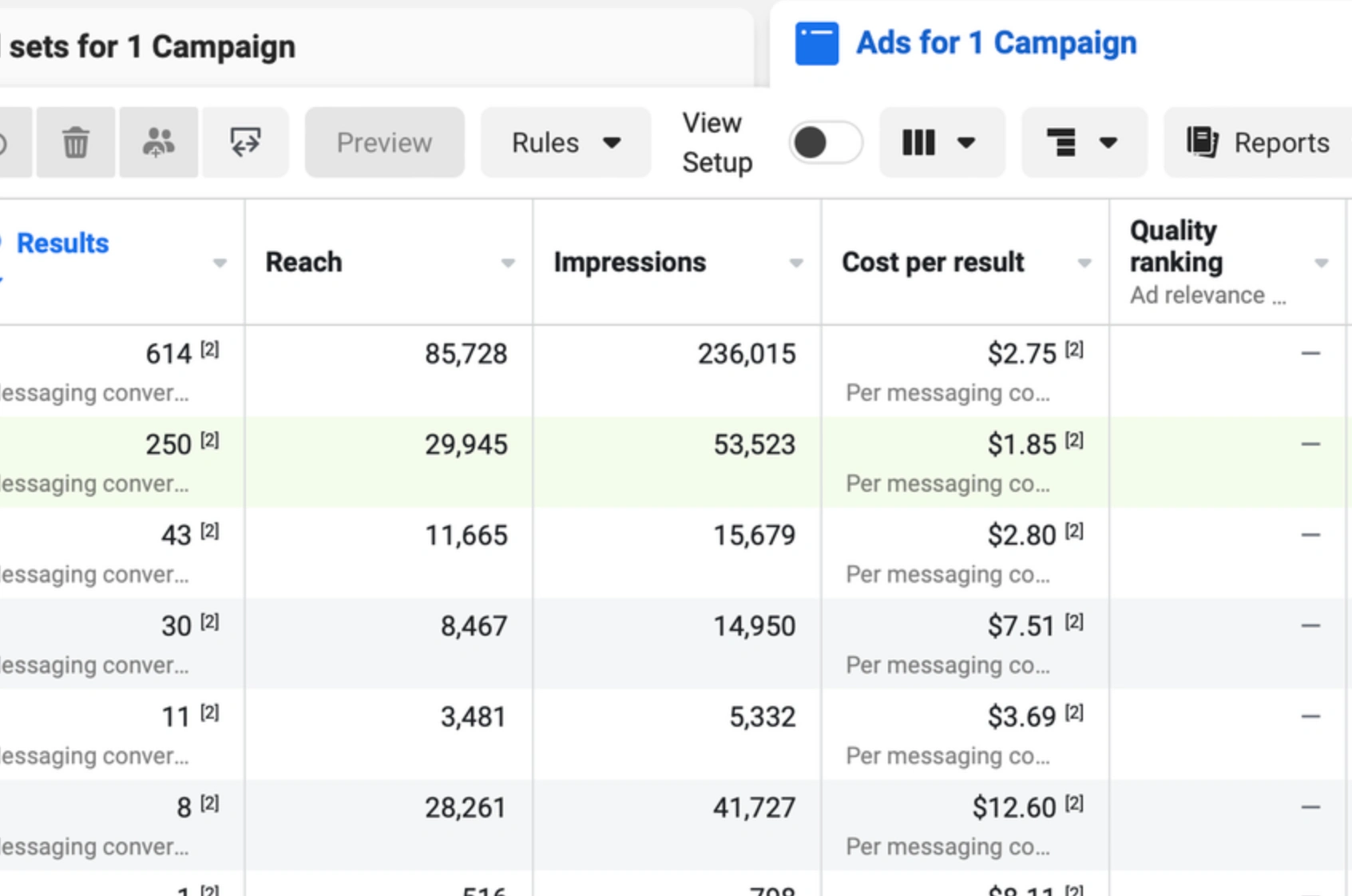
The attached Facebook Ads Manager screenshot shows multiple ad sets with strong reach, impressions, and competitive cost‑per‑result, confirming efficient delivery and controlled acquisition costs.
2. Creative & Messaging Strategy
To maximize performance, I combined data‑driven testing with deep understanding of the client’s audience:
Creative angles
Problem–solution messaging addressing specific customer pain points.
Social proof: testimonials, reviews, and user‑generated‑content‑style creatives.
Offer‑driven variations to test urgency (limited‑time offers, bundles, or free shipping).
Testing structure
Systematic A/B tests on:
Hooks and headlines.
Visual format (static vs. video vs. carousel).
CTAs and value propositions.
Clear success metrics: CTR for engagement, cost per add‑to‑cart, and cost per purchase for profitability.
Continuous iteration
Paused underperforming creatives quickly.
Scaled winning combinations by increasing budgets and duplicating into new audience segments.
3. Audience Engineering on Facebook
I built and refined multiple audience segments to balance scale and efficiency:
Lookalike audiences from:
High‑value purchasers.
Repeat customers.
Add‑to‑cart and checkout initiators.
Interest‑based audiences
Layered interests aligned with the brand’s niche and buying behaviour.
Retargeting audiences
7‑, 14‑, and 30‑day windows for dynamic retargeting.
Exclusions to ensure clear separation between TOF, MOF, and BOF.
The outcome was a campaign structure in which each ad set had a clear role in the funnel, measurable KPIs, and minimal overlap, helping maintain sustainable cost per result across segments.
4. Google Ads Acquisition Engine
To complement Facebook’s discovery power, I built a high‑intent acquisition engine through Google Ads:
Keyword strategy
Branded campaigns to capture users already searching for the client by name at low CPCs.
Non‑brand campaigns around category, product type, and pain‑point keywords to acquire net‑new customers.
Negative keyword lists to filter out low‑intent or irrelevant searches, improving quality scores and lowering CPCs.
Campaign types
Search campaigns focused on purchase‑intent queries.
(Where appropriate) Performance Max or Shopping campaigns to showcase products with rich visuals and price information.
Ad copy optimization
Clear alignment between keyword, headline, and landing page.
CTA‑driven descriptions focused on benefits and differentiation.
Ongoing testing of multiple RSA variants to identify the highest‑converting combinations.
Bid & budget management
Smart bidding strategies (e.g., target ROAS or target CPA) used once sufficient conversion data was collected.
Cross‑campaign budget allocation based on incremental revenue impact and ROAS, not just clicks.
5. Funnel & Landing Page Optimization
Campaign performance was reinforced by funnel improvements:
Simplified navigation and reduced friction from landing page to checkout.
Clearer above‑the‑fold messaging to align with ad promises.
Strategic deployment of trust signals (reviews, guarantees, secure checkout).
Analysis of drop‑off points in the checkout flow and targeted fixes (e.g., form fields, payment options).
These enhancements increased conversion rates so that each incremental click from Facebook and Google translated into more revenue.
Results
Revenue & Orders
Using the combined Facebook and Google strategy, the business saw a substantial uplift in both revenue and order volume.
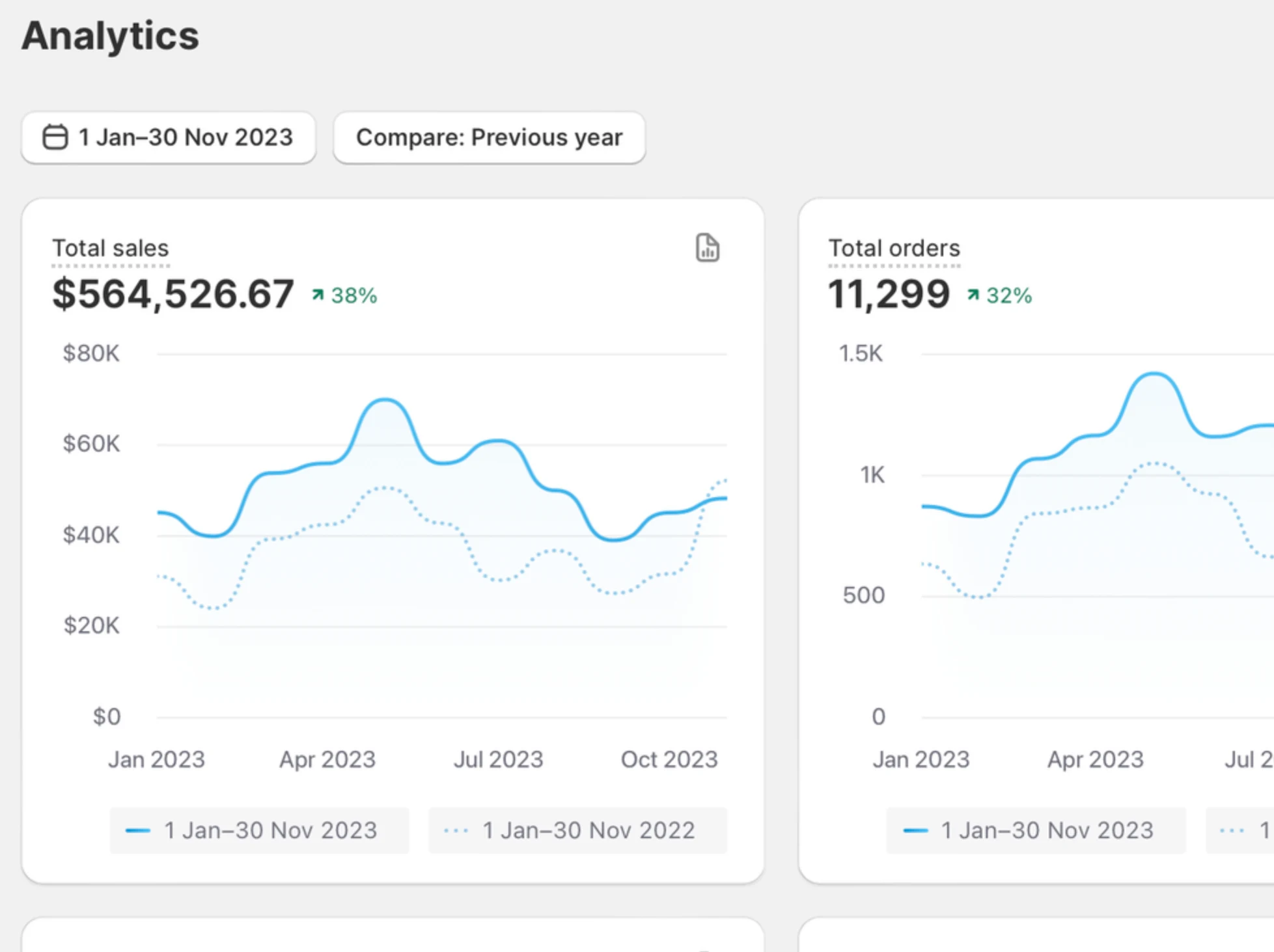
Monthly revenue increased by $15,000–$20,000 compared with previous months.
Over the wider period, the brand’s analytics dashboard shows total sales of $564,526.67, reflecting a 38% increase vs. the previous year, and 11,299 total orders, a 32% increase year‑over‑year.
These gains were achieved while maintaining a healthy ROAS, as evidenced by stable and competitive cost‑per‑result values in Facebook Ads Manager.
Channel‑Level Impact
Facebook Ads
Delivered large‑scale reach and impressions at a sustainable cost per messaging or purchase conversion, enabling profitable prospecting.
Retargeting ads efficiently converted warm users, reducing overall blended acquisition costs.
Google Ads
Captured high‑intent traffic from users already searching for the product category or brand, lifting overall conversion rates.
Provided incremental revenue with strong purchase intent, improving the profitability of the full media mix.
What This Demonstrates
This project highlights several strengths:
Advanced platform expertise in both Facebook Ads Manager and Google Ads, including campaign architecture, optimization, and attribution.
Strategic thinking, turning a fragmented ad presence into a cohesive full‑funnel system that compounds across channels.
Data‑driven decision‑making, using metrics such as cost per result, conversion rate, AOV, and ROAS to guide optimization.
E‑commerce growth focus, prioritizing not just clicks or traffic, but incremental, profitable revenue.
Services Provided on This Project
Facebook Ads strategy, setup, and ongoing optimization
Google Ads strategy, setup, and ongoing optimization
Conversion tracking and analytics alignment
Creative testing and messaging strategy
Funnel and landing page optimization
Ongoing performance analysis and growth recommendations
Ideal Clients
This approach is especially effective for:
E‑commerce brands doing consistent sales but ready to scale.
Founders who need a performance marketer to own both strategy and execution.
Businesses that want measurable, revenue‑focused results, not vanity metrics.
If you were reading this as a potential client on Contra, what specific outcome (for example, “revenue increase,” “better ROAS,” or “full‑funnel build”) would matter most to you so the case study can emphasize it even more?
Like this project
Posted Jun 21, 2026
Developed a marketing strategy for an e-commerce brand using Facebook Ads, increasing monthly revenue by $15,000–$20,000.