5 Budgeting Tips for Young Professionals

Shamah Nyamweda


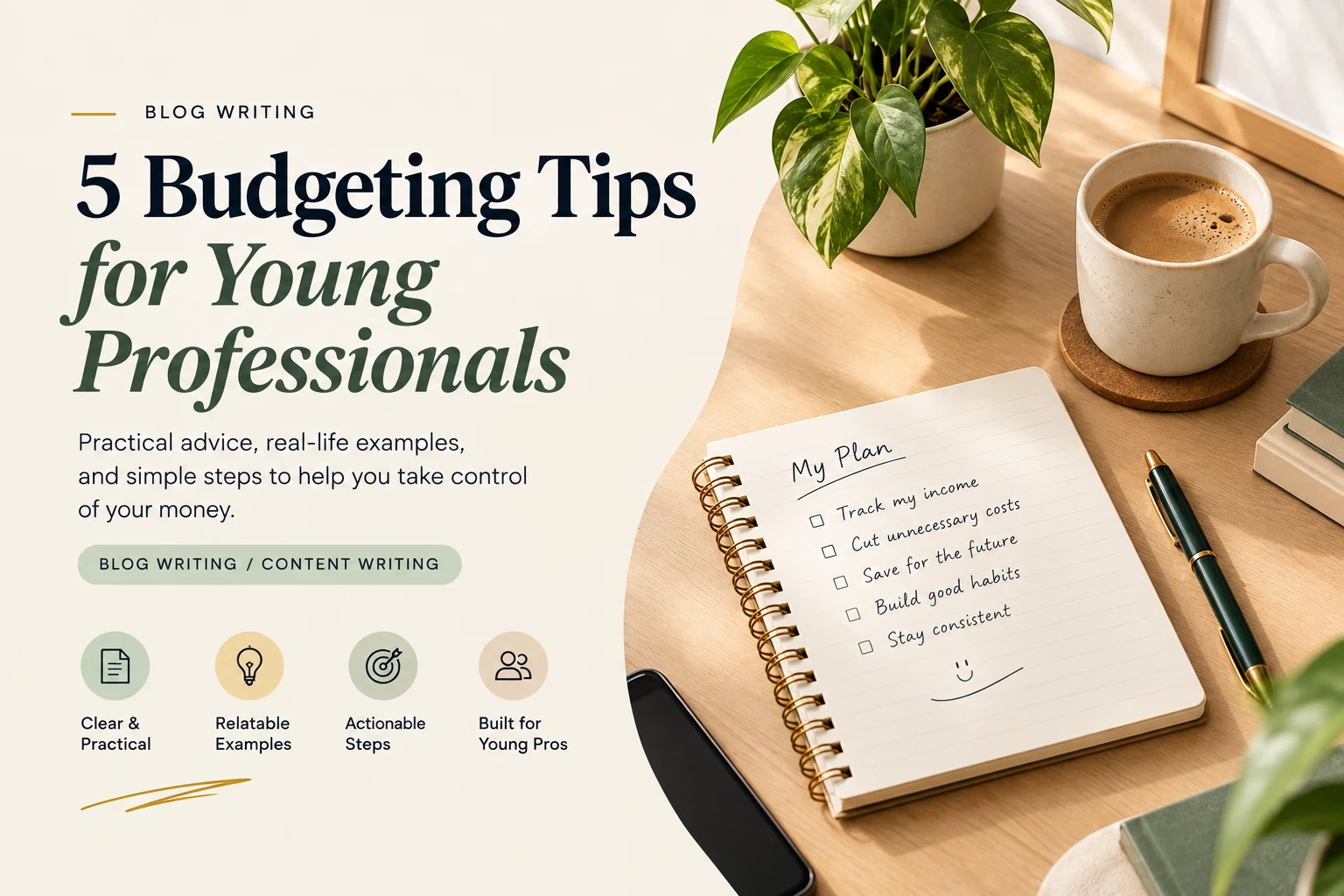
5 Budgeting Tips for Young Professionals
Starting your first job feels great, until you realize your paycheck disappears faster than you expected. Rent, transport, food, and subscriptions add up quickly, and nobody teaches you how to handle it all. The good news is that budgeting doesn't have to be complicated. These five simple steps will help you take control of your money.
1. Track your income
You can't manage money if you don't know exactly how much is coming in. Start by writing down your monthly take-home pay, which is what you actually receive after tax, not your salary on paper. If your income changes from month to month, as it does for freelancers, use a conservative estimate based on your lowest recent month.
Once you know your number, you can plan around it instead of guessing. A notebook, a spreadsheet, or a free budgeting app all work. The tool matters less than the habit of checking it.
2. Cut unnecessary costs
Next, look at where your money goes. For one month, write down everything you spend. Most people are surprised by how much leaks out through small, regular costs: a coffee every morning, food delivery, or subscriptions you forgot you had.
Sort your spending into needs, like rent, bills, and transport, and wants, like takeaways and entertainment. You don't have to cut every treat. Just trim the things you barely notice. Cancelling two unused subscriptions or cooking at home a few more nights a week can free up real money without making your life feel smaller.
3. Save for the future
Pay yourself first. Instead of saving whatever is left at the end of the month, which is often nothing, move a set amount into savings as soon as you get paid.
A common guideline is the 50/30/20 rule: about 50% of your income for needs, 30% for wants, and 20% for savings and debt repayment. It isn't right for everyone, especially if your costs are high, so treat it as a starting point. Even a small amount counts. Saving a little every month builds a safety net for emergencies and gives you options later.
4. Build good habits
A budget only works if you actually use it, and habits make that easier. Pick one regular time each week for a quick money check, maybe ten minutes on a Sunday evening. Review what you spent, see how you're doing against your plan, and adjust if you need to.
Automation helps too. Set up an automatic transfer to savings and automatic payments for your bills, so the important things happen without you having to remember them. Small routines like these take the stress out of money.
5. Stay consistent
You will have off months. A birthday, an unexpected repair, or a night out can throw your plan off, and that's normal. What matters is getting back on track the next day, not giving up.
Progress with money is slow and steady. If you stick with your plan, even imperfectly, you'll notice the difference after a few months: less stress, more savings, and more confidence about your choices.
Final thoughts
Budgeting isn't about restricting yourself. It's about making sure your money goes toward the things that matter to you. Start with one tip this week, whether that's writing down your income or cancelling a subscription, and build from there. Small steps add up faster than you think.
Like this project
Posted Oct 3, 2026
A 600-word blog post with five practical budgeting tips for young professionals, written in a clear, friendly tone for readers new to managing their money.