Twin Oceans Research Foundation Website Development

Eneas Aldabe


Twin Oceans Research Foundation
A conservation research website built to communicate the science, publish ongoing fieldwork and turn visitors into active supporters of hammerhead shark protection.
Industry: Marine Conservation & Research
Platform: Webflow
Scope: UX/UI design, website design, Webflow development, CMS architecture
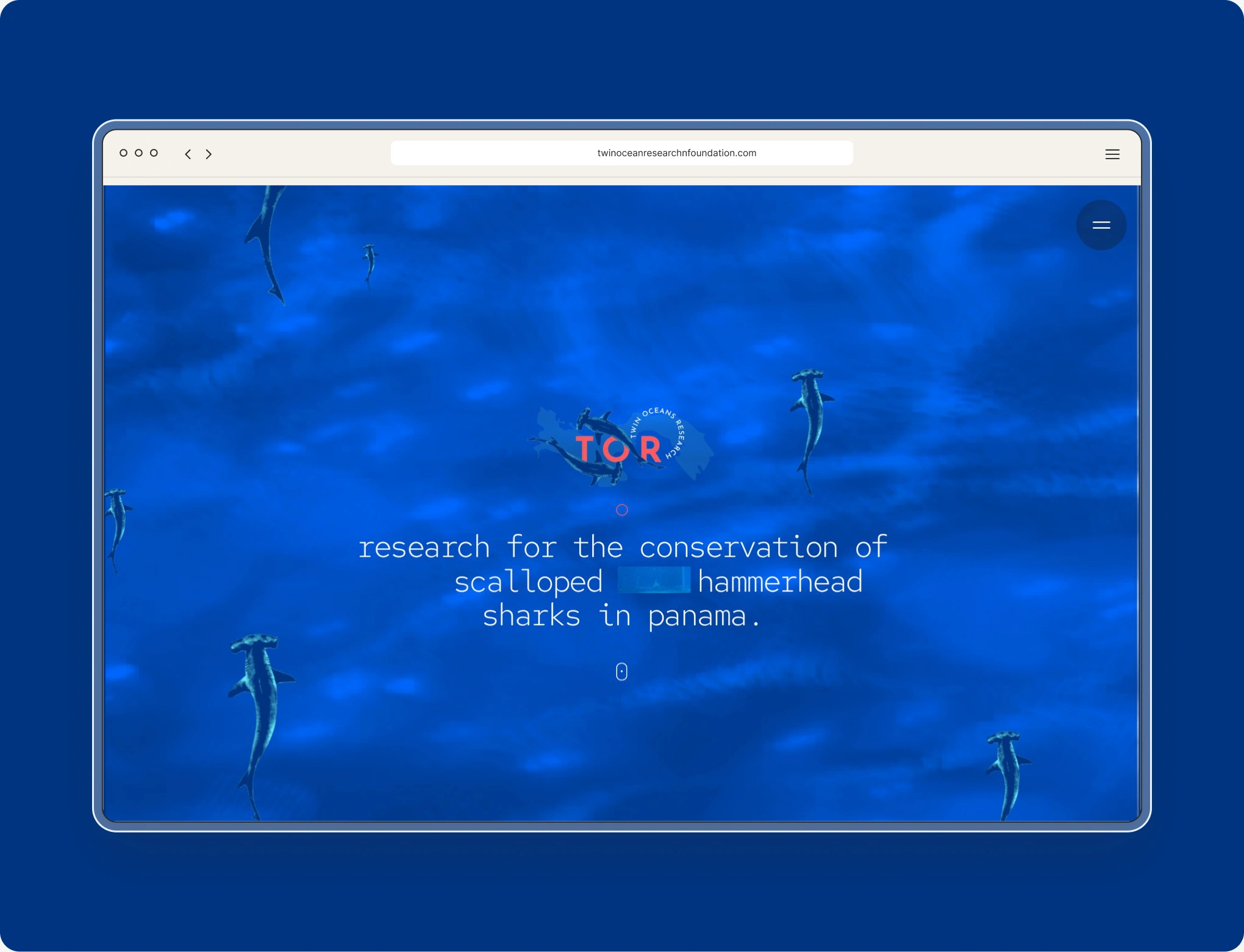
Home on desktop
Context
Twin Oceans Research Foundation is a Panama-based organization focused on the scalloped hammerhead shark, a species listed as Critically Endangered by the IUCN. Their work includes satellite tagging, migration tracking between Panama and the Galápagos, DNA testing of local fish markets and lobbying for amendments to Panama's shark finning laws.
The foundation needed a website that could explain the science without dumbing it down, make the crisis feel immediate, publish research updates, support merchandise sales and convert visitors into petition signers, newsletter subscribers and donors. The audience ranges from marine biologists and policymakers to concerned citizens and potential sponsors.
TOR logo
Brand in use
The logo and the illustrated hammerhead live on t-shirts, tote bags, caps and in the brandbook.
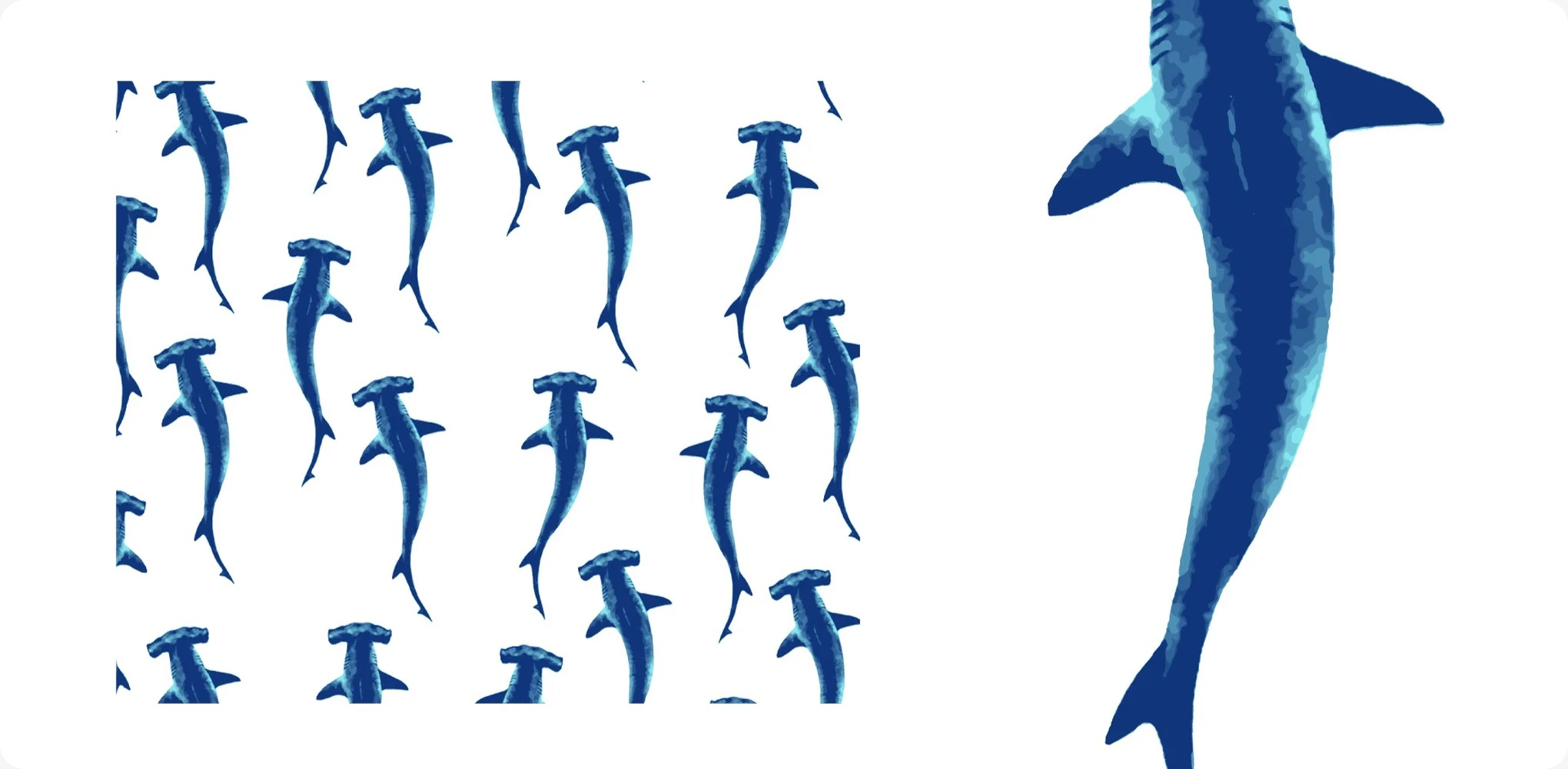
Brand in use
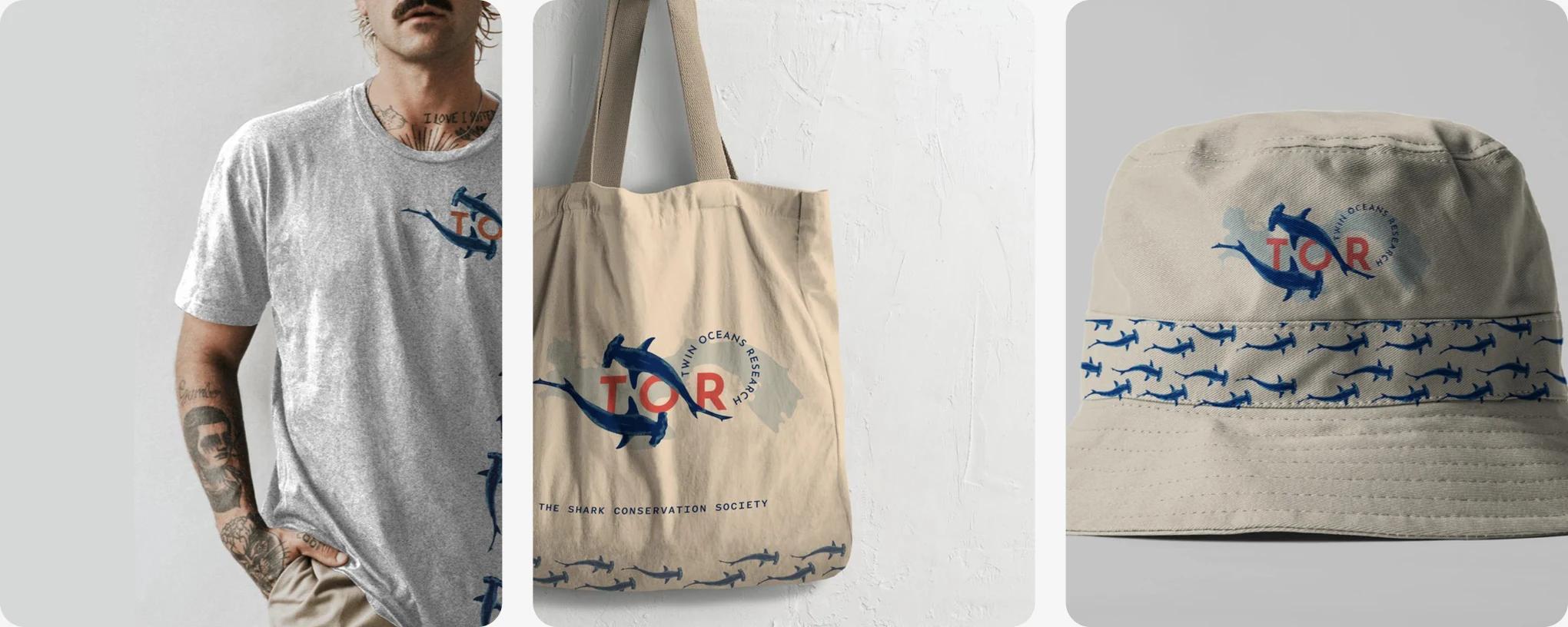
Merch
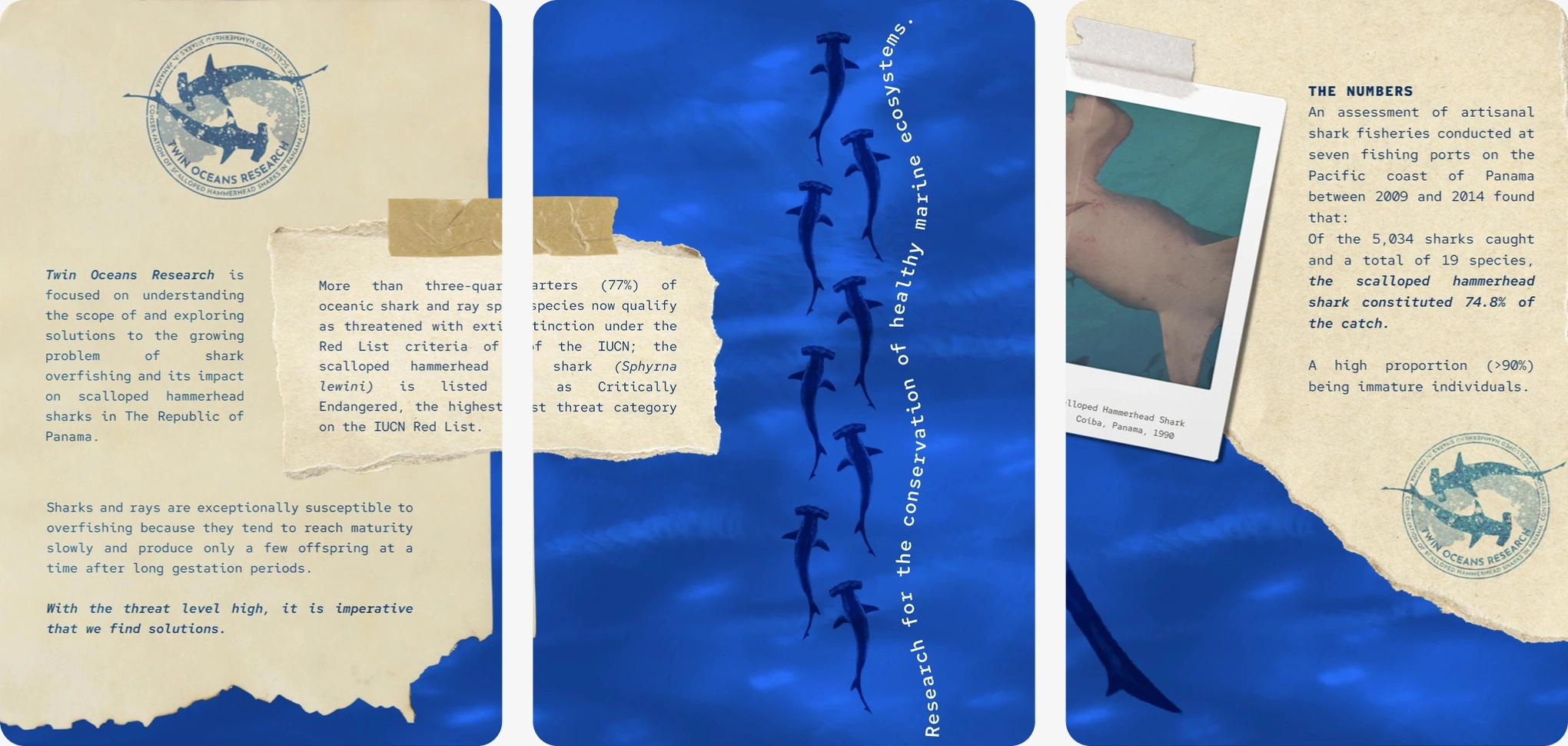
Brandbook
Approach
The work focused on making the mission tangible and the science accessible without losing the weight of the subject.
Video-first atmosphere. Background video of hammerhead sharks runs across multiple pages and puts visitors in the water from the first scroll.
Narrative over information dump. The home follows a deliberate arc: what we do, why we do it, who we are. Visitors move from the problem to the team to taking action, in that order.
Live migration tracking. A dedicated page presents satellite tracking data of tagged sharks, turning abstract research into something a visitor can follow and come back to.
Research to action. Petitions, legislative proposals and newsletter signups sit next to the research. The ask comes after the context.
Blog as research log. The CMS blog works as a field journal: tagging expeditions, satellite updates, DNA test results and legislative news.
Merch as support. The merch section is framed as a way to support the mission, not as shopping.
Team as credibility. Marine biologists, veterinarians, students and sponsors with photos and roles.
Desktop
A site that explains what they do, why, and how to join. Ocean blue, paper and a mono typeface.
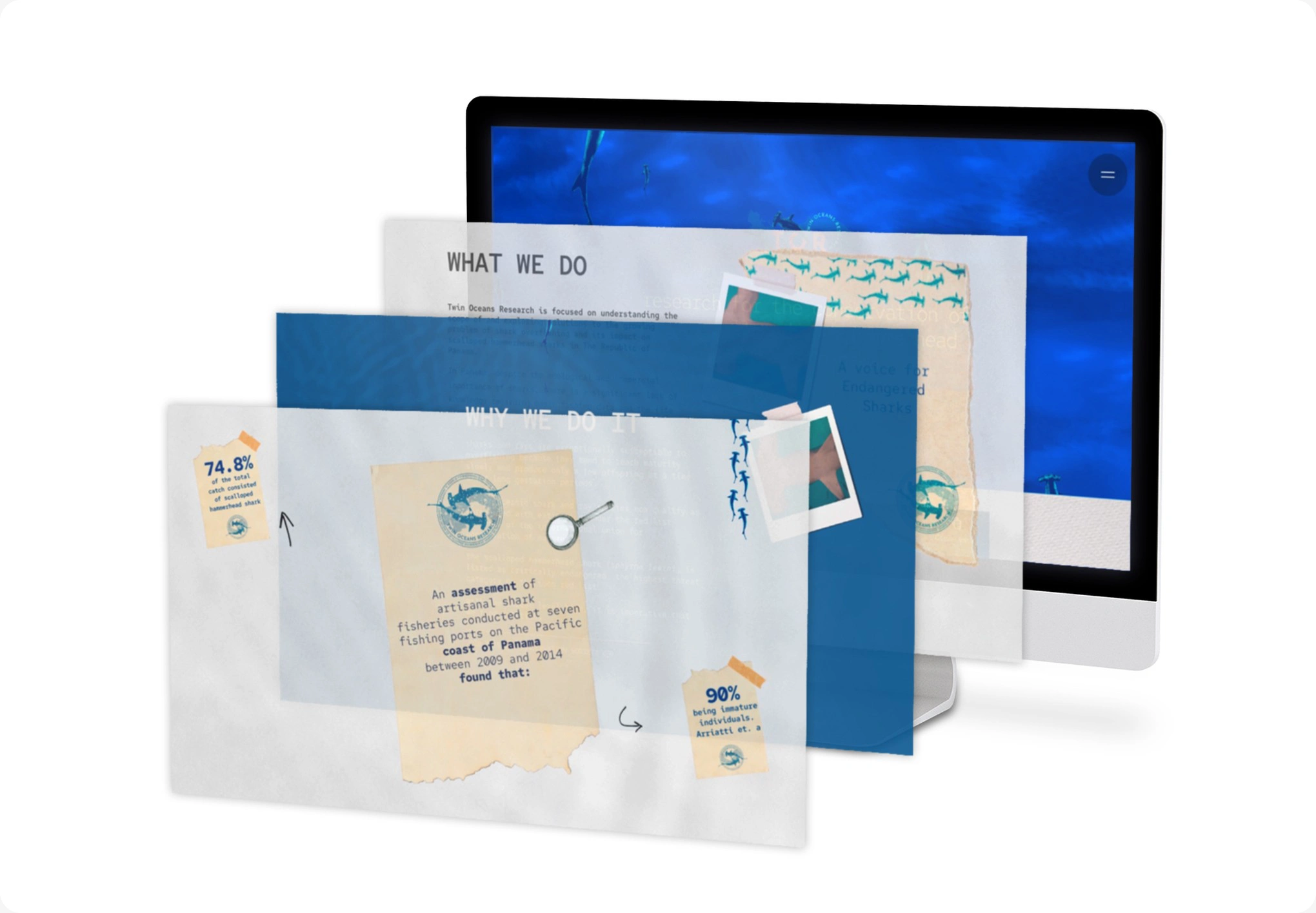
Screens on a monitor
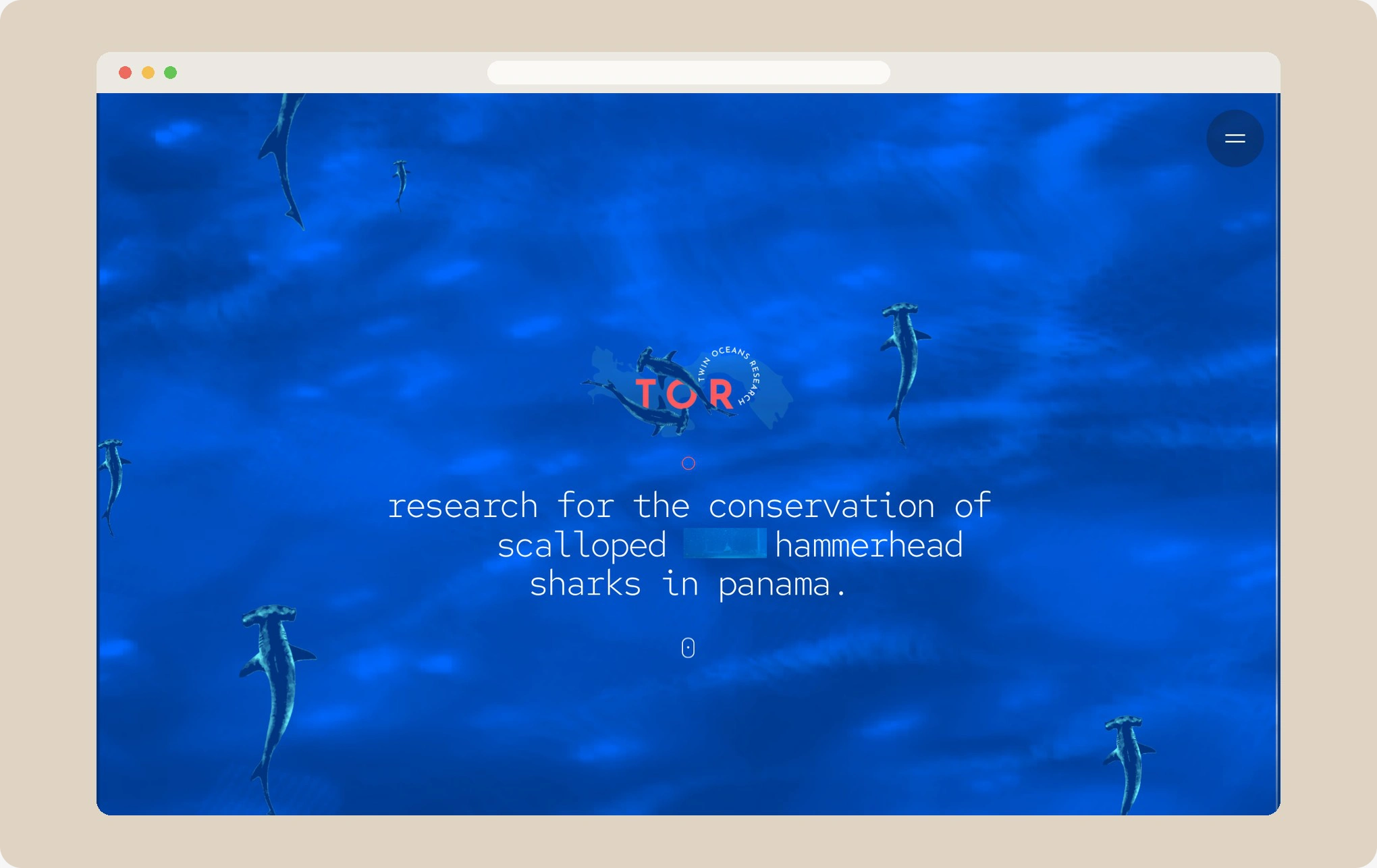
Home
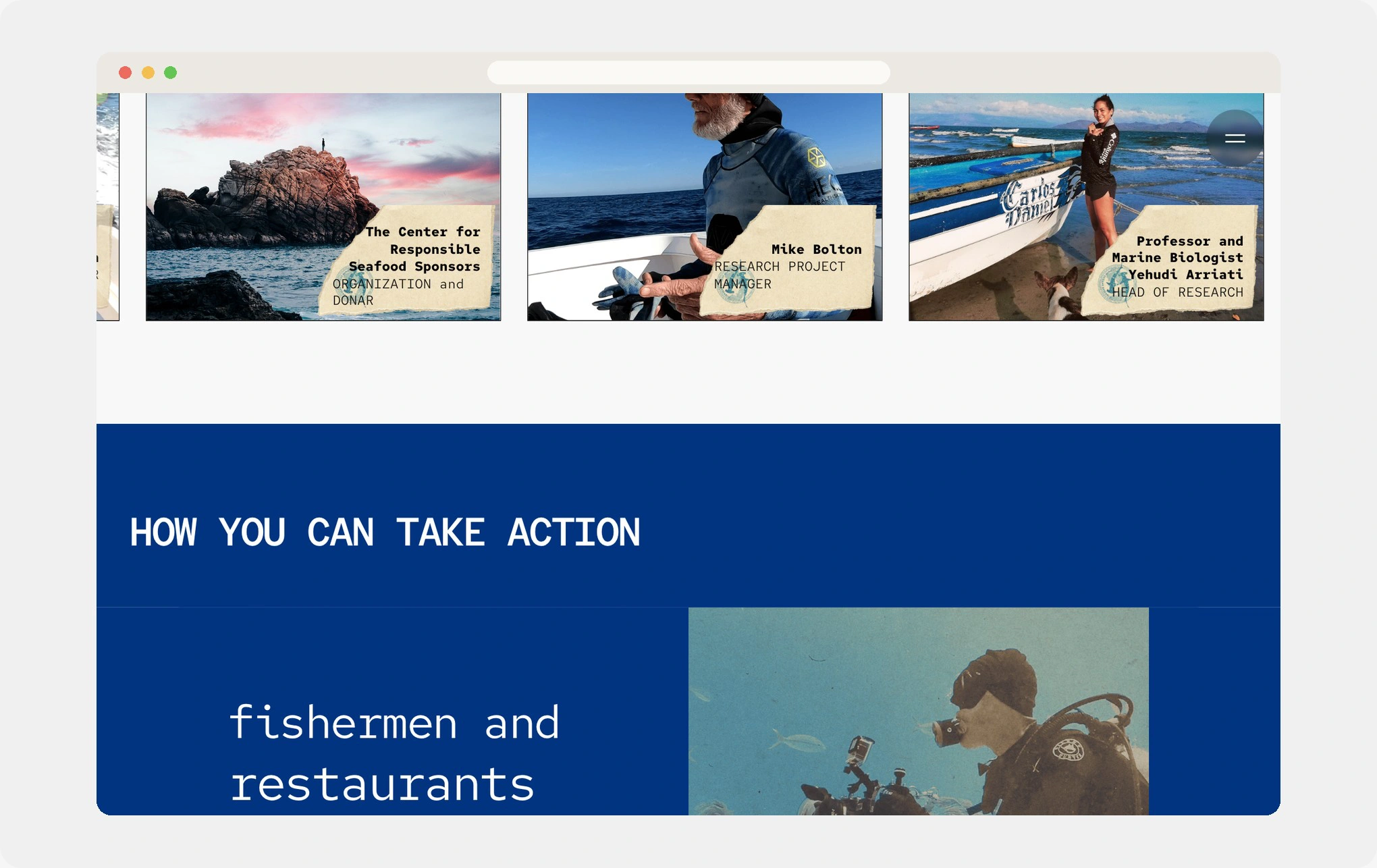
How you can take action
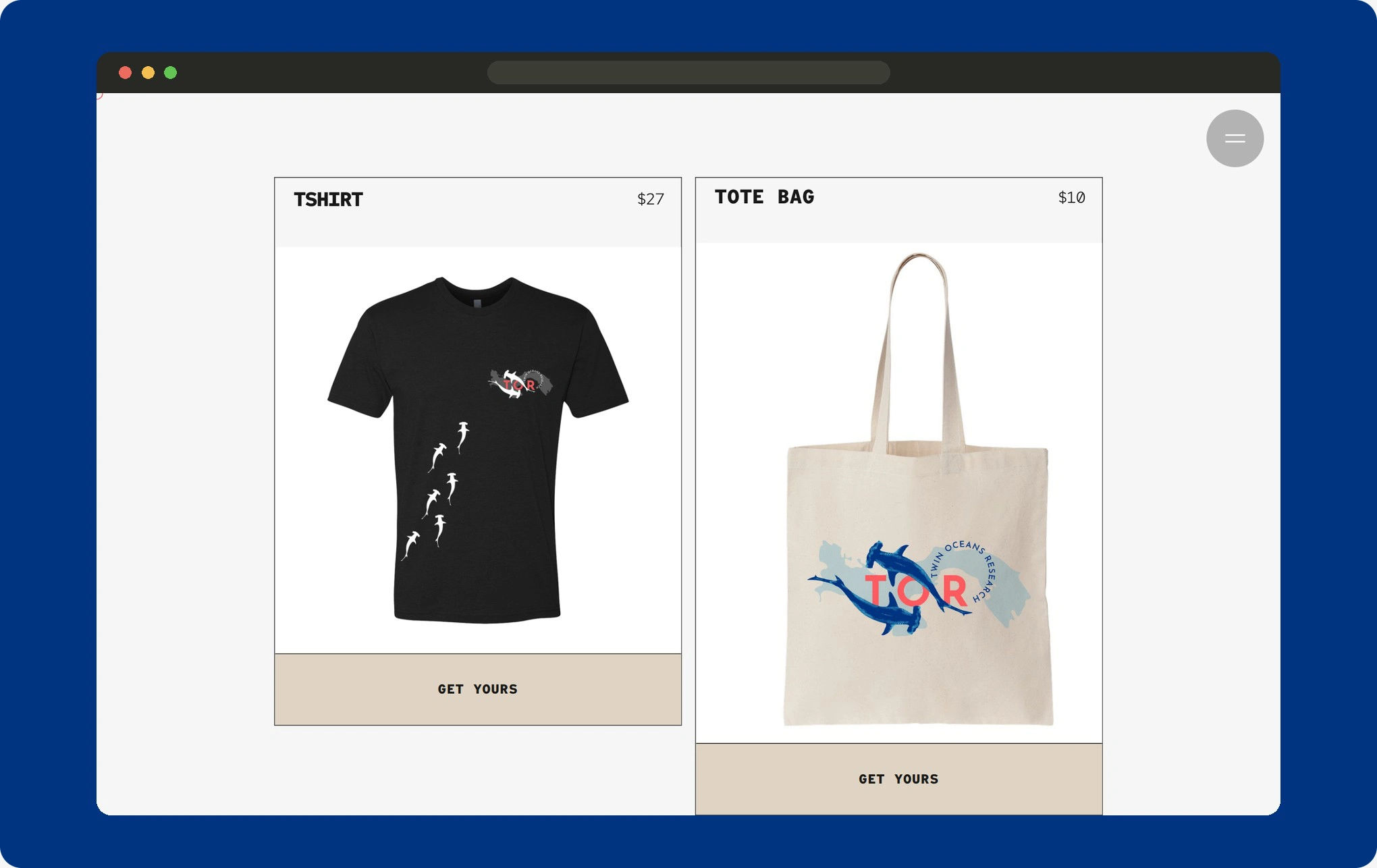
Merch page
Mobile
The same journey on the phone: stacked sections, polaroids and the store close at hand.
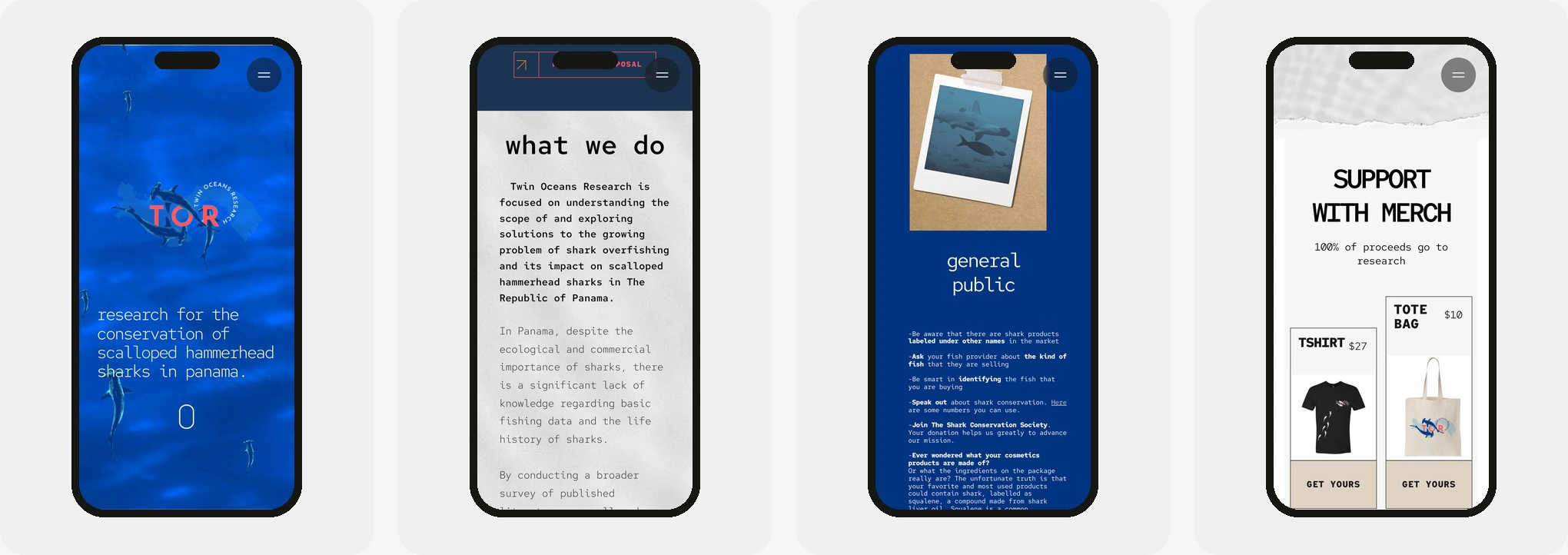
Mobile screens
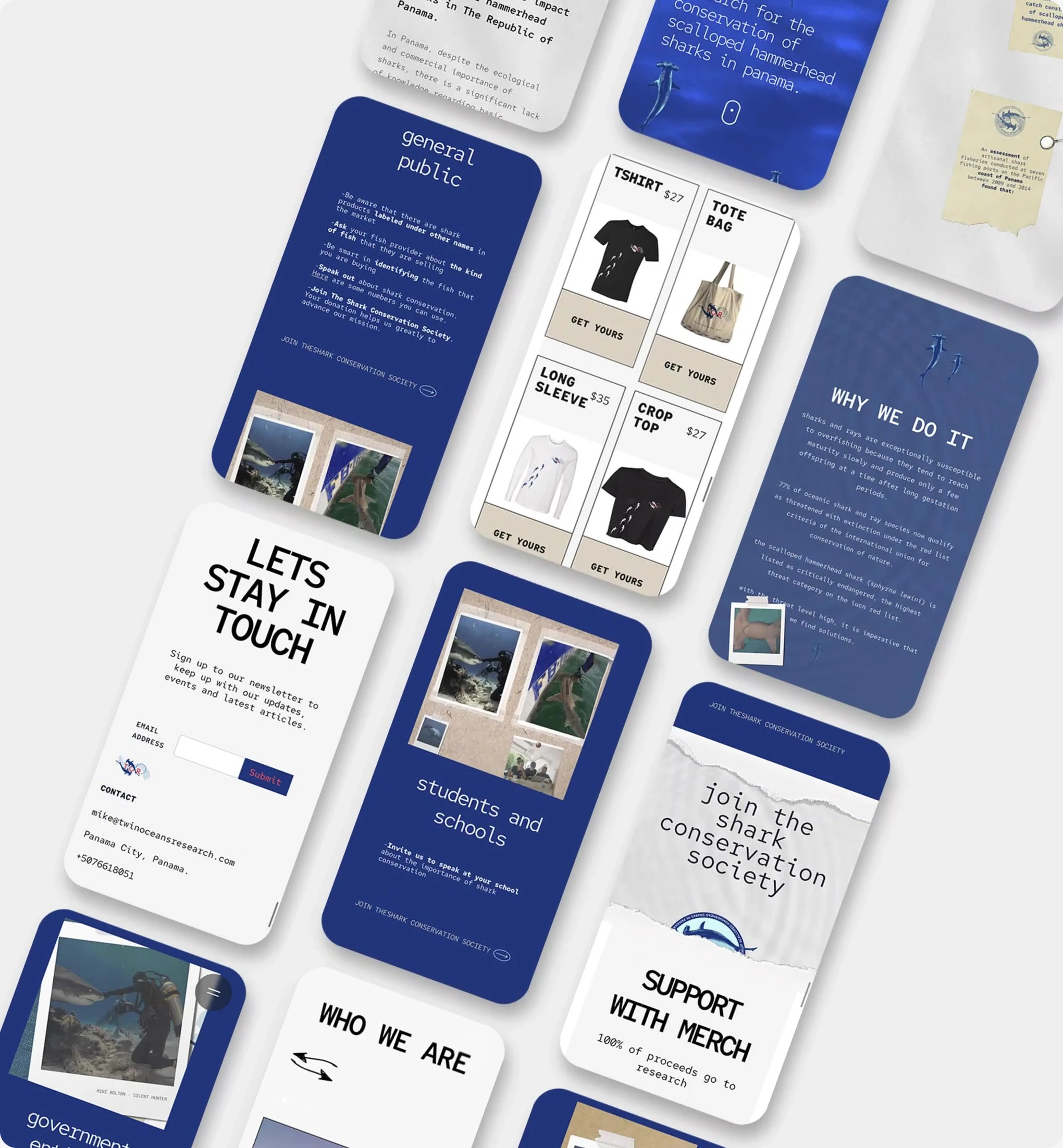
Mobile screens in perspective
System
Ocean blue and coral from the logo, light blue from the map of Panama and a warm paper tone for the notes.
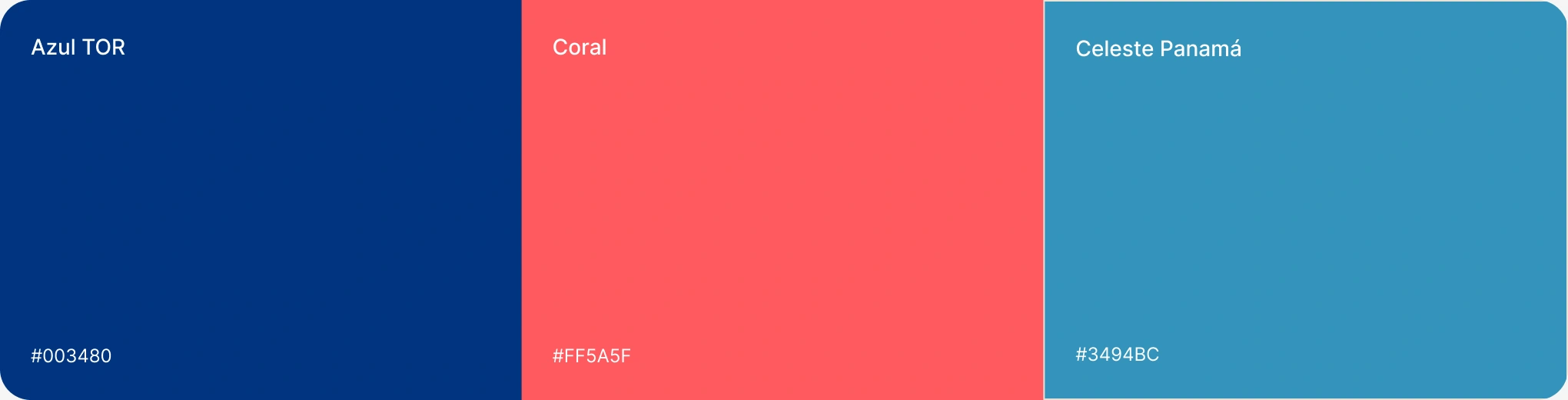
Brand colors
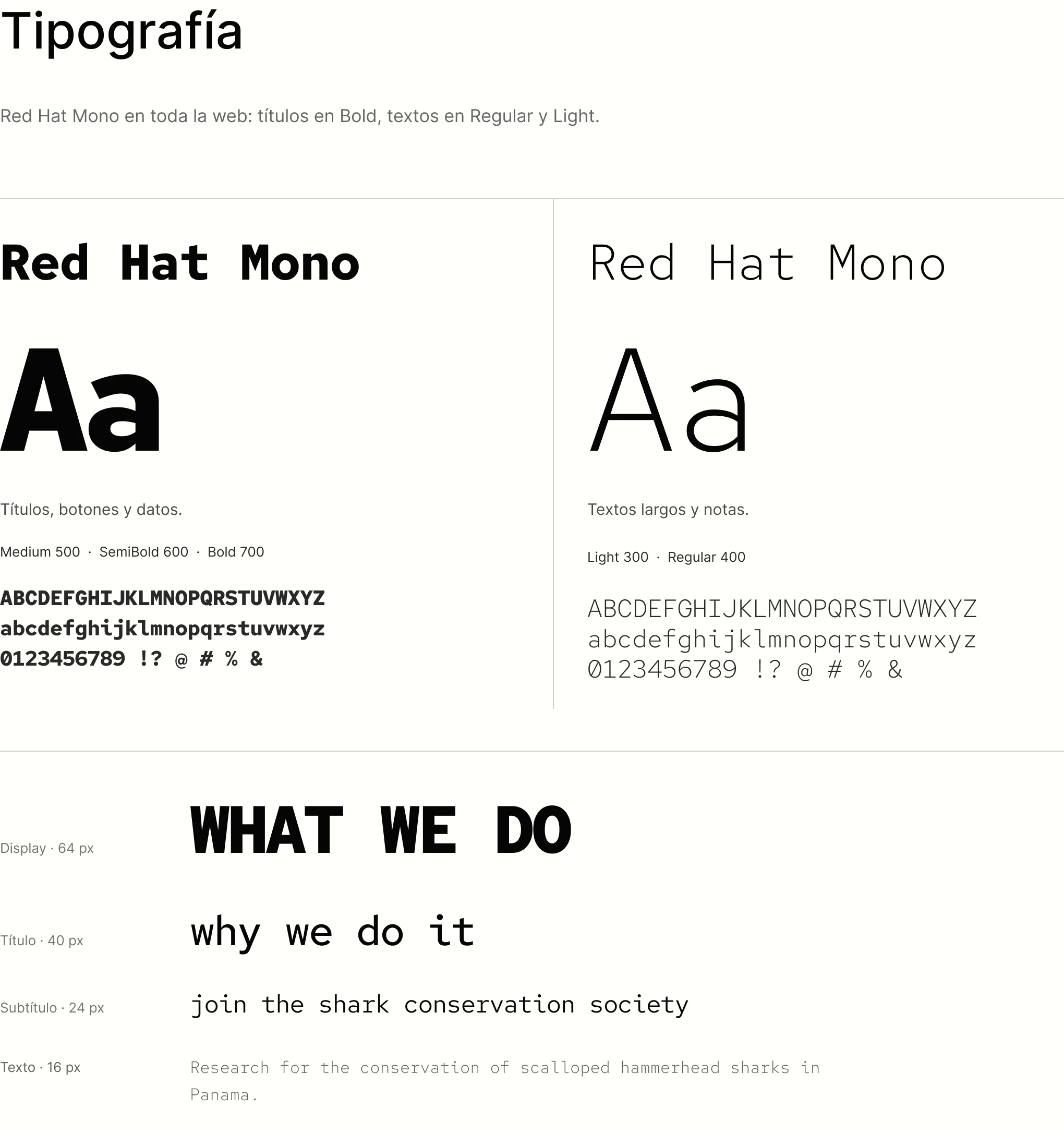
Typography
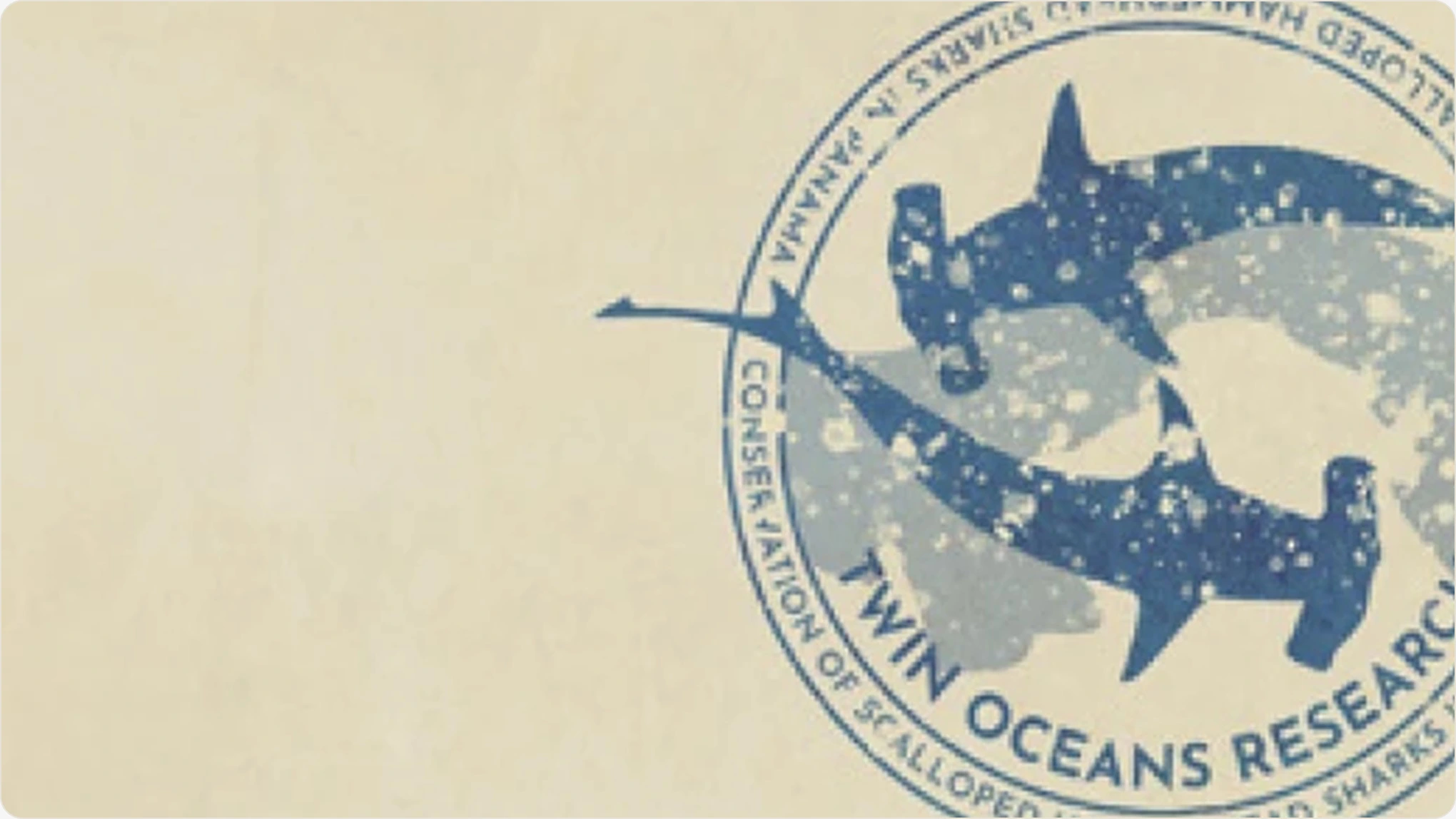
Circular seal from the brandbook
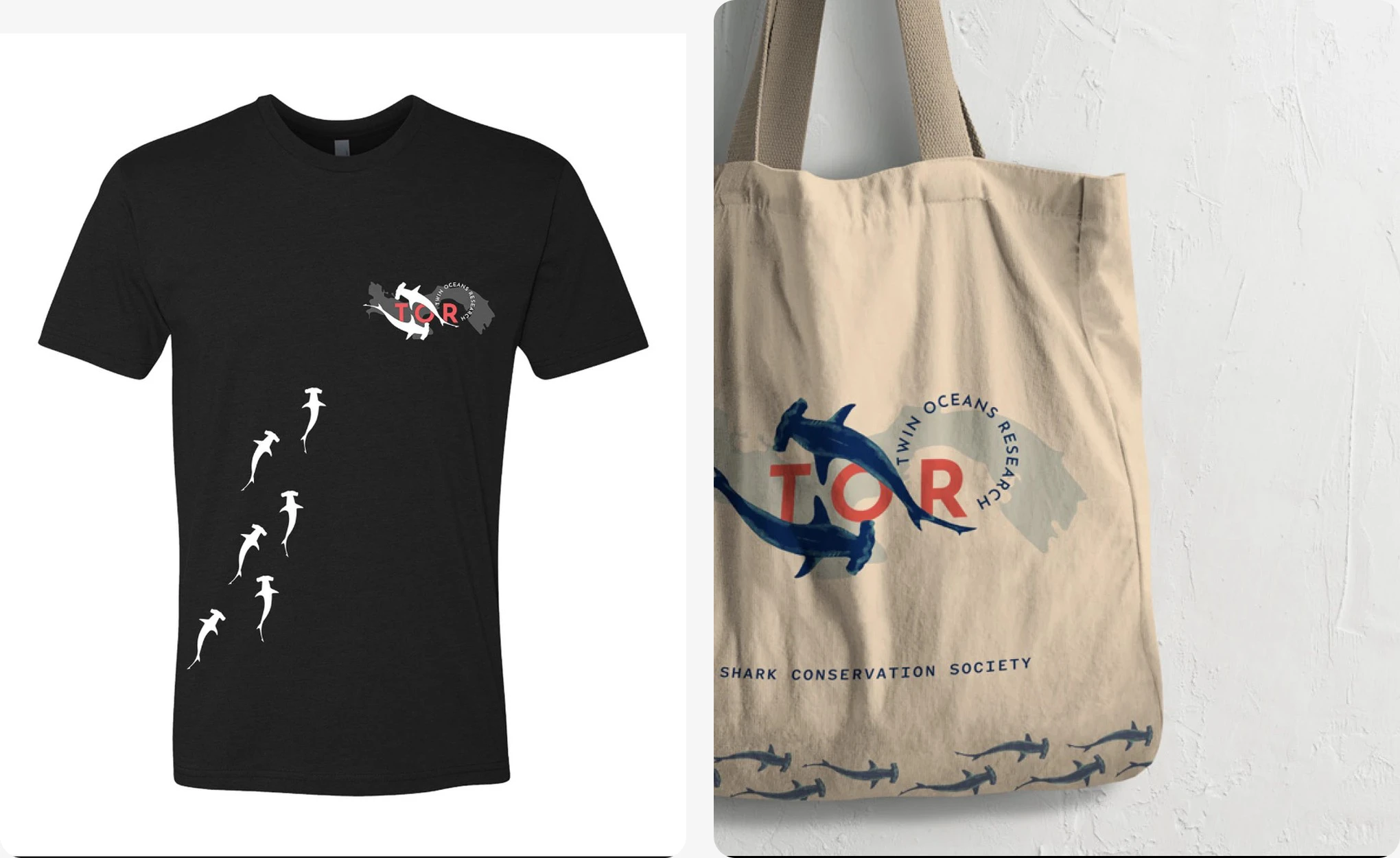
Merch applications
Components
Real pieces from the site: buttons, merch cards, polaroids, paper notes, newsletter and footer.
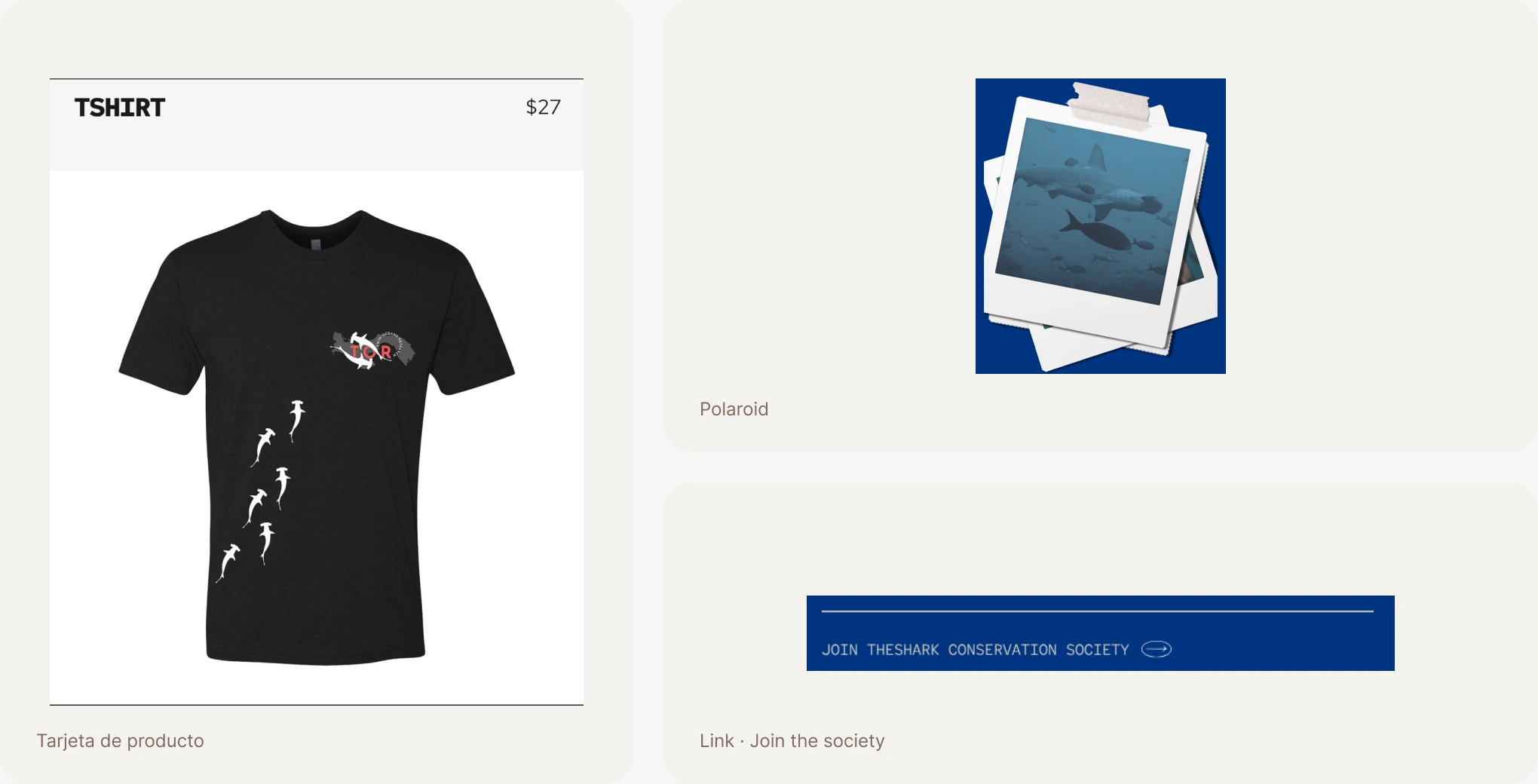
Components
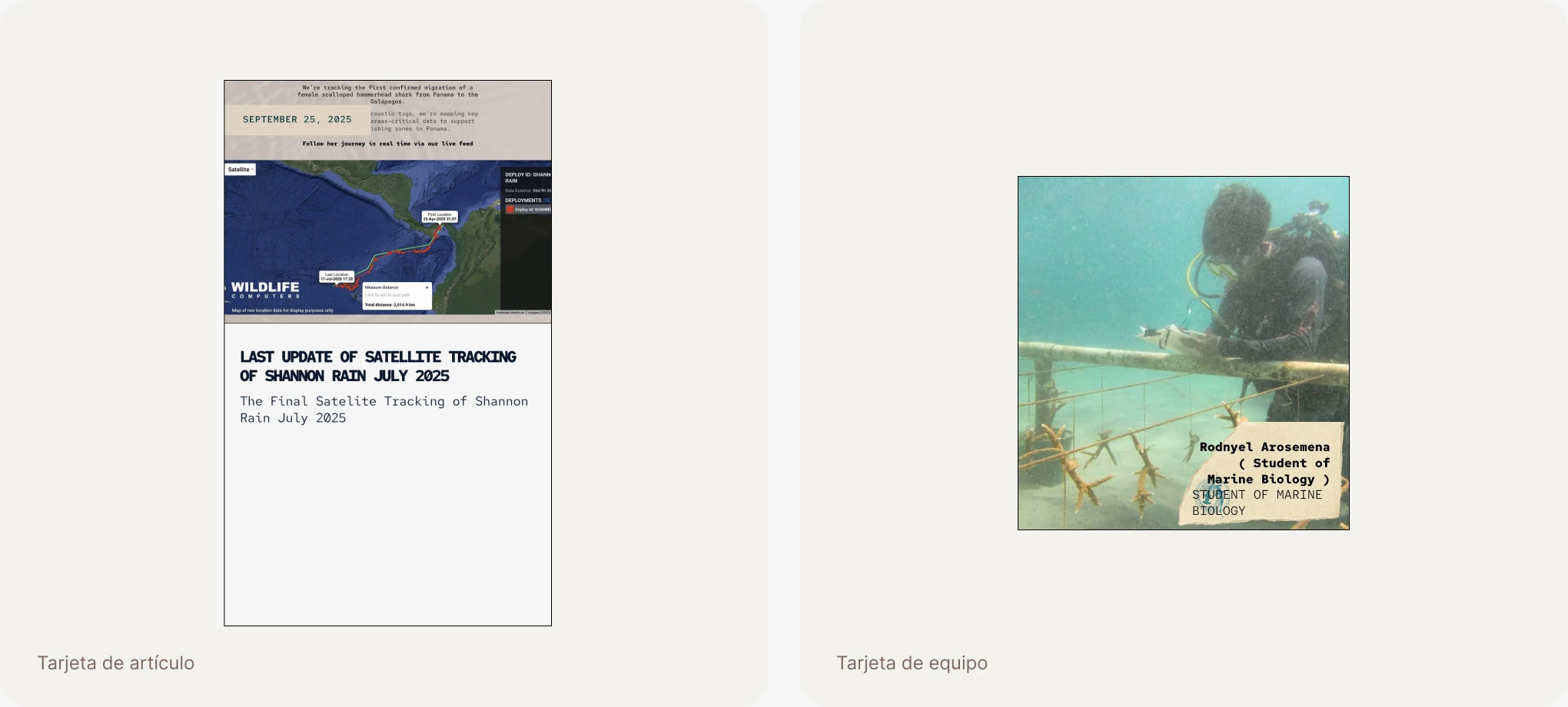
Components
Execution
Video backgrounds across pages for an underwater atmosphere without hurting load times
Navigation with animated lettering that sets the tone from the first interaction
Drag interactions and scroll-triggered elements for a layered, tactile feel
CMS blog for field updates without developer involvement
Merch page with product imagery, pricing and external checkout
Petition and newsletter CTAs placed at moments of engagement, not as overlays
Team carousel with profiles linking to author pages
Statistics woven into the narrative to back urgency with evidence
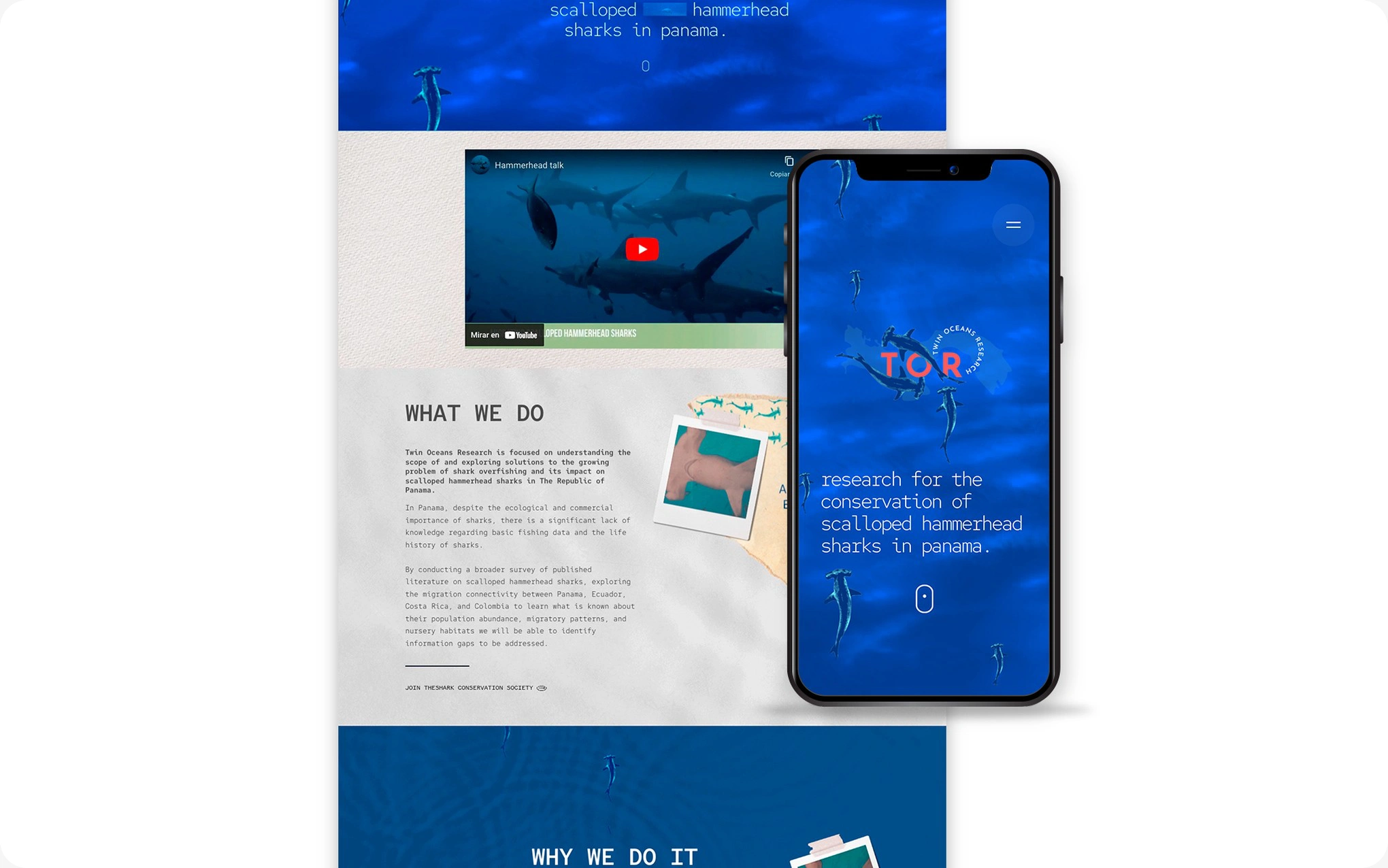
The site on phone and desktop
Results
The migration tracking page gives visitors a reason to come back and follow tagged sharks
The narrative home moves visitors from awareness to action without aggressive fundraising
The blog gives the foundation a publishing rhythm that keeps the site current and supports SEO around shark conservation and Panama marine policy
The merch section adds a low-friction revenue channel that reinforces the identity
A small foundation now presents itself online at the level of larger conservation organizations
The site treats the audience as capable of caring about the science, not just the sentiment, and makes it easy to act on that understanding.
Like this project
Posted May 4, 2026
Webflow build for a shark conservation foundation. Scroll animations, underwater atmosphere, CMS blog, and a narrative layout that moves visitors to action.
Likes
0
Views
8