Voice Draft Made for ChatGPT

Sankalp Tiwari


𝐓𝐢𝐭𝐥𝐞 : 𝐓𝐡𝐞 𝐅𝐞𝐚𝐭𝐮𝐫𝐞 𝐈'𝐝 𝐁𝐮𝐢𝐥𝐝 𝐭𝐨 𝐅𝐢𝐱 𝐕𝐨𝐢𝐜𝐞
6 weeks. 31 users surveyed. 6 interviews. 1 clear behavioral insight.
Here's the product solution I designed from research to PRD. 👇
𝐓𝐡𝐞 𝐩𝐫𝐨𝐛𝐥𝐞𝐦 (𝐫𝐞𝐜𝐚𝐩):
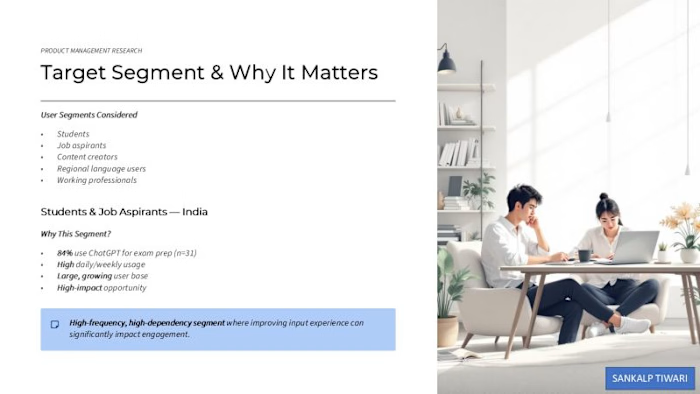
Students don't use voice on ChatGPT because voice auto-submits the moment you stop speaking. No review. No edit. No control.
For a student mid-exam-prep, one wrong transcription and the whole query is gone. That one failure creates long-term avoidance.
The fix isn't better speech recognition. The fix is restoring control.
𝟑 𝐬𝐨𝐥𝐮𝐭𝐢𝐨𝐧 𝐝𝐢𝐫𝐞𝐜𝐭𝐢𝐨𝐧𝐬 𝐈 𝐜𝐨𝐧𝐬𝐢𝐝𝐞𝐫𝐞𝐝:
→ Direction 1: Restore Control — editable voice drafts before sending
→ Direction 2: Reduce Disruption — quieter, less intrusive capture
→ Direction 3: Structured Thinking — pause/resume for multi-part queries
I chose Direction 1.
It's the only approach that directly eliminates the primary behavioral barrier. Directions 2 and 3 address secondary friction — they can be layered in as the feature matures.
𝐓𝐡𝐞 𝐬𝐨𝐥𝐮𝐭𝐢𝐨𝐧: 𝐕𝐨𝐢𝐜𝐞 𝐃𝐫𝐚𝐟𝐭 𝐌𝐨𝐝𝐞
Voice input redesigned from instant-submit to draft-first.
The new interaction loop: Speak → see transcription in real time → draft held for review → edit or add more → explicitly send
Voice now behaves like typing: controllable, reviewable, and structured.
𝐊𝐞𝐲 𝐟𝐞𝐚𝐭𝐮𝐫𝐞𝐬:
→ Editable voice drafts — transcription becomes editable text before sending
→ Real-time transcription — builds trust, reduces fear of errors mid-speech → Pause and resume — supports natural breaks without losing the draft
→ Mixed input — supplement voice with typing in the same draft
→ Explicit send — voice is never auto-submitted
𝐇𝐨𝐰 𝐈'𝐝 𝐦𝐞𝐚𝐬𝐮𝐫𝐞 𝐬𝐮𝐜𝐜𝐞𝐬𝐬:
Primary metric: % of study-related queries initiated via voice
Guardrail: no regression in overall message send rate or session duration
A/B plan:
Control → current instant-send voice
Treatment → draft-first voice
Split → 50/50 on study-segment users
Duration → minimum 2 weeks to account for learning curve
𝟑 𝐭𝐡𝐢𝐧𝐠𝐬 𝐭𝐡𝐢𝐬 𝐩𝐫𝐨𝐣𝐞𝐜𝐭 𝐭𝐚𝐮𝐠𝐡𝐭 𝐦𝐞 𝐚𝐛𝐨𝐮𝐭 𝐏𝐌 𝐭𝐡𝐢𝐧𝐤𝐢𝐧𝐠:
→ Low feature adoption is almost never a discoverability problem. Dig into the behavioral mismatch first.
→ Non-goals matter as much as goals. I explicitly called out that this feature doesn't try to improve STT accuracy or replace typing — knowing what you're not solving keeps scope clean.
→ Trade-offs are decisions, not gaps. Draft-first adds one extra step to the send flow. I accepted that trade-off because 77% of users value accuracy over speed — and this step is the entire value delivery.
This is my first end-to-end PM project — market landscape → user research → wireframes → full PRD with A/B plan, metrics, open questions, and trade-off documentation. NextLeap
Like this project
Posted Aug 30, 2026
Designed Voice Draft Mode to improve voice input control for ChatGPT users.
Likes
0
Views
1