Recovery at the Triangle Club

CJ Higgins

On Sunday, between the Dupont Italian Kitchen, where the tables are filled with the boozy brunches of the kickball gays, and Mikko, where a young couple is celebrating their anniversary with some Champagne, the door to a row-house opens, and all at once, a crowd pours forth onto the stairs. Only the stairs keep on filling. These folks aren’t leaving. They’ve only left the building to come to the stairs, just to chat. It’s as though 100 people all decided to go for a smoke out front, all at the same time. But if you ask them why they’re there, you’ll get only the vaguest of answers. “We’re just coming from a meeting,” one will say. “It’s a clubhouse,” says another.
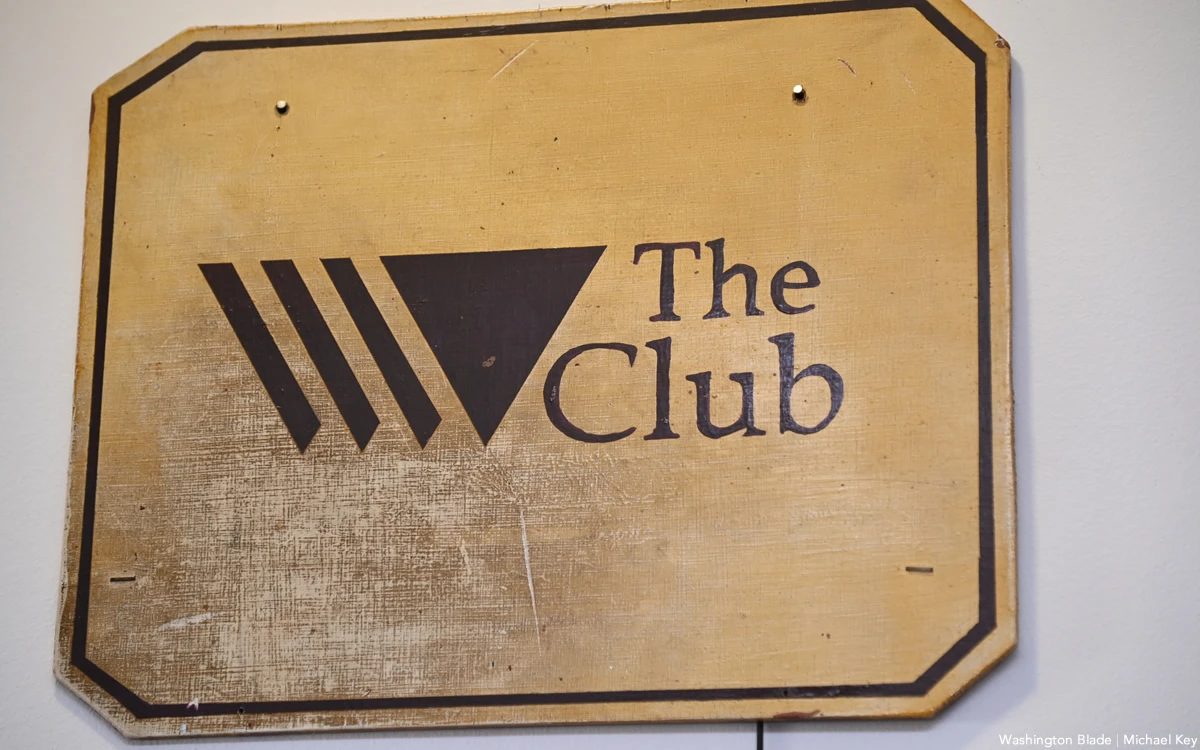
There are good reasons for this vagueness. The Triangle Club is a center for queer folk to attend recovery meetings: Overeaters Anonymous, Alcoholics Anonymous, Crystal Meth Anonymous, Sexual Compulsives Anonymous. It’s part of the very mission of these groups to protect the privacy of their members. But these groups also want those in the queer community who need the support to know that they’re there. And so the folks at the Triangle Club were kind enough to welcome the Blade into their space for a few meetings, to see how things worked and shed some light on what they’re all about.
The Club had its kickoff meeting in 1988, during the AIDS crisis. Churches weren’t particularly enthusiastic about hosting gay recovery meetings in their back rooms. And so the Club sought to provide a safe place for those meetings to take place. At the time of the club’s founding, it was estimated that gays and lesbians were twice as likely to report problems with alcohol abuse than heterosexuals. One would hope that things might have changed in the intervening years. But according to a government report released this summer, that figure has barely improved. (The government report did not collect any statistics on transgender people.)
Of course there is no single reason queer people develop problems with drugs and alcohol. But one in particular struck me, especially as a reason I heard coming from a lot of the younger folk at the Triangle Club. “I thought meth was a prerequisite for going out,” said one. “I thought that’s what you did.” Another said, “I drank to find community. And then I drank to numb myself when I didn’t find it in the gay community.” Again and again, I heard stories about turning to drugs and alcohol as a way of finding connection, and as a way of coping with the failure to find connection.
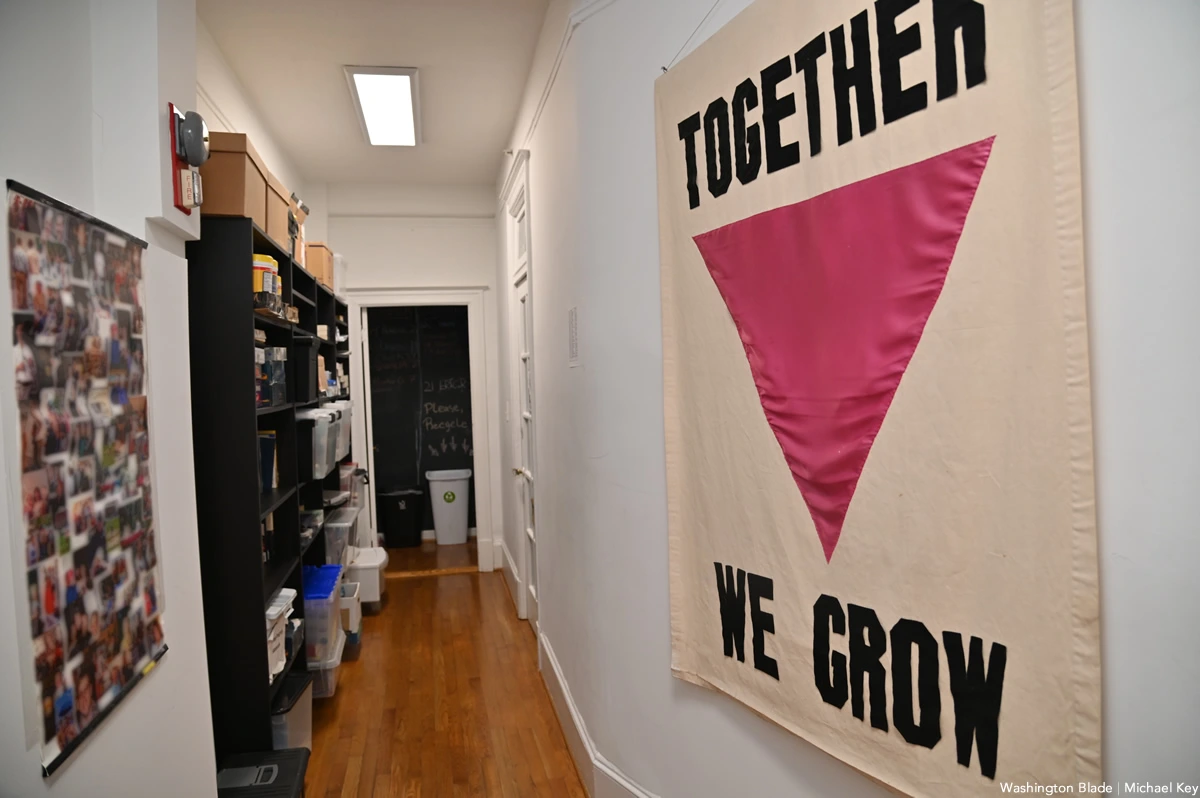
And so while I heard a lot of gratitude for the role the meetings at the Triangle Club played in people’s recovery, I also heard a lot of gratitude for the community of the Triangle Club itself. It wasn’t just that the Club helped people turn away from an unhealthy way of solving their problems. It’s that it gave them what they were really looking for in the first place: a community they could call their own.
Improbably, as I left a meeting of Crystal Meth Anonymous, I found myself wishing to be an addict in recovery. To have a place to share things that would go unsaid among friends and family, let alone therapists. To take part, week after week, in one another’s mission for a more fulfilling life. To be present for the absolute raucousness, as when one gentleman described living on meth as “wearing a fur coat into a swimming pool,” and then “turning the wave-machine on.” To hear the applause that only someone four days sober could receive. But what kind of destructive, life-threatening wish was I making? I couldn’t possibly be serious.
Many of us in the queer community are exhausted by drinking, if not drugging, our way into it. That exhaustion might not rise to the level of addiction, but this has the perverse consequence of not driving us to seek alternative forms of belonging. One of the men I interviewed kept talking of the “sober community,” and my ears perked up. Perhaps there was a broader community of folks, of which those in recovery were only a part, that wasn’t centered around substance use.
“The sober community absolutely extends beyond the Triangle Club,” he told me. “There are a bunch of other gay meetings that go on.” This wasn’t exactly what I hoped to hear. What a sorry state we’re in, I couldn’t help but feel that to be part of the sober community was to be in recovery. As though the community of substance use were so mandatory that it had to drive you to your own personal edge in order for you to find community in sobriety.
The Triangle Club should not be overly romanticized, and they’d be the first to tell you. People talked of trying to find fellowship at the club in the past, and not necessarily succeeding. Being one of two Black people in the room, only for the other to drop out of the program. Or of the demands of service, dragging yourself out late Friday night to chair a meeting, or sponsoring someone for the first time and being scared that you aren’t the right one to advise them. But I think it’s a testament to the space that these things could be said in the space. The meetings aren’t a place of mandatory optimism, but honest experience. And what good is a meeting for sharing honest experience if you can’t share your negative experiences too?
I had hoped, as part of this feature, to attend a meeting of Sexual Compulsives Anonymous. The two meetings I appealed to were kind enough to hold a vote on whether they would open their doors—but in the end they opted to remain private. One gentleman from the meetings volunteered to share a little of what these meetings were all about. Recovery meetings in general depend on coming together as a group to fight a common addiction. But “S” meetings, as the gentleman described them, can’t take “coming together” lightly, nor a “common addiction” lightly.
To begin with, sexual addiction is not as straightforwardly defined as addiction to drugs or alcohol. What sobriety is for one person is not what sobriety is for another. One person might be trying to curtail a masturbation habit. But for others? “That simply isn’t an option,” the gentleman said. And unlike recovery meetings for substances, which can ban substances from the room, the same can’t as easily be said for “S” meetings. We’re sexual beings, and so inevitably, to bring yourself into a room is to bring sexuality along with it. The recovery meetings at the Triangle Club usually end with the group joining hands to say the serenity prayer. But this can’t be a given at “S” meetings, where joining hands might be violating someone’s boundary.
With the pandemic waning, most recovery meetings have slowly started to transition away from video format back to in-person. But “S” meetings have been more reluctant to do so, and most have stuck with a hybrid format. One veteran of Al-Anon voiced his relief at coming back to the rooms. “You can’t hug a square!” I suspect that’s the very reason “S” meetings have been slow to return.
Part of my disappointment in not attending the “S” meetings was how central they seemed to be to a queer recovery organization. Substance abuse might disproportionately affect the queer community, but it is the addicts who are queer, not the addictions. If the addiction is to love or sex, however, the addiction itself is inextricably queer. Aren’t the “S” meetings the heart, in a sense, of the Triangle Club? But a conversation with a gentleman from Alcoholics Anonymous had me rethinking this. “[Accepting you’re an alcoholic,] it’s similar to coming out as gay,” he said. “There are people out there who view it as a moral failing, but it’s just part of who I am.”
The experience of coming out is so central to being queer. How could coming out as an addict have nothing whatsoever to do with it? The same story of a newfound, authentic life was as common to the folks at the Triangle Club as it would be to anyone who comes out as queer.
(CJ Higgins is a postdoctoral fellow with the Alexander Grass Humanities Institute at Johns Hopkins University.)
Like this project
Posted Jul 24, 2025
Exploration of the Triangle Club's role in queer addiction recovery.