Inkwell AI Writing Assistant Landing Page

Ali Hassan


Inkwell — AI Writing Assistant Landing Page
Built in under 48 hours. Now live on the Framer Marketplace.
I wanted to test something: how fast can I take a template from idea to a fully live, sellable product? Inkwell was the answer — and it took less than two days.
The brief (that I gave myself)
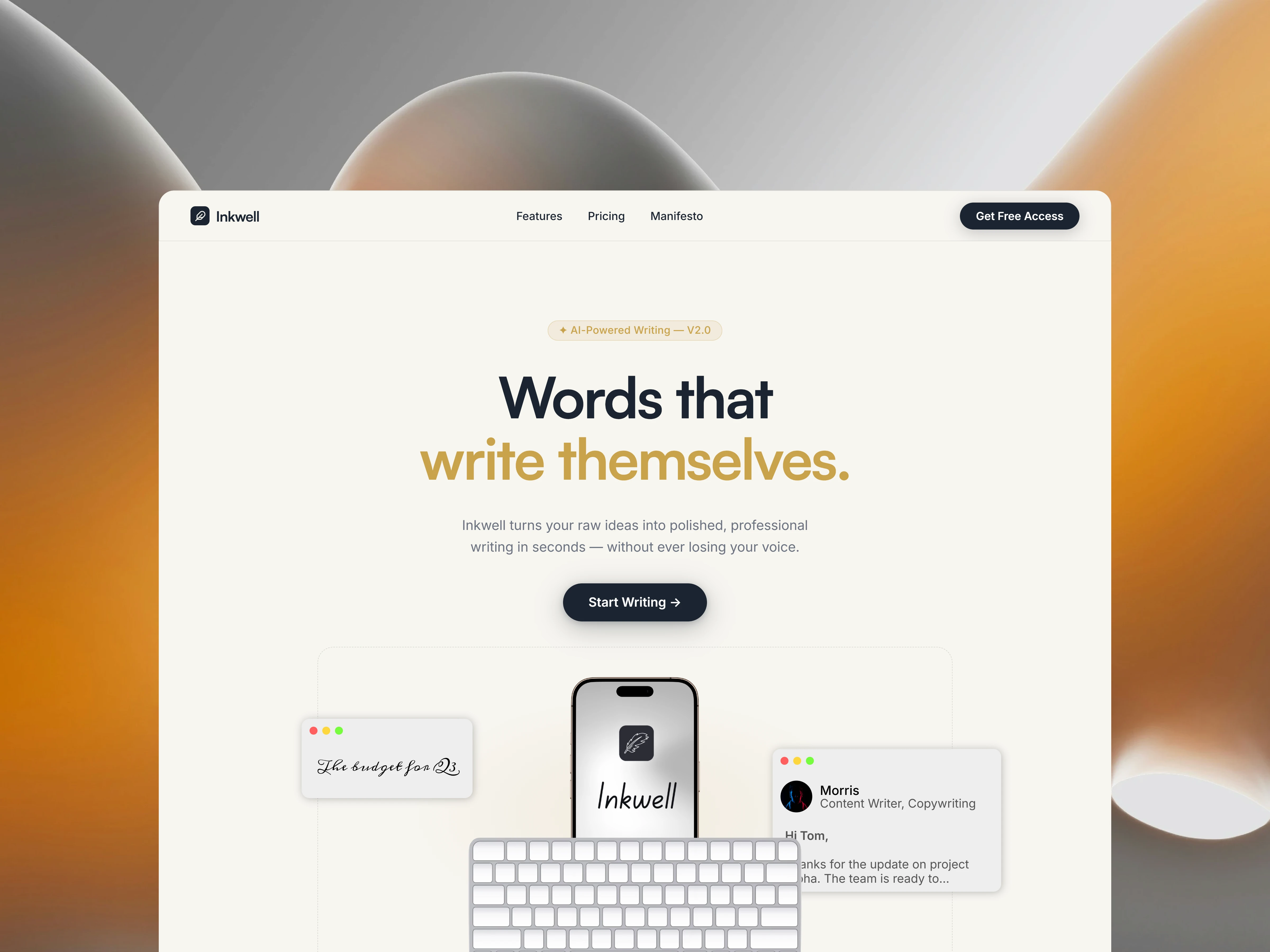
Inkwell is a landing page template for AI writing tools and SaaS productivity products. The goal was simple — make it look expensive, make it feel smooth, and make it something a real AI startup could plug their content into and launch the same day.
The process
I started with Claude to plan out the structure and copy — section flow, headline direction, feature breakdown, pricing layout. Having that framework locked in early meant I wasn't designing and writing at the same time, which is usually where templates slow down.
For visuals, I used Magnific to generate the imagery — the hero illustration, supporting graphics, and visual elements that needed to feel polished without me spending hours in Figma or hiring a designer.
Then everything came together in Framer. This is where the structure and copy actually turned into a real, interactive product — scroll animations, hover effects, responsive breakpoints, the whole thing.
What I focused on
A hero section that does the selling in one scroll — heading, subtext, CTA, all working together
Smooth scroll-triggered animations instead of static sections
A testimonial layout that doesn't feel like every other template's grid
Pricing cards that actually guide the eye to the plan I want sold
Full responsiveness — mobile, tablet, desktop, no exceptions
The result
Inkwell went live on the Framer Marketplace, fully built — research to launch — in under 48 hours. No team, no outsourcing, just Claude for planning, Magnific for visuals, and Framer for execution.
This project proved something to me: with the right AI tools in the stack, the bottleneck isn't skill anymore — it's how well you sequence the work. Plan first, generate visuals second, build last.
If you're working on a SaaS or AI product and need a landing page that actually looks built, not templated — that's exactly the kind of work I do.
Like this project
Posted Jun 26, 2026
Created Inkwell landing page template for AI tools, live on Framer Marketplace.
Likes
0
Views
6