Incartica

Kine Node


Designing an AI Research Assistant: From 4-Tab Friction to 62% User Retention & 18k+ Validated Sources
Led the end-to-end UX strategy, information architecture, and dashboard design for a dual-sided research platform (mobile app and enterprise admin). Built using Figma, dark-mode component systems, and a data-dense metrics architecture focused on AI trust and signal quality.
The Challenge
The Friction of Information Drowning. Knowledge workers are often caught between two bad trade-offs: navigating a dozen open browser tabs or relying on "confident-sounding" AI answers that hallucinate. Early versions of Incartica suffered from this same internal friction, featuring a bloated, 4-tab navigation model with unlabeled menus and dead-end user flows that slowed down critical research tasks
The Solution
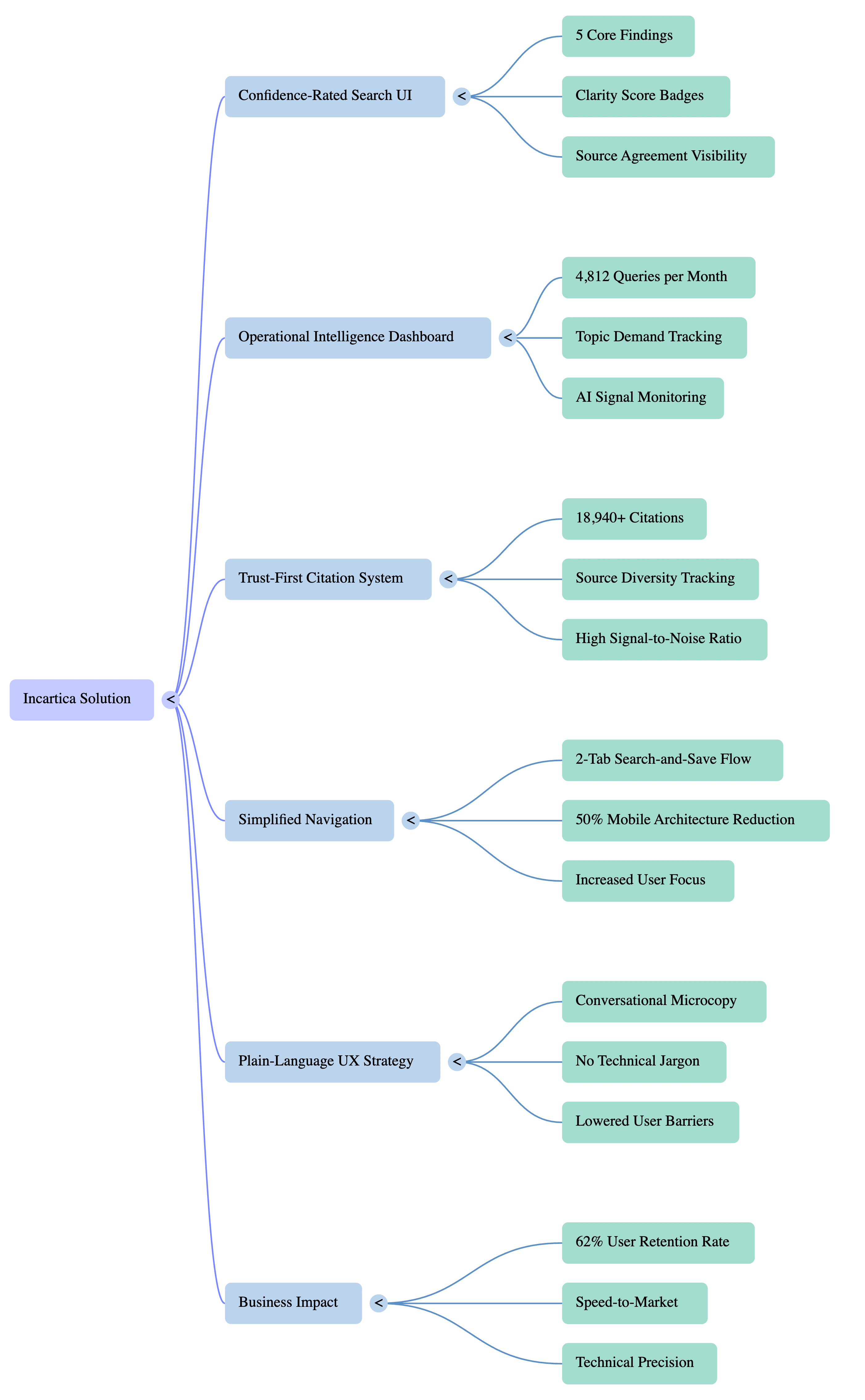
Confidence-Rated Search UI: Designed an instant-search experience that collapses raw data into 5 core findings, each featuring a prominent "Clarity Score" badge to make source agreement visible at a glance.
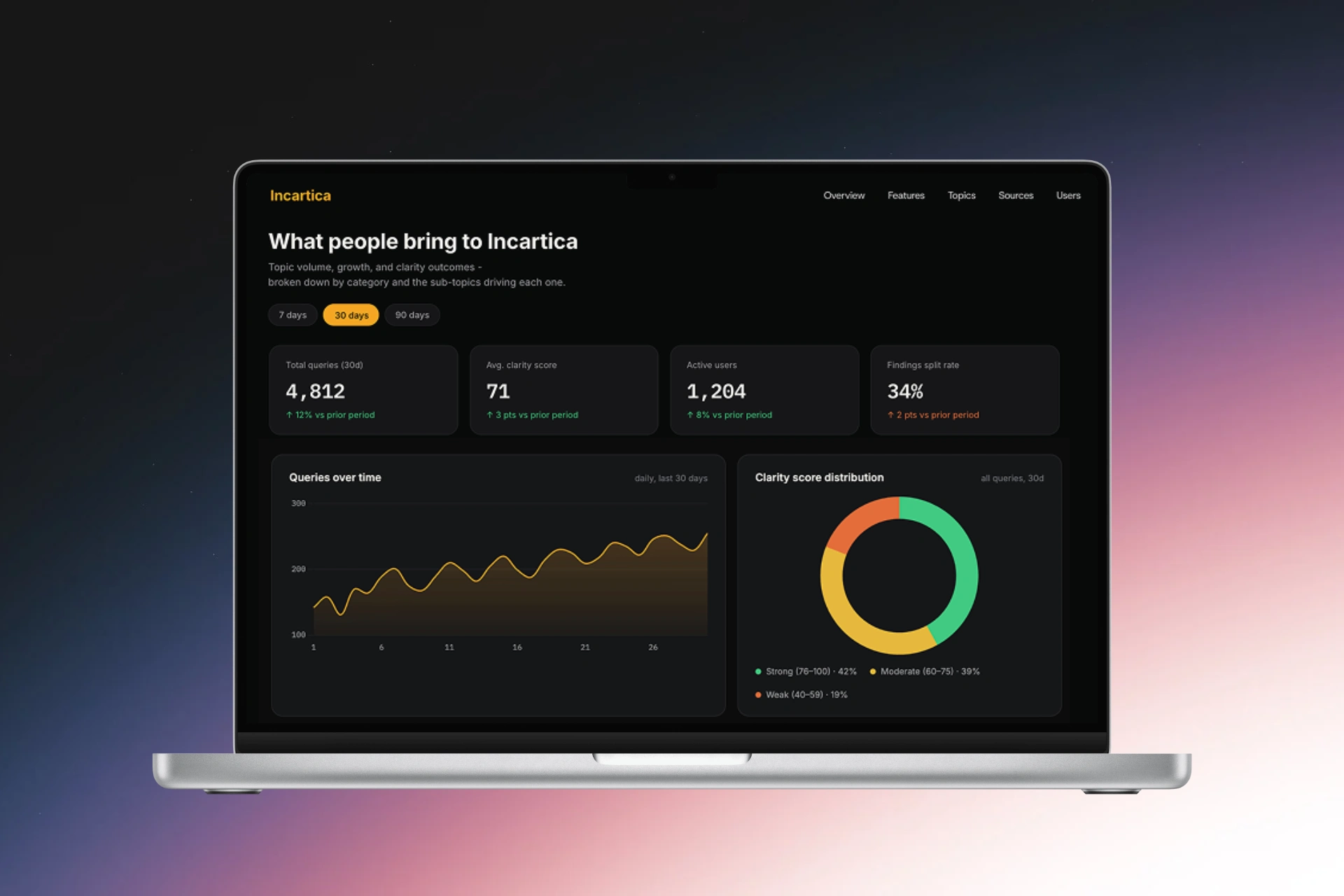
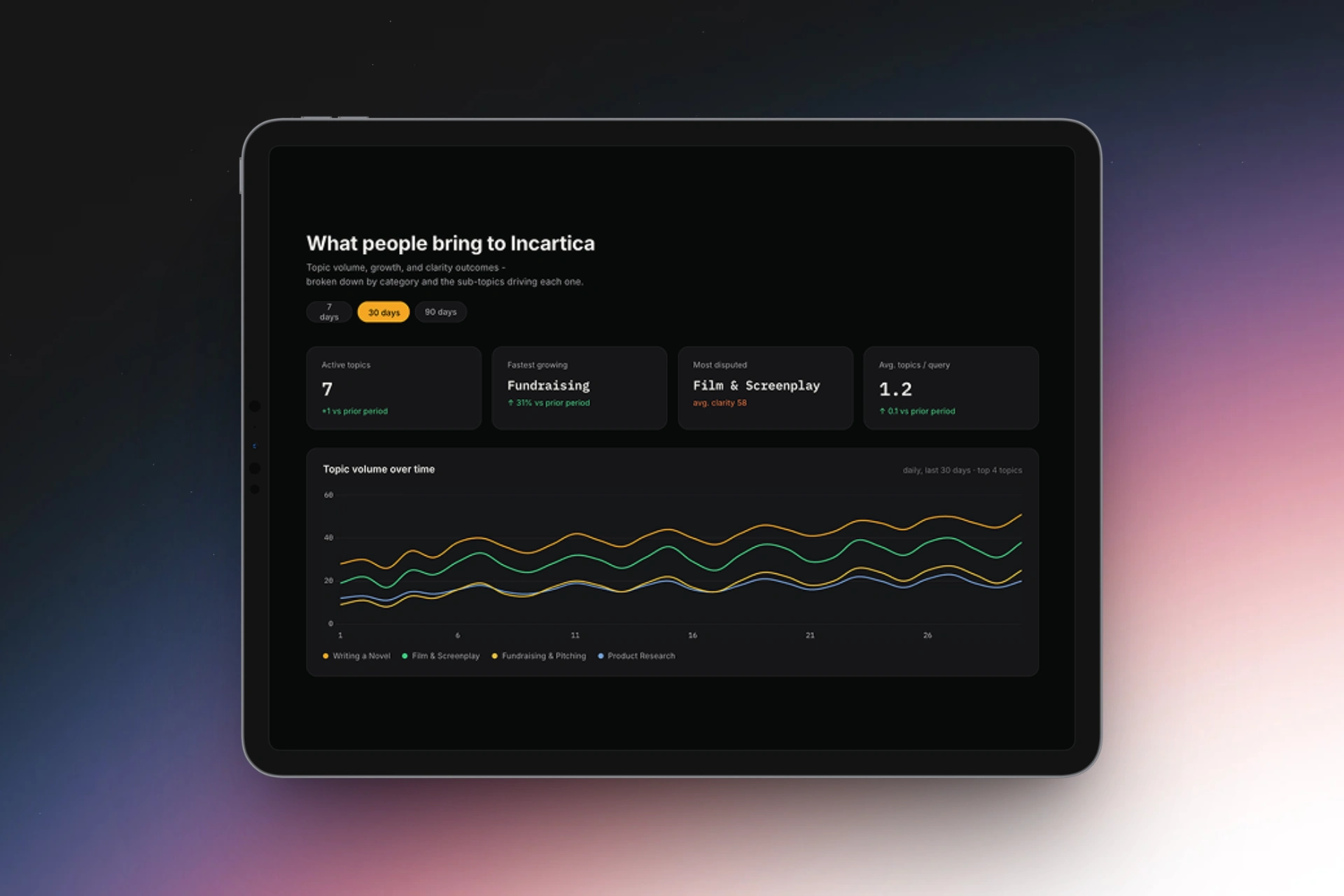
Operational Intelligence Dashboard: Built a comprehensive admin suite to track query volume (4,812/mo) and topic demand, allowing the team to identify exactly where AI signals were strongest or most disputed.
Trust-First Citation System: Developed an interface that automatically validates and tracks source diversity—managing 18,940+ citations to ensure a high signal-to-noise ratio.
Simplified 2-Tab Navigation: Streamlined the mobile architecture by 50% after user testing proved the extra screens weren't earning their place, moving from a 4-tab model to a focused 2-tab search-and-save flow.
Plain-Language UX Strategy: Replaced technical AI jargon with conversational microcopy (e.g., "How clear is this, out of 100"), significantly lowering the barrier for new users
Key Results & Impact
High Product Stickiness: Achieved a 62% 30-day retention rate and managed an average of 4.0 queries per user, indicating deep integration into the user's daily research workflow.
Massive Throughput & Signal Strength: Successfully processed 4,812 queries per month while maintaining an average clarity score of 71 across all research findings.
Automated Source Validation: Scaled the platform to track 18,940+ sources with an average of 3.9 sources per query, effectively eliminating the "AI hallucination" problem for the end-user
Like this project
Posted Aug 2, 2026
AI research assistant into a high-retention ecosystem. Delivered a streamlined mobile UX and an advanced admin dashboard.
Likes
0
Views
3