WhatsApp Offline Conversion Tracking in Kommo & Shopify

Kirwyn B


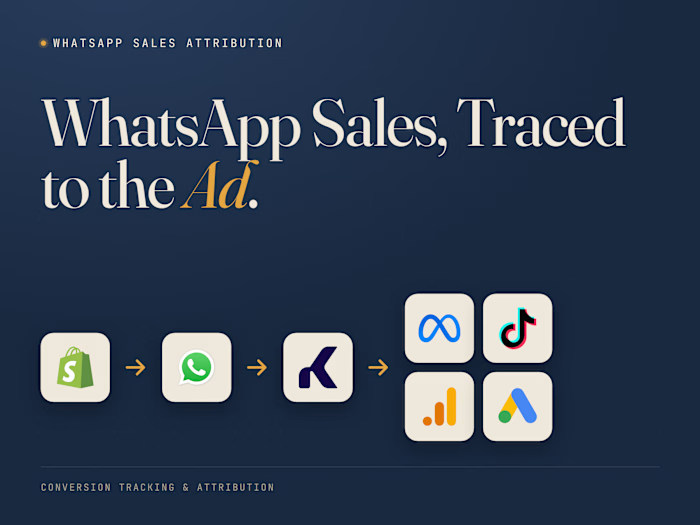
A Peruvian Shopify brand closed three in four of its ad-driven sales in WhatsApp. Customers clicked a Meta or TikTok ad, landed on the Shopify site, tapped the WhatsApp button, and a sales associate closed the sale in Kommo and raised the order in Shopify.
The Situation
Meta and TikTok saw roughly the right sales total, but not which campaign, ad set or creative drove each sale. They filled the gap with modelled estimates, and budget decisions were made on them.
Kommo's own Conversions API did not fit: it covers ads that open WhatsApp directly, and these ads sent people to the website first.
How It Works
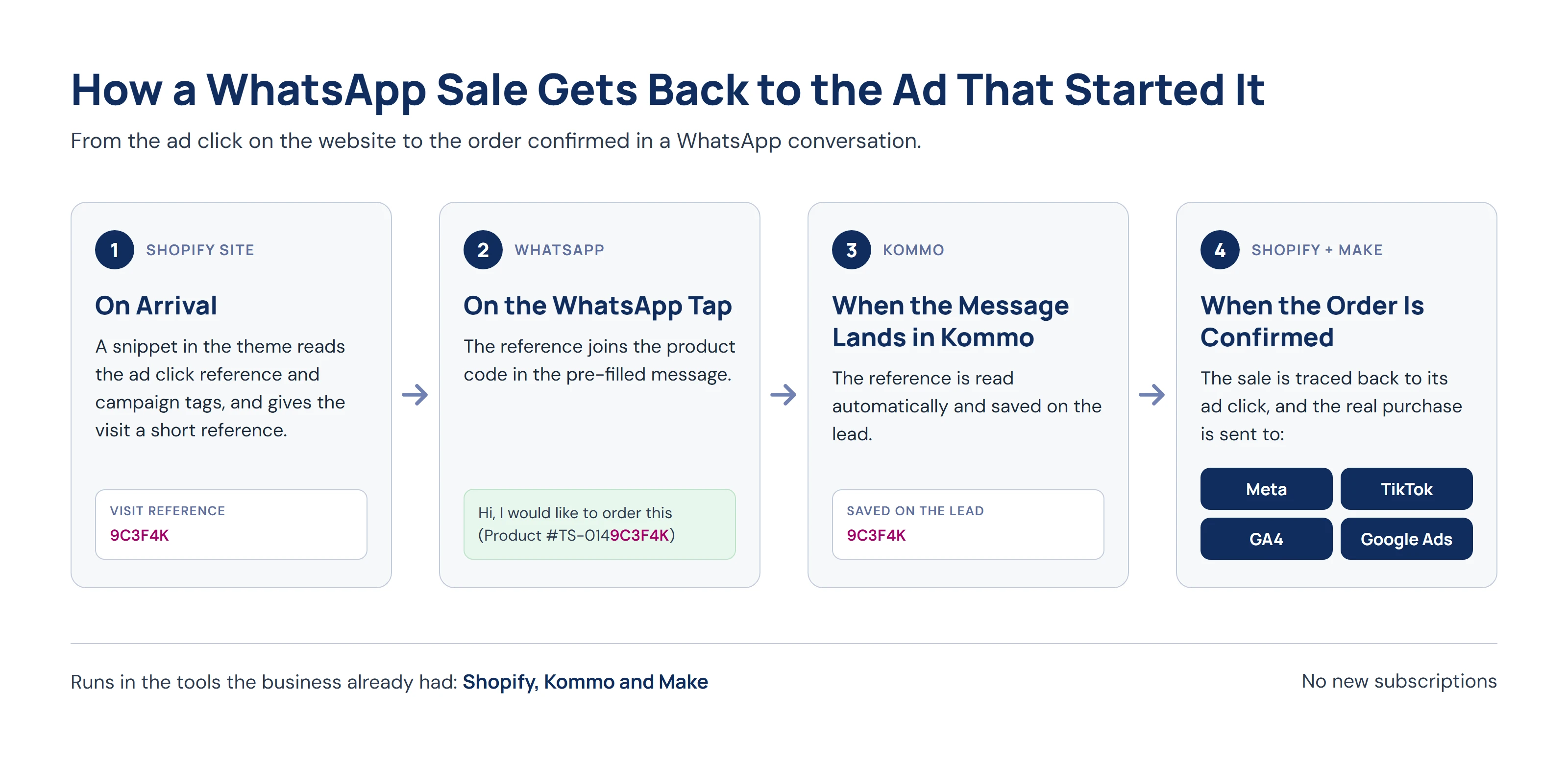
How a WhatsApp sale gets back to the ad that started it
On arrival, a snippet in the Shopify theme reads the ad click reference and campaign tags and gives the visit a short reference.
On the WhatsApp tap, that reference joins the product code in the pre-filled message.
When the message lands in Kommo, the reference is read automatically and saved on the lead.
When the order is confirmed in Shopify, the sale is traced back to its ad click and the real purchase is sent to Meta, TikTok, GA4 and Google Ads.
It all runs in the tools the business already had: Shopify, Kommo and Make.
Reducing the Likelihood of the Message Reference Being Deleted
The reference only works if the customer sends it. So it is six characters attached to the product's real SKU, and reads like an ordinary product code rather than a tracking string a customer might delete before sending.
Six is the shortest length that stays unique at this traffic level without slowing the site to check a central list. Anything that did not earn its place (a prefix, a separator) was removed.
No Extra Work for the Sales Team
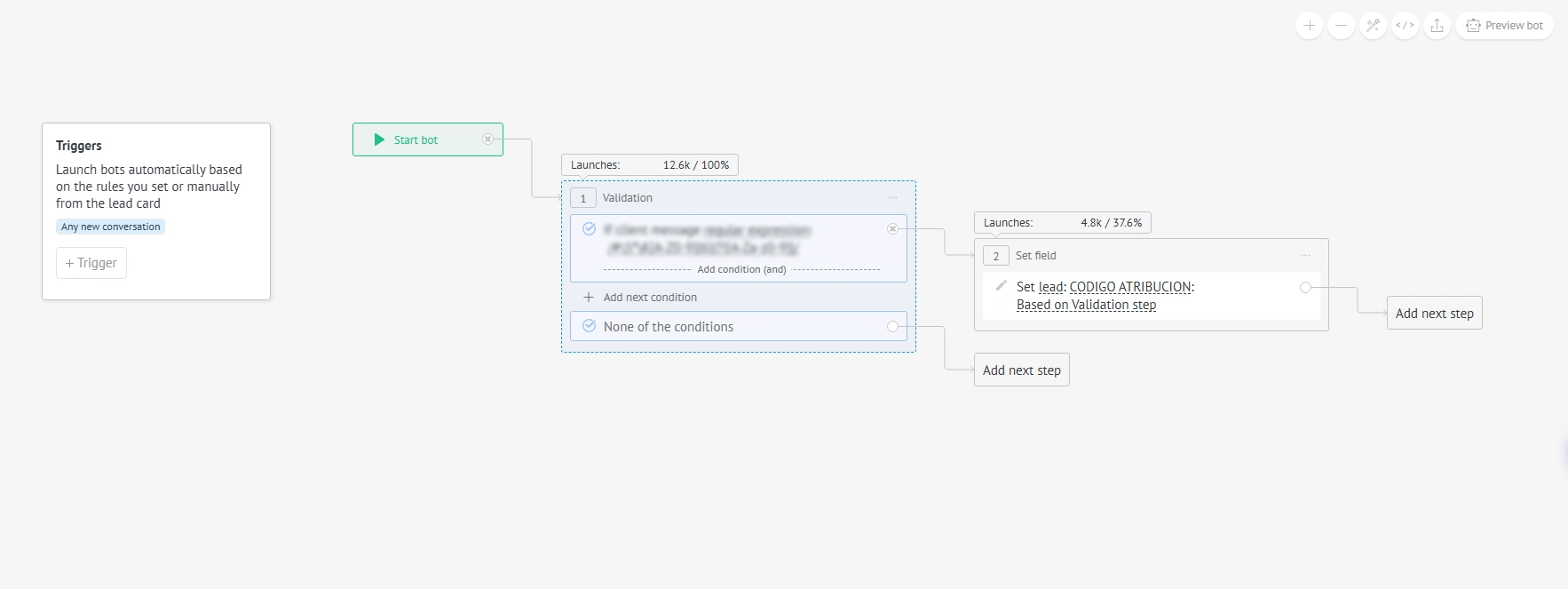
Two steps in Kommo's own Salesbot: find the reference in the first message, then write it to the lead. No code.
The sales team closes sales exactly as before. The reference is read from the first message and stored on the lead automatically, by a two-step Kommo Salesbot with no code behind it.
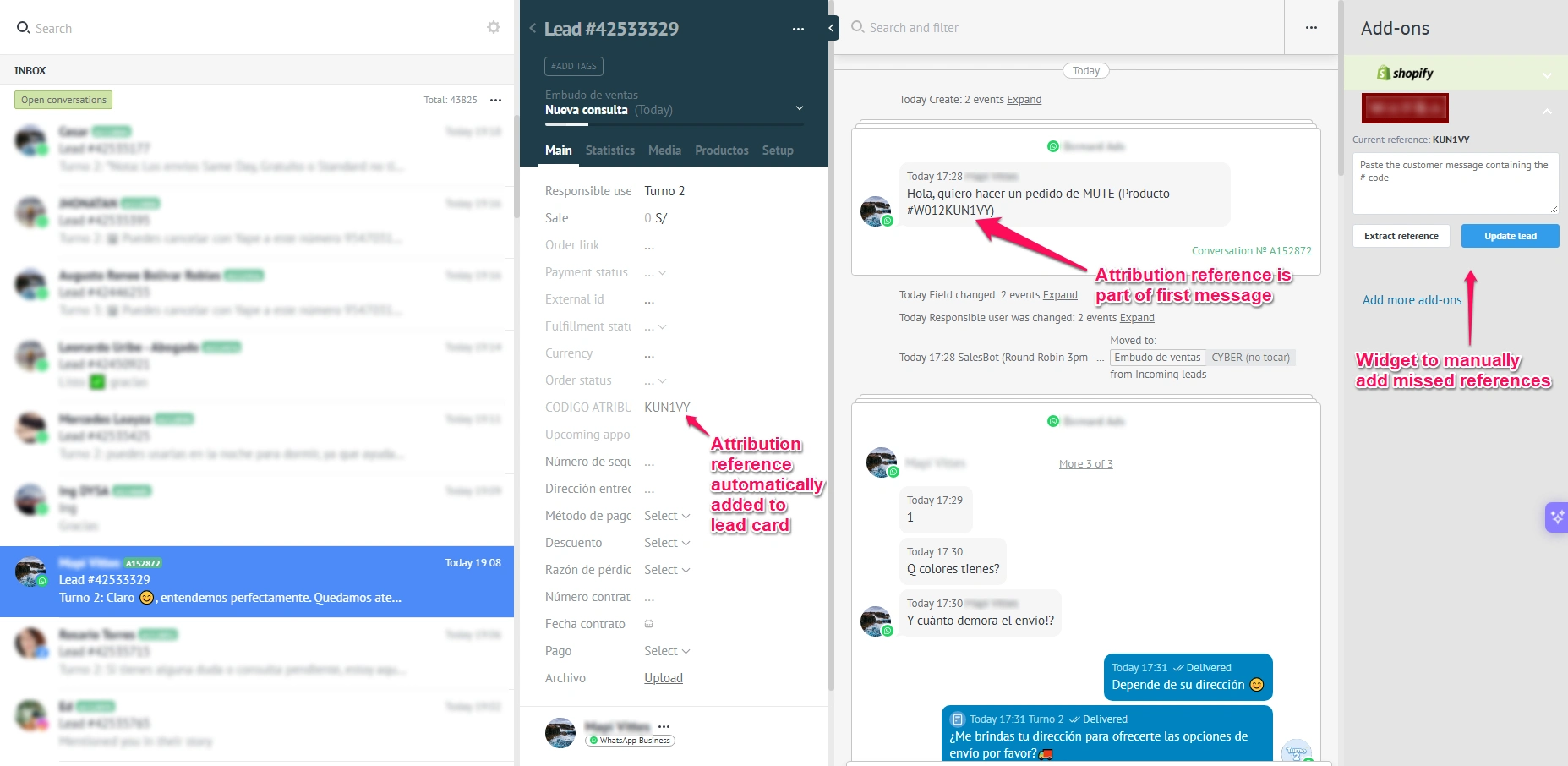
The reference arrives inside the first message and lands on the lead card. The widget on the right recovers any the automation missed.
For the few cases the automation cannot catch, such as a customer who says hello before sending the product message, a widget in the lead's right-hand panel lets the team capture the reference by hand.
Only Confirmed Sales Are Reported
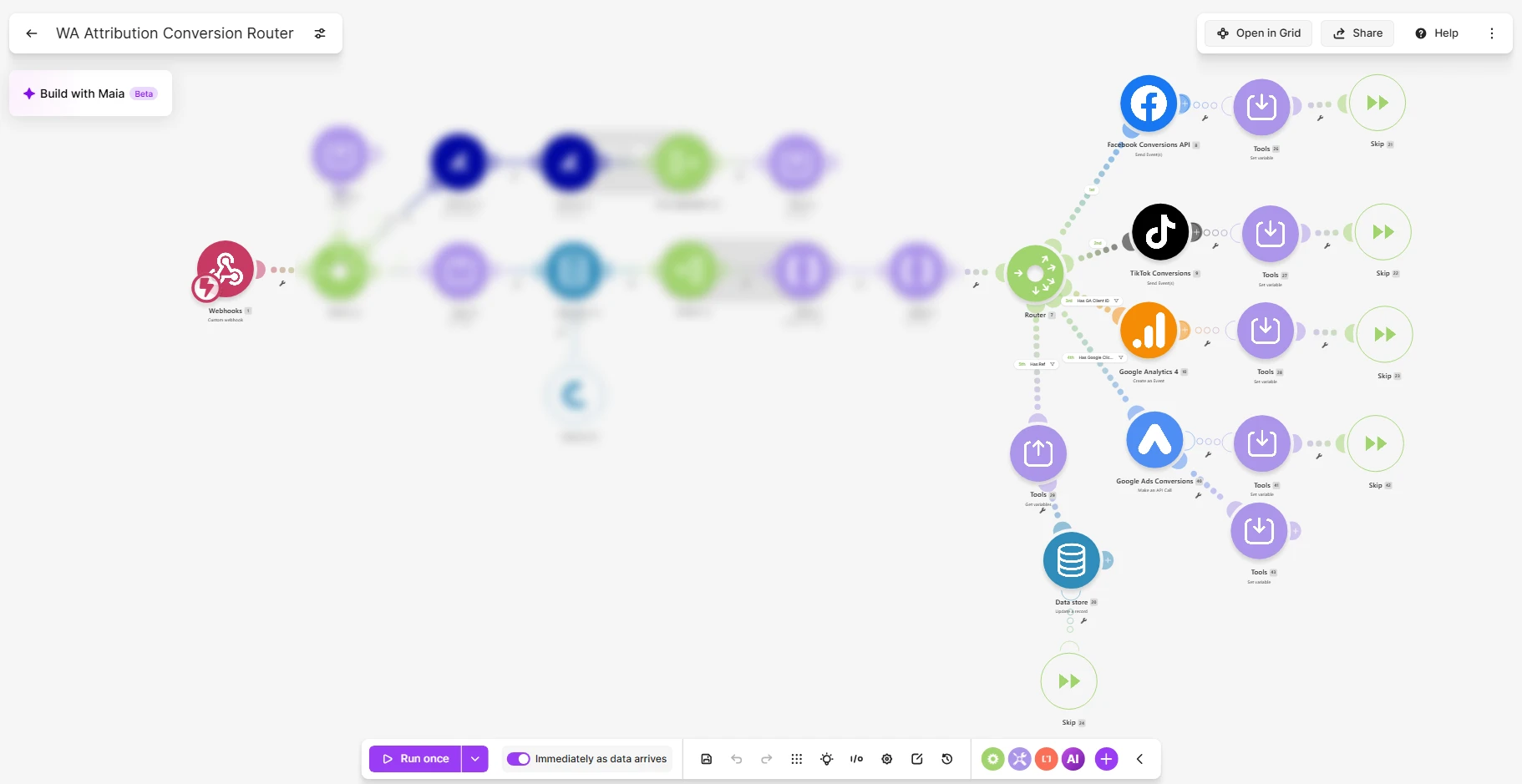
Each confirmed order is routed to Meta, TikTok, GA4 and Google Ads, then its record is marked as sent so it can never go twice.
Pay-on-delivery sales start as a draft order during the conversation. Reporting at that point would count abandoned quotes as purchases and teach the ad platforms to chase conversations that never close.
So the purchase is sent only when the order is confirmed, and each record is marked once dispatched, so a sale can never be reported twice.
Ensuring No Double Counting
Shopify's Facebook and TikTok sales channel apps also send purchase events. Left as they were, Meta and TikTok would have received each WhatsApp sale twice, from two senders.
Their data sharing setting was lowered so this system is the only sender of purchases.
Results
WhatsApp sales in Meta and TikTok
Before: counted, but not tied to any campaign, ad set or creative.
After: each confirmed sale sent as a real purchase, with the ad click wherever the customer came from an ad.
WhatsApp sales in GA4
Before: not recorded. GA4 saw website checkout sales only.
After: recorded against the visitor's original session, and now about two thirds of all purchases GA4 sees. 71% land on a paid campaign, against 43% for website checkout orders.
Kommo lead cards
Before: nothing linking the lead to an ad.
After: the reference on the lead, which traces the sale back to its ad click.
Google Ads was launched after the build, with WhatsApp sales reported against the Google ad click from its first month.
Hand Over & Knowledge Transfer
Every platform connection was created in the client's own accounts.
A written implementation record covers every component, why it was built that way, and a ten-minute monthly health check for the three failures that would otherwise be silent.
One filter (transaction ID begins with
wa-) shows WhatsApp sales in any GA4 report.Like this project
Posted Sep 24, 2026
A Shopify brand closed 3 in 4 ad-driven sales in WhatsApp. I traced them back to the ad click and sent the real purchases to Meta, TikTok, GA4 and Google Ads.