86 Years Later: Investigating a 1939 World's Fair Postcard

Stefa Groves
The Artifact
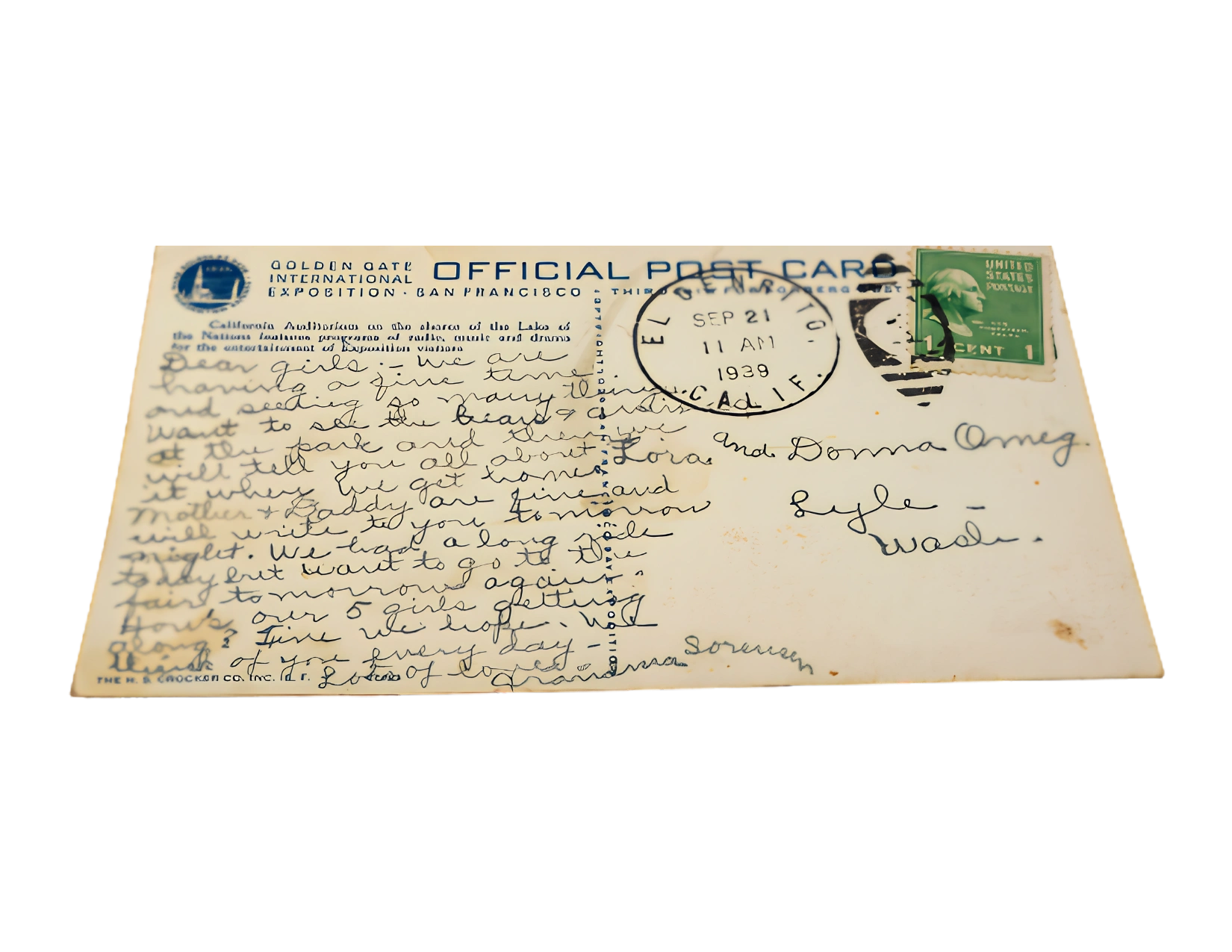
A postcard from 1939. No address. Handwritten message. Postmarked from El Cerrito, California. Sent during the Golden Gate International Exposition — just 20 days after Germany invaded Poland and World War II began. The sender and recipient had no idea their world was about to change.
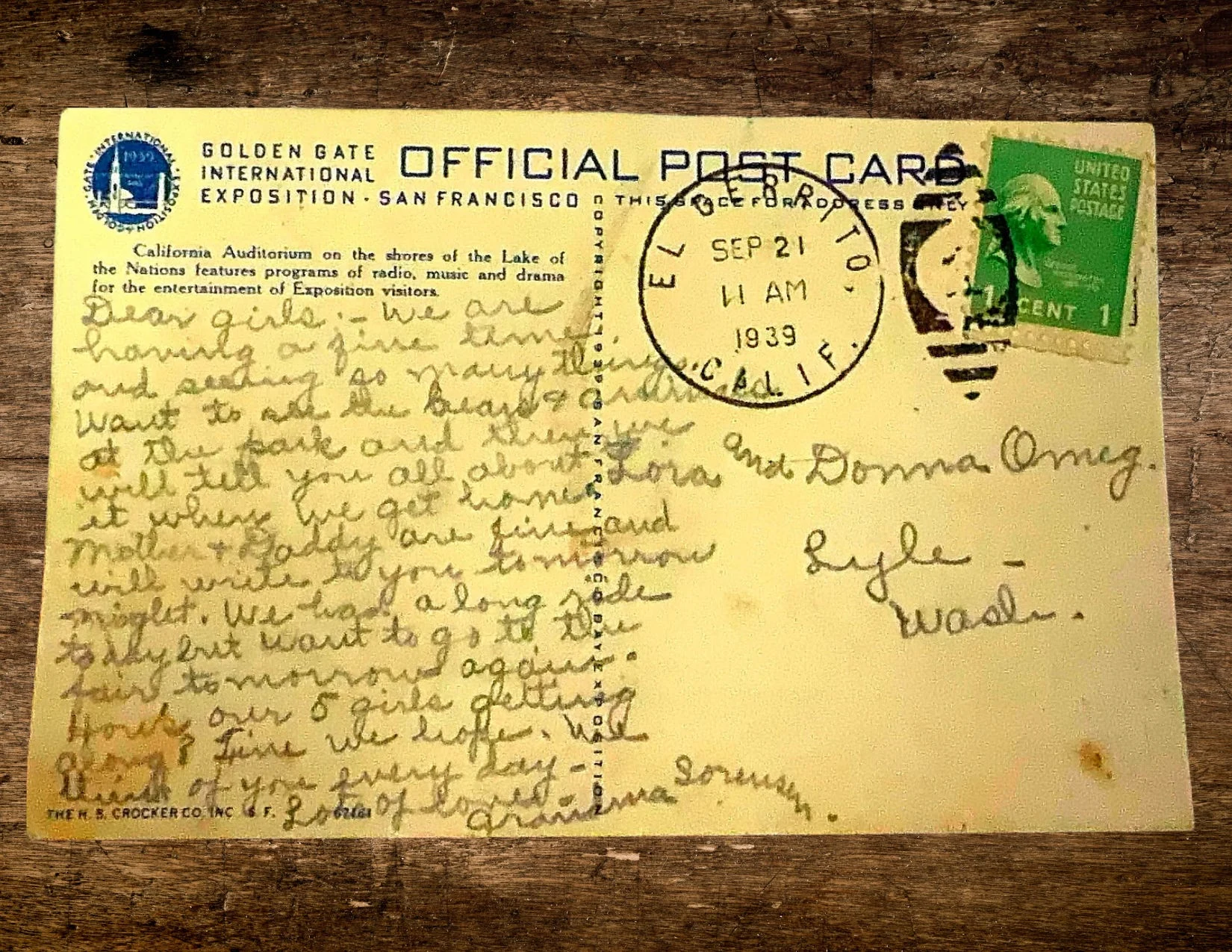
Front of the 1939 Golden Gate International Exposition postcard
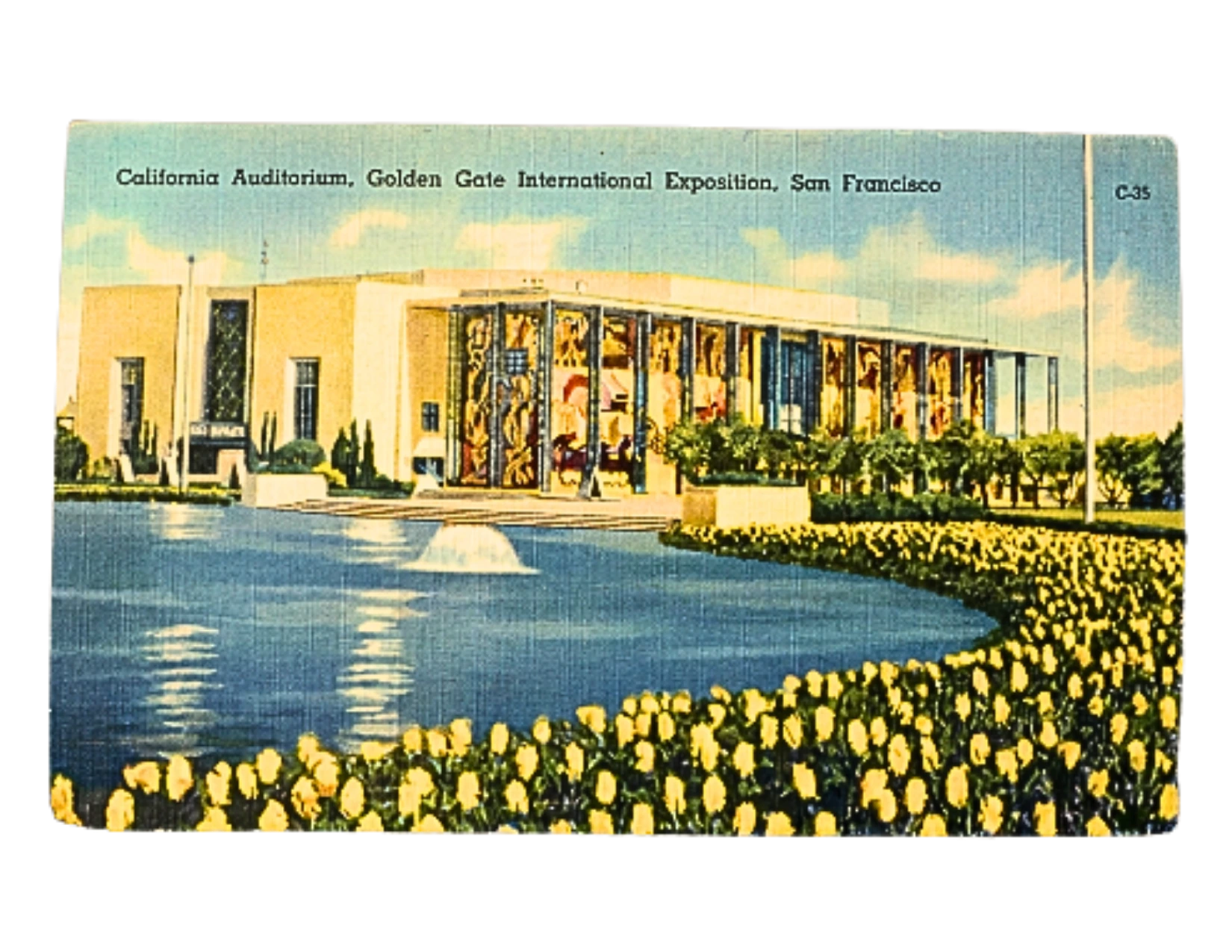
The handwriting side — enhanced for readability
That's all I had to work with.
The Process
I treat every piece of ephemera like an investigation. The postcard itself is a collection of data points: the handwriting, the stamp, the postmark, the message content, the design on the front, and what's missing (in this case, a real address).
Step 1: Transcription and language. The message contained some German. I speak enough to work with it. I transcribed the full text and broke down every sentence for investigative leads — names, places, references to people and events.
Step 2: Postmark and postal history. I identified the post office in El Cerrito, California. I researched the town's history, including who operated the local post office during that era — before the USPS was federalized, mail was handled out of homes and shops. This opened a thread into the postal carriers themselves and their families.
Step 3: Identity reconstruction. From the message content, I identified the sender ("Grandma S.") and began tracing her identity. Using genealogy databases, public records, newspaper archives, and cross-referencing, I identified her full name, her husband, her siblings, her parents, and multiple generations of descendants.
Step 4: The Sorensen family. I located a "Grandpa Sorensen" referenced in the postcard — one person out of every Sorensen alive in 1939. I traced his identity, his family, where they lived, where they're buried, and where their descendants are today.
Step 5: Historical context. I researched the 1939 Golden Gate International Exposition itself, the route the sender likely traveled, the town the postcard was mailed from, and the broader historical moment — a family enjoying the World's Fair while Europe went to war.
Step 6: Verification and cross-referencing. Every finding was verified across multiple independent sources. I located photographs of the people involved, newspaper articles documenting their lives, property records, and cemetery records. I used Google Street View and satellite imagery to examine whether structures from that era still exist in their town — a town that still has fewer than 500 people.
What I Found
From a single postcard with no address, I reconstructed:
The full identities of the sender and recipient
Multi-generational family trees for both families
Life stories, marriages, children, and where they ended up
The postal history of the town and the mail carriers who served it
A connected story involving a mail carrier who saved an entire bag of mail from a sinking steamboat on the Columbia River — holding it above water so not a single letter was lost
Historical context tying the postcard to the 1939 World's Fair and the opening days of WWII
The initial research took approximately 2 hours. The full documentation and writing is an ongoing project published on Substack.
Methodology
I work without bias or assumptions. I visualize each investigation as a river system: the main channel is the primary line of inquiry, and each tributary is a possibility. If a tributary leads nowhere, it gets sealed off. Some get marked as "maybe" and revisited if new information fits. Eventually, the tributaries narrow and the destination reveals itself.
The research desk
I maintain a custom-built OSINT tool database organized by use case (missing persons, ephemera research, identity verification, etc.) and sorted by access level (free, freemium, paid). I update it weekly and use AI assistants to help sort and organize my research notes — but the investigative work itself, the pattern recognition, the connections, the judgment calls about which tributaries to follow — that's human work.
Who This Is For
This project is part of an ongoing ephemera research series. I have hundreds of postcards spanning over a century, each one a potential investigation. But the skills demonstrated here apply directly to:
Legal teams needing background research or identity verification
Families searching for biological relatives or lost connections
Businesses conducting due diligence on people or claims
Journalists verifying sources, timelines, or historical claims
Anyone who has a question and not enough information to answer it
Like this project
Posted Jul 9, 2026
Starting with a single postcard from 1939 with no address, I reconstructed the identities, family histories, and life stories of the sender and recipient using open-source intelligence methods.