Trending Today: How Trends Quietly Run Our Lives

Riya Belwal

Trending Today, Timeless Tomorrow: How Trends Quietly Run Our Lives
“Ohh, it’s trending, let’s hop into it.”
We’ve all said this line, and we’ve all heard it too, on a reel, in a story, in a group chat. We say it casually, as if it means nothing. But here’s the real question: while we act like we don’t care, are we secretly letting them run our lives anyway?
The answer is yes.
Once you start noticing it, you can’t stop. The food we eat, the clothes we wear, the way we decorate our homes, even the way we think. All of it is quietly shaped by something bigger than personal choice. Scroll through your feed for five minutes, and you’ll see it. The latest social media trends decide, almost overnight, what’s worth eating, wearing, or talking about. Trends shape us. Suddenly, not following a trend doesn’t just make you different. It makes you feel excluded, even from your own friend group.
That’s the quiet pressure trends carry. They’re never forced on you directly, but the fear of being left behind does most of the convincing for them.
The Trend That Was Never New, Just Forgotten for a While
Hers is the most interesting part of the trend is that most of them are not new; they have just come from the past.
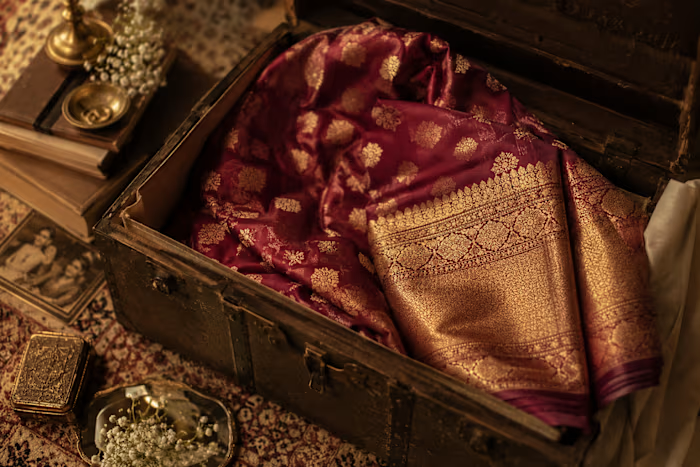
Take bell-bottom jeans, for example. Decades ago, they were the signature style of iconic actors and bold personalities, a symbol of confidence and flair. Then they disappeared for years, dismissed as outdated. Now they’re back, dominating society and Instagram feeds. Ironically, skinny jeans, once the “cool” replacement, are now the ones being called boring and old.
Press enter or click to view image in full size
Trends don’t really invent anything new. They recycle the past, repackage it with fresh branding, and hand it back to a generation that doesn’t even realize it’s wearing history.
From a Housewife’s Pastime to a High-Street Fashion Statement
Now let’s talk about something even more personal: crochet.
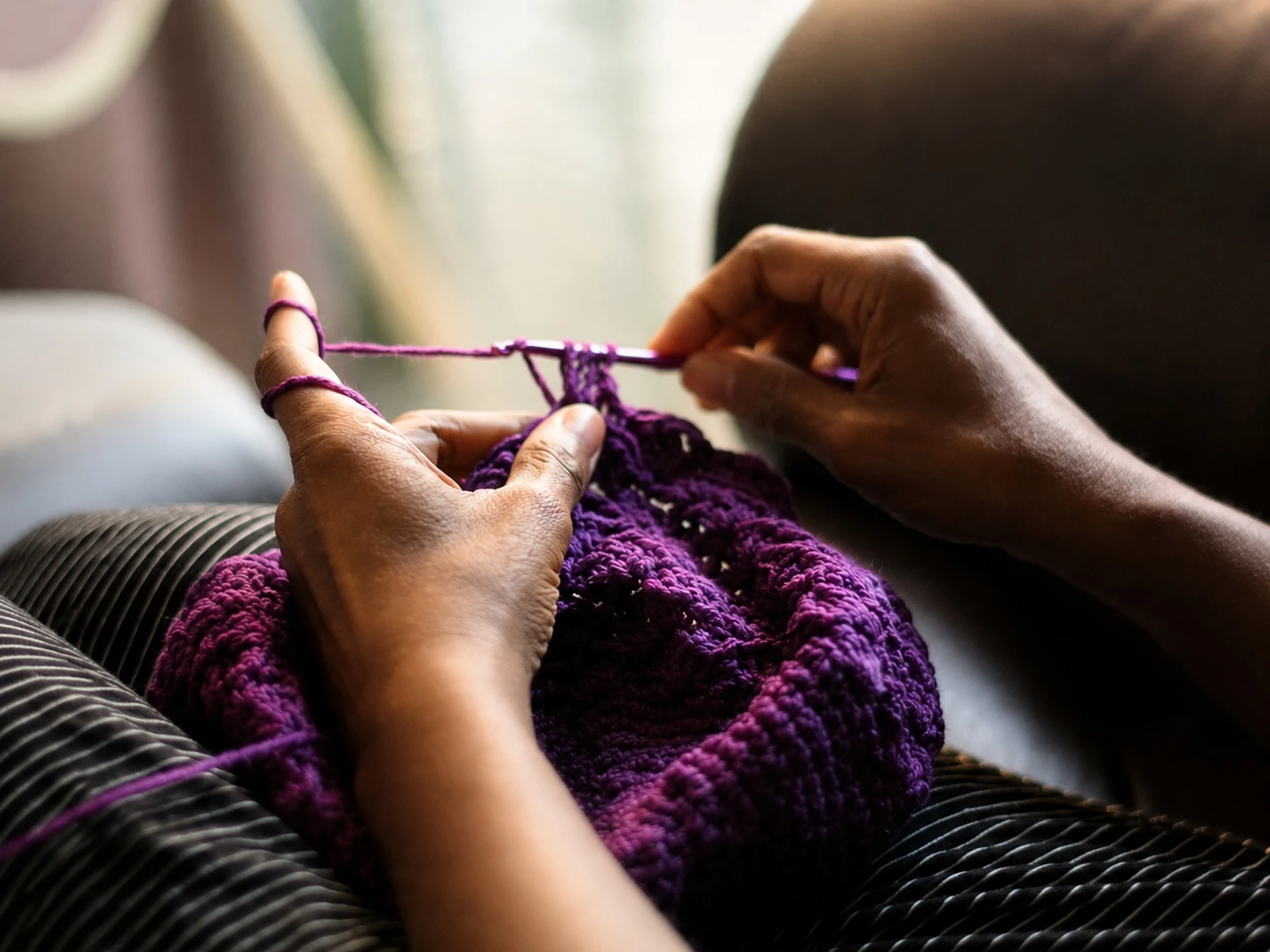
Crochet was simply something women did at home, often because they weren’t allowed to step outside much. It was a quiet, patient craft used to make sweaters for children and grandchildren, a way to pass time and stay productive within the four walls they were confined to. It wasn’t glamorous. It was just part of daily life.
Fast forward to today, and crochet is everywhere: bags, tops, keychains, phone charms, worn by men and women alike, sold at premium prices in markets and online stores. Why the sudden shift in value? Because one Instagram influencer wore it once, and it looked unique and aesthetic. Just like that, a humble household skill turned into a high-priced fashion statement.
This is the real mechanism of trend-making. A social media influencer does something visible, people find it appealing, and a chain reaction begins until everyone wants to be on the same page. It’s not really about the object, the jeans, the crochet top, the sweater. It’s about the collective urge to upgrade together, to not be left behind while everyone else moves forward.
Press enter or click to view image in full size
I Asked People What “Trend” Actually Means
To test this theory, I ran a small, informal survey. I asked two of my friends what trend actually means to them. The answers were more insightful than I expected.
One person said, “Trends depend on the category. If it is about technology or education, then it matters to me, because falling behind them has real consequences. But trends in fashion, food, or lifestyle are optional. Whether you follow them depends on how much financial freedom, time, and responsibility you have”.
Another person saw it differently. To them, a trend is simply whatever the internet convinces people to want this month, only to replace it with something new the next.
The survey was small, but the responses revealed something important. A trend isn’t one fixed idea. For some, it’s a necessity. For others, it’s a privilege. For most people, it’s shaped less by desire and more by how much room their circumstances leave for following it.
The Society That Loved Staying the Same
Indian society, for the longest time, believed in one simple rule. Stick to the same ideology, walk the same path, and that’s what keeps a society together. There was comfort in sameness. People got used to their environment, their surroundings, and their way of doing things, and that comfort became identity.
Change did happen, but slowly. Someone would try something new, one neighbour would notice, then two, and soon the whole street would start following. It was a chain reaction, but a slow-burning one, passed down like a whisper rather than broadcast like an announcement.
This kind of gradual shift was mostly visible to a limited set of people, perhaps just a local area, a community, or an inner-village circle. Change existed, but it took years, sometimes an entire generation, to travel from one home to another.
Then digital transformation happened, and everything sped up. A lot. Nowhere is this shift more visible than in social media trends in India, where an entire country, spread across languages, regions, and generations, now moves to the same viral beat within hours.
When Change Stopped Waiting for Its Turn
Social media didn’t just speed up how trends move. It completely rewired the system. What once took a generation to travel from one village to the next now takes a single scroll. One post, one reel, one influencer trying something new, and suddenly a million people are watching, absorbing, and reacting to it at the same moment.
This is the real power of social media. It’s no longer just a platform for updates. It’s a stage where an entire audience, cutting across cities, ages, and backgrounds, witnesses change happening live, together, instantly. Check any list of current social media trends today, and you’ll notice the same pattern. A dance, a phrase, an outfit, even a recipe goes from unknown to unavoidable within days. Social media and food trends move the same way. One viral dish or drink shows up on a feed, and suddenly it’s on every menu and every plate.
That brings us to the question everyone secretly asks but rarely says out loud.
Is Following a Trend Really Mandatory?
Not officially. Nobody hands you a rulebook that says, “You must follow this.”
But unofficially? It kind of feels mandatory.
Trends give people a sense of belonging, a silent membership card that says, “I’m part of this”.
The Real Truth About Trends
Trends aren’t villains, and they aren’t heroes either. They’re mirrors, reflecting what a generation values, fears, and wants to belong to at any given moment. They don’t always bring something new. Often, they just remind us of what we’d forgotten, dressed a little differently.
Flip the lens, and understanding this cycle is really the art of influence itself. Knowing how to influence people has never been about shouting the loudest. It’s about being the first person someone trusts enough to follow.
Somewhere between chasing what’s “in” and holding on to what’s “you” lies the real art of staying grounded in a world that keeps reinventing itself every season.
Like this project
Posted Aug 30, 2026
An article exploring how trends influence our daily lives and social behaviors.
Likes
1
Views
1