Social Studies - Fotografiska Berlin

Eric Jordan


Social Studies expands Lauren Greenfield's Emmy-nominated FX documentary into a walk-through museum experience at Fotografiska Berlin. Across the exhibition, photography, screens, and two full-room projection installations turn the private language of teenage phones into something you can stand inside.
Eric Jordan led projection design for the Algorithm Room, building the Tik Tok algorithm recommendation system as a cold, clinical machine visitors walk alongside, and worked directly with Filmmaker Lauren Greenfield on the projection configuration for Ella's Bedroom, from Cinema 4D previz through surface animation and final projection layout.
Director Lauren Greenfield / Institute Pictures
Projection design, animation, 3D pre-visualization & sound design: Eric Jordan
Fotografiska Berlin · 26 Sep 2026 - 12 Jan 2027

Social Studies - An FX Original Documentary Series, A Social Studies Exhibition at Fotografiska
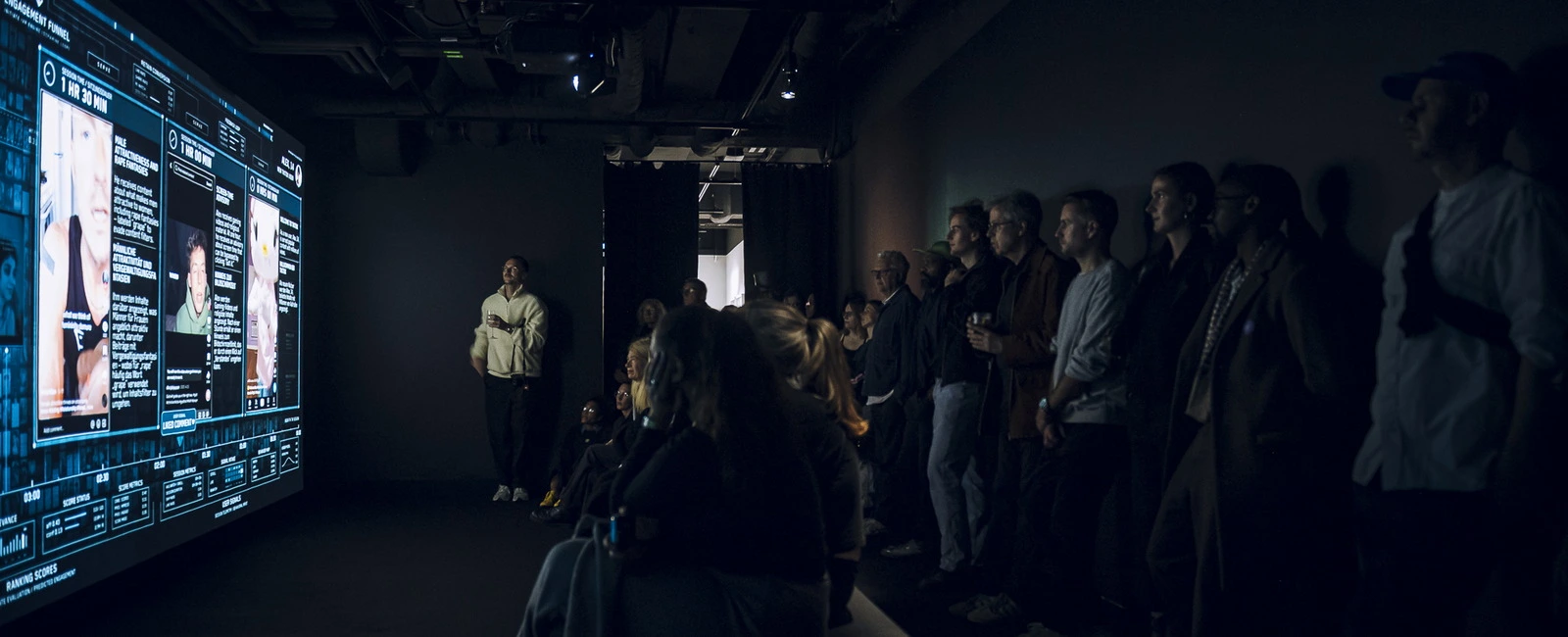
Algorithm Room - opening night, Social Studies Exhibit - Fotografiska Berlin, Germany.
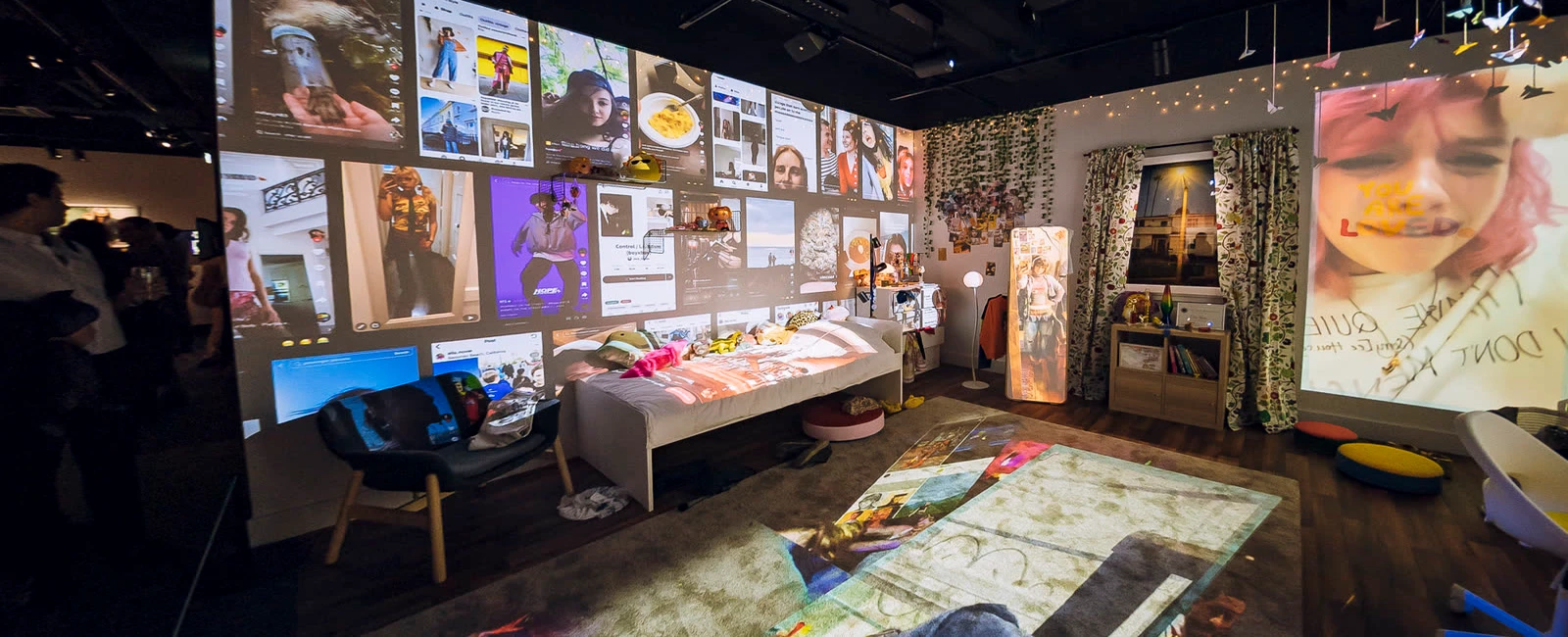
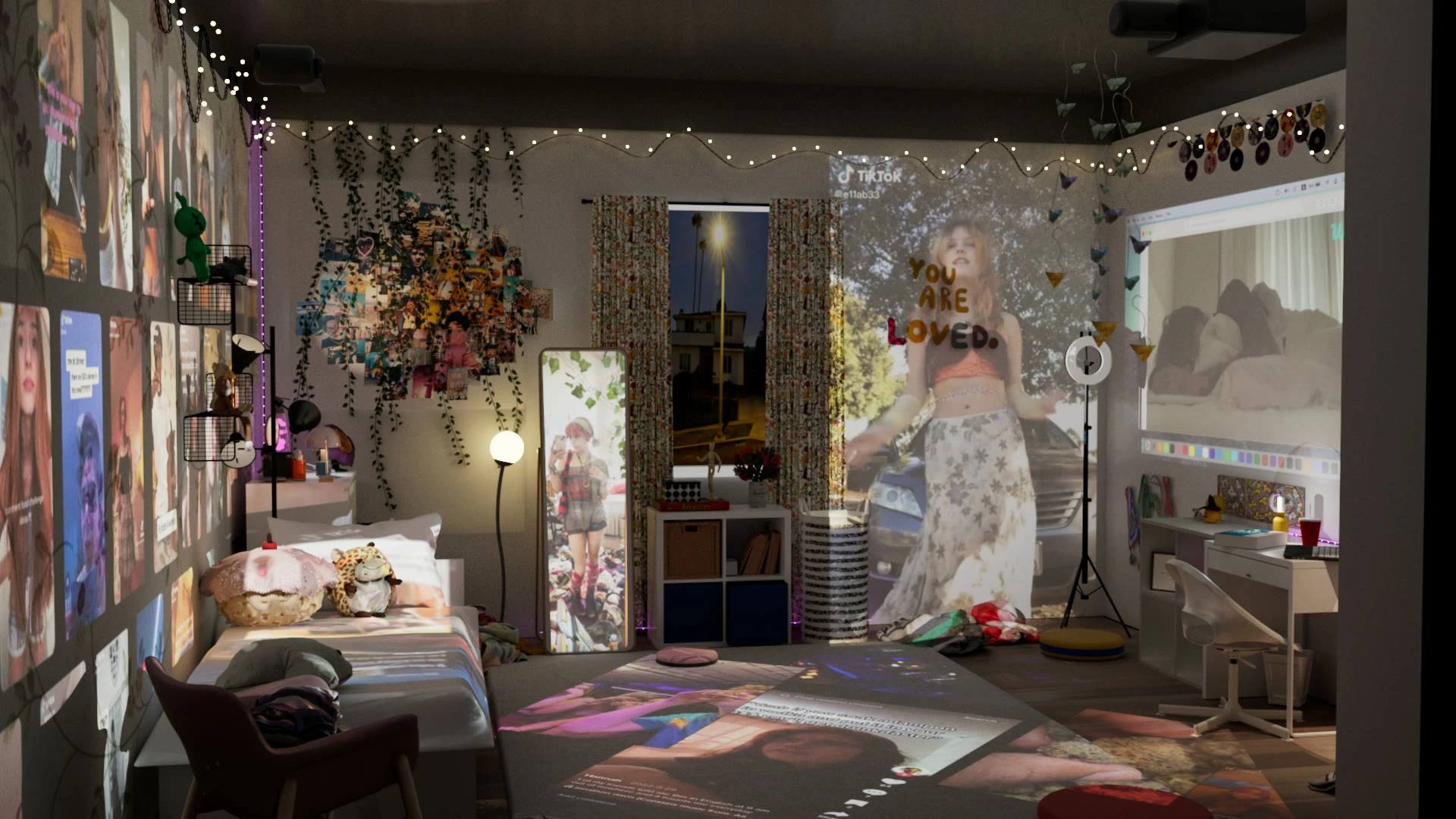
Ella's Bedroom - opening night, Social Studies Exhibit - Fotografiska Berlin, Germany.
Algorithm Room
Goal
Make the recommendation algorithm visible as a cold, clinical machine visitors can walk alongside, close enough to feel how a feed narrows from broad curiosity into increasingly extreme material through ordinary taps and scrolls.
Strategy
The wall was designed as a dystopian executive dashboard, built to show the view the platform sees rather than the view the user gets: grayscale telemetry, engagement funnels, session timestamps, and candidate channels, laid out with the cold confidence of a system reporting on its own performance. Inside that frame, six turn sequences play as optimization cycles. Candidates shuffle in black and white while the machine weighs them, a single selection locks, and the chosen clip punches into full color as the surrounding telemetry recedes, so the only warmth on the wall arrives at the exact moment the algorithm gets what it wanted. None of that lands unless the machine is legible first, so the intro boots the full system at maximum density before dimming it back, letting the served TikTok content carry the rest of the loop. Everything was delivered as dual ultra-short-throw masters with the overlap baked into the files, which kept the blend out of the venue's hands and let the wall behave as one continuous surface from the moment it was switched on.
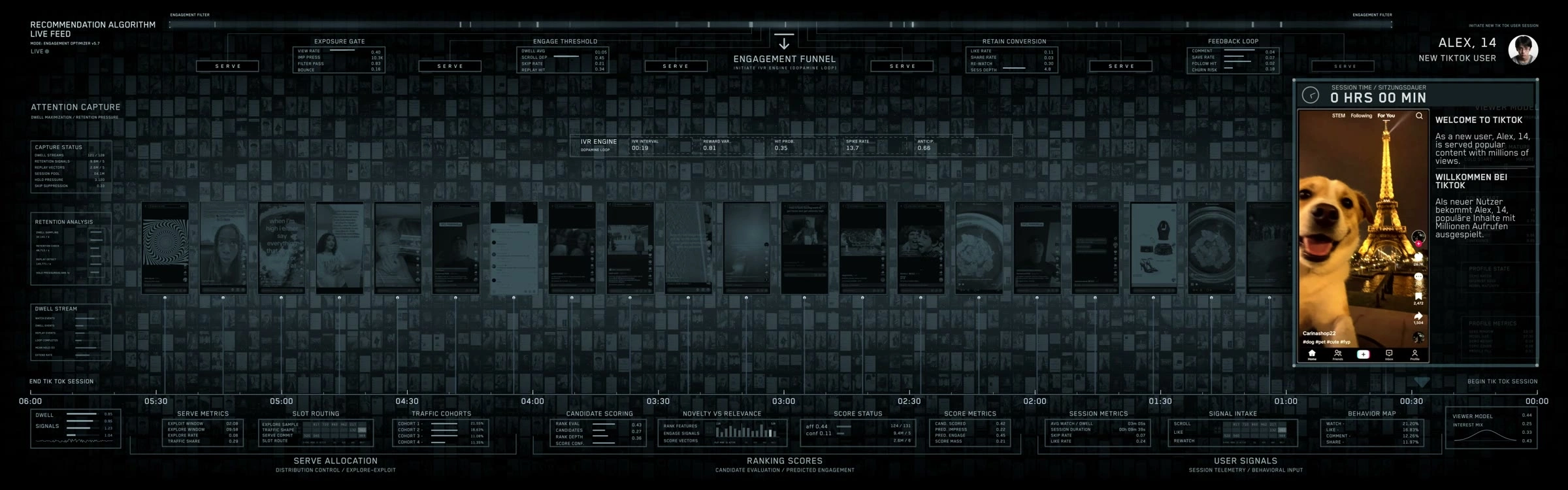
Full Algorithm Room design
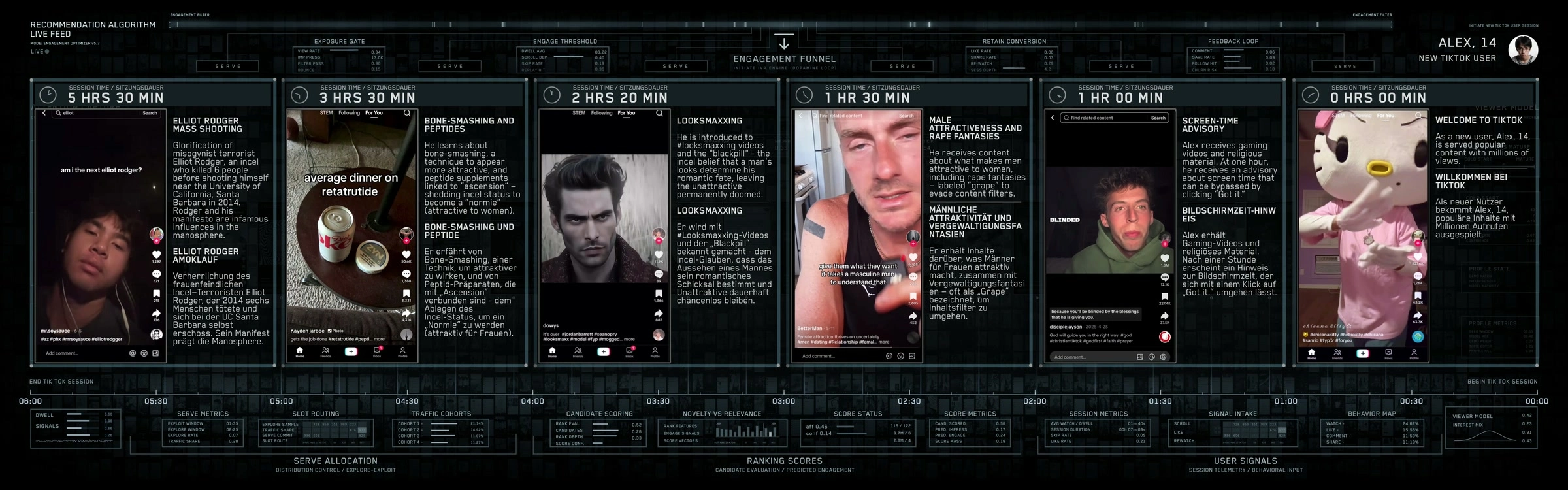
All six turns populated
Algorithm Room - Alex journey (INCEL path through ED verdict)
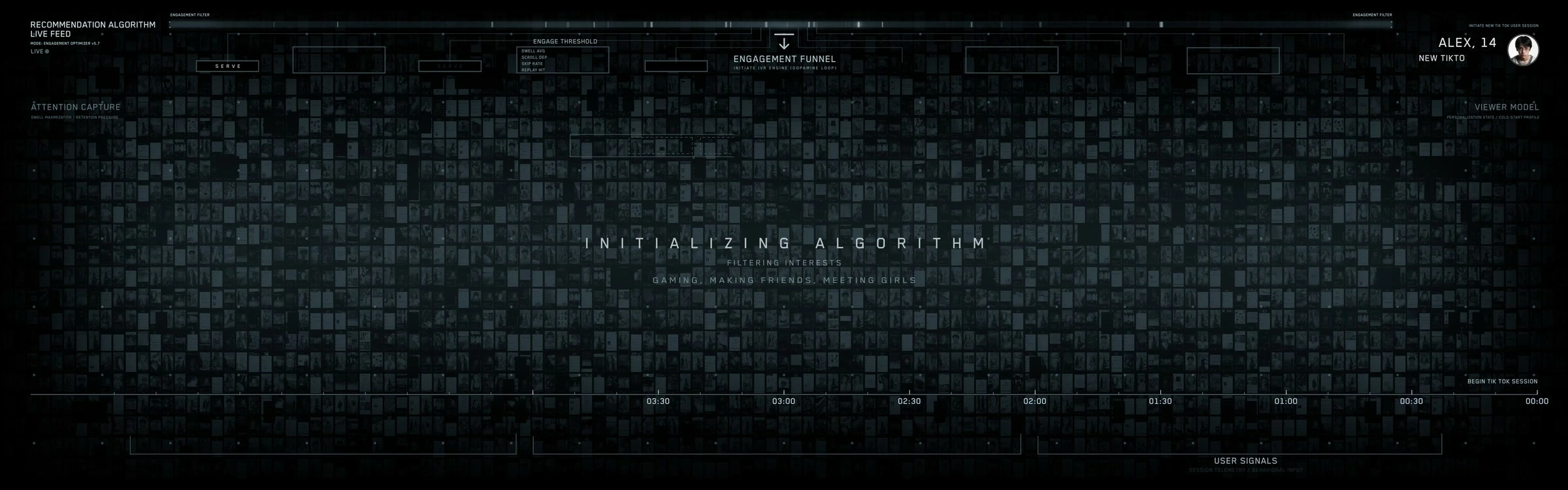
User interests boot sequence
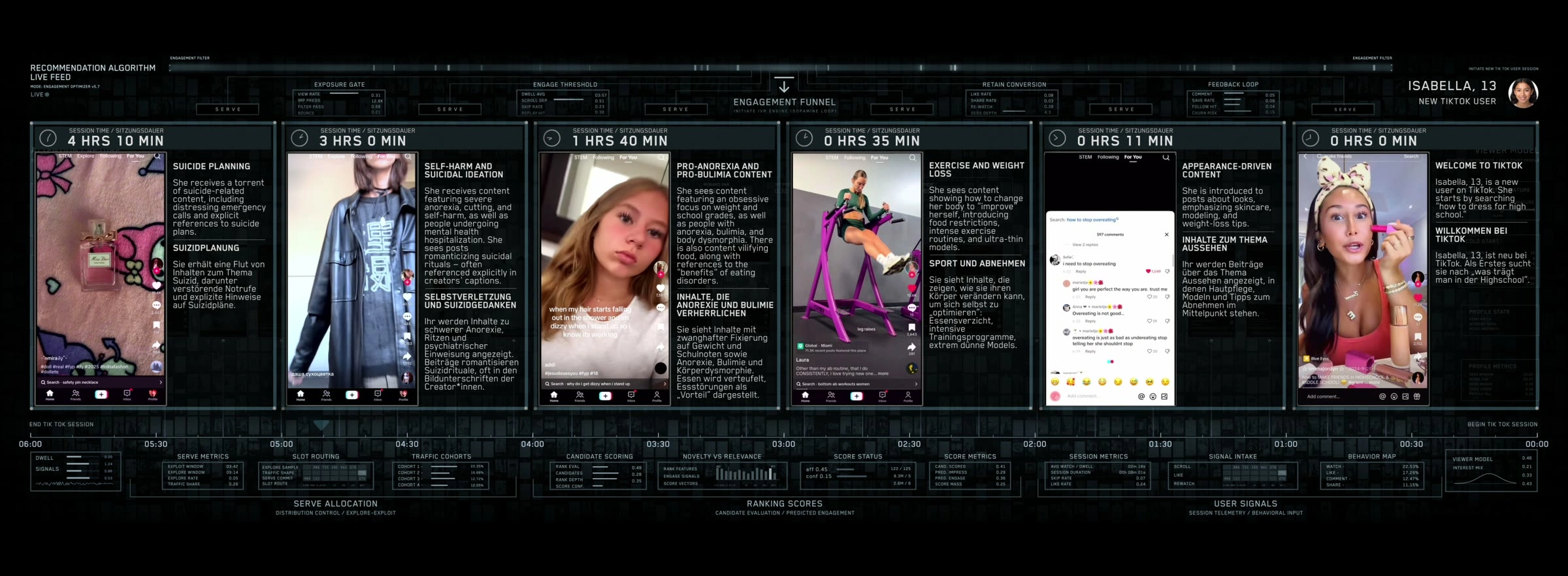
Isabella sequence - all six turns
Algorithm intro loop
Turn sequence detail loop
Physical setup
The projection surface runs along the right-hand wall as guests enter, roughly 32 feet wide and 9.5 feet tall, long enough that no one can take it in from a single standing position. Coverage comes from two synchronized ultra-short-throw projectors at their native 1920×1200, overlapping by about 30 percent, with the blend region authored into the delivered files so the seam disappears and the surface reads as one machine instead of two images meeting in the middle. Playback progresses right to left across the six turns, running with the direction guests are already walking so the architecture sets the pacing. The opposite wall was held black with a mirror treatment, which keeps stray light and competing imagery off the projection and leaves the algorithm as the only surface in the room asking to be read.
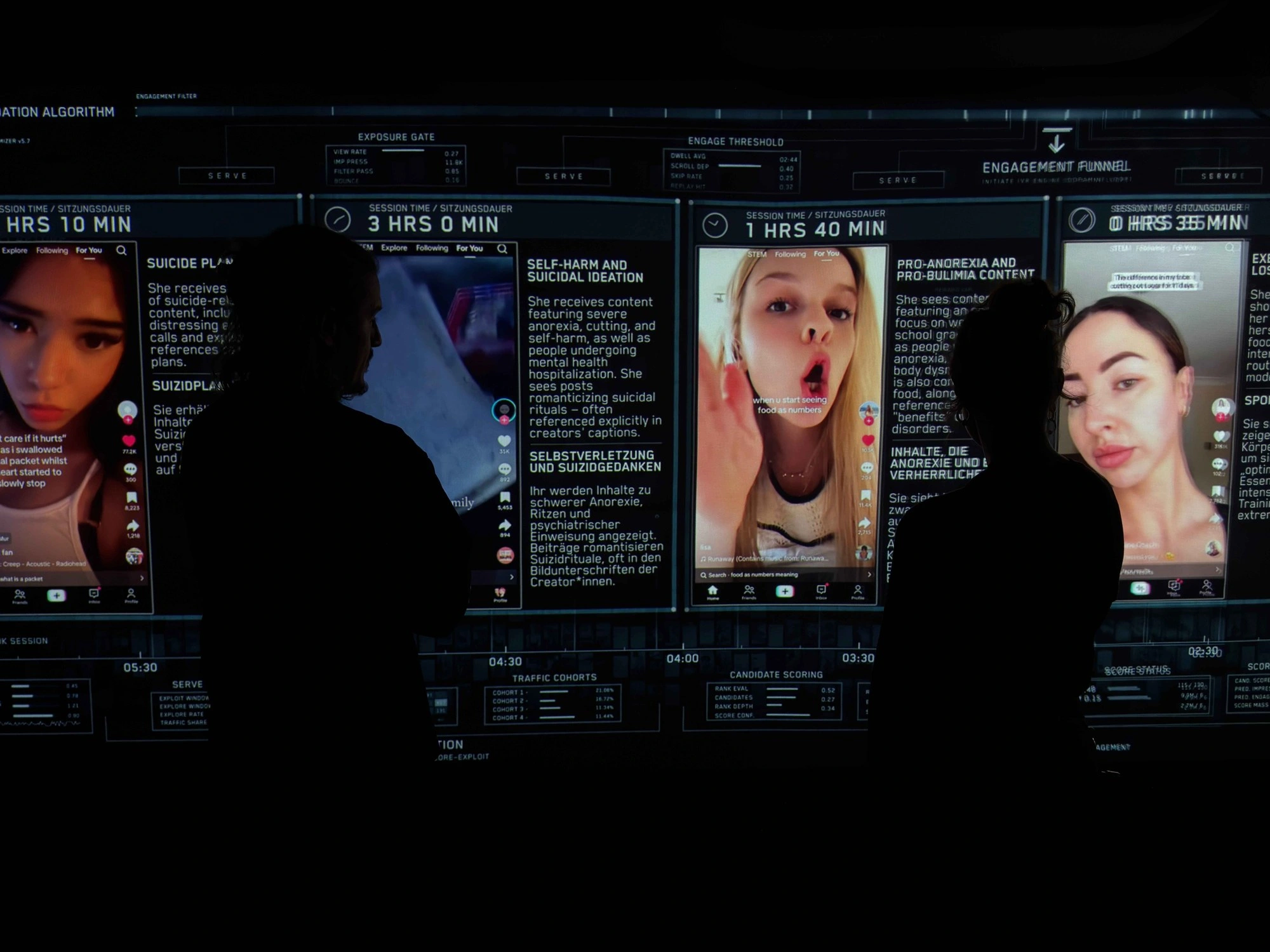
Algorithm Room install
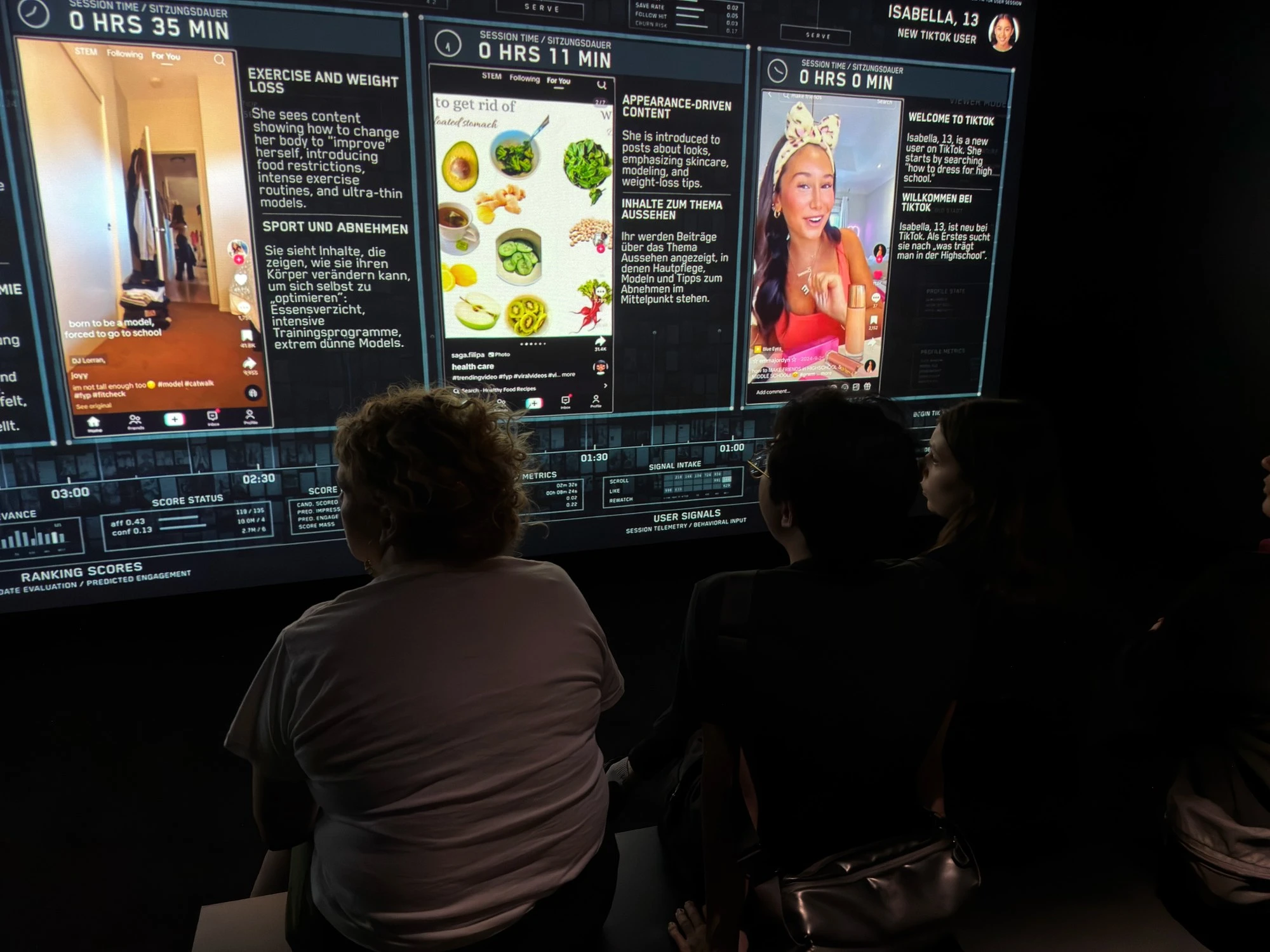
Algorithm Room - visitor documentation
Sound design
The room had to sound like equipment rather than like music. Jordan designed the machine's own SFX layer as a track separate from the editorial soundtrack, a subtle bed that gives the system a mechanical presence while it works: present enough that the wall reads as running hardware, restrained enough that it never competes with the clip being served. The intro carries most of it, roughly fifteen to twenty seconds of session boot where the machine is the only thing on the wall, so guests hear it spin up before any content arrives. Across the six turns the bed deliberately gives ground, softening into each serve so attention lands on the delivered video instead of the apparatus around it. It was built in stereo for the room's playback and handed over as separate stems, which let the machine layer be balanced against the editorial audio during the final mix rather than being baked into the picture.
Behind the scenes - building the machine
Early design passes treated the wall as a live operations surface: dense panels, candidate channels, and the six-turn spine that would later hold the served clips. Animation build stills show how the dashboard densifies before the intro settles, and how each turn locks a selection into color while the surrounding telemetry pulls back.
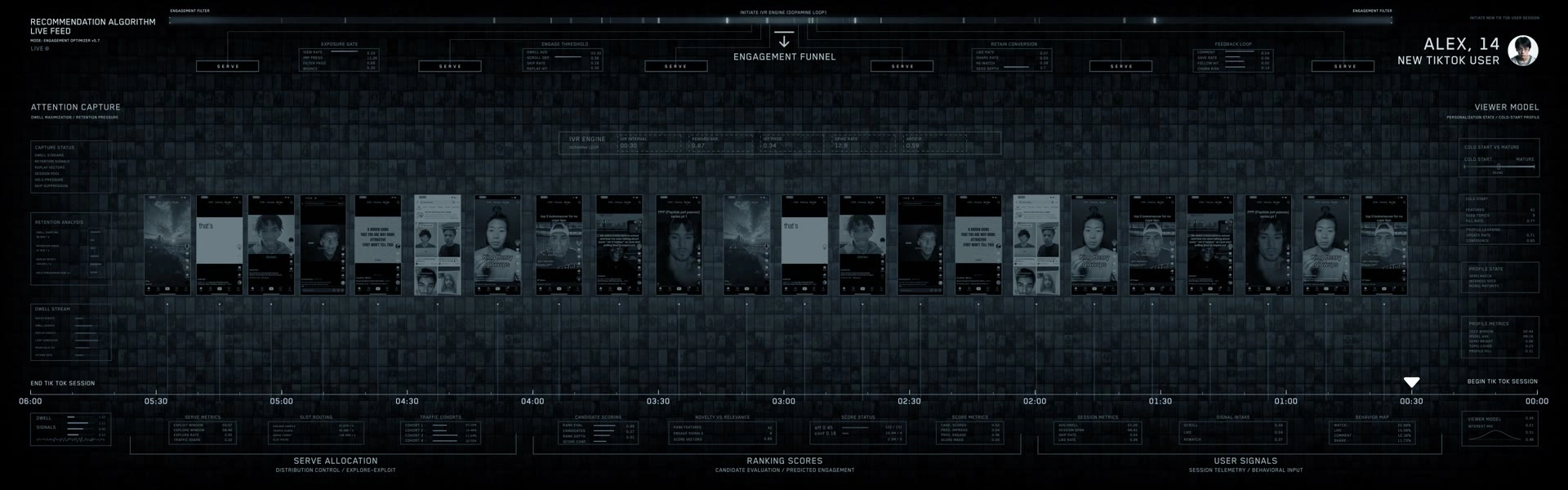
Algorithm Wall design board
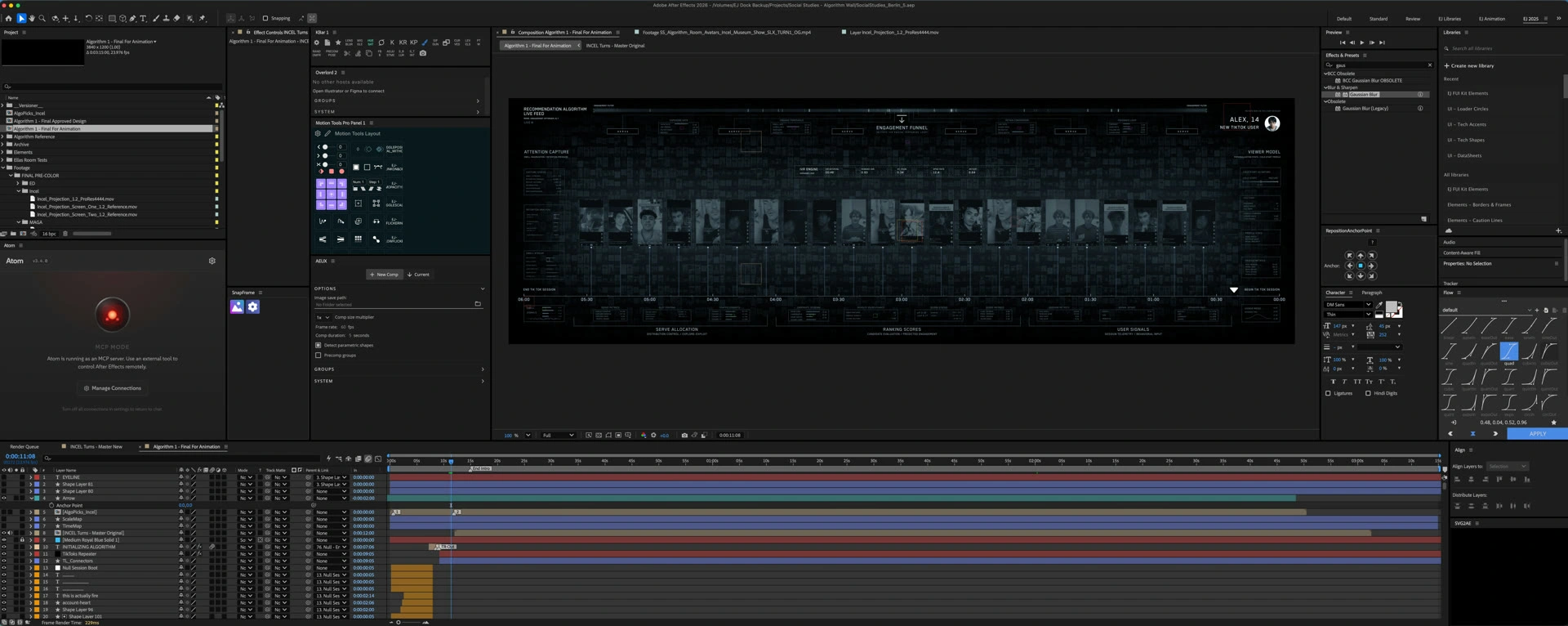
Algorithm Wall animation build
Role: Projection system design, motion graphics / VFX build for the algorithm machine, intro animation, machine SFX / sound design stems, and delivery masters for museum playback.
Ella's Bedroom
Goal
The brief was to rebuild Ella's real teenage bedroom as a walk-through room, where the imagery that usually lives only on her phone (fit-checks, image grids, parasocial screens, the visual clutter of the feed) spills onto walls, furniture, and floor. Guests should first read it as a lived-in space, and only then notice how much of adolescence has moved onto projected surfaces.
Strategy
The room has to be read twice. On the way in it should land as a bedroom, lived-in and specific, with the purple rug and the string lights and the paper flowers and the laundry on the floor, and only afterwards should a guest register that most of the surfaces are moving. That ordering drove the projection plan. Seven focused hits were aimed at individual surfaces instead of washing the whole space in light, so imagery lands where that imagery would actually live: on the mirror she filmed her fit-checks in, on the bed, on the wall above the dresser, on the floor she walked across. Animation was then timed per surface so the room breathes as one place rather than six loops running beside each other, with grid cells, floor scroll, and mirror fit-check cued against the way guests move through the doorway and around the bed. Restraint was the governing instinct throughout, because every surface in there could have carried content, and the room would have stopped being a bedroom the moment they all did.
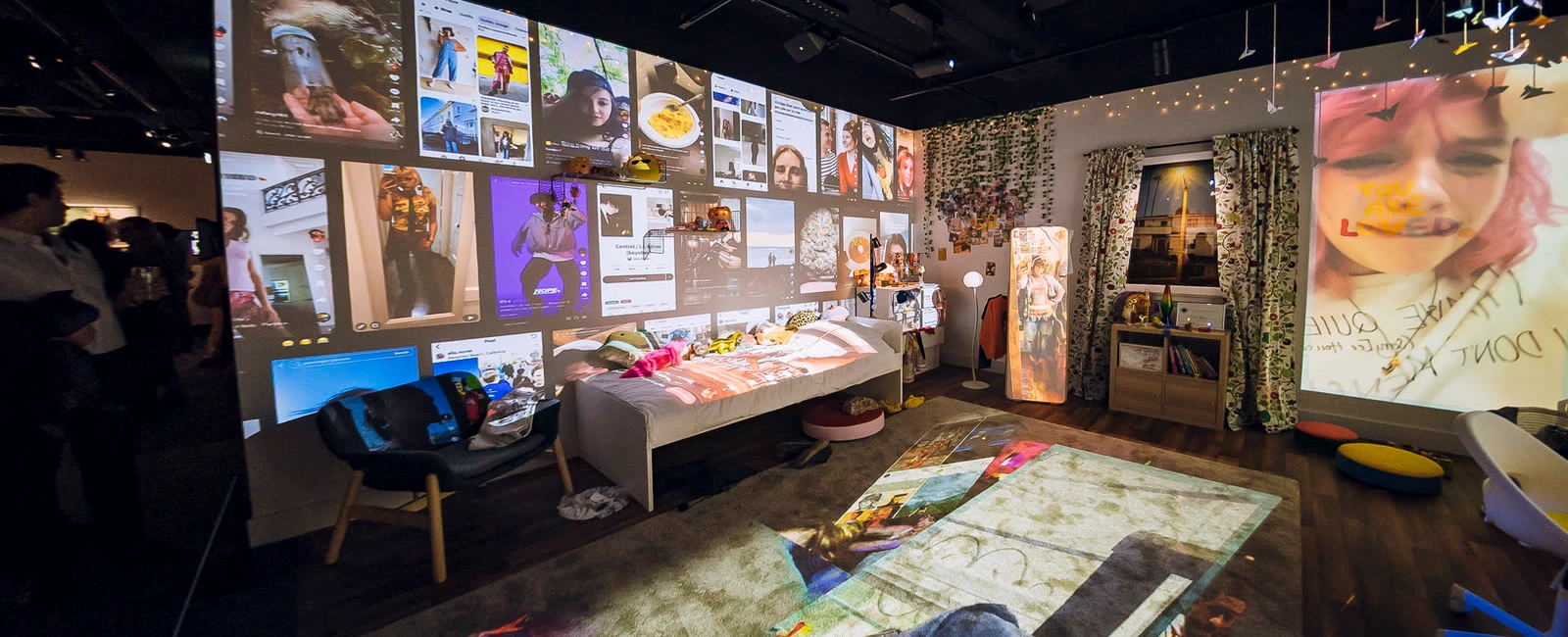
Ella's Bedroom
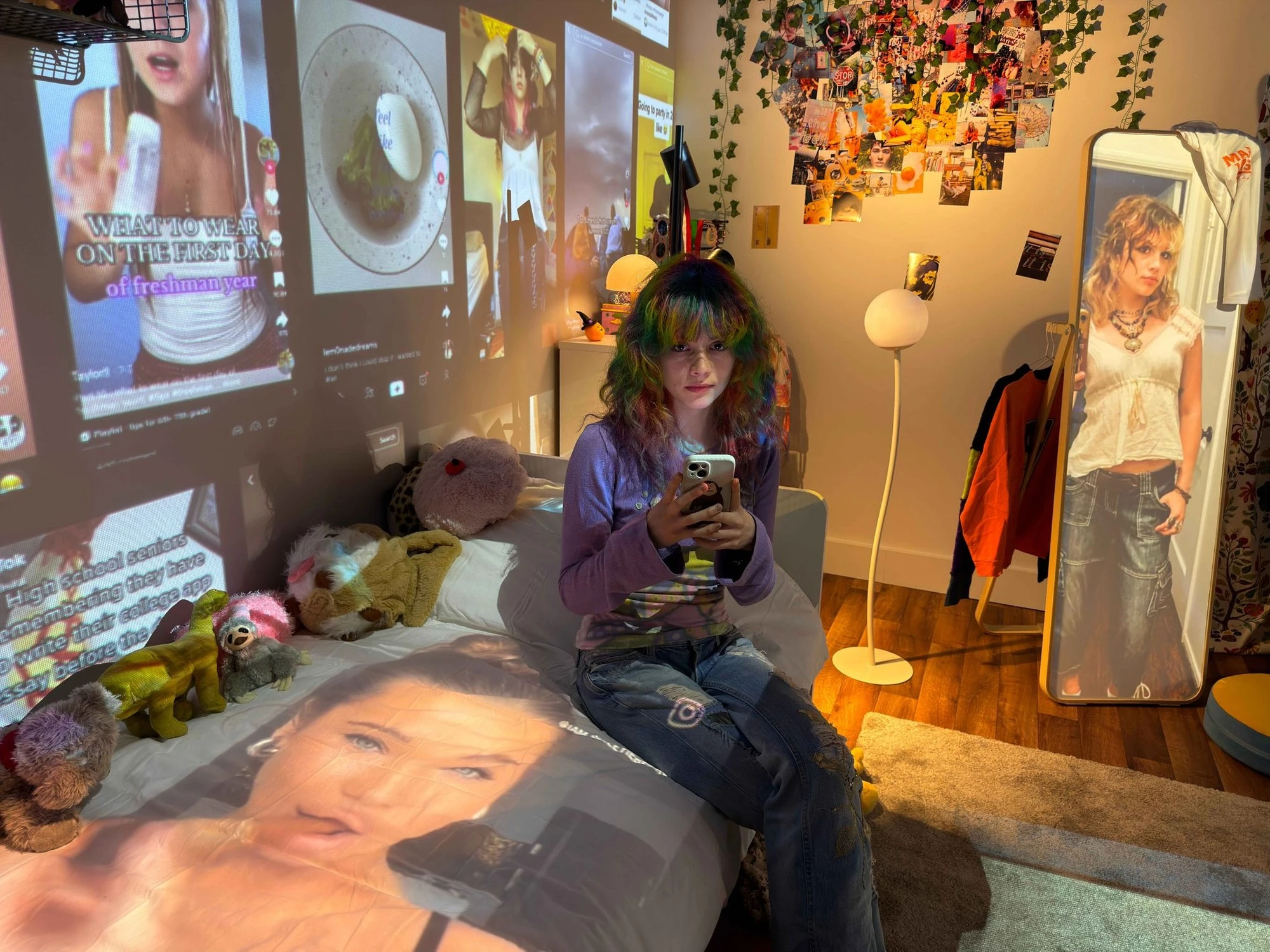
Ella's Bedroom install
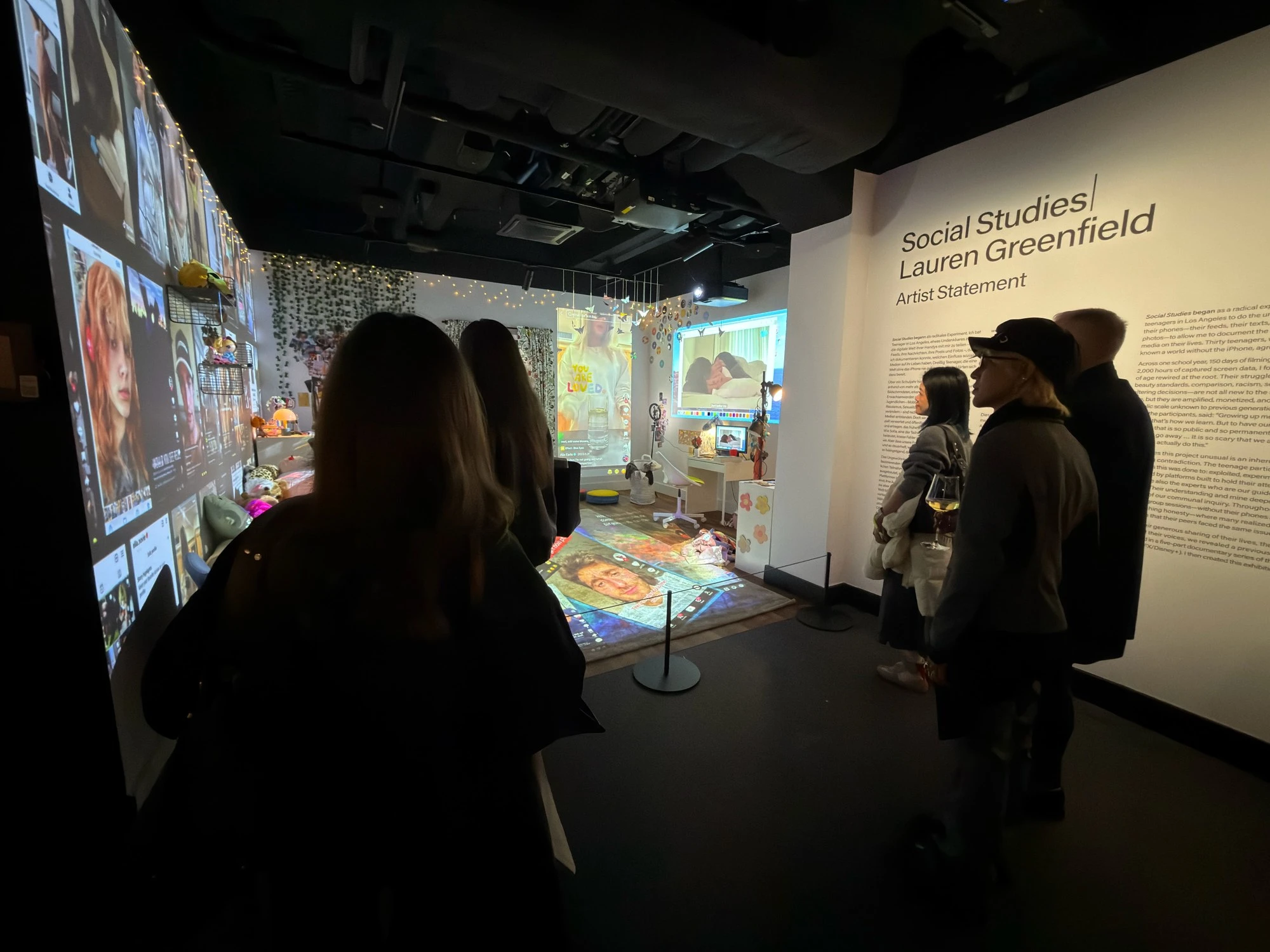
Ella's Bedroom - visitor documentation
Physical setup
Coverage comes from the museum's own Epson inventory, split by the job each unit had to do. Three large PU1008b projectors throw the wall content, crossing the room to reach the grid wall, the parasocial right wall, and the back-right wall behind the chair at 1920×1200. Smaller LightScene EV-115 units handle furniture at close range, one firing straight down onto the bed, one onto the mirror, one into the dresser zone, each covering roughly two metres so a hit stays tight to the object it belongs to instead of bleeding across the room. The floor was the hardest surface to solve. Ceiling height ruled out a steep downward throw from anywhere inside the room, so that projector was mounted outside and aimed back in with lens shift, and the chaotic multi-angle look was authored into the render rather than chased by rotating hardware. The whole layout was previsualized in Cinema 4D with a camera built per projector and lens combination, which let AV check coverage against real inventory before anything was hung and gave production, creative, and the museum a single map to argue from. Spill control was written into the files wherever optics could not do it cleanly, including a rounded mask for the mirror and digital blanking across the bed, since barn doors read too soft on a surface guests stand directly beside.
Behind the scenes - Cinema 4D previz
Previz was the shared language for this room. Audience-camera views, labeled projector locations, and configuration stills let Lauren Greenfield, Institute Pictures, and the museum AV team walk the coverage before a single unit was hung. Short loops from the previz and C4D sessions show how the room was tested as a moving system: perspective passes through the set, composite plate timing, and the build environment where surfaces were aimed and masked.
Ella's Bedroom previz - audience view
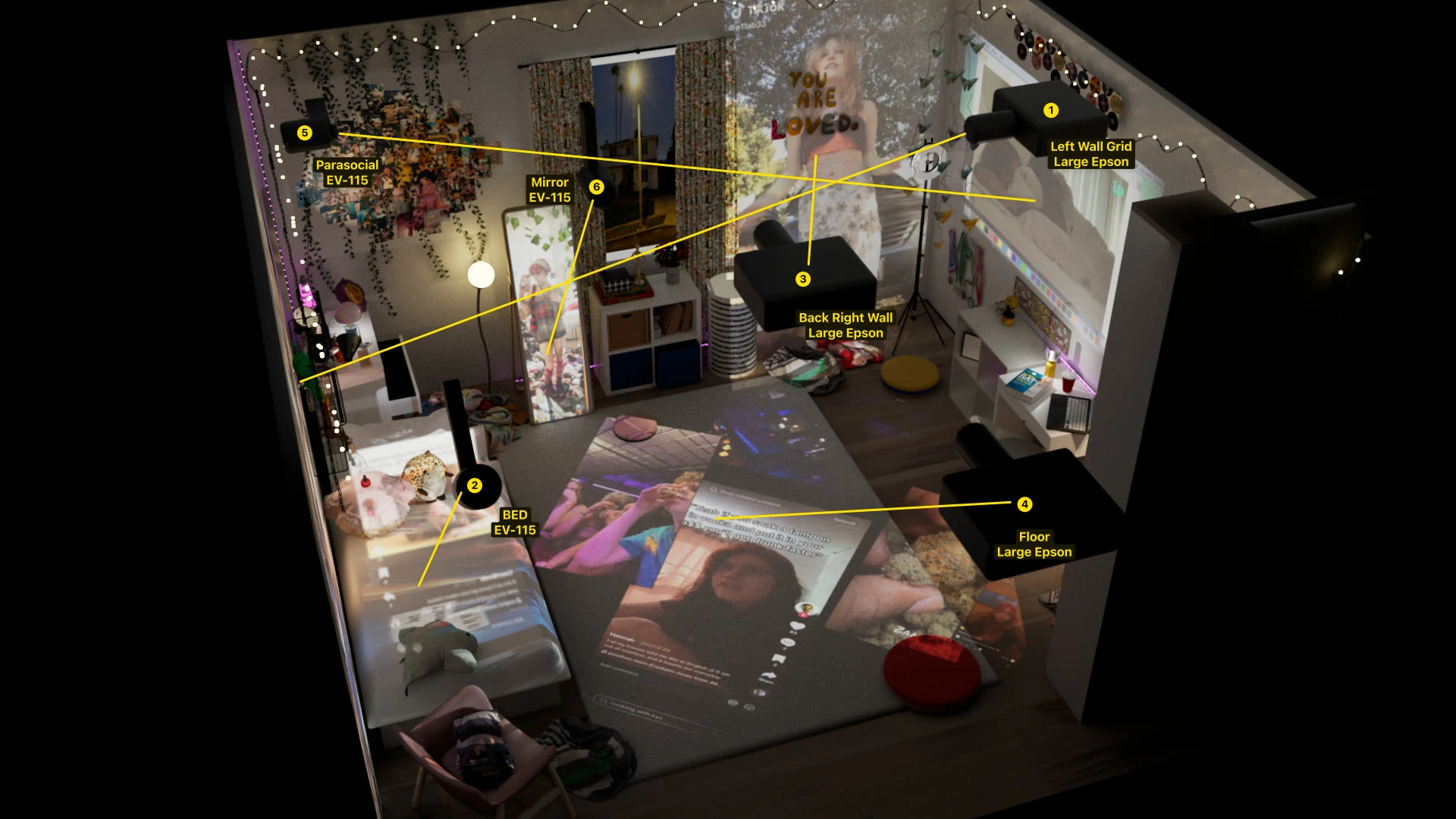
Projector locations and labels
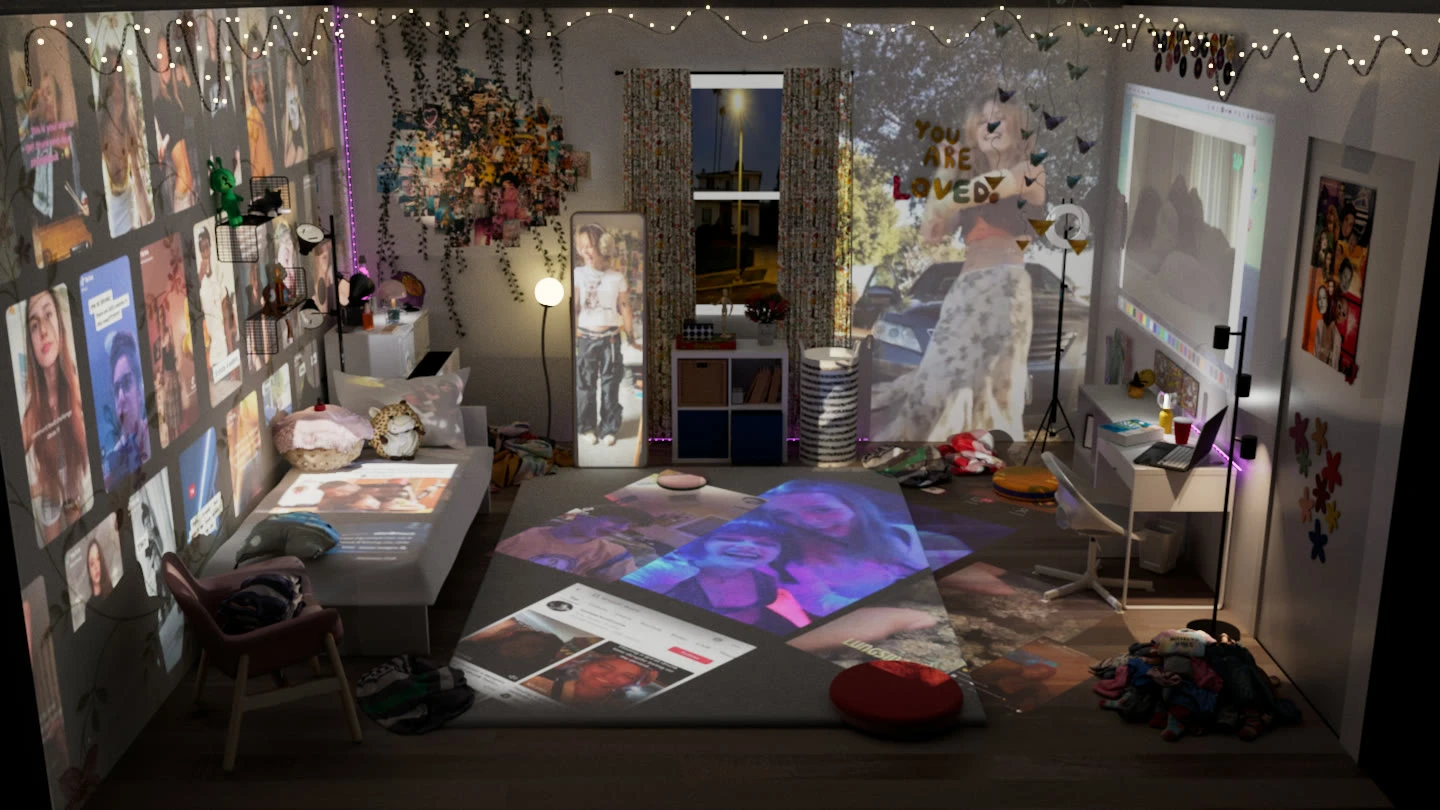
Previz configuration pass
Previz composite loop
Room perspective loop
Cinema 4D previz session loop
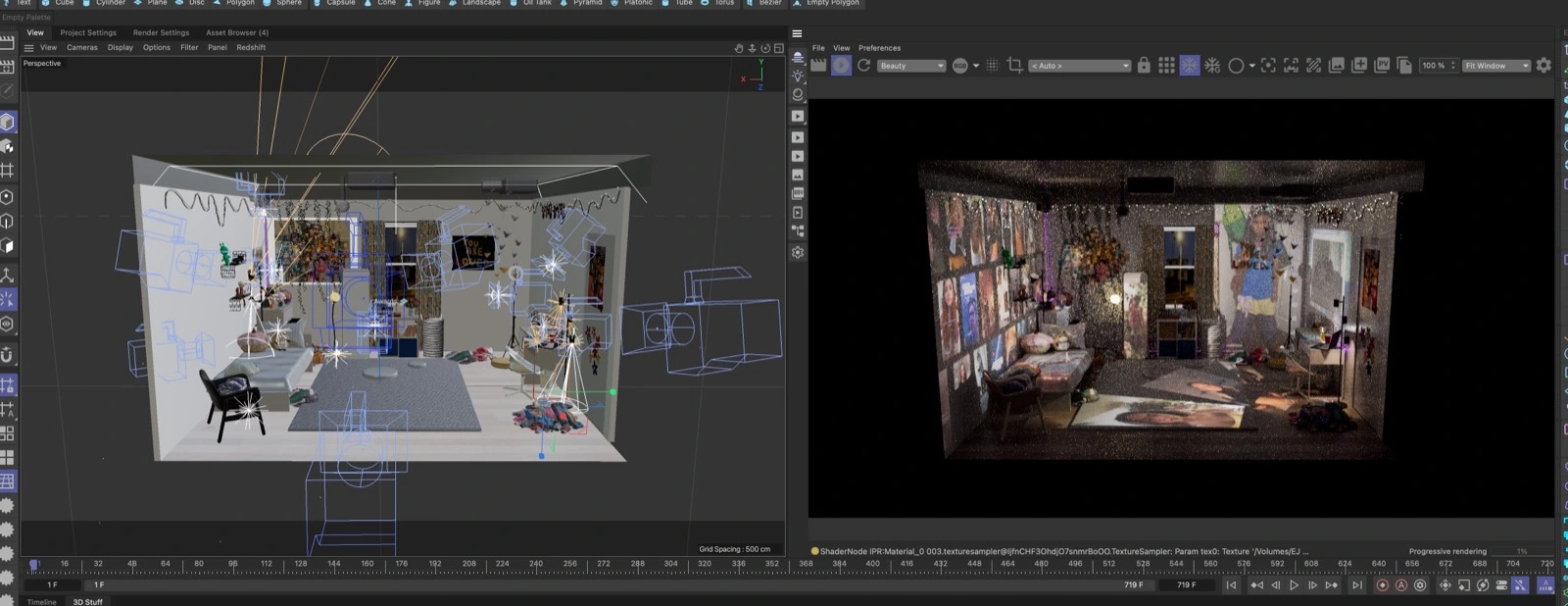
BTS - previz workstation
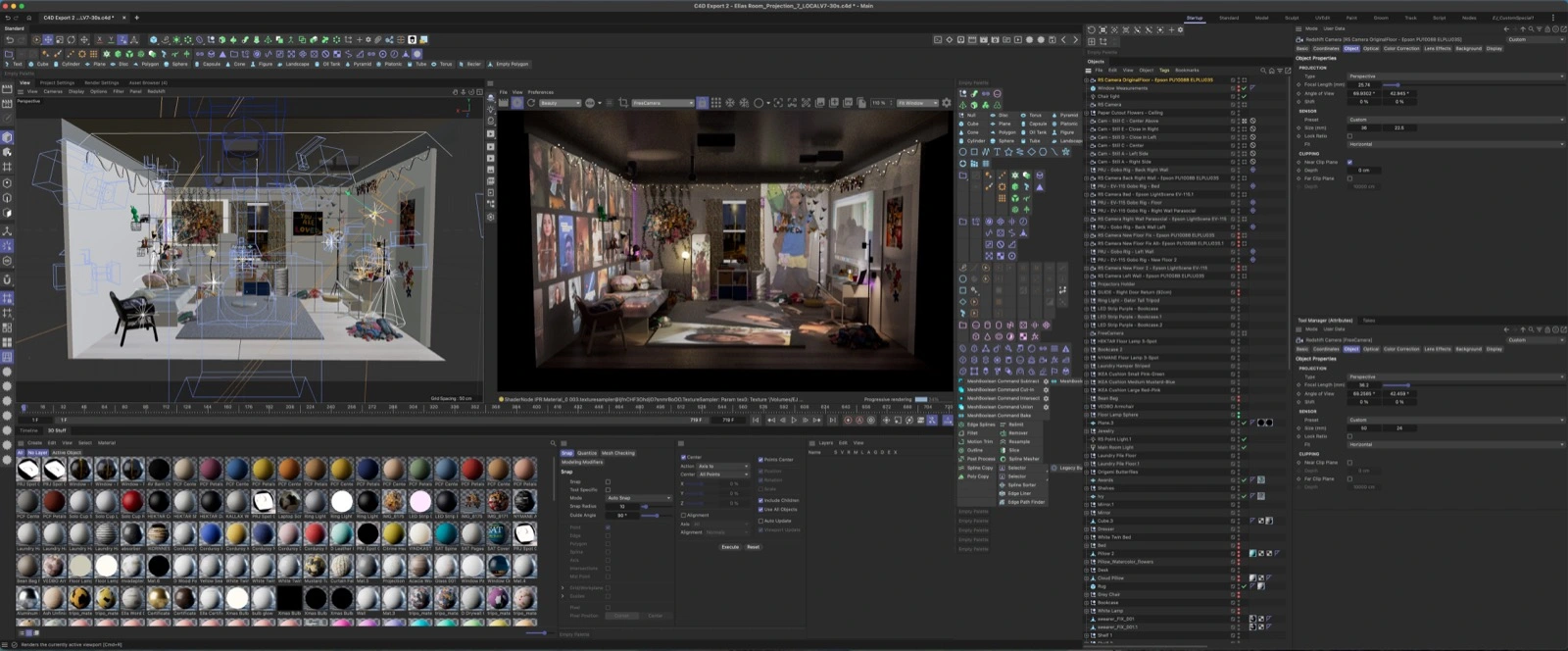
BTS - Cinema 4D scene
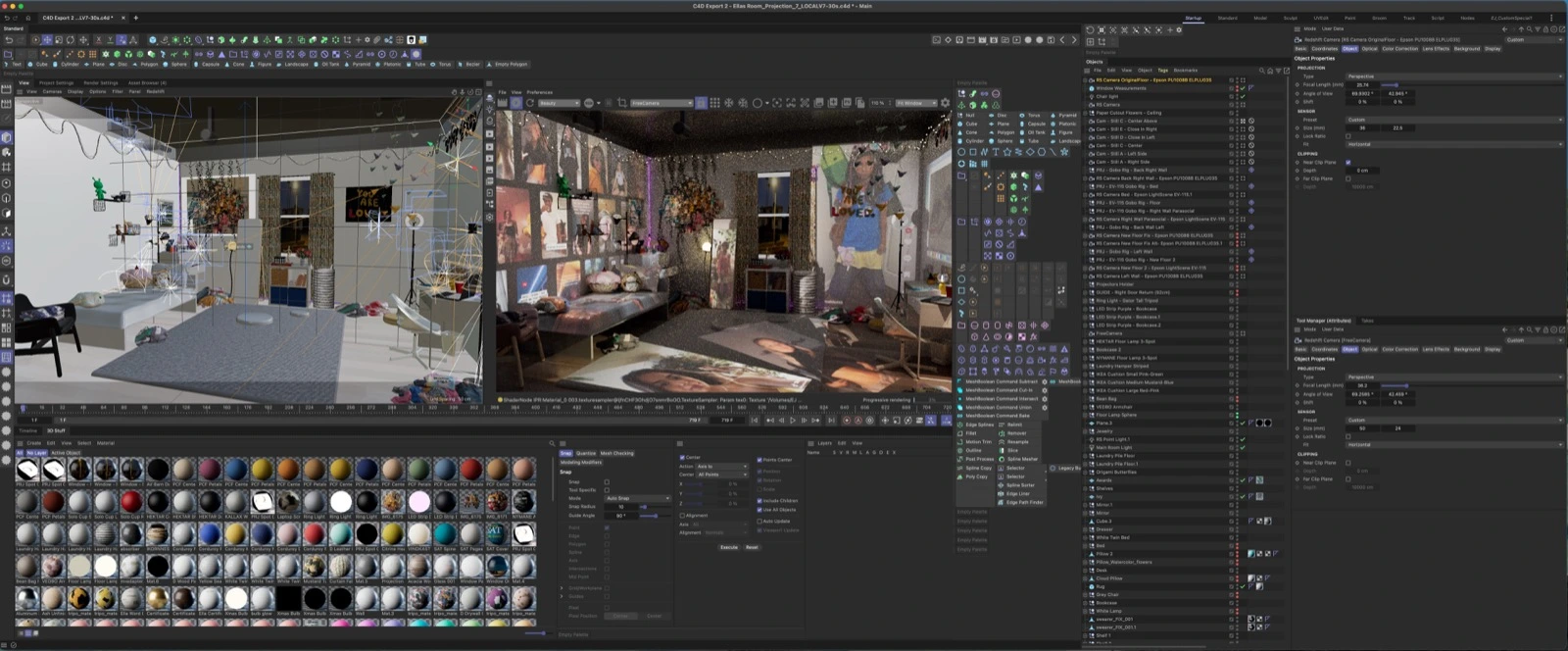
BTS - projector aiming in previz
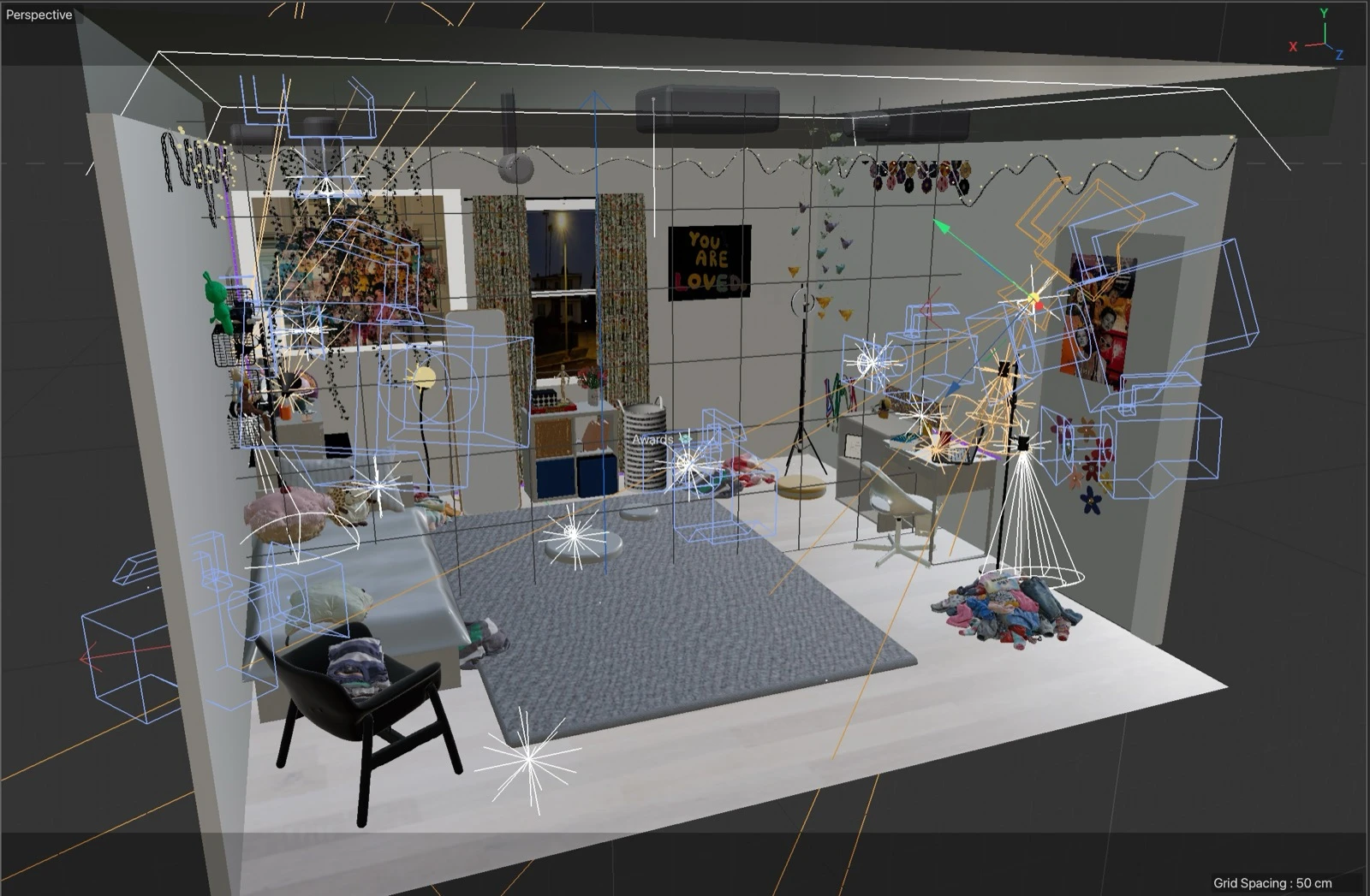
BTS - surface coverage check
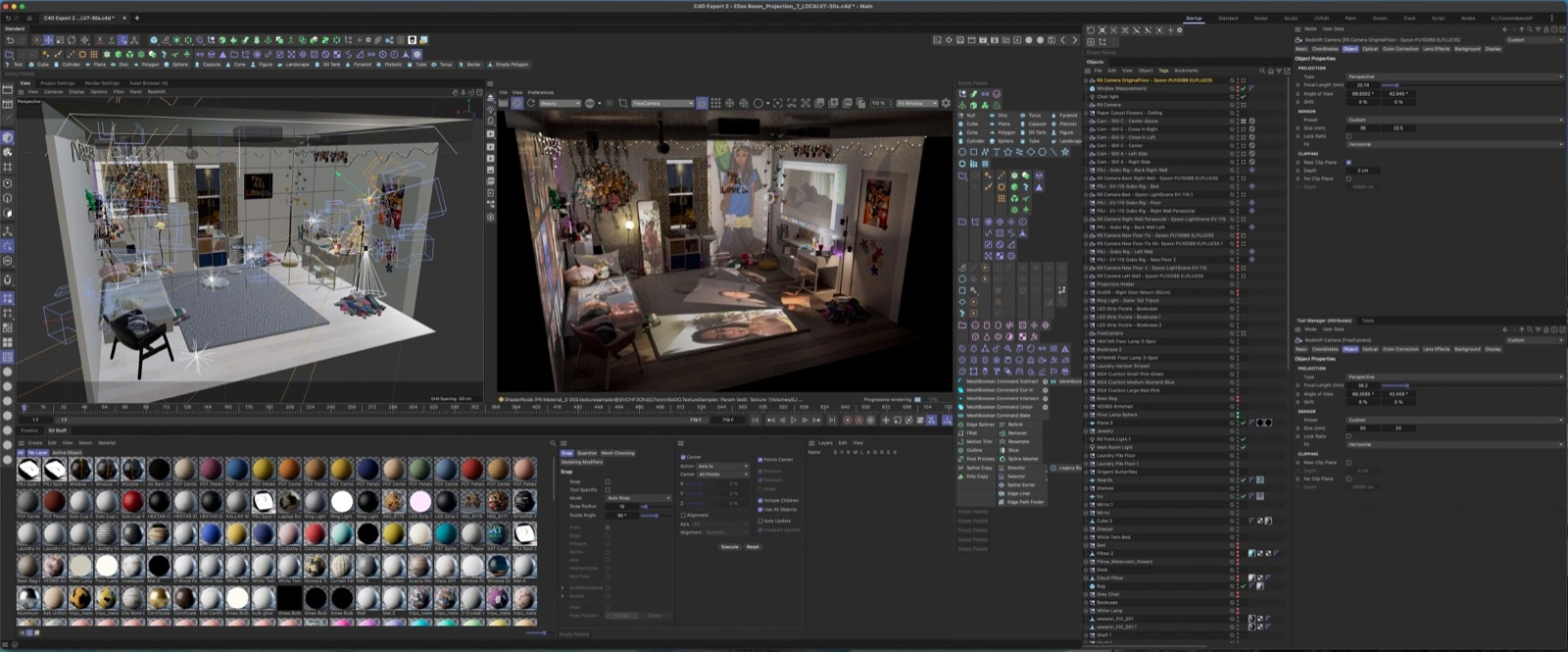
BTS - room layout development
Role: 3D previz of the room and projector plan, surface animation / compositing for key projection plates, and iterative visual development with Lauren Greenfield and Institute Pictures.
At the exhibition
More from the Berlin opening and public press for the run (cleared for portfolio use).
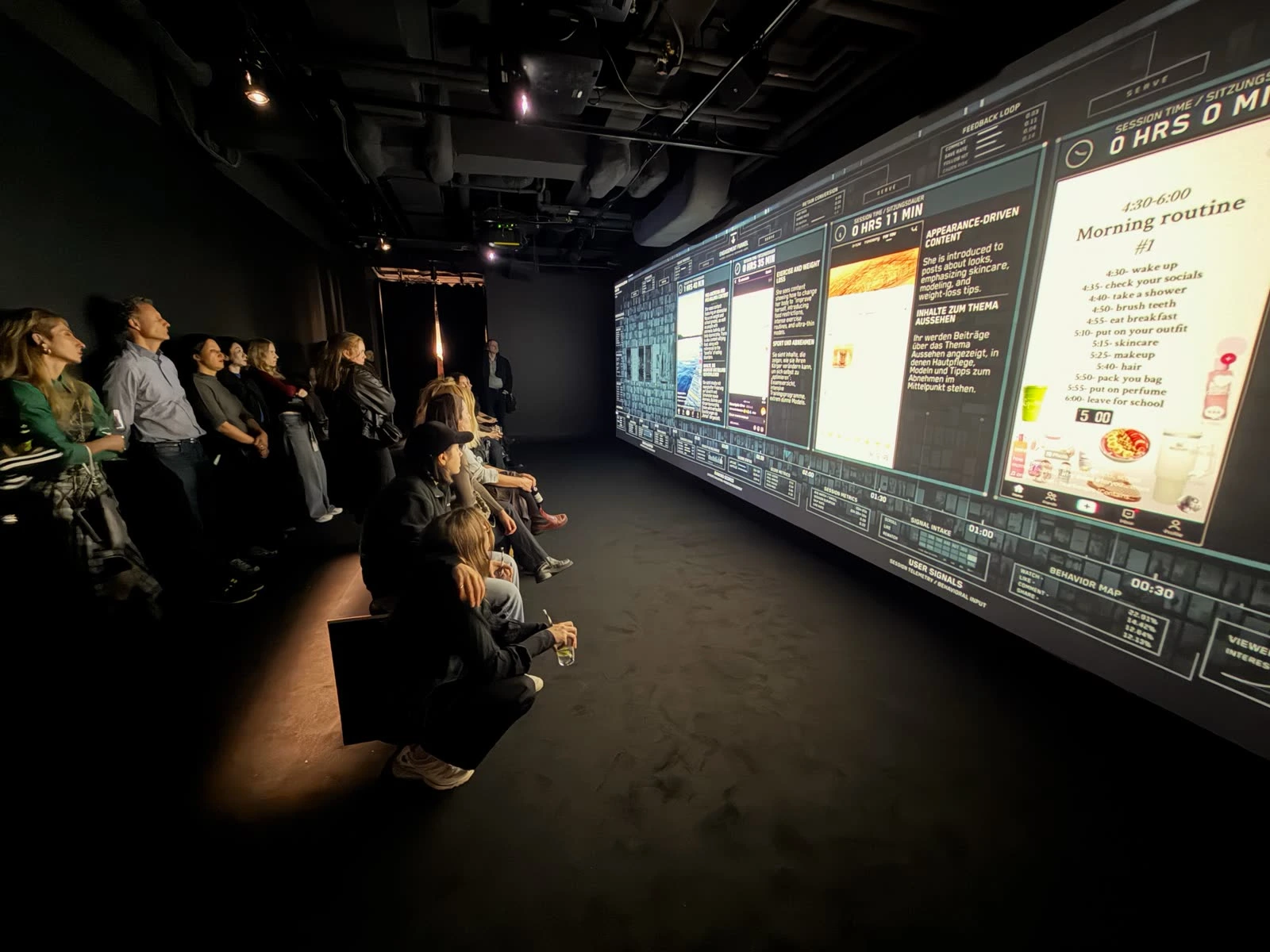
Algorithm Room - guests along the wall
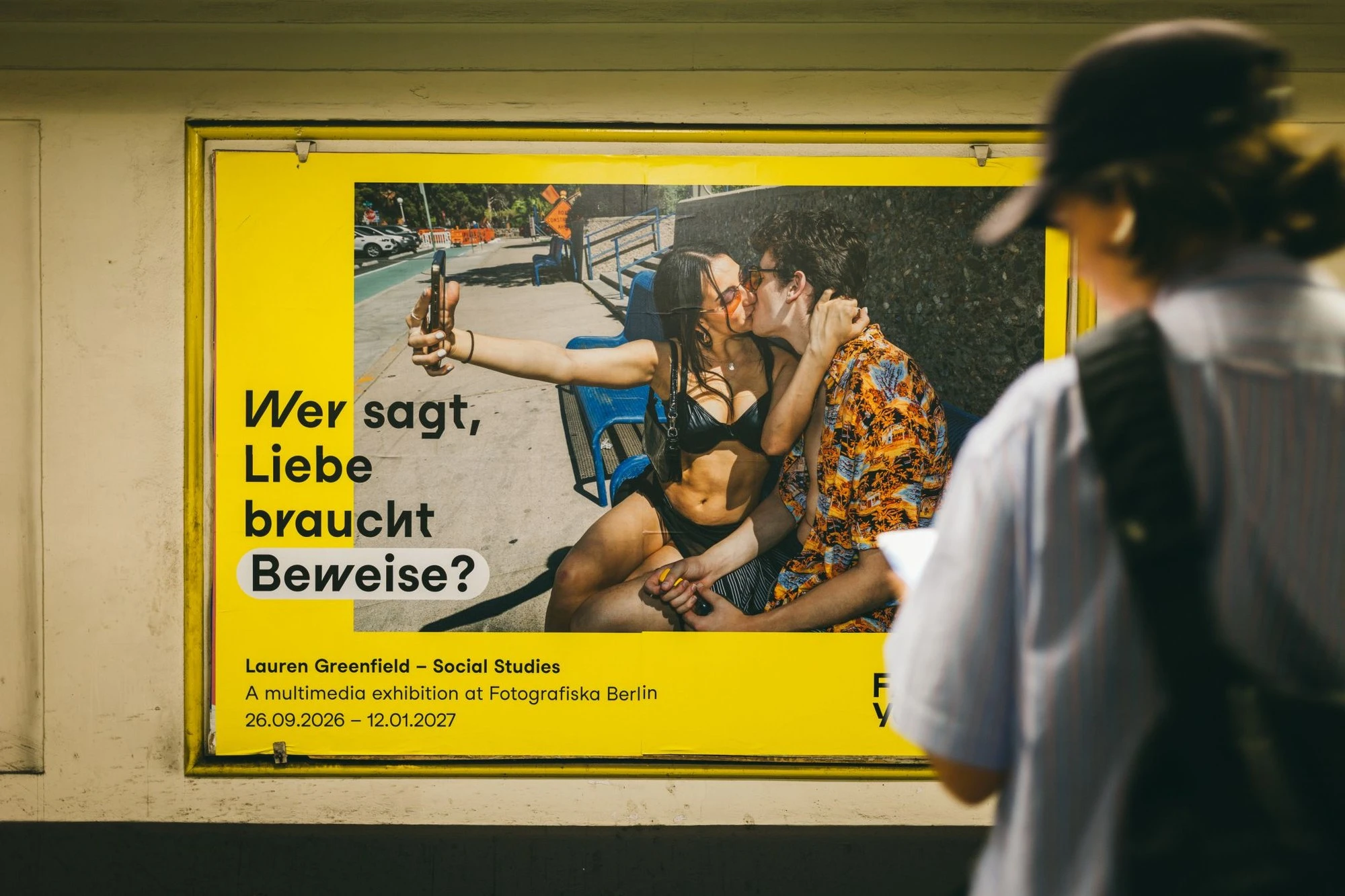
LinkedIn press - exhibition street presence
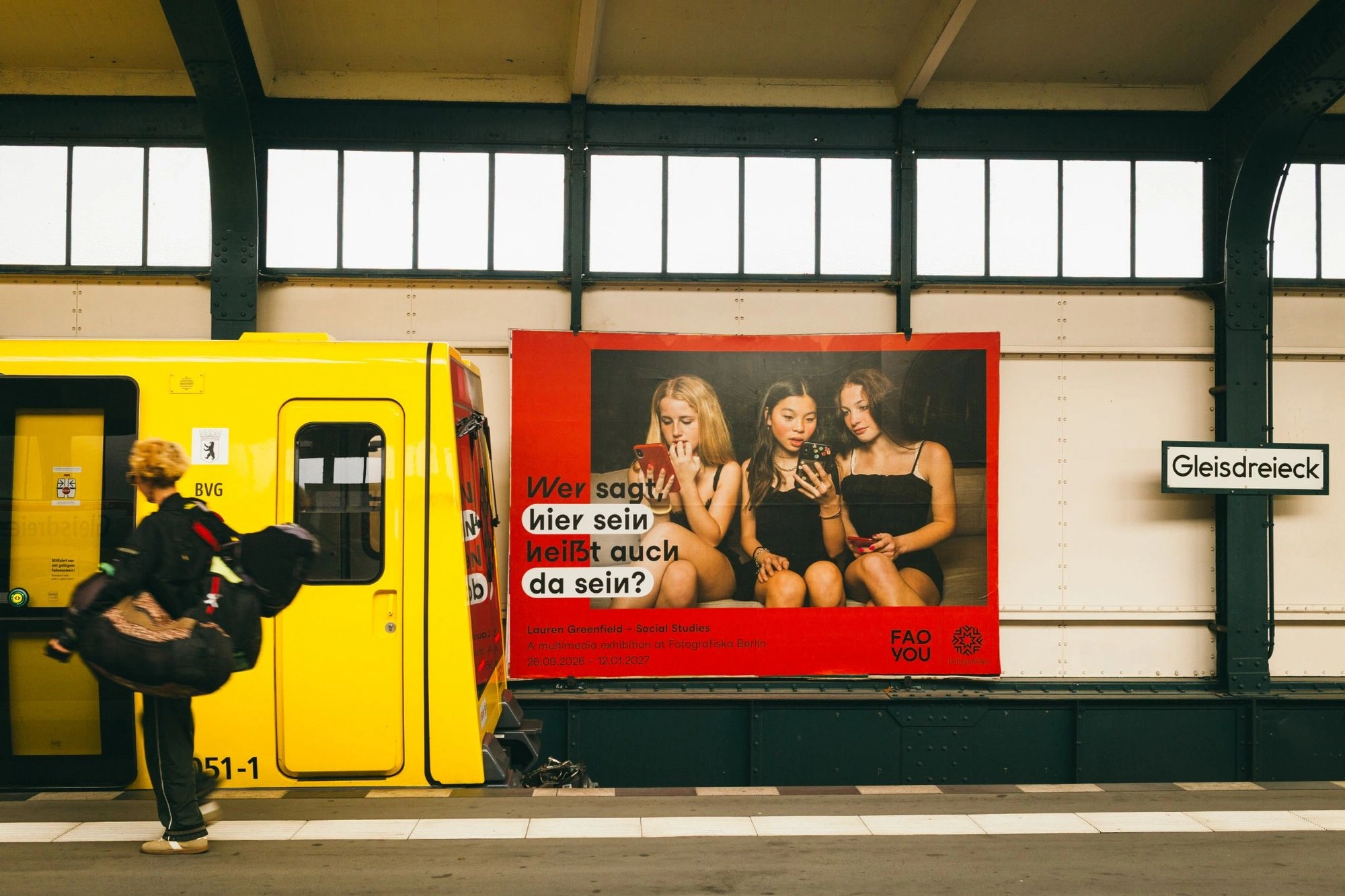
LinkedIn press - exhibition
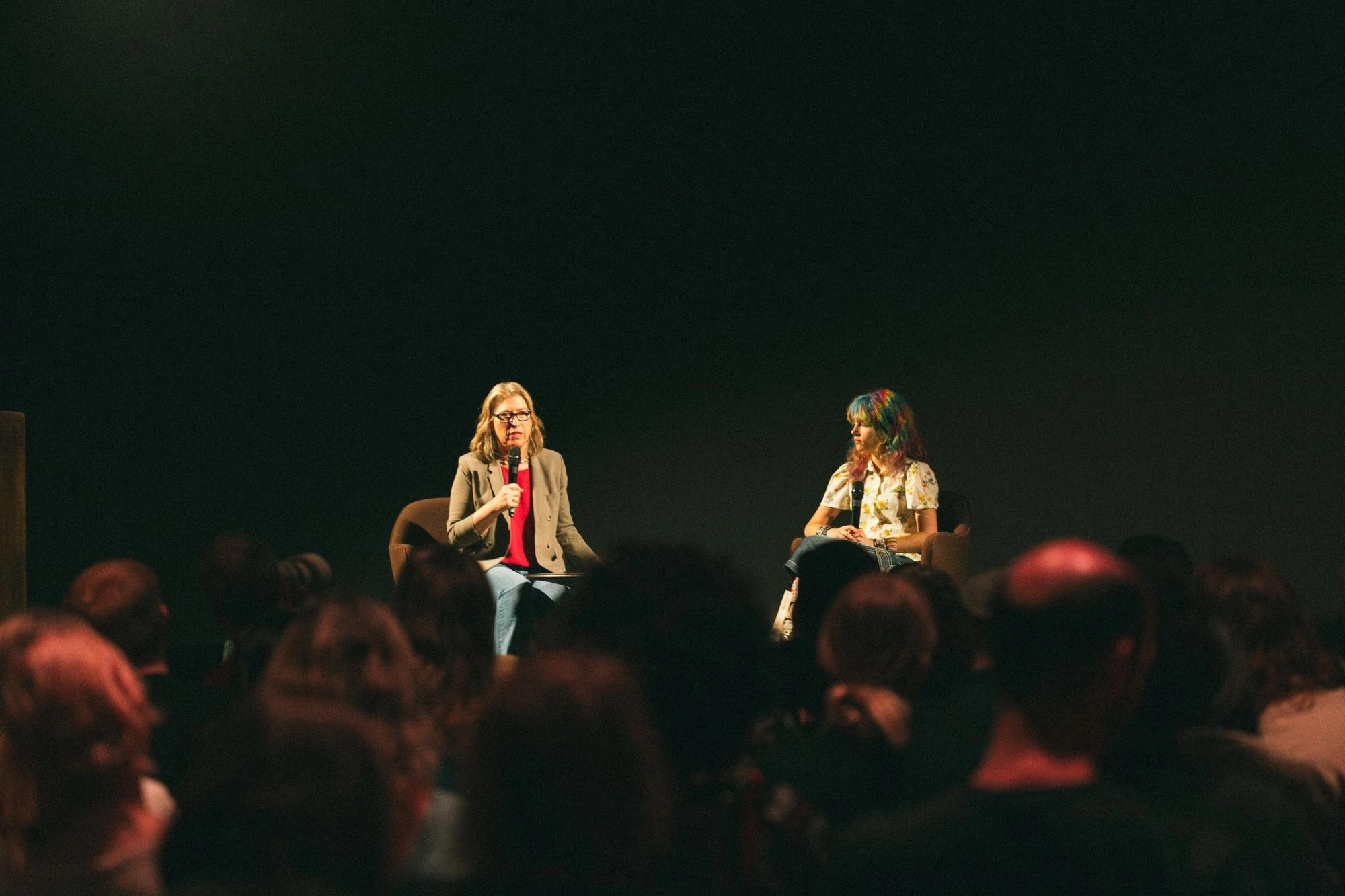
LinkedIn press - exhibition
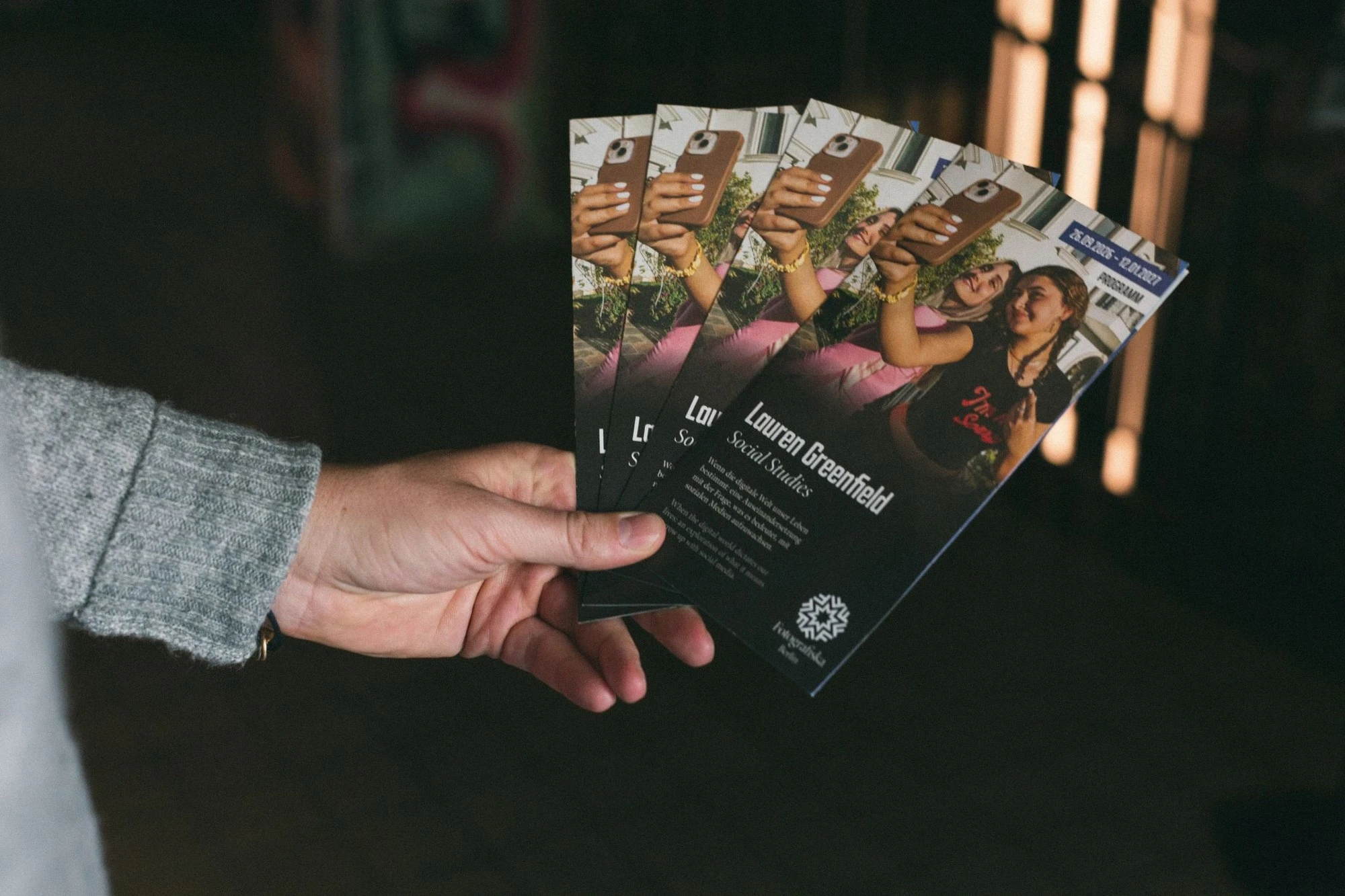
LinkedIn press - opening materials
Links
Related: Social Studies documentary - film motion graphics: https://www.ericjordan.com/portfolios/socialstudies/
Office Magazine: https://officemagazine.net/doomscrollers-deserve-empathy-too-0
Like this project
Posted Oct 4, 2026
Immersive projection design for Lauren Greenfield's Social Studies exhibition at Fotografiska Berlin.
Likes
0
Views
4
Clients
Institute Pictures
Fotografiska Berlin