AI CHATBOAT

Arfat Adhoni
Features for AI Chatbot SaaS Product
User Management
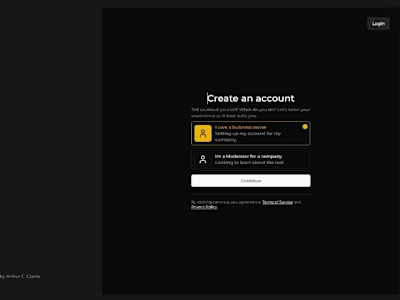
User Registration and Login: Create accounts for businesses to use the chatbot service.
Profile Management: Manage company details, settings, and user permissions.
Role-based Access Control: Admins can set permissions for different users in the company (e.g., chatbot manager, support agents).
Multi-Factor Authentication: Enhance security for accessing the platform.
Chatbot Functionality
Natural Language Processing (NLP): Use NLP to understand and respond to customer queries in real-time.
Intent Recognition: The chatbot can identify customer intents (e.g., FAQ, product inquiry, order status).
Predefined Flows and Customization: Businesses can design custom conversation flows for common queries.
Contextual Conversations: Maintain context across multiple interactions with customers.
Multi-Language Support: Support multiple languages for global customer service.
Integration with Communication Channels
Live Chat Widget: Embed the chatbot on websites or web apps for direct interaction.
Social Media Integration: Integrate with platforms like Facebook Messenger, WhatsApp, Slack, etc.
Email Integration: Provide email support and follow-up automation via the chatbot.
SMS Integration: Send automated SMS responses to customer inquiries.
Advanced Features
AI-powered Recommendations: Suggest products, services, or content based on user behavior.
Sentiment Analysis: Detect customer sentiment (positive, negative, neutral) and adjust responses accordingly.
Knowledge Base Integration: Access an extensive database for self-help support to answer frequently asked questions.
Voice Integration: Use voice commands for chatbot interaction (optional).
User Feedback & Ratings: Collect feedback on chatbot performance and improve responses.
Admin Panel
Dashboard: Overview of chatbot performance (number of interactions, customer satisfaction).
Analytics & Reports: Detailed reports on customer interactions, conversation statistics, sentiment analysis, and response times.
Bot Training & Learning: Admins can train the chatbot by adding new intents, entities, and improving the bot’s knowledge base.
Customizable Templates: Offer pre-configured templates for common business needs (e.g., lead generation, customer support).
User Management & Permissions: Control who can manage, train, and access chatbot data.
Support for Multiple Clients
Multi-Tenant Architecture: Support multiple businesses (tenants) using the same platform while keeping their data and configurations separate.
White-labeling: Offer businesses the ability to customize the look and feel of the chatbot interface with their branding.
Subscription Plans: Provide tiered pricing plans (e.g., basic, advanced, enterprise) based on usage, features, and support levels.
Payment Integration
Subscription Management: Handle recurring billing for users.
Multiple Payment Gateways: Integrate with payment providers like Stripe, PayPal, etc.
Invoicing & Billing: Automatically generate invoices for customers.
Security & Compliance
Data Encryption: Ensure all user data is encrypted and securely stored.
GDPR Compliance: Ensure the platform complies with privacy regulations.
User Data Anonymization: Anonymize sensitive data where necessary to ensure privacy.
Like this project
Posted Jan 18, 2025
Building an AI chatbot as a SaaS product can provide businesses with an automated solution for customer support, sales, and engagement.
Likes
0
Views
2