Infrared–Visible Image Fusion Under Degraded Conditions

程浩 王

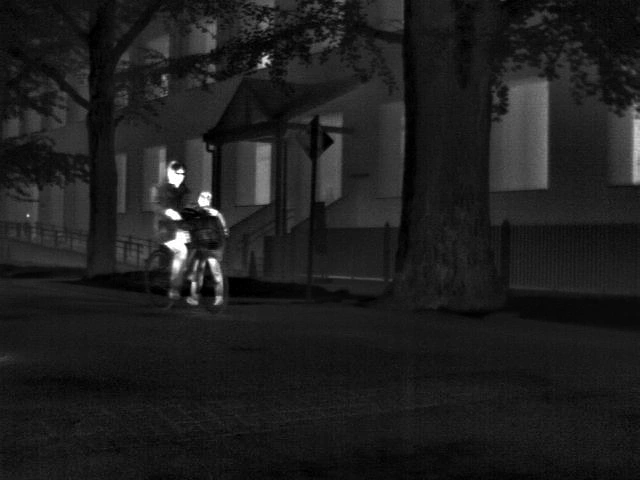
Infrared input — MSRS 00571D, S01.
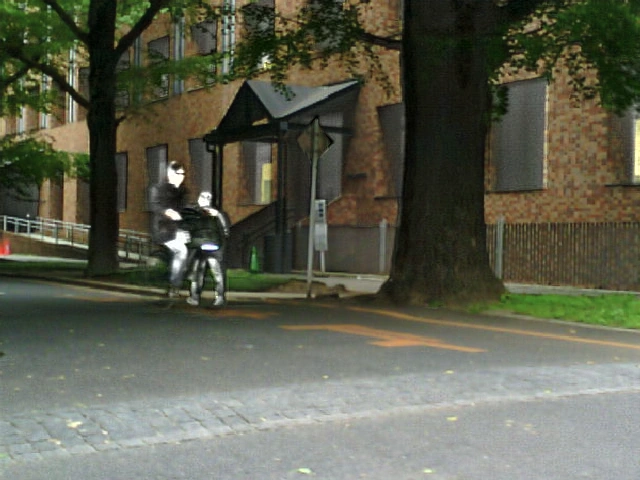
Fused output — actual saved seed-0 result; selected qualitative example.
Overview
A research engineering study of infrared-visible image fusion under degraded conditions. The project evaluates how fusion methods preserve scene information and perceptual quality.
Approach
The study compares multiple methods on MSRS and RoadScene, with three random seeds and recorded output images, metrics, and qualitative examples. The work includes repeatable evaluation and examination of quality trade-offs.
Displayed example
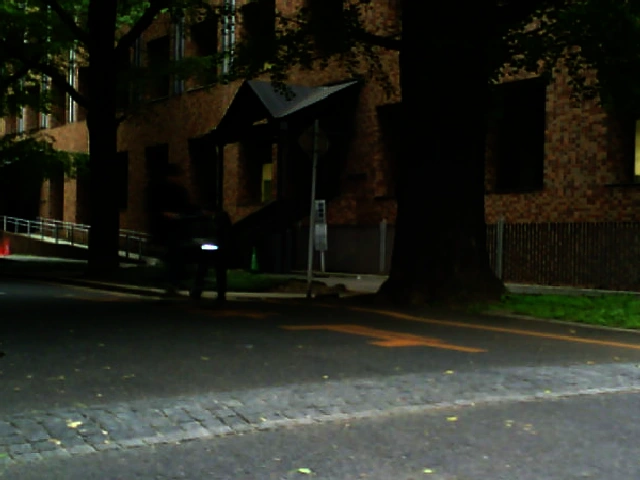
The images show an actual saved MSRS test example, 00571D, S01, seed 0: visible input with gamma=2.2 simulated low light, infrared input, and fused output. The cover uses the fused output. These pixels have not been redrawn by a generative model. This is one selected qualitative example, not a summary of overall performance.
Results and limitations
The report documents differences across information-preservation and perceptual-quality metrics. The evaluated method does not lead on every metric. Training crops and other conditions differ between methods, so the reported results are an adapted comparison rather than a strictly matched-training benchmark. The experiments were not independently rerun for this portfolio entry.
This is a research study; it is not a claim of deployment on physical devices.
Like this project
Posted Oct 29, 2026
Anonymized research study comparing infrared-visible fusion methods, image quality metrics and evaluation trade-offs.
Likes
0
Views
0