Designing a Role-Based Conversion System for TaskMeQuick

Mark Kaizen


OVERVIEW
What is TaskMeQuick?
TaskMeQuick is a Philippines-based virtual support agency that delivers role-based execution on an hourly basis.
Who is it for?
It serves owners of growing businesses who experience delegation overload and operational strain as their teams and responsibilities expand.
What problem does TMQ solve?
TMQ addresses two core issues: reliance on unreliable freelance support and inefficiencies caused by paying for idle time in traditional hiring models.
Why does this case study exist?
The original site suffered from poor role discoverability, no structured intent capture, and limited scalability, which likely contributed to user drop-offs and low-quality inquiries.
GOALS
Business Goals
The business needed a scalable way to present and grow its support roles within a consistent structure, while also serving as a self-discovery tool that educates users and generates more qualified leads.
Website Goals
The website needed a clear system to present current and future roles, guide visitors toward the most relevant option, and preserve their selections through to the booking stage in order to reduce friction and drop-offs.
User Goals
Visitors needed to quickly discover relevant roles, understand the scope and expectations of each role, and proceed to booking without repeating selections or encountering unnecessary complexity.
CHALLENGES
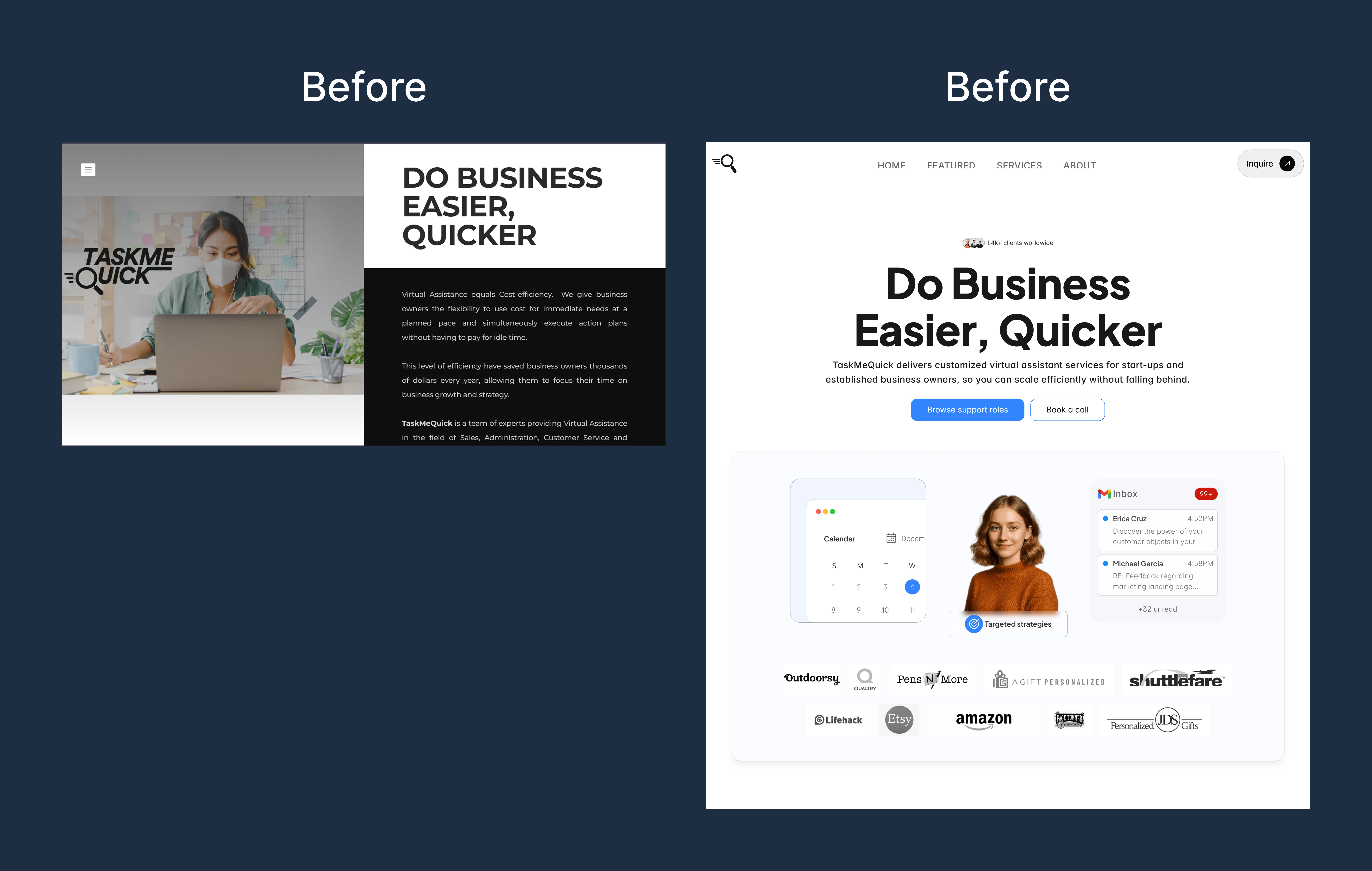
The original site limited access to support roles primarily through the navigation menu > services page, with no prominent display on the homepage. Combined with dense content that was difficult to skim, this made it harder for users to immediately understand available support options.
Additionally, the roles catalog was presented as a long vertical list without filtering, search, or intent capture. Visitors were required to manually scan the entire list and reselect their preferences during booking, increasing cognitive load and drop-off risk. From a maintenance standpoint, the structure was not scalable and adding new roles required manual layout adjustments rather than simple content updates.
STRATEGY
The redesign focused on a role-based architecture aimed at reducing friction through early intent capture. The first priority was improving role discoverability so users could immediately understand what support was available. Next, intent capture was introduced to preserve user selections throughout the journey to booking, minimizing repetition and decision fatigue. Finally, a flexible CMS-driven catalog structure was implemented to ensure new roles could be added or modified without structural rework.
SOLUTION
To address limited accessibility and discoverability, support roles were placed directly on the homepage as featured entries. This reduced reliance on navigation and allowed users to quickly assess whether the platform offered relevant support without additional searching.
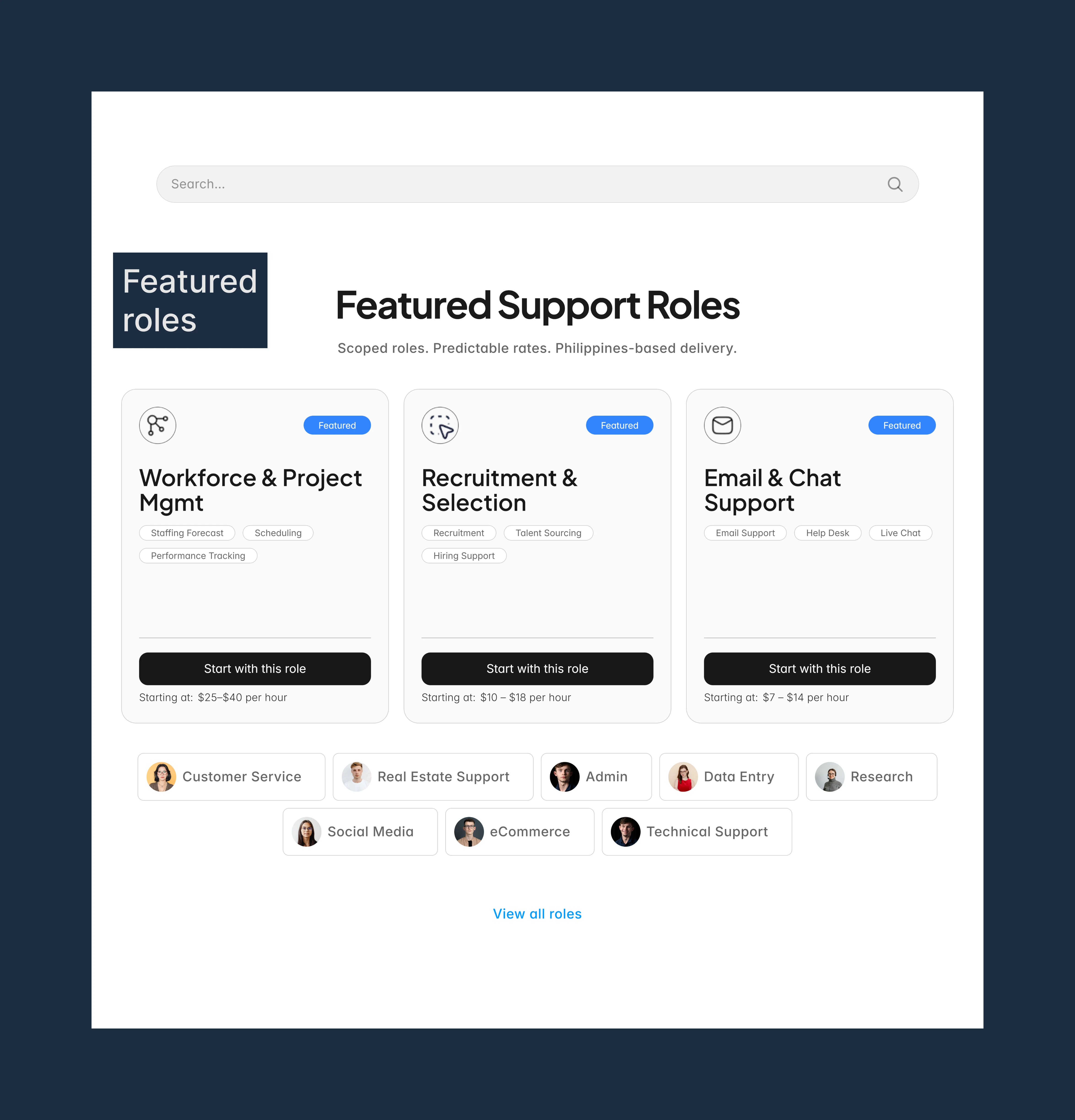
“Roles surfaced directly on the homepage to reduce search friction and guide discovery.”
To resolve poor skimmability and exhaustive scrolling, category-based filtering and search functionality were added to the roles catalog. This enabled users to quickly narrow down options and navigate directly to relevant roles, with pricing clearly displayed in hours. As a result, visitors no longer need to scroll back up after passing a relevant role.
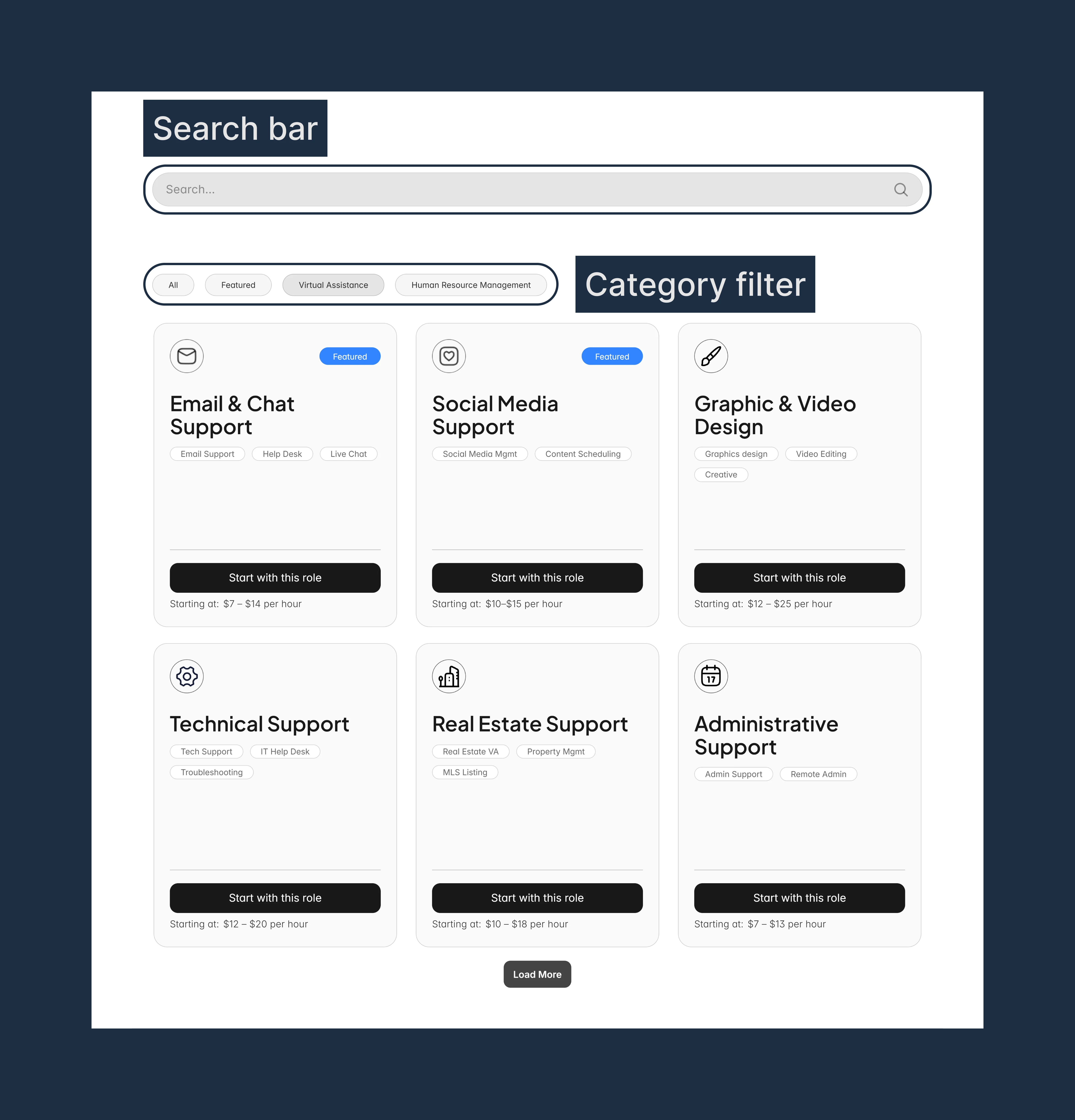
“Category filtering and search allow users to quickly narrow roles instead of scanning a long list.”
To nurture users and prevent re-entry of information, dedicated role detail pages were introduced. Each page provides a clear overview, responsibilities, and required skills. Calls to action were appended with URL parameters that prefilled the booking form with the selected role, preserving user intent through to conversion. All role data was managed through a flexible CMS, allowing new roles to be added without manual restructuring.
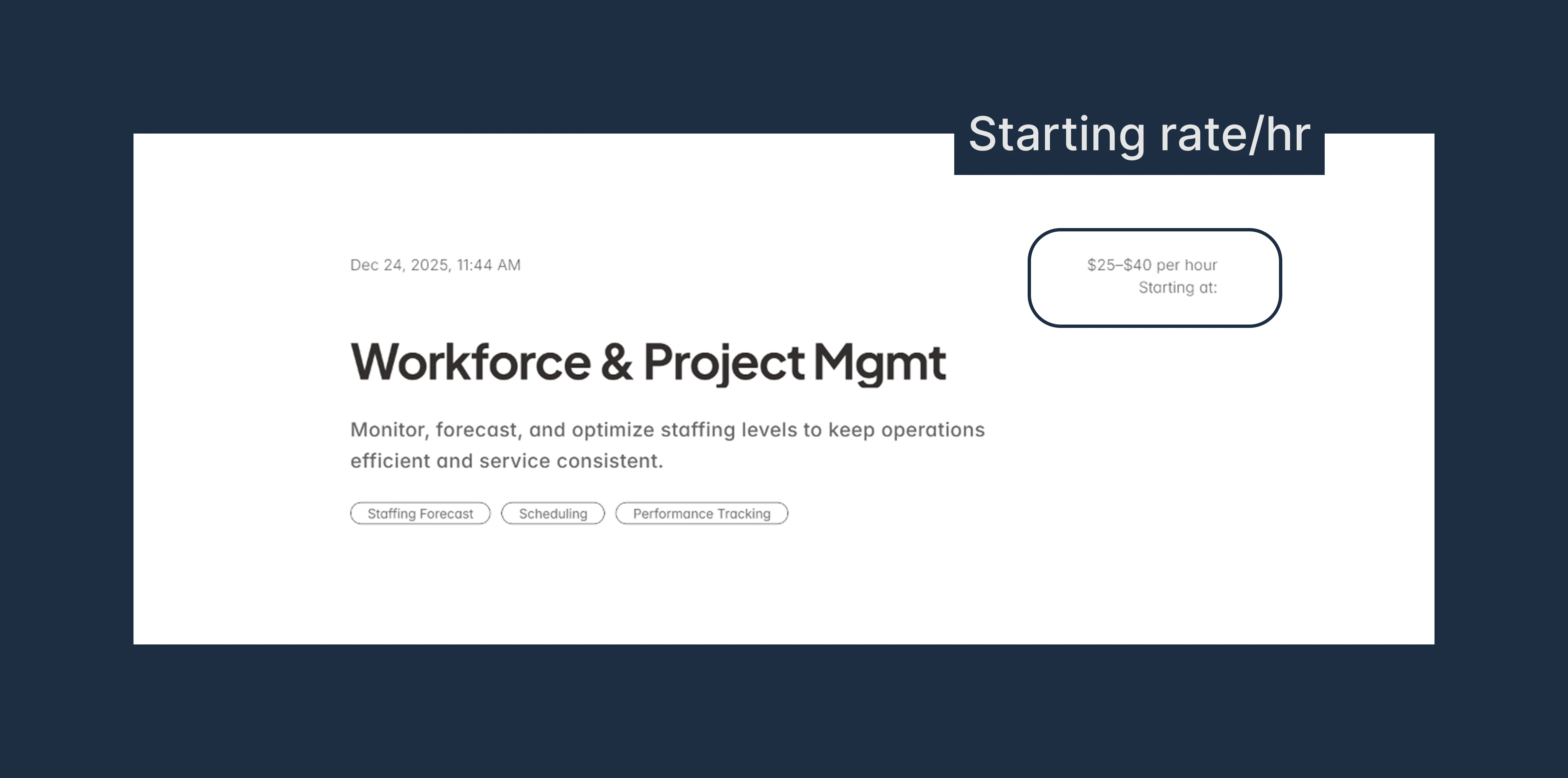
“Role detail pages reduce uncertainty by clearly defining scope before booking.”
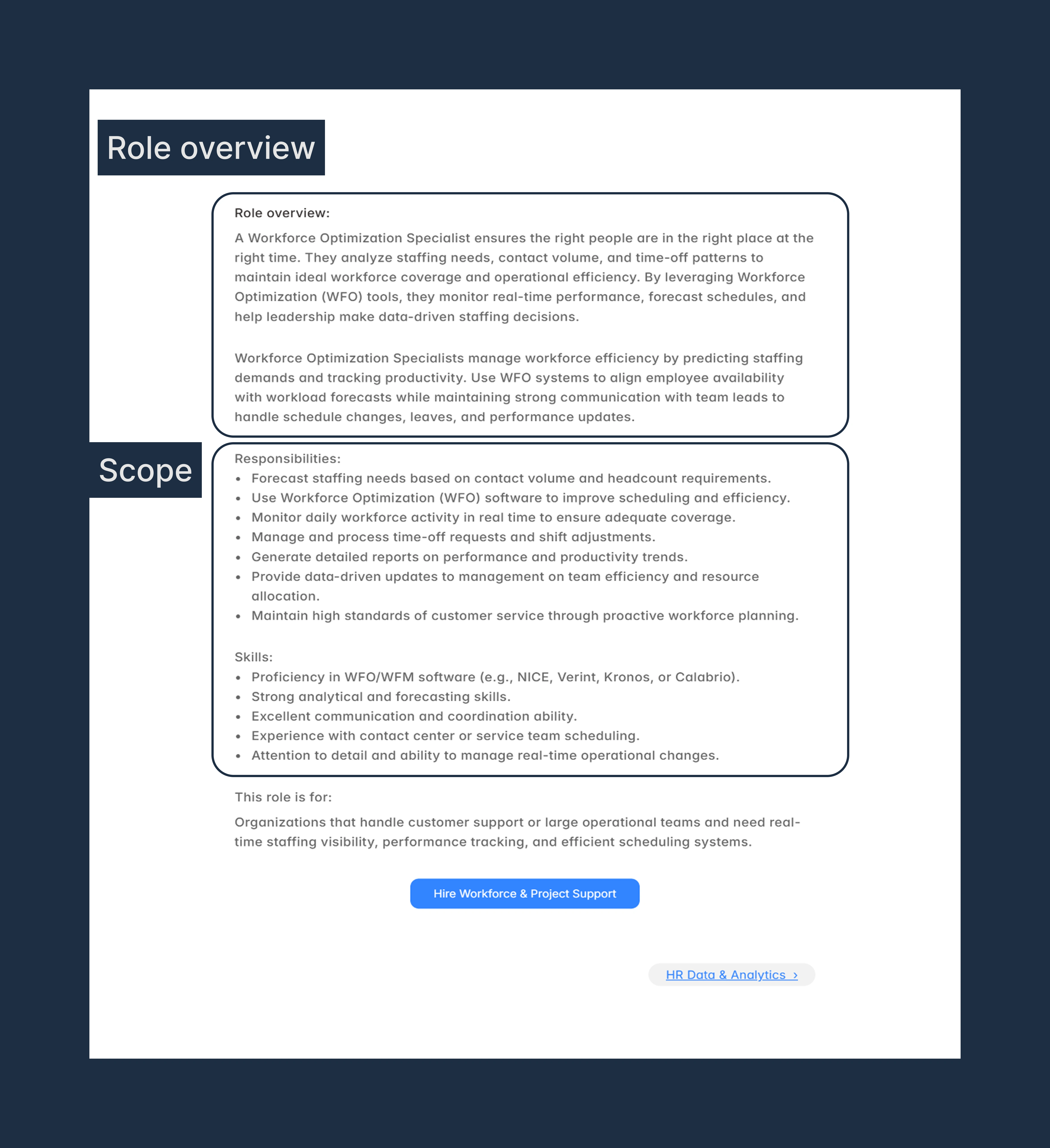
“Role detail pages reduce uncertainty by clearly defining scope before booking.”
OUTCOME
The redesigned site delivered a clearer, more navigable, and scalable structure for presenting support roles, alongside a smoother onboarding flow. Early usability testing with five participants showed a consistent preference for the search and filtering functionality, as well as for the preservation of role selections through to booking.
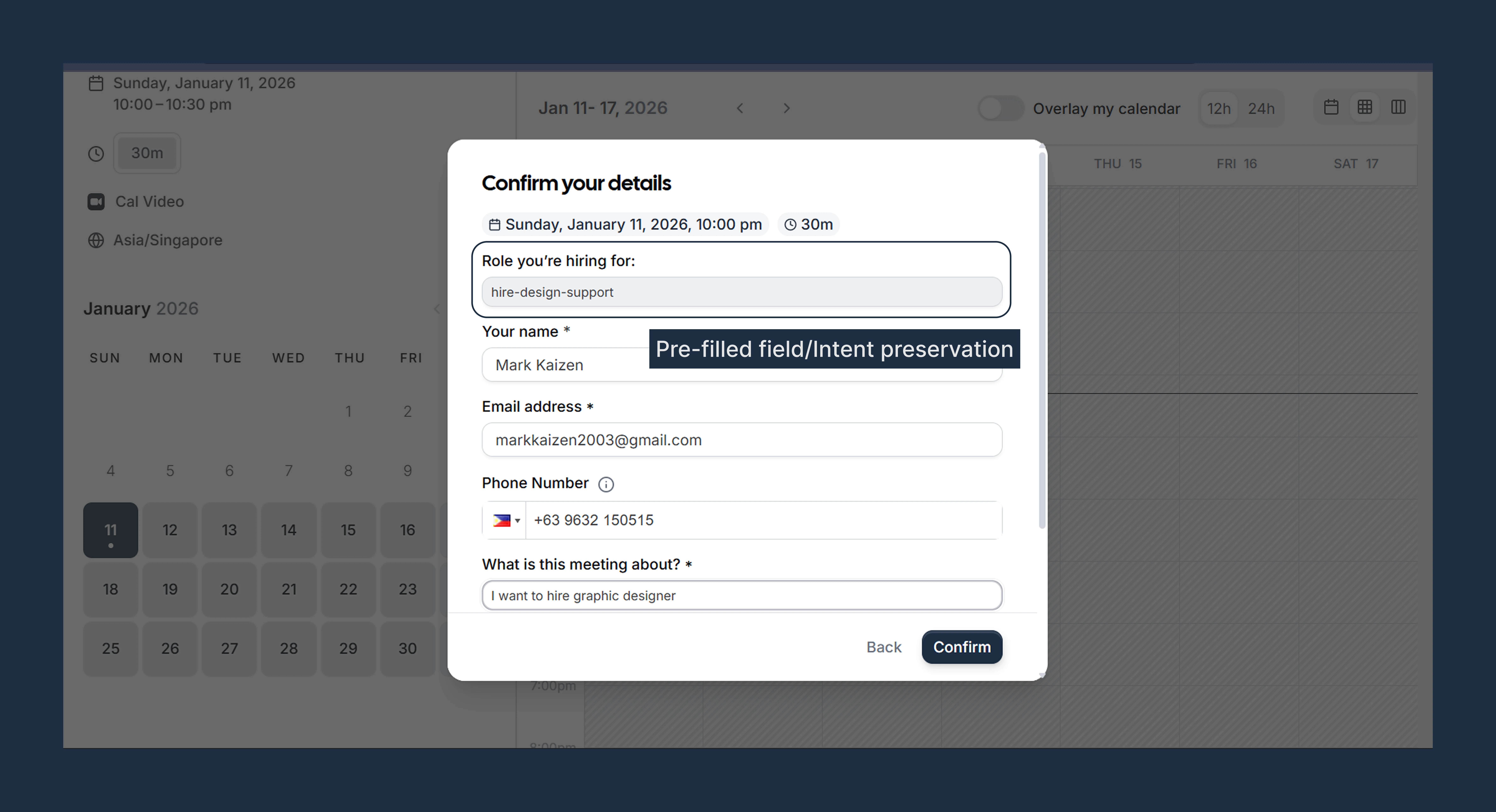
“User selections are preserved through URL parameters, reducing repetition and drop-off.”
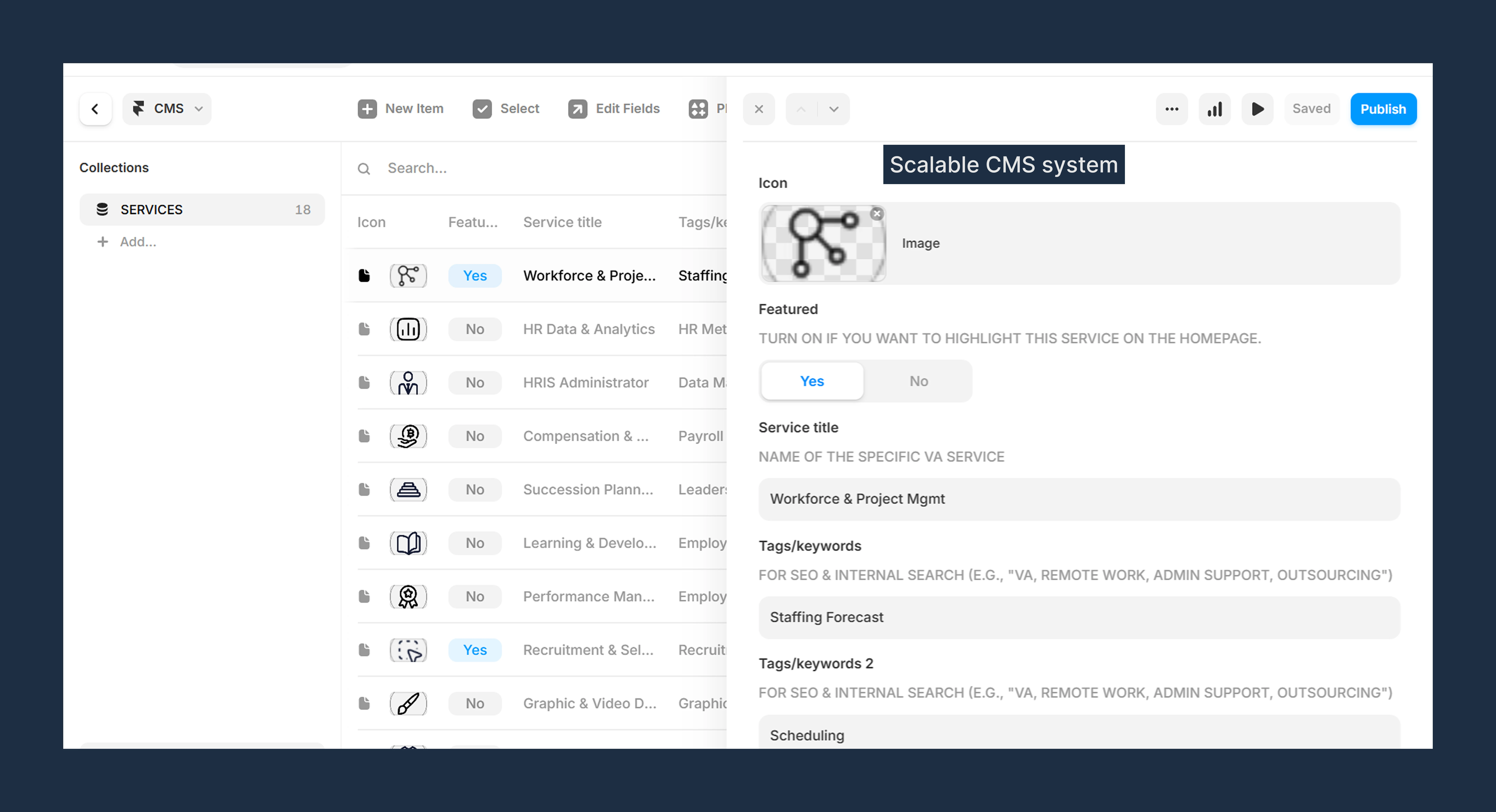
“All roles are managed through a scalable, future-proof CMS, allowing new roles to be added without layout changes.”
These changes reduced confusion during the inquiry process and improved perceived lead quality by aligning booking requests more closely with user intent. Overall, the new architecture supports faster discovery, reduced friction, and long-term scalability.
LEARNINGS & NEXT STEPS
This redesign reinforced the importance of strong information hierarchy and clear user flow when designing for a real operational business. One key takeaway was the impact of intent preservation. Maintaining user selections throughout the journey significantly reduces friction and decision fatigue. Designing with scalability in mind from the outset also proved essential, as a flexible structure prevents ongoing manual rework as the business grows.
If this were a formal collaboration with the owner, the next priority would be tracking booking-to-hire conversion rates to identify drop-off points after call requests. Monitoring the most-searched and most-selected roles would also inform which offerings should be prioritized on the homepage over time.
Since the project is not live with real traffic, these remain planned next steps. Logical future enhancements would include enabling self-serve payments, collecting testimonials from early clients, and introducing a “Work with Us” application flow to support internal talent acquisition as demand scales.
Original site (for reference): https://taskmequick.com/index.html
Redesigned experience: https://tmq.framer.website/
“This was a self-initiated redesign based on real operational constraints of the business.”
Like this project
Posted Jan 11, 2026
Designed a role-based website focused on reducing friction in role discovery, improving booking intent capture, and future-proofing the platform for growth.
Likes
4
Views
18