
🚨 A successful automation doesn't always mean everything is working correctly.
One of the biggest challenges in AI automation is handling failures that don't trigger obvious errors.
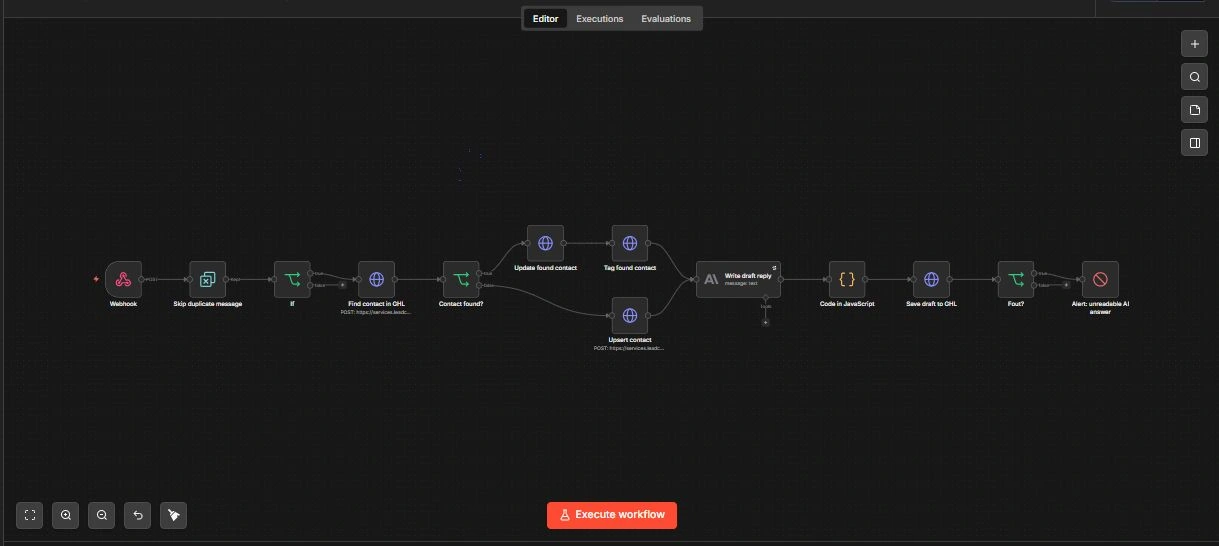
I recently explored a common issue in an AI-powered lead reply workflow built with n8n, Claude, and GoHighLevel.
Here's how it works:
→ Captures incoming lead replies.
→ Uses Claude to understand the message and identify intent.
→ Categorizes replies as Interested, Question, Not Now, or Unsubscribe.
→ Generates a suggested response.
→ Sends the draft for human review before sending.
But what happens when AI returns data in an unexpected format?
The workflow might assign an incorrect default label or save an empty response without reporting an error.
That's why reliable automation needs proper safeguards.
Here are six important protections:
Error handling instead of silent defaults.
Validation of AI-generated categories against predefined values.
Automatic retries for failed AI requests.
Email notifications with execution details.
Protection against empty drafts overwriting valid data.
Duplicate detection to prevent repeated webhook processing.
The key takeaway:
AI handles understanding and content generation, while code handles validation, rules, and reliability.
A workflow shouldn't just execute. It should also recognize when something goes wrong and respond appropriately.
At Hills Dot, I focus on building automation that is reliable, transparent, and designed for real business operations.
What's one safeguard you always include in your automation workflows?
#n8n #AIAutomation #GoHighLevel #WorkflowAutomation #BusinessAutomation
0 likes · 2 views · Nov 18, 2026


