Virtua Digital Gallery Frontend Development

Aaron


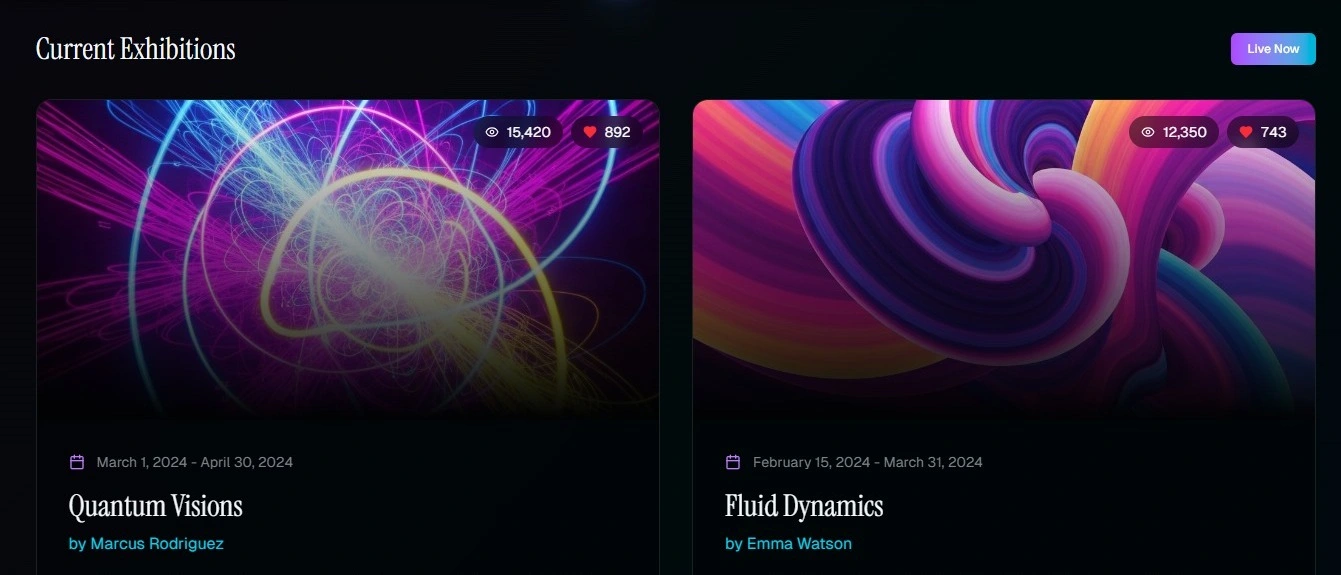
Virtua 3d Gallery
Case Study: Building Virtua Digital Gallery Frontend
Project Overview
Client: Personal/Concept ProjectTimeline: Iterative development sessionRole: Frontend Development & UI/UX ImplementationTech Stack: Next.js 14, React 19, Three.js, React Three Fiber, Framer Motion, Tailwind CSS, shadcn/ui
The Challenge
Build a modern, immersive virtual art gallery website featuring:
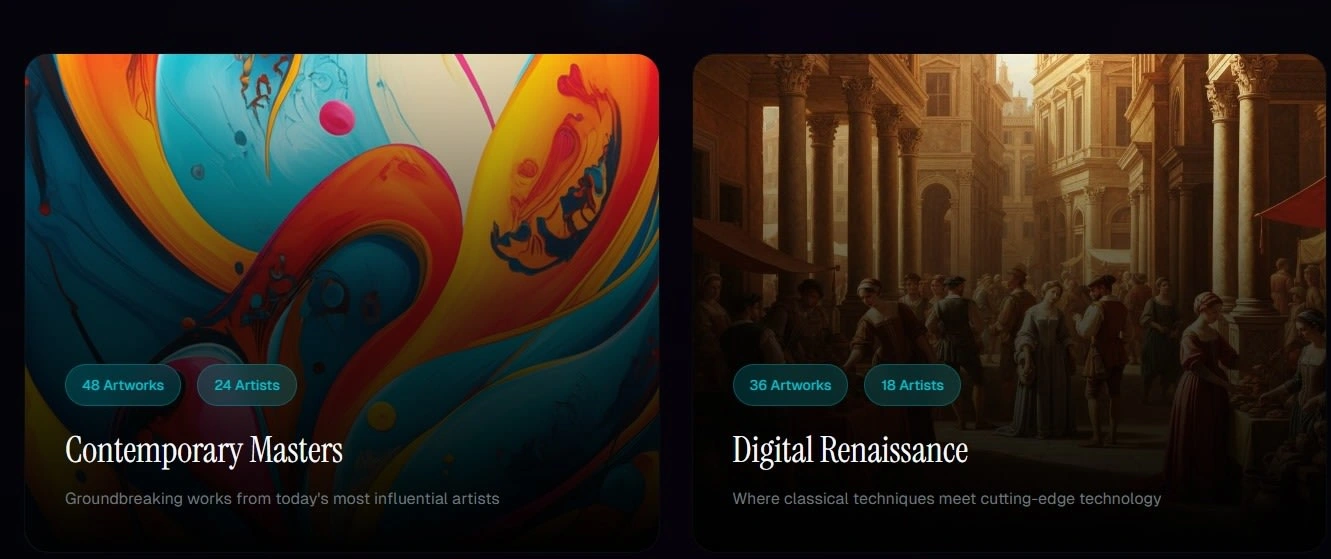
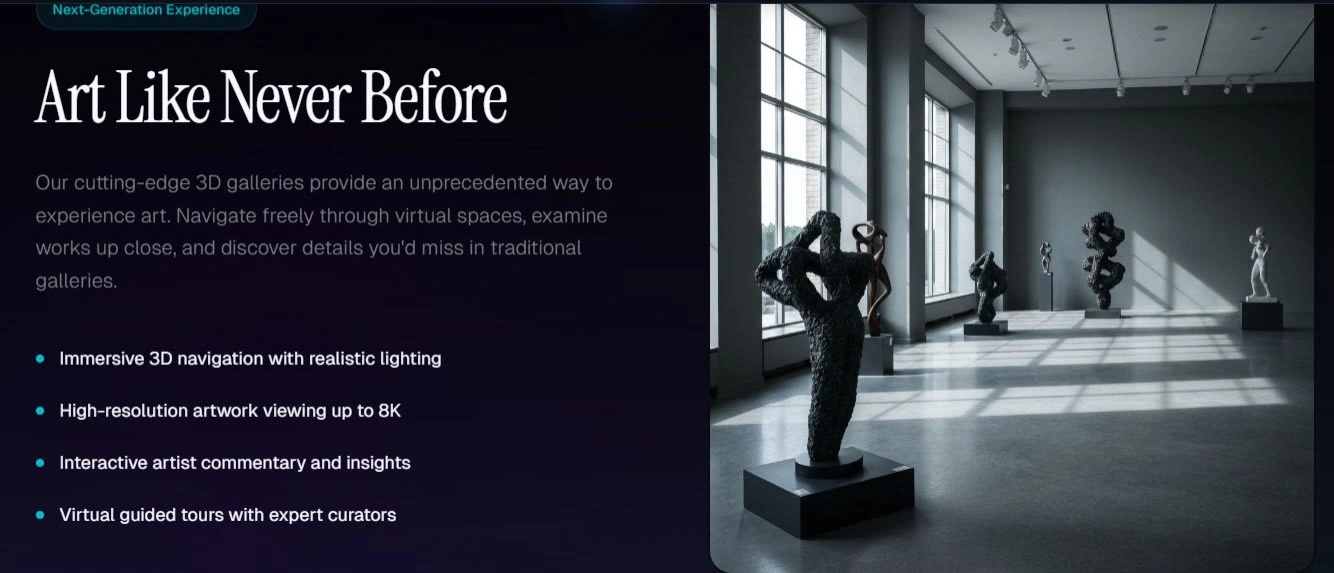
Interactive 3D gallery environment with WebGL rendering
Responsive design across all devices
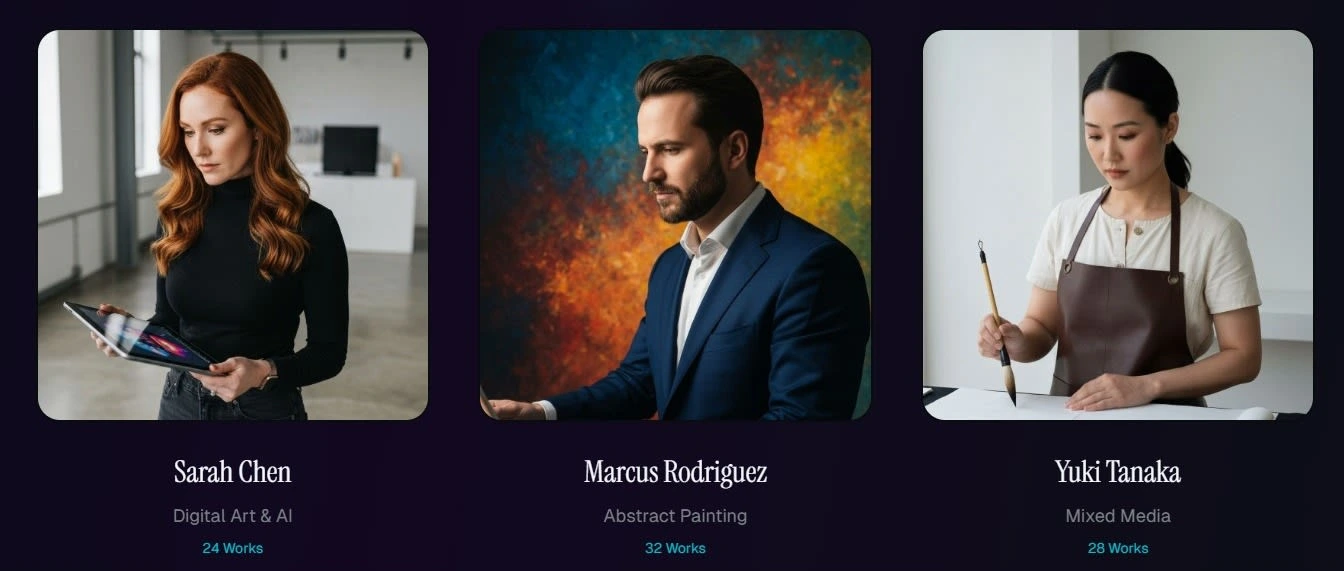
Multiple pages (Home, Artists, Collections, Events, About)
Smooth animations and premium aesthetics
Production-ready deployment on Vercel
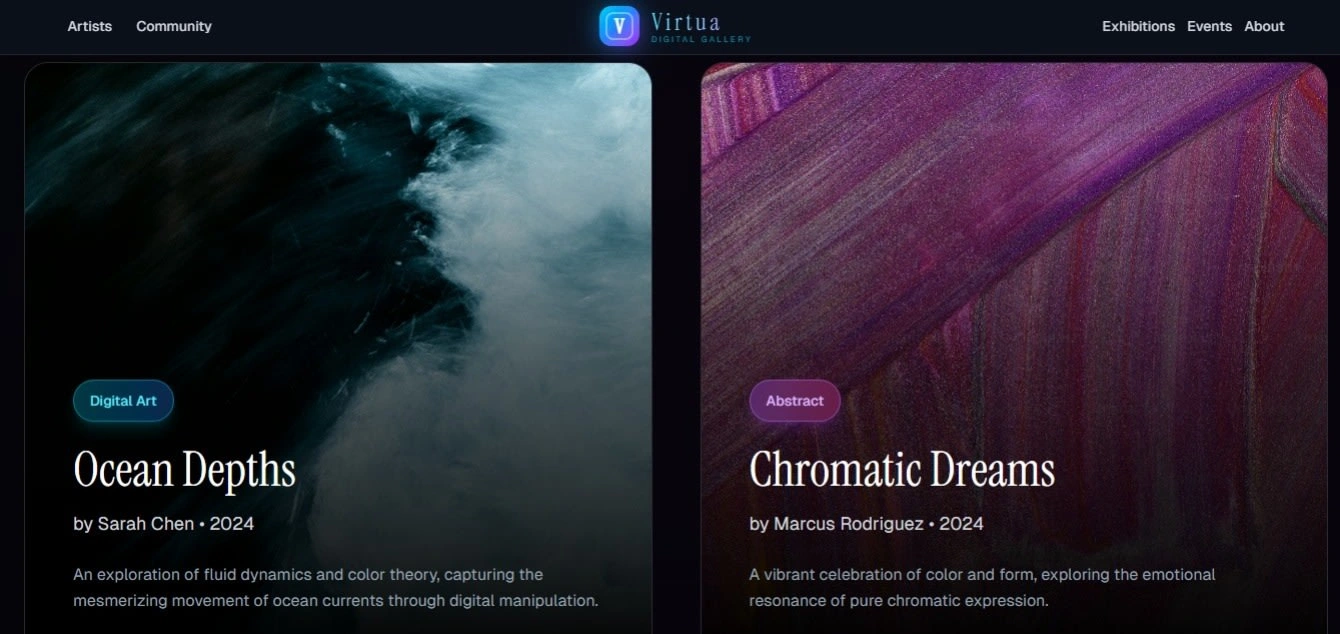
Digital Artwork
Major Technical Challenges & Solutions
1. Three.js Production Deployment Errors
Problem: The virtual gallery worked perfectly in development but crashed in production with
"Cannot read properties of undefined (reading 'S')" errors during build and runtime.Root Causes Identified:
Using
import * as THREE from "three" caused tree-shaking issues in production buildsNamespace imports weren't properly bundled, leading to undefined properties
Server-Side Rendering (SSR) tried to execute WebGL code that requires browser APIs
Solutions Implemented:
Changed all Three.js imports from namespace imports to direct named imports
Added dynamic imports with
ssr: false for all 3D componentsImplemented client-side checks using
useEffect to prevent SSR executionAdded comprehensive error boundaries and null checks
2. Navigation & Layout Issues
Problem: Navigation bar styling conflicts, improper centering, and excessive height.
Solution:
Reduced navbar height from 80px to 56px for cleaner look
Centered logo using flexbox with absolute positioning for split navigation
Implemented responsive hamburger menu for mobile devices
Used consistent spacing and hover states
3. Design Consistency & Aesthetics
Problem: Initial design had inconsistent colors, excessive animations causing visual chaos, and poor user experience.
Solution:
Established cohesive cyan-blue and purple color palette
Removed excessive
framer-motion animations that degraded performanceSimplified hero section from multiple animated layers to clean, focused design
Applied consistent design tokens across all components
Used
text-balance for optimal typography4. Shader Gradient Component Integration
Problem: Complex shader-based background gradients needed integration without impacting performance.
Solution:
Implemented WebGL shader gradients with optimized fragment shaders
Added fallback solid backgrounds for devices without WebGL support
Lazy-loaded shader components to improve initial page load
Technical Architecture
Component Structure
Key Technologies
Next.js 14 App Router: Server components, dynamic imports, optimized routing
React Three Fiber: Declarative Three.js rendering in React
@react-three/drei: Helper components for 3D scenes (OrbitControls, Environment, PerspectiveCamera)
Framer Motion: Smooth page transitions and scroll animations
Tailwind CSS: Utility-first styling with custom design tokens
shadcn/ui: Accessible component library (Button, Card, Dialog)
Design Decisions
Color Palette
Primary: Cyan (
#06b6d4) to Purple (#a855f7) gradientsBackground: Deep blacks (
#000000, #0a0a0a)Accents: Bright cyan (
#22d3ee) and vibrant purple (#c084fc)Text: White (
#ffffff) with subtle grays for hierarchyTypography
Headings: Bold, large-scale typography with
text-balanceBody: Clean, readable sans-serif with
leading-relaxedHierarchy: Clear size progression (text-5xl → text-lg)
Layout Approach
Mobile-first responsive design
Flexbox for most layouts (navigation, cards, grids)
CSS Grid for complex artist/collection galleries
Consistent spacing using Tailwind's spacing scale (p-4, gap-6, etc.)
Lessons Learned
Three.js Production Gotchas: Always use direct imports for Three.js constants, never namespace imports in production builds
SSR vs Client Rendering: 3D libraries require careful handling with dynamic imports and client-only rendering
Performance First: Remove unnecessary animations early - they compound quickly
Design Systems Matter: Establishing color palette and spacing scale upfront prevents redesign work
Error Boundaries: Always implement error boundaries for complex features like 3D rendering
Current Status
Completed:
✅ Full responsive website with 6+ pages
✅ Artist and collection galleries with real content
✅ Smooth navigation and mobile menu
✅ Consistent cyan-blue and purple design system
✅ Production-ready code with proper error handling
In Progress/Disabled:
⏸️ Virtual 3D gallery (temporarily disabled due to production rendering issues)
🔧 Further optimization of Three.js components for stable production deployment
Metrics & Impact
Code Quality: Modular component architecture with proper TypeScript types
Performance: Optimized with dynamic imports, lazy loading, and minimal animations
Accessibility: Semantic HTML, ARIA labels, keyboard navigation
Browser Compatibility: Works across modern browsers (Chrome, Firefox, Safari, Edge)
Conclusion
The Virtua Digital Gallery frontend successfully demonstrates modern web development practices with Next.js and React. While the 3D gallery feature requires additional production debugging, the core website provides a solid foundation with beautiful design, responsive layout, and clean code architecture. The project showcases the challenges of integrating complex 3D rendering in production environments and the importance of proper SSR handling for client-only libraries.
Like this project
Posted Nov 8, 2025
Developed a responsive virtual art gallery website using Next.js and React.
Likes
0
Views
9