EG - Plant-Based Egg Substitute

Howie Y


EG
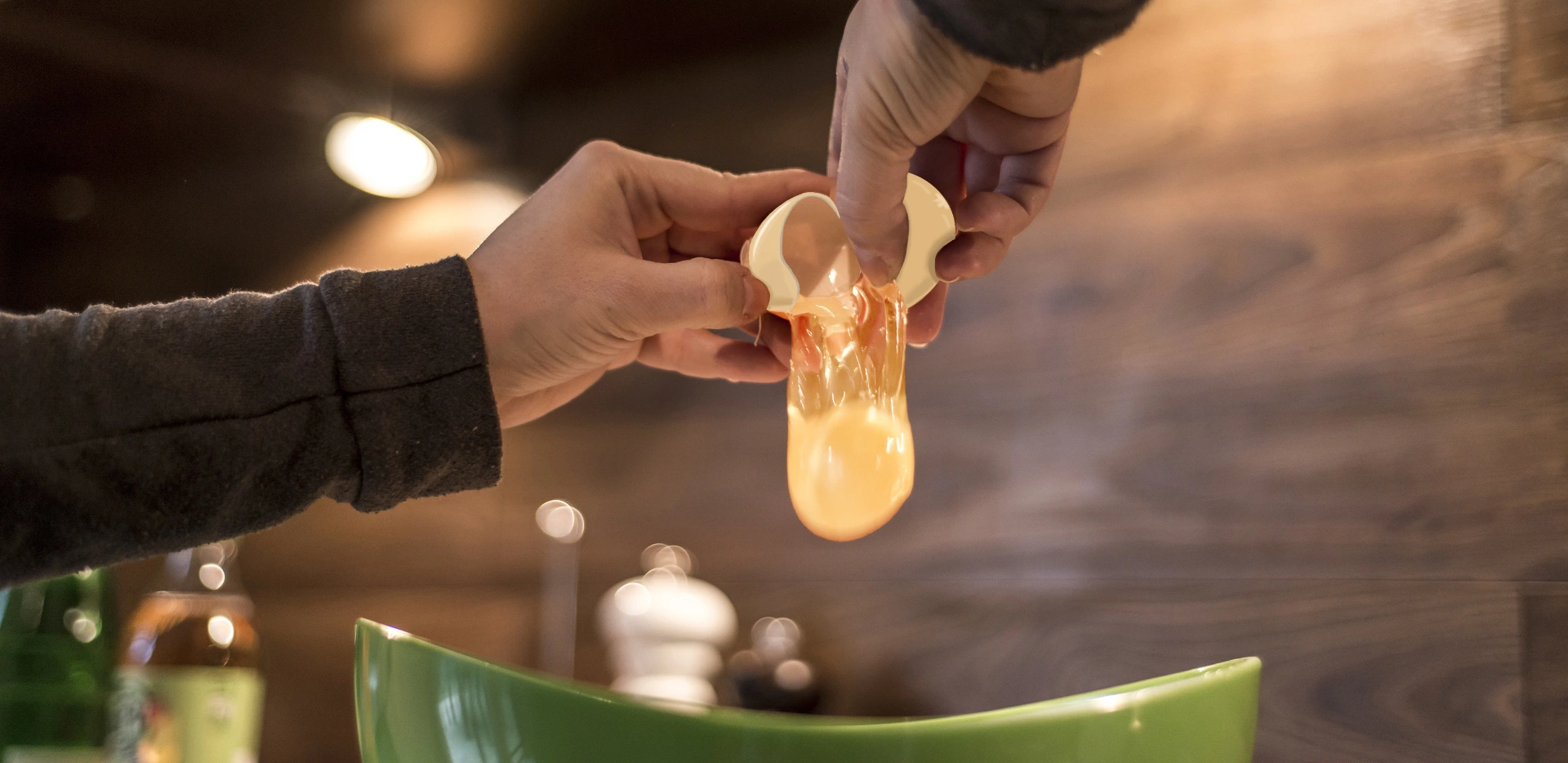
A 100% plant-based egg — shell and all.
An organic, plant-based egg substitute with a crackable shell, rich nutrition, and sustainable packaging — designed to make the switch to vegan effortless.
Role
Industrial Designer
Type
Industrial Design · Package Design
Year
2020
Deliverables
Industrial Design · Package Design
01 Brief
Eggs are one of the most common foods on the planet; we eat 1.4 trillion chicken eggs per year. Our current industrialized egg system has negative impacts on our health and environment. People are looking for new, sustainable, and nutritious egg substitutes. The global egg-substitutes market was valued at $1.5 billion in 2018 and is poised to grow at 5.9% during the forecast period 2019–2025.
02 Opportunity
Why Plant-Based, Why Now?
Concerns around animal welfare, environmental impact, and health are reshaping food choices. Combined with the rapid growth of plant-based eating, these shifts reveal a clear opportunity for innovation.
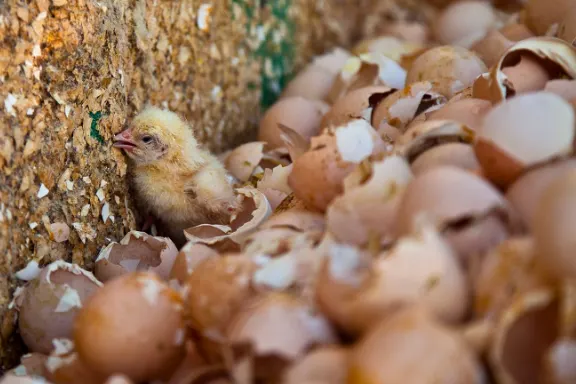
Intense confinement
Selectively bred to produce the maximum number of eggs, hens spend up to two years packed in wire cages with six other birds — so cramped they cannot even spread their wings or exhibit other natural behaviors.
Eggs and the environment
For every egg consumed, half a pound of greenhouse gases is produced. Beyond ammonia and carbon dioxide, the industry leans on pesticides that pollute local waterways and the air.

Eggs and your health
Eggs can carry Salmonella from bird droppings, causing diarrhea, fever, cramps, headache, and nausea. As health awareness rises, shoppers increasingly want organic, low-cholesterol, high-nutrition options.

Plant-based food is a fast-growing trend
More people are willing to add vegan products to their diets and start living the vegan lifestyle. However, it takes time and effort to find the right products and figure out the recipes for new vegans.
03 Solution
Plant-based, shell and all
EG is an organic and 100% plant-based egg substitute, which could be used in various applications such as savories, dressings, spreads, bakery products, and confectionery.
Rich nutrition
Each EG has fewer calories and no fat but 6 grams of high-quality protein.
Tastes so good
We added spinach and turmeric to change the color and flavor of EG. Spinach is high in insoluble fiber and an excellent source of many vitamins and minerals. Curcumin, the main active ingredient in turmeric, is also fat-soluble.
Make the cracking experience really happen
We use caramelized sugar coated with paraffin wax to produce the shell. It simulates the real egg experience, so the user has no doubt when using it. In addition, each EG has 15g of protein, which provides 30% of the protein you need to take every day.
Attractive package design
EG provides two kinds of package designs. The traditional Chinese package is used as a marketing tool to introduce the brand and help grocery stores attract more customers to the vegan frozen-food area. The hexagon package is stable and saves space in transportation. The primary material — bagasse — is an annually renewable resource and fully degradable.
Make cooking easier
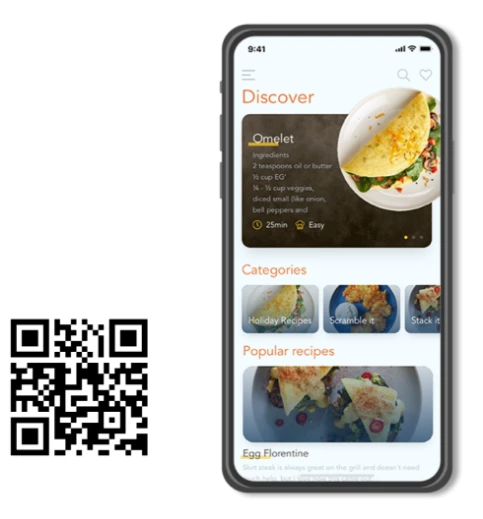
You can easily find the right recipes by QR code and follow the instructions to cook step-by-step. It also gives suggestions on how much protein you need daily.
04 Impact
Better for you and our planet
EG isn't only better for you — it's far lighter on the planet. Made directly from plants, it dramatically cuts the water, land, and emissions behind every egg.
EG uses 98.6% less water
A single chicken egg costs 53 gallons of water to grow all that feed. EG comes directly from plants, which means we use 98.6% less water.
EG uses 86.2% less land
Food from animals makes up only 18% of our calories but requires up to 83% of our farmland to produce. EG comes directly from plants, which means we use 86.2% less land.

EG creates 93.3% fewer CO₂ emissions
By making EG from plants, we are able to produce 93.3% fewer CO₂ emissions.

Your participation matters
The most significant personal impact you can make on our planet is the food you choose to eat. Every breakfast, lunch, or dinner is a chance to vote for our world. With your participation, we could make it better for our planet.
05 Design process
How EG came together
The research, prototyping, and strategy behind the product, the packaging, and the path to market.
User research
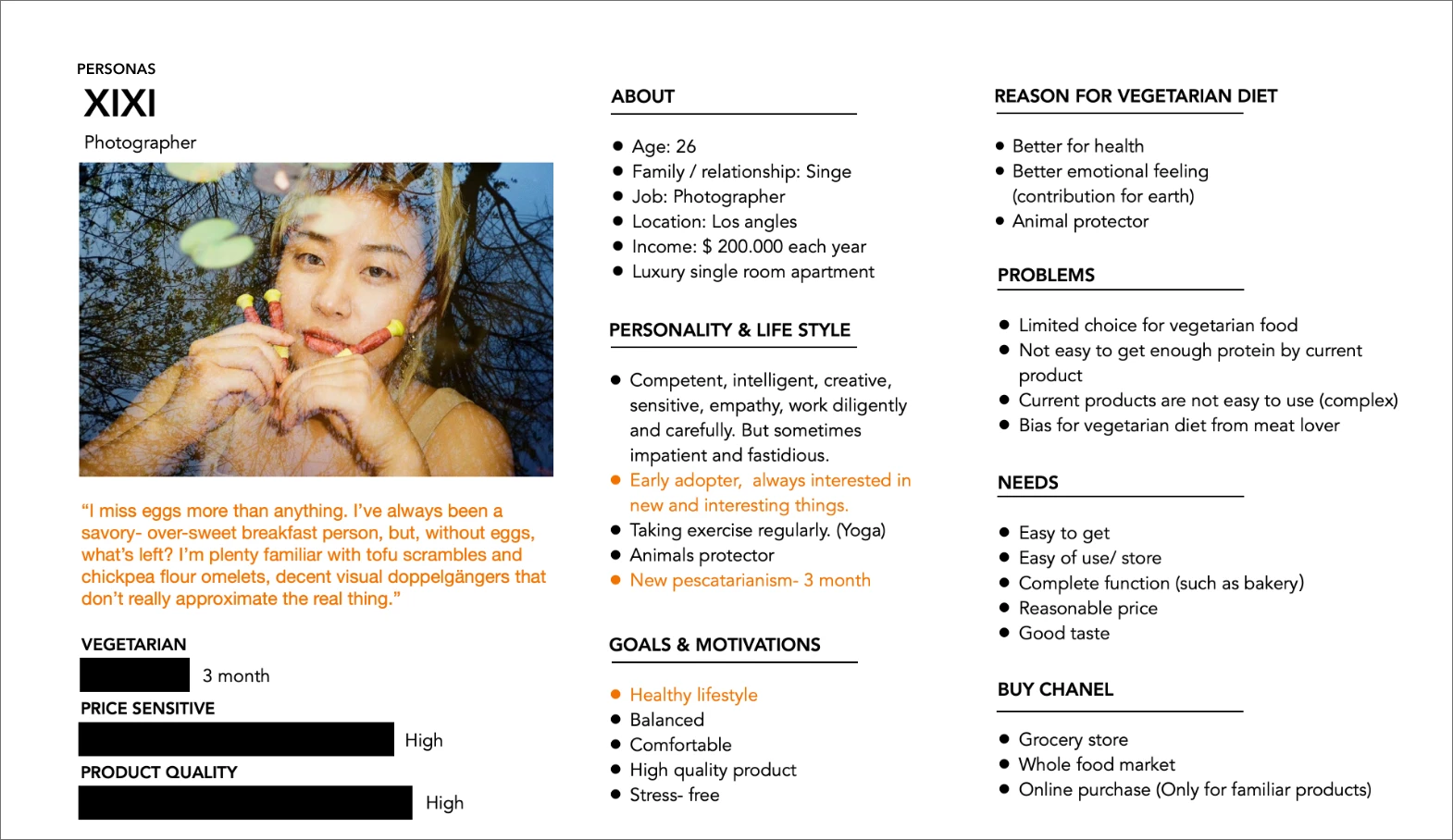
Built a persona — XIXI, a 26-year-old photographer and early-adopter pescatarian — to ground EG in real motivations, problems, and needs.
Customer experience
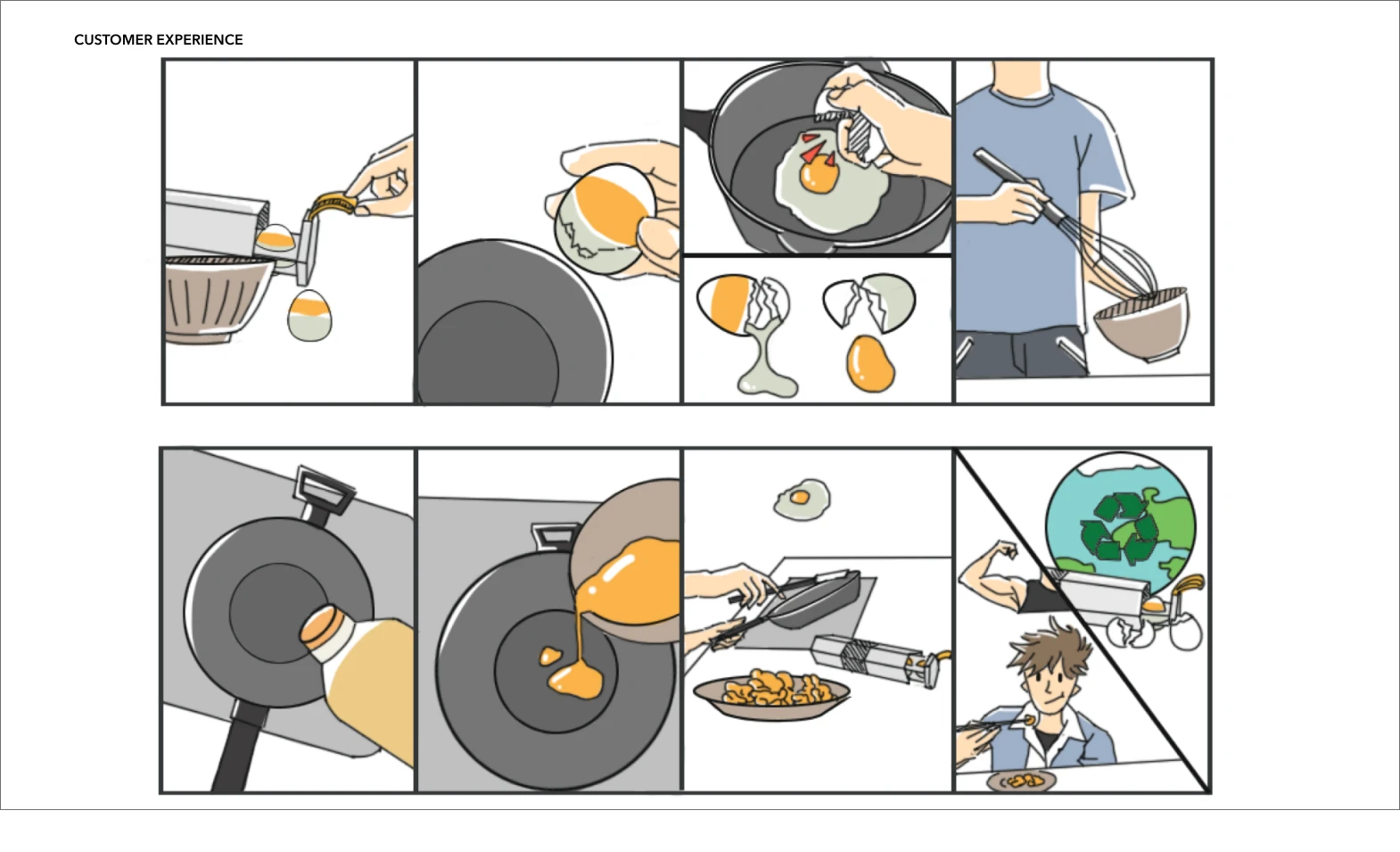
Storyboarded the full experience — cracking, cooking, and enjoying EG — from shell to plate.
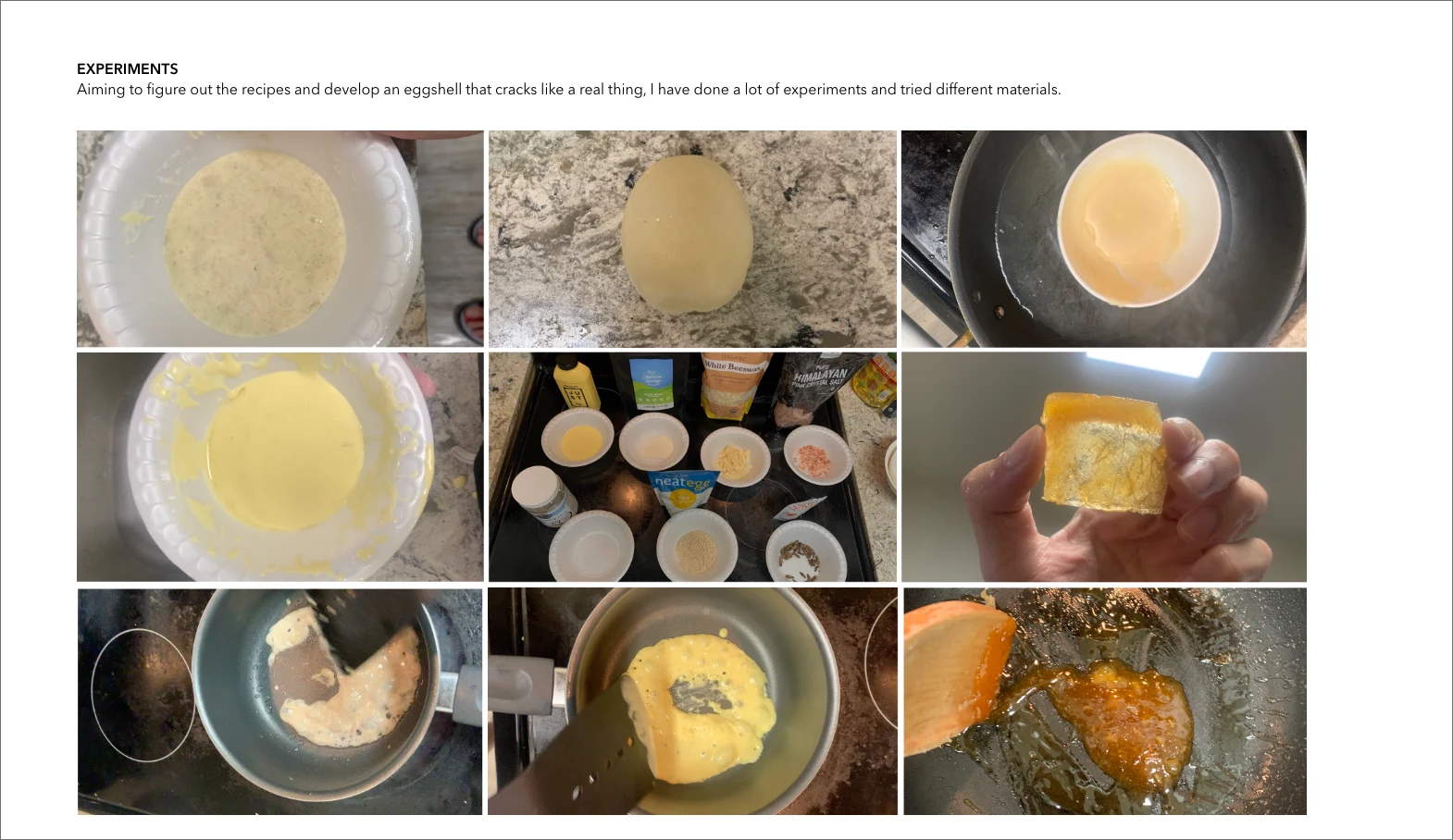
Experiments
Aiming to figure out the recipes and develop an eggshell that cracks like the real thing, I ran a lot of experiments and tried different materials.
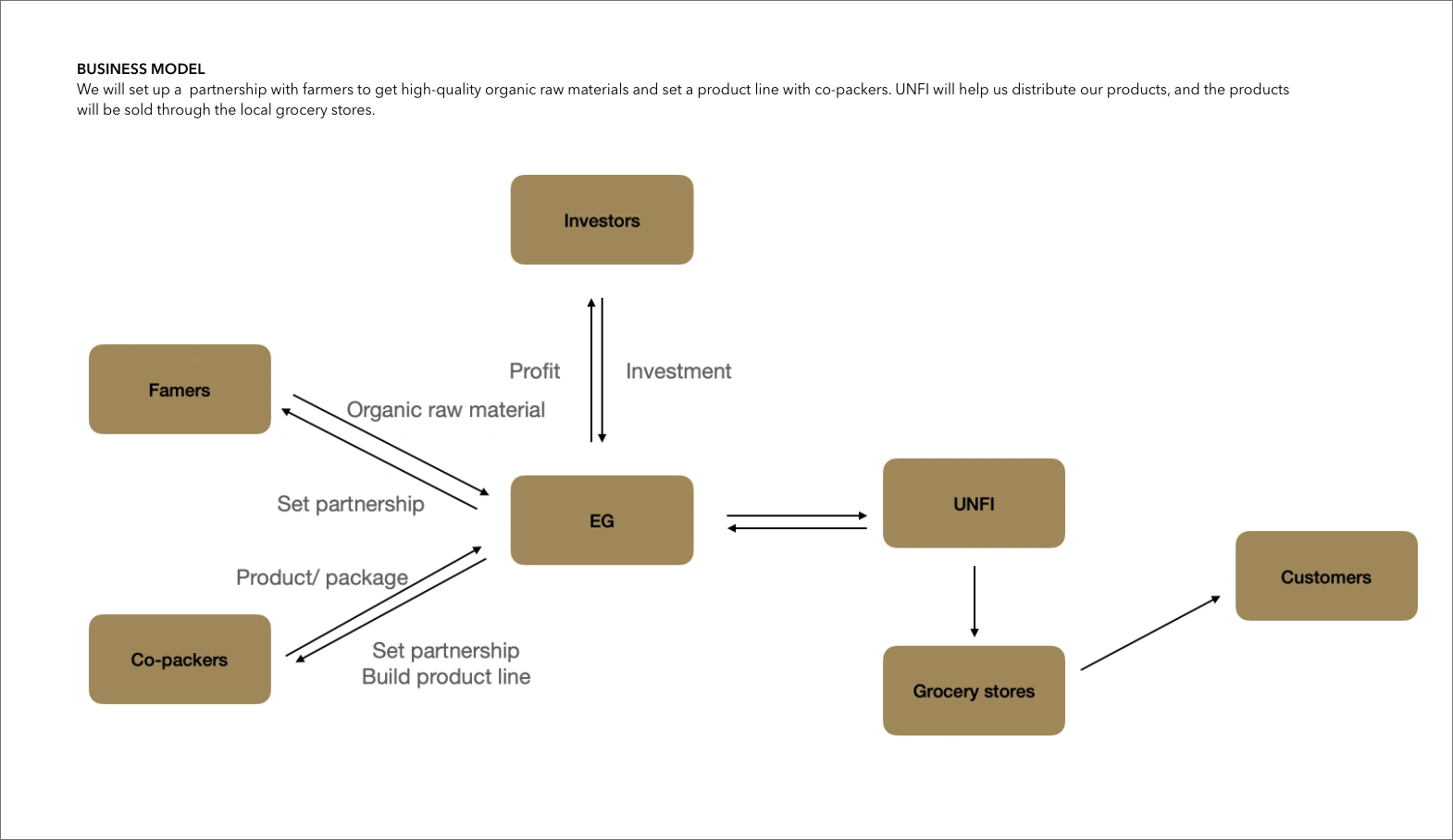
Business model
Partner with farmers for organic raw materials and co-packers for the product line; UNFI distributes EG to local grocery stores.
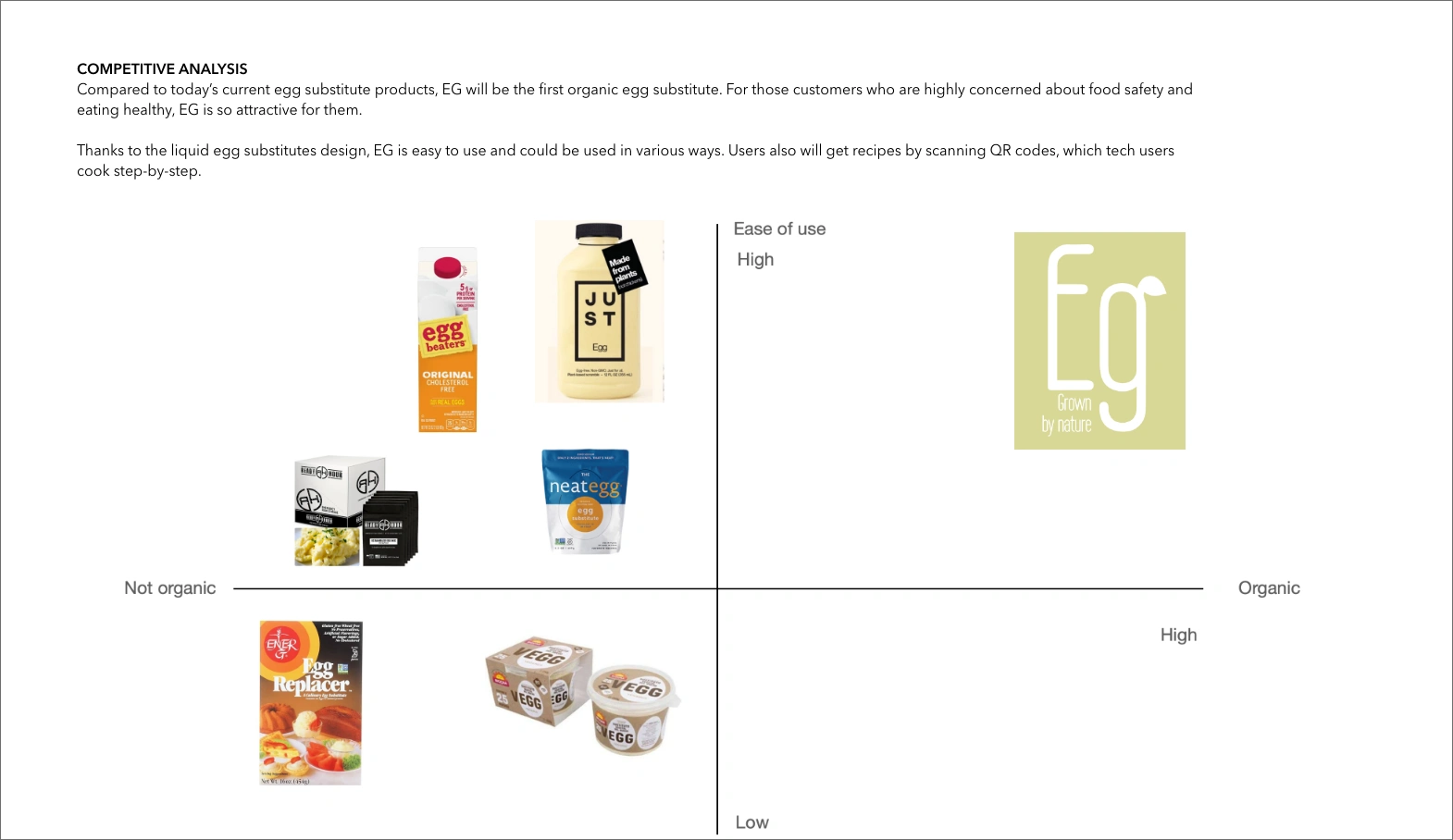
Comparative analysis
Compared to today's egg substitutes, EG is the first organic option. Its liquid design makes it easy to use in many ways, with QR-code recipes for step-by-step cooking.
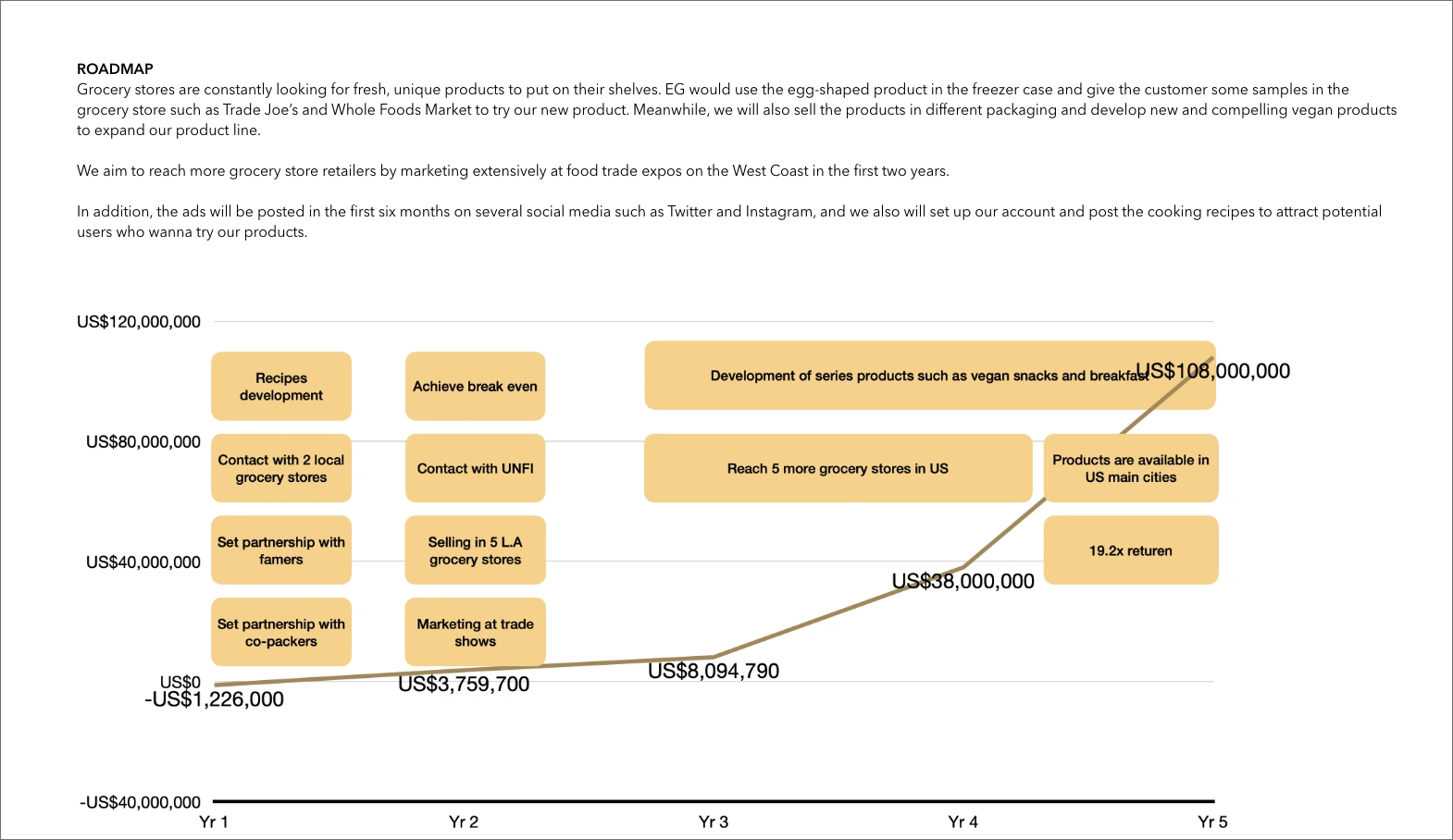
Road map
A five-year plan — from farmer and co-packer partnerships and trade-show marketing to UNFI distribution and national availability — projecting a 19.2× return.
Like this project
Posted Jun 9, 2026
Plant-based egg substitute with sustainable packaging, targeting health and environmental concerns.
Likes
0
Views
7